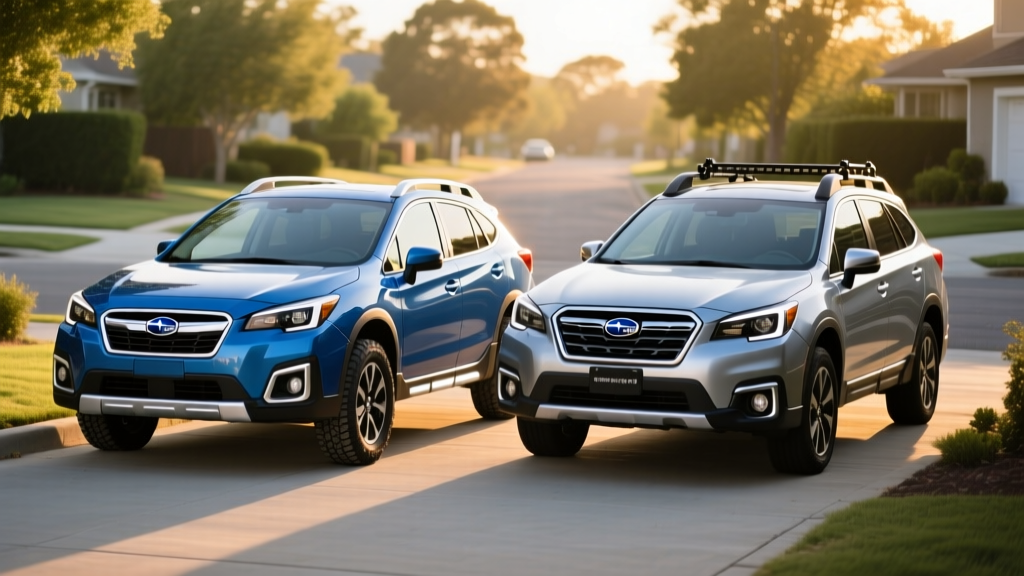
If you're searching for a Subaru hybrid used vehicle in 2026, you'll quickly discover that Subaru's electrified lineup is smaller than Toyota's or Honda's — but what it offers is purpose-built for the all-weather, all-terrain buyer. Subaru has offered two main hybrid paths in recent years: the Crosstrek Hybrid (a plug-in hybrid, or PHEV) and the Outback Hybrid (a conventional hybrid, or HEV). Understanding the difference between these two powertrains — and what to look for in a used example — is the single most important step before you hand over cash.
This guide breaks down real EPA fuel economy, battery longevity, replacement costs, electric-only range, tax credit eligibility on used purchases, and who should actually buy a used Subaru hybrid versus jumping to a full EV or sticking with gas. All figures reflect the most current EPA and manufacturer data available for the relevant model years you'll encounter on the used market.
HEV vs PHEV: Which Subaru Hybrid Are You Actually Looking At?
Before we get into specs, let's eliminate the most common confusion. Subaru has sold two fundamentally different hybrid systems, and they serve different buyers:
| Feature | Conventional Hybrid (HEV) | Plug-In Hybrid (PHEV) |
|---|---|---|
| Example Model | Outback Hybrid (2020–2023) | Crosstrek Hybrid (2019–2023) |
| Needs to plug in? | No — charges via regen & engine | Yes — plug in for electric-only miles |
| Electric-only range | None (motor assists engine only) | ~17 miles (EPA) |
| Battery size | ~0.6 kWh (small buffer) | 8.8 kWh usable (lithium-ion) |
| Charging hardware | N/A | J1772 Level 2 (no DC fast charge) |
| Tax credit (new) | None | Up to $4,502 (when new, now expired) |
| Best for | Drivers who can't charge at home | Short-commute drivers with home charging |
Key takeaway: The Outback Hybrid is a traditional hybrid like a Prius — you just fill it with gas and drive. The Crosstrek Hybrid is a PHEV — you plug it in overnight to get roughly 17 miles of pure electric driving, then the gas engine takes over for longer trips.
Subaru Crosstrek Hybrid (PHEV): Specs, Range, and MPG
The Crosstrek Hybrid was Subaru's only plug-in offering in the U.S. market, sold from the 2019 through 2023 model years. It's built on Toyota's hybrid synergy drive architecture (a result of the Subaru-Toyota partnership), pairing a 2.0-liter flat-four with two electric motors and an 8.8 kWh lithium-ion battery pack.
| Spec | Crosstrek Hybrid (2019–2023) |
|---|---|
| Powertrain | 2.0L Boxer-4 + 2 electric motors |
| Combined horsepower | 148 hp (net system output) |
| Battery (usable) | 8.8 kWh lithium-ion |
| EPA electric-only range | 17 miles |
| EPA combined range (gas + electric) | 480 miles |
| EPA MPGe (electric mode) | 90 MPGe |
| EPA MPG (hybrid mode, gas only) | 35 city / 33 highway / 34 combined |
| Level 2 charging time (240V) | ~2.5 hours (0–100%) |
| DC fast charging | Not supported |
| Drivetrain | Symmetrical AWD (standard) |
| 0–60 mph | ~8.5 seconds |
Real-world range note: The EPA's 17-mile electric-only figure assumes moderate temperatures and mixed driving. In our experience, expect 13–15 miles of electric range in cold weather (below 40°F) due to cabin heating demand and reduced battery efficiency. In summer city driving at moderate speeds, some owners report squeezing out 19–20 miles. The 34 MPG combined gas figure holds up reasonably well — real-world owners on fueleconomy.gov report averages between 32–36 MPG combined.
How far can the Crosstrek Hybrid go on electric only?
The EPA rates it at 17 miles of electric-only driving at speeds up to roughly 65 mph. This covers the average American one-way commute (approximately 16 miles, per Census Bureau data). If you can charge at home and at work, you may burn almost no gasoline on weekdays. For longer road trips, the combined 480-mile total range means no range anxiety whatsoever.
Subaru Outback Hybrid (HEV): MPG and Powertrain
The Outback Hybrid (sometimes badged as the "Outback e-Boxer" in certain markets) was offered primarily in the 2020–2023 model years in limited U.S. trims. Unlike the Crosstrek PHEV, this is a mild conventional hybrid — it uses a small battery and electric motor to assist the gasoline engine, recapture energy during braking, and enable brief engine-off coasting. You never plug it in.
| Spec | Outback Hybrid (2020–2023) |
|---|---|
| Powertrain | 2.0L Boxer-4 + electric motor assist |
| Combined horsepower | ~148 hp (net system) |
| Battery | ~0.6 kWh (nickel-metal hydride) |
| EPA MPG | 35 city / 33 highway / 34 combined |
| Electric-only driving | None (assist-only system) |
| Drivetrain | Symmetrical AWD |
| Plug-in required? | No |
Real-world MPG vs EPA: Conventional hybrids like the Outback Hybrid tend to exceed their EPA city rating in stop-and-go driving because regenerative braking recovers more energy. Highway MPG may fall slightly below the sticker, particularly at sustained 75+ mph speeds or when climbing grades. Expect roughly 33–37 MPG combined in mixed real-world use, with city-heavy drivers seeing the higher end of that range. For comparison, the non-hybrid 2.5L Outback returns 26 city / 33 highway / 29 combined — so the hybrid delivers a meaningful ~5 MPG improvement in combined driving.
Battery Longevity, Warranty, and Replacement Cost
Battery anxiety is the top concern for any used hybrid buyer. Here's what you need to know about both Subaru hybrid systems:
Battery Warranty Coverage
- Crosstrek Hybrid (PHEV): 8 years / 100,000 miles (10 years / 150,000 miles in CARB states including CA, NY, MA, and others)
- Outback Hybrid (HEV): 8 years / 100,000 miles (same CARB-state extension applies)
- Warranty threshold: Subaru covers the battery if capacity drops below approximately 70% of original
Source: Subaru Warranty Information
Is a used Subaru hybrid reliable, and what does battery replacement cost?
Subaru's hybrid systems have proven reliable in the field. The Crosstrek Hybrid's Toyota-derived powertrain benefits from decades of Prius-proven hybrid architecture. Common issues reported by owners are more often related to the 12V auxiliary battery (a standard car battery that still exists in hybrids) and infotainment quirks than the high-voltage traction battery.
If you're buying a 2019–2021 Crosstrek Hybrid in 2026, the original 8-year/100,000-mile warranty may still have remaining coverage — check the in-service date and odometer. For older or higher-mileage examples, you're likely out of warranty.
Battery replacement cost:
- Crosstrek Hybrid (PHEV, 8.8 kWh pack): $3,000–$5,000 for a new OEM replacement, plus labor (~$500–$800)
- Outback Hybrid (HEV, ~0.6 kWh pack): $1,500–$3,000 — smaller pack, lower cost
For context, most hybrid batteries from Toyota and Subaru last 150,000–200,000+ miles before significant degradation. Individual cell replacement (rather than the full pack) is sometimes available through independent hybrid specialists for $500–$1,500, reducing cost further.
Used Subaru Hybrid Pricing and Tax Credit Eligibility
Here's what you can expect to pay in the 2026 used market, and what credits might apply:
| Model | Model Years | Used Price Range (2026) | Original MSRP (when new) |
|---|---|---|---|
| Crosstrek Hybrid (PHEV) | 2019–2023 | $18,000–$28,000 | $36,395–$39,000 |
| Outback Hybrid (HEV) | 2020–2023 | $20,000–$30,000 | $33,000–$37,000 |
Does a used Subaru hybrid qualify for any tax credit?
This is where buyers often get confused. The federal §30D new clean vehicle credit (up to $7,500) applies only to new vehicle purchases and has MSRP caps, income limits, and battery sourcing requirements per IRS guidelines. The Crosstrek Hybrid originally qualified for up to $4,502 when purchased new (based on its battery capacity), but this credit is no longer available for new purchases since the model was discontinued after 2023.
Used EV credit (§25E): If you buy a used Crosstrek Hybrid from a dealer, you may qualify for the Used Clean Vehicle Credit — up to $4,000 or 30% of the sale price (whichever is less). Key requirements:
- Sale price must be $25,000 or less
- Buyer income caps: $75,000 single / $112,500 head of household / $150,000 joint
- Vehicle must be at least 2 model years old
- Must purchase from a licensed dealer (private sales don't qualify)
- Can only claim this credit once every 3 years
This means a used Crosstrek Hybrid priced at or below $25,000 could net you up to a $4,000 federal tax credit, effectively bringing the price down to the low $20,000s. The Outback Hybrid, as a conventional HEV with a battery under 7 kWh, generally does not qualify for either the new or used federal EV credits. Always consult a tax professional and verify current IRS rules before relying on credit eligibility.
Hybrid vs PHEV vs EV: Which Subaru Fits Your Life?
Subaru's current lineup (as of 2026) still leans heavily on conventional gasoline models, with the all-new Solterra as their only full EV. Here's a decision framework to help you choose:
Choose a used Crosstrek Hybrid (PHEV) if:
- You have Level 1 or Level 2 charging access at home (even a standard 120V outlet works overnight for 17 miles of range)
- Your daily round-trip commute is under 30 miles
- You want electric daily driving but need gas flexibility for weekend trips and cold-weather excursions
- You want Subaru's standard AWD for snow and dirt roads
- You find one priced at or under $25,000 to qualify for the used EV tax credit
Choose a used Outback Hybrid (HEV) if:
- You live in an apartment or otherwise cannot charge at home
- You want better MPG without changing any habits — just gas up and go
- You need more cargo space (Outback: 32.5 cu ft behind rear seats vs Crosstrek: 19.9 cu ft)
- You tow occasionally (Outback Hybrid rated up to 2,700 lbs vs Crosstrek's 1,500 lbs)
Choose a full EV (like the Subaru Solterra or a used Tesla Model Y) if:
- Your daily driving is under 200 miles and you have reliable home charging
- You want to eliminate gasoline expenses entirely
- You're eligible for the full $7,500 federal credit on a new EV or the $4,000 used credit
- You live in an area with robust DC fast-charging infrastructure for road trips
What to Inspect When Buying a Subaru Hybrid Used
Beyond the standard pre-purchase inspection you'd do on any used vehicle, hybrid-specific checkpoints include:
- Hybrid battery state of health (SoH): Ask the dealer or seller for a hybrid battery health report. Some Subaru dealers can pull this via the OBD-II port. Look for capacity above 85% — anything below 75% on a vehicle still under warranty may qualify for replacement.
- Charging port condition (PHEV only): Inspect the J1772 charge port on the Crosstrek Hybrid for corrosion, bent pins, or a damaged latch. Replacement charge port assemblies run $300–$600.
- Regenerative braking feel: During the test drive, the transition between regenerative and friction braking should be smooth. Any grinding, pulsing, or harsh handoff may indicate brake actuator issues.
- 12V battery age: Hybrids still use a conventional 12V battery for accessories and computers. These typically last 3–5 years. If it's original on a 2019–2020 model, budget $150–$250 for replacement.
- Service records: Hybrid-specific coolant changes (for the inverter and battery cooling circuits) are often overlooked. Confirm these were done per the maintenance schedule.
- Warranty transfer: Subaru's hybrid battery warranty is tied to the vehicle, not the owner. If a 2021 Crosstrek Hybrid has 62,000 miles, you still have roughly 2 years and 38,000 miles of battery coverage remaining.
Pros and Cons of a Used Subaru Hybrid
Pros
- Standard Symmetrical AWD — best-in-class for snow and light off-road
- Crosstrek PHEV offers 17 miles electric with no range anxiety on long trips
- Proven Toyota-derived hybrid system with strong reliability track record
- Outback Hybrid delivers ~5 MPG improvement over gas model without plug-in
- Potential $4,000 used EV tax credit on Crosstrek Hybrid under $25,000
- Strong resale value — Subaru hybrids hold value well in AWD-demanding markets
Cons
- Crosstrek PHEV discontinued after 2023 — limited used inventory
- No DC fast charging on Crosstrek Hybrid (Level 2 only, ~2.5 hours)
- 148 hp combined output feels modest, especially at highway passing speeds
- Outback Hybrid availability is limited — wasn't sold in all states or trims
- Electric-only range (17 mi) is short compared to newer PHEVs (RAV4 Prime: 42 mi)
- Cargo space reduced slightly vs gas Crosstrek due to battery pack placement
Frequently Asked Questions
How many MPG does a used Subaru hybrid get?
The Crosstrek Hybrid (PHEV) is rated at 35 city / 33 highway / 34 combined MPG when operating as a hybrid on gasoline. In electric-only mode, it achieves 90 MPGe. The Outback Hybrid (HEV) is rated at 35 city / 33 highway / 34 combined MPG. Real-world owners typically report 32–37 MPG combined depending on driving conditions, with city-heavy driving yielding higher numbers thanks to regenerative braking.
Can I charge the Crosstrek Hybrid at a public DC fast charger?
No. The Crosstrek Hybrid only accepts Level 2 AC charging via a J1772 connector (the same connector used for home Level 2 chargers). At a 240V Level 2 station, a full charge takes about 2.5 hours. It cannot use DC fast chargers (CCS, CHAdeMO, or NACS). On a standard 120V household outlet (Level 1), expect roughly 5 hours for a full charge.
Is the Subaru hybrid battery expensive to replace?
The Crosstrek Hybrid's 8.8 kWh PHEV battery pack costs approximately $3,000–$5,000 for OEM replacement plus labor. The Outback Hybrid's smaller ~0.6 kWh pack runs $1,500–$3,000. However, Subaru hybrid batteries are designed to last 150,000–200,000+ miles, and the warranty covers 8 years/100,000 miles (longer in CARB states). Most owners never need a replacement.
Does a used Subaru hybrid qualify for a federal tax credit in 2026?
The Crosstrek Hybrid (PHEV) may qualify for the §25E Used Clean Vehicle Credit — up to $4,000 or 30% of sale price — if the sale price is $25,000 or less, the buyer meets income caps ($75K single / $150K joint), and the purchase is from a licensed dealer. The Outback Hybrid (HEV) generally does not qualify for federal EV credits because its battery is below the 7 kWh minimum threshold. Always verify current rules at IRS.gov and consult a tax professional.
Should I buy a Subaru hybrid or a full EV?
If you can charge at home and your daily driving stays under 200 miles, a full EV like the Subaru Solterra, Hyundai Ioniq 5, or a used Tesla Model Y will save more on fuel and maintenance. Choose a used Subaru hybrid (especially the Crosstrek PHEV) if you need AWD capability for harsh winters, frequently drive beyond EV range in rural areas with sparse charging infrastructure, or simply aren't ready to commit to full electric. The PHEV gives you the best of both worlds — electric commuting and gas-powered road trips — with no charging infrastructure dependency for longer drives.
What model years of Subaru hybrid should I look for?
For the Crosstrek Hybrid, the 2022–2023 model years are ideal — they include updated EyeSight driver-assist features and are most likely to still have remaining factory battery warranty. For the Outback Hybrid, 2021–2023 examples are preferred for the same reason. Avoid any used hybrid where the seller cannot confirm the hybrid system warning lights are off and the battery health report shows above 80% capacity.
Finding a Subaru hybrid used in 2026 requires patience — inventory is limited because Subaru never produced these models in the volumes Toyota does with the RAV4 Hybrid or Prius. But for the right buyer who values standard AWD, proven hybrid reliability, and the flexibility of a PHEV or the simplicity of an HEV, a used Subaru hybrid remains a smart, efficient choice that holds its value well. Check the battery health, verify warranty status, and confirm tax credit eligibility before you buy.