The 2026 Subaru Hybrid Landscape: What's Actually Available
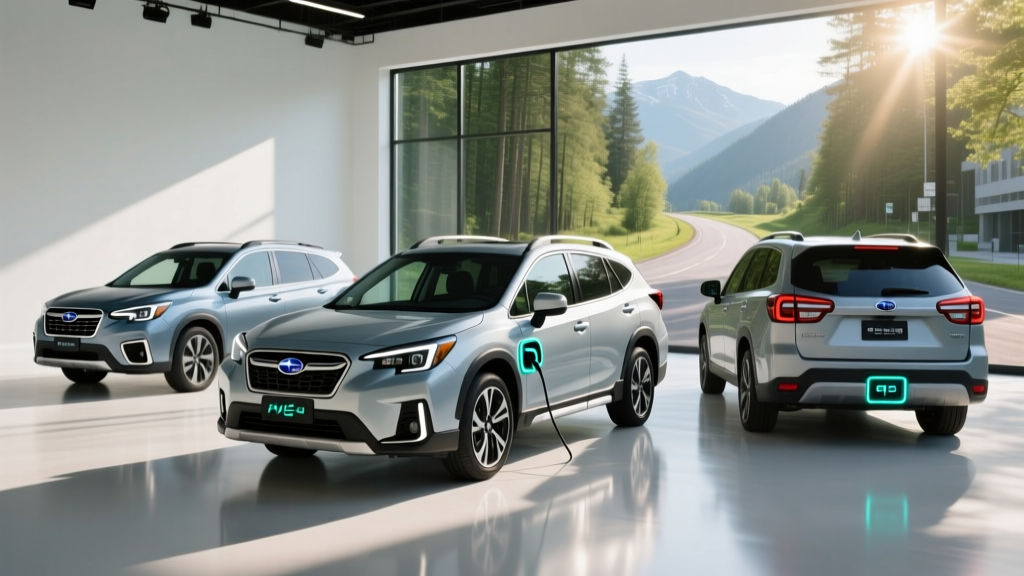
Subaru's approach to electrification has always been methodical rather than aggressive, and the 2026 model year reflects that philosophy. If you're searching for a Subaru hybrid, you'll find the brand offers conventional hybrid (HEV) versions of its most popular models — the Crosstrek Hybrid and Forester Hybrid — while its plug-in hybrid (PHEV) strategy has shifted significantly. The Crosstrek PHEV was discontinued after the 2023 model year, and Subaru's next PHEV push centers on the larger SUV platforms expected for 2027 and beyond.
This guide breaks down every Subaru hybrid you can buy in 2026, with exact EPA figures, real-world efficiency expectations, powertrain specs, pricing, and a clear framework for deciding whether a Subaru hybrid, a full EV, or a conventional gas model is the right call for your driveway.
HEV vs. PHEV: The Critical Distinction
Conventional Hybrid (HEV): Uses a small battery (typically 1–2 kWh) recharged by regenerative braking and the gasoline engine. You never plug it in. It improves MPG, especially in city driving, but offers no electric-only range.
Plug-In Hybrid (PHEV): Carries a larger battery (10–20+ kWh) that you charge via a wall outlet or charging station. Provides 20–40 miles of electric-only driving before the gas engine takes over. Qualifies for partial or full federal tax credits under IRS §30D rules.
As of 2026, Subaru's US lineup includes HEV models only. No new Subaru PHEV is currently on sale.
2026 Subaru Crosstrek Hybrid: Specs, MPG, and Pricing
The Crosstrek Hybrid returned to the lineup for the 2025 model year as a conventional HEV after a brief PHEV-only period, and it carries into 2026 with Subaru's updated hybrid powertrain. It pairs a 2.0-liter horizontally opposed (Boxer) four-cylinder engine with an integrated electric motor housed within a revised Lineartronic CVT.
| Spec | Value |
|---|---|
| Powertrain | 2.0L Boxer-4 + electric motor, CVT |
| Combined Horsepower | 194 hp (net system) |
| EPA MPG (City / Hwy / Combined) | 36 / 34 / 35 MPG |
| Drivetrain | Symmetrical AWD (standard) |
| Electric-Only Range | N/A (HEV — no plug-in capability) |
| Battery | ~1.1 kWh lithium-ion (self-charging) |
| 0–60 mph | ~7.8 seconds |
| Base MSRP | $30,495 (includes destination) |
| Federal Tax Credit | Not eligible (HEV — §30D requires plug-in) |
Source: EPA Fuel Economy
Real-World MPG vs. EPA Sticker
| Scenario | Expected MPG | Notes |
|---|---|---|
| City / stop-and-go | 37–40 MPG | Hybrids excel here; regen braking recaptures energy |
| Highway (70 mph) | 31–33 MPG | Less hybrid advantage at sustained speed |
| Cold weather (below 32°F) | 29–32 MPG combined | Engine runs more for cabin heat; battery less efficient |
| Mixed daily driving | 34–36 MPG | Closest to EPA combined estimate |
Like most hybrids, the Crosstrek Hybrid rewards city driving. The electric motor handles low-speed acceleration and idle-stop seamlessly, and you'll routinely beat the EPA combined number in urban commutes. Highway efficiency is less impressive — at 70+ mph, the Boxer engine does most of the work with minimal electric assist, so expect a 2–4 MPG drop versus the sticker.
2026 Subaru Forester Hybrid: The Family SUV Option
After a hiatus, the Forester Hybrid returned for the 2025 model year and continues into 2026 with the same hybridized 2.5-liter Boxer powertrain. It's the larger, more practical alternative to the Crosstrek Hybrid, offering more cargo room and a slightly more powerful system.
| Spec | Value |
|---|---|
| Powertrain | 2.5L Boxer-4 + electric motor, CVT |
| Combined Horsepower | 210 hp (net system) |
| EPA MPG (City / Hwy / Combined) | 35 / 33 / 34 MPG |
| Drivetrain | Symmetrical AWD (standard) |
| Cargo Volume | 28.9 cu ft (rear seats up) |
| 0–60 mph | ~7.4 seconds |
| Base MSRP | $35,995 (includes destination) |
| Federal Tax Credit | Not eligible (HEV) |
Source: Subaru USA
The Forester Hybrid's 34 MPG combined represents a meaningful improvement over the standard gas-only Forester's 29 MPG combined — roughly a 17% gain. Over 15,000 miles per year, that translates to approximately 75 fewer gallons of fuel, saving roughly $225–$300 annually at $3.00–$4.00 per gallon.
What Happened to the Subaru PHEV?
Subaru sold the Crosstrek Plug-In Hybrid from 2019 through 2023. Based on Toyota's Prius Prime architecture, it offered 17 miles of electric-only range and a 13.5 kWh battery. It was discontinued due to modest sales and Subaru's pivot toward its next-generation e-Boxer platform and Toyota co-developed PHEV systems for larger SUVs.
As of early 2026, Subaru has confirmed that a next-generation plug-in hybrid is in development — likely based on the Outback or a new midsize SUV platform — but no model is currently available for purchase. Subaru has indicated a PHEV variant will arrive no earlier than the 2027 model year. Until then, the only electrified Subarus you can buy are the HEV models listed above.
Subaru Hybrid Battery Warranty & Replacement
Warranty coverage: Subaru covers its hybrid battery packs for 8 years / 100,000 miles (whichever comes first). In California Air Resources Board (CARB) states, coverage extends to 10 years / 150,000 miles.
Expected lifespan: Modern lithium-ion hybrid batteries in HEVs are designed to last 12–15 years under normal use. Because HEV batteries are small (~1 kWh) and never fully depleted or fully charged (Subaru manages a state-of-charge buffer), degradation is minimal compared to full EV packs.
Replacement cost (out of warranty): A Subaru hybrid battery replacement currently ranges from $2,500 to $4,000 including labor, depending on the model. This is significantly less than full EV battery replacement ($8,000–$20,000+) because the HEV pack is far smaller.
Reliability outlook: Subaru's hybrid system is derived from Toyota's proven THS architecture. Hybrid battery failure rates in the first 10 years are under 2% across the Toyota/Subaru shared platform, per industry data.
Subaru Hybrid vs. Full EV vs. Gas: Which Is Right for You?
Choosing between a Subaru hybrid, a battery-electric vehicle (BEV), and the standard gas model depends on three practical factors: your daily mileage, your access to charging, and your budget.
Decision Framework
Choose the Subaru Hybrid (HEV) if:
- You drive 10,000–18,000 miles per year with a mix of city and highway
- You don't have access to home or workplace charging (apartment, street parking)
- You want AWD capability with better fuel economy but zero lifestyle change
- You want to keep ownership simple — no charging apps, no plug-in routines
Choose a full EV (e.g., Subaru Solterra, Hyundai Ioniq 5, Tesla Model Y) if:
- You can install a Level 2 home charger (240V)
- Your daily commute is under 80 miles round-trip
- You want to eliminate gasoline costs entirely and qualify for the up-to-$7,500 federal tax credit under IRS §30D
- You're willing to plan around DC fast charging on road trips
Stick with the gas-only Subaru if:
- You drive mostly highway miles (hybrid advantage shrinks)
- The hybrid trim's price premium (~$2,000–$3,000) doesn't pencil out for your mileage
- You plan to keep the vehicle under 4 years (hybrid fuel savings won't offset the premium)
Pricing, Trims, and Tax Credit Reality
Neither the 2026 Crosstrek Hybrid nor the Forester Hybrid qualifies for the federal clean vehicle tax credit under IRS §30D. The credit applies exclusively to plug-in electric vehicles (BEVs and PHEVs with at least 7 kWh of battery capacity). Conventional hybrids, which cannot be plugged in, are categorically ineligible.
| Model / Trim | MSRP (incl. destination) | Fed. Tax Credit |
|---|---|---|
| Crosstrek Hybrid (single trim) | $30,495 | $0 |
| Forester Hybrid Premium | $35,995 | $0 |
| Forester Hybrid Limited | $39,495 | $0 |
State incentives: Some states offer their own rebates for conventional hybrids, though these are increasingly rare as incentive programs shift toward plug-in vehicles. Check your state's energy office or AFDC state incentive database for current programs.
Payback math: The Crosstrek Hybrid carries roughly a $2,500 premium over the gas-only Crosstrek Premium ($27,995). At 35 MPG combined vs. 29 MPG combined, driving 15,000 miles/year at $3.50/gallon, you'd save approximately $280 per year in fuel. Break-even takes about 9 years — meaning the hybrid makes financial sense primarily if you plan to own the car long-term, value the environmental benefit, or drive significantly more than average in city conditions where the MPG gap widens.
Pros and Cons: Subaru Hybrid Ownership
✓ Pros
- Standard AWD with no fuel-economy penalty vs. FWD competitors
- 35 MPG combined (Crosstrek) is excellent for an AWD crossover
- No charging infrastructure required — works like a gas car
- Proven Toyota-derived hybrid system with strong reliability data
- Hybrid battery warranty: 8yr/100k mi (10yr/150k in CARB states)
- Seamless stop-start and low-speed electric assist
✗ Cons
- No federal tax credit (HEV ineligible under §30D)
- ~$2,500 price premium over gas-only model with slow payback
- No PHEV option available — can't drive on electric-only
- Highway MPG advantage over gas model is modest (3–4 MPG)
- CVT can feel sluggish during hard acceleration merges
- Limited hybrid trim availability — often one or two trims only
Frequently Asked Questions
How many MPG does the Subaru Crosstrek Hybrid get?
The 2026 Subaru Crosstrek Hybrid is EPA-rated at 36 city / 34 highway / 35 combined MPG. In real-world city driving with frequent stops, owners commonly report 37–40 MPG. Highway driving at 70+ mph typically yields 31–33 MPG. Cold weather can drop combined figures to 29–32 MPG due to increased engine runtime for cabin heating.
Does Subaru make a plug-in hybrid in 2026?
No. Subaru discontinued the Crosstrek PHEV after the 2023 model year. As of 2026, all Subaru hybrid models are conventional hybrids (HEVs) that cannot be plugged in. Subaru has confirmed a next-generation PHEV is in development, likely arriving for the 2027 or 2028 model year.
Is the Subaru hybrid system reliable?
Yes. Subaru's hybrid system is co-developed with Toyota and shares architecture with the Toyota Hybrid System (THS), which has over two decades of proven reliability data. Hybrid battery failure rates in the first 10 years are estimated below 2% across the platform. The hybrid battery is covered for 8 years/100,000 miles (10 years/150,000 miles in CARB states).
What does a Subaru hybrid battery replacement cost?
Out-of-warranty replacement for a Subaru HEV battery pack ranges from $2,500 to $4,000 including labor. This is significantly less than EV battery replacement because the HEV battery is small (~1 kWh). Most hybrid batteries last 12–15 years under normal driving conditions.
Does the Subaru Hybrid qualify for any tax credit?
No. The federal clean vehicle credit under IRS §30D applies only to plug-in vehicles (BEVs and PHEVs). Conventional hybrids like the Crosstrek Hybrid and Forester Hybrid are not eligible. Some states may offer small rebates for hybrids — check your state's energy office or the AFDC state incentive database for details.
Subaru Hybrid vs. Toyota RAV4 Hybrid — which is better?
The Toyota RAV4 Hybrid offers 41 MPG combined (EPA) and starts around $33,000, making it more fuel-efficient and comparably priced. However, the Subaru Crosstrek Hybrid provides standard AWD (vs. Toyota's AWD availability limited to certain trims), 8.7 inches of ground clearance for off-road capability, and Subaru's EyeSight safety suite. If fuel economy is your top priority, the RAV4 Hybrid wins. If AWD capability and ground clearance matter, the Subaru holds an edge.
Can I convert my gas Subaru to a hybrid?
No. There is no factory or certified aftermarket conversion to add a hybrid system to a conventional Subaru. The hybrid powertrain requires a dedicated transmission, battery pack, motor, and control electronics integrated at the factory level.
Bottom Line: Who Should Buy a Subaru Hybrid?
The 2026 Subaru hybrid lineup serves a specific buyer: someone who wants the fuel-economy benefits of hybridization without changing how they interact with their car. You'll never plug in, never download a charging app, and never worry about range. You'll just drive a slightly more efficient Subaru with standard AWD.
The Crosstrek Hybrid at $30,495 and 35 MPG combined is the value pick. The Forester Hybrid at $35,995 and 34 MPG combined is the family pick. Neither qualifies for federal tax credits, and the payback period versus their gas-only siblings is long — so the purchase makes the most sense for high-mileage city drivers who plan to keep their Subaru for 8+ years.
If you want electric-only driving and tax credit eligibility, you'll need to look at the Subaru Solterra (a full BEV) or wait for Subaru's next-generation PHEV expected in 2027–2028.