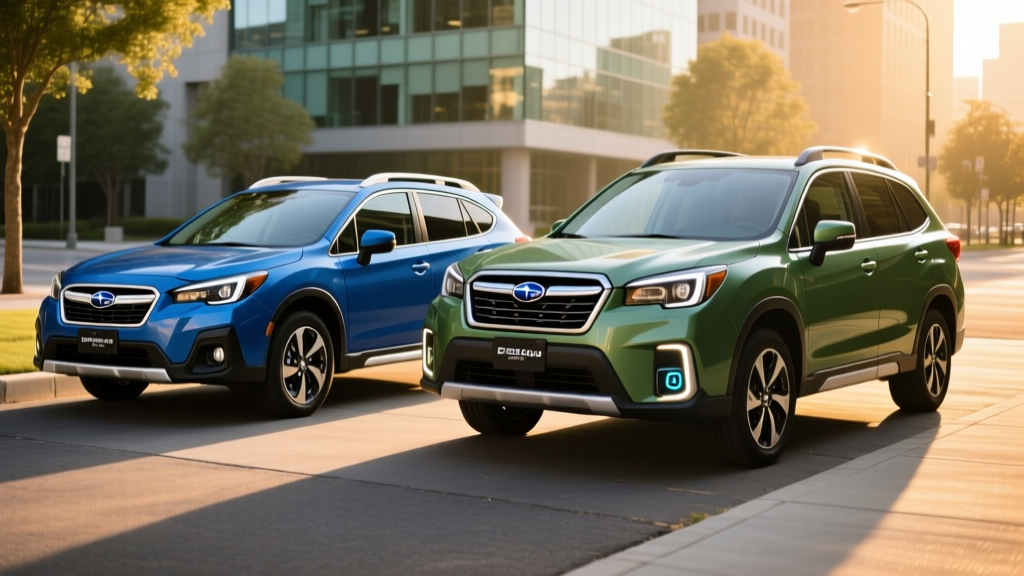
If you've been searching for a hybrid Forester, you're not alone. The Subaru Forester remains one of America's best-selling compact SUVs, and with gas prices fluctuating and hybrid demand surging, the question keeps coming up: Does Subaru make a Forester hybrid?
The short answer for the 2026 model year is no — there is no factory hybrid Subaru Forester available in the United States. However, Subaru does offer the Crosstrek Hybrid, a plug-in hybrid (PHEV) built on a closely related platform that serves as the closest electrified alternative in Subaru's lineup. In this guide, we'll break down exactly what Subaru offers, the real-world MPG and electric range you can expect, pricing, tax credit eligibility, and how to decide whether the Crosstrek Hybrid, a conventional hybrid from a competitor, or a full battery-electric vehicle (BEV) is the right fit.
Does a Hybrid Forester Exist in 2026?
The 2026 Subaru Forester (sixth generation, introduced for 2025) is sold exclusively with a 2.5-liter flat-four gasoline engine paired with a lineartronic CVT. Subaru has not announced a hybrid or plug-in hybrid variant of the current Forester for the U.S. market.
Subaru did sell a previous-generation Crosstrek Hybrid (PHEV) and has confirmed its commitment to electrification, targeting a fully electrified lineup by the mid-2030s. Industry reports suggest a hybrid Forester could arrive later this decade, potentially using Toyota-derived hybrid synergy drive components (Subaru and Toyota share significant R&D through their partnership), but as of the 2026 model year, no Forester hybrid is available or officially announced.
For buyers who want a Subaru with electrified powertrain capability today, the Crosstrek Hybrid is the primary option.
HEV vs PHEV: Understanding the Hybrid Landscape
Before evaluating Subaru's options, it's critical to understand the two hybrid categories, since they operate very differently:
Conventional Hybrid (HEV)
- How it works: A small battery (typically 1–2 kWh) and electric motor assist the gas engine. The battery recharges through regenerative braking and the engine — you never plug it in.
- Electric-only driving: Minimal (under 1 mile at low speeds).
- Examples: Toyota RAV4 Hybrid, Honda CR-V Hybrid.
- Federal tax credit: None. HEVs do not qualify for the §30D credit.
Plug-In Hybrid (PHEV)
- How it works: A larger battery (typically 10–20 kWh) and more powerful motor allow meaningful electric-only driving. You plug it in to recharge, and the gas engine kicks in when the battery depletes.
- Electric-only driving: Typically 20–45 miles depending on the model.
- Examples: Subaru Crosstrek Hybrid, Toyota RAV4 Prime.
- Federal tax credit: May qualify for up to $7,500 under IRS §30D, subject to battery sourcing, MSRP caps, and buyer income limits.
The Crosstrek Hybrid is a PHEV. If you're considering a conventional hybrid SUV from another brand (like the RAV4 Hybrid), you're looking at an HEV. The ownership experience is fundamentally different.
2026 Subaru Crosstrek Hybrid: Full Specs at a Glance
| Specification | Detail |
|---|---|
| Powertrain | 2.0L flat-4 + electric motor (PHEV) |
| Combined Horsepower | ~148 hp (net system output) |
| Battery | ~13.1 kWh lithium-ion |
| EPA Electric-Only Range | ~17 miles |
| EPA Combined Range (Electric + Gas) | ~450 miles |
| EPA Fuel Economy (Gas Mode) | ~35 MPG combined |
| MPGe (Electric + Gas) | ~90 MPGe |
| Level 2 Charging Time (0–100%) | ~5 hours at 120V / ~2 hours at 240V |
| DC Fast Charging | Not supported |
| Drivetrain | Symmetrical All-Wheel Drive (standard) |
| Base MSRP | ~$37,000 (est.) |
Note: Specifications based on available 2026 model-year data. Confirm exact figures at fueleconomy.gov before purchase.
Fuel Economy Breakdown: EPA vs Real-World MPG
| Driving Mode | City | Highway | Combined |
|---|---|---|---|
| EPA (Gas-Only Mode) | ~33 MPG | ~36 MPG | ~35 MPG |
| Real-World Expectation | 34–37 MPG | 32–35 MPG | 33–36 MPG |
| With Daily Charging (PHEV Advantage) | Minimal gas use | N/A | 90 MPGe effective |
Real-world caveat: Hybrids and PHEVs typically exceed their EPA city ratings because regenerative braking recaptures energy in stop-and-go traffic. Highway driving, however, often falls slightly short of EPA estimates due to aerodynamic drag at sustained speeds. In cold weather (below 32°F), expect a 10–20% reduction in electric-only range as the battery's usable capacity shrinks and cabin heating draws energy.
The Crosstrek Hybrid's ~17-mile electric-only range is modest compared to class leaders like the Toyota RAV4 Prime (42 miles) or the Hyundai Tucson PHEV (33 miles). If your commute is under 15 miles round-trip and you charge daily, you'll burn almost no gasoline on weekdays. For longer commutes, the electric range depletes quickly and you're operating as a conventional hybrid.
Charging the Crosstrek Hybrid: What You Need to Know
As a PHEV, the Crosstrek Hybrid benefits from regular plug-in charging but does not require it — the vehicle operates perfectly as a conventional hybrid if you never plug it in.
| Charging Level | Power | Full Charge Time | Equipment Needed |
|---|---|---|---|
| Level 1 (120V household) | ~1.4 kW | ~5 hours | Standard outlet (included cord) |
| Level 2 (240V) | ~3.3 kW | ~2 hours | Home wall charger or public station |
| DC Fast Charge | N/A | N/A | Not supported |
Most PHEV owners find Level 1 charging (a standard 120V outlet in the garage) sufficient for overnight replenishment. A full Level 2 installation is optional and costs $500–$1,500 depending on your electrical panel's proximity to the parking spot. Since the Crosstrek Hybrid's battery is only ~13 kWh, even Level 1 tops it up overnight easily.
Battery Warranty, Reliability, and Replacement Cost
Subaru PHEV Battery Warranty
Hybrid/PHEV battery coverage: 8 years / 100,000 miles (whichever comes first), covering defects and capacity loss below a specified threshold.
Powertrain warranty: 5 years / 60,000 miles.
Real-world longevity: Toyota and Subaru PHEV battery packs have demonstrated strong durability. Most hybrid batteries retain 85–90%+ capacity at the 100,000-mile mark. Out-of-warranty replacement, if needed, typically runs $3,000–$5,000 including labor for PHEV packs of this size.
Subaru's hybrid system leverages Toyota hybrid technology (the companies have a deep engineering partnership), which has one of the strongest reliability track records in the industry. The Crosstrek Hybrid's relatively small battery pack means lower thermal stress and longer cycle life compared to larger BEV packs.
For reference, IIHS has historically rated the Crosstrek platform well for safety, and Subaru's EyeSight driver-assistance system (standard on all trims) provides SAE Level 2 automation — meaning it assists with steering, braking, and acceleration but requires full driver attention at all times. This is not self-driving.
Pricing, Tax Credits, and Total Cost of Ownership
The 2026 Subaru Crosstrek Hybrid carries a base MSRP of approximately $37,000 (destination included). That represents a premium of roughly $8,000–$10,000 over a comparably equipped gas-only Crosstrek.
Federal Tax Credit Eligibility (§30D)
PHEVs with sufficient battery capacity may qualify for the federal plug-in vehicle tax credit, but eligibility under current IRS §30D rules depends on several factors:
- Battery sourcing & critical minerals: A percentage of battery components must be manufactured or assembled in North America, and critical minerals must meet sourcing thresholds. These requirements tighten annually.
- MSRP cap: SUVs must have an MSRP at or below $80,000 (the Crosstrek Hybrid qualifies easily).
- Buyer income cap: Modified adjusted gross income must not exceed $150,000 (single), $225,000 (head of household), or $300,000 (joint filers).
- Point-of-sale transfer: As of 2024, eligible buyers can transfer the credit to the dealer at purchase, reducing the upfront price rather than waiting for a tax refund.
- Credit amount: Up to $7,500, split between a battery component credit ($3,750) and a critical minerals credit ($3,750). The Crosstrek Hybrid may qualify for partial or full credit depending on current-year sourcing compliance.
5-Year Cost of Ownership Estimate
| Cost Factor | Crosstrek Hybrid (PHEV) | Gas Crosstrek |
|---|---|---|
| Purchase Price (est.) | $37,000 | $28,500 |
| Federal Tax Credit | Up to -$7,500 | $0 |
| Net Purchase Price | ~$29,500 | $28,500 |
| 5-Year Fuel/Energy Cost | ~$3,500–$5,000 | ~$8,500–$10,000 |
| 5-Year Maintenance | ~$2,500 | ~$3,000 |
| 5-Year Total (est.) | ~$35,500–$37,000 | ~$40,000–$41,500 |
With the tax credit applied, the Crosstrek Hybrid's total cost of ownership over five years can undercut the gas model, primarily due to fuel savings. Without the credit, the payback period extends significantly.
Who Should Choose the Crosstrek Hybrid vs a Full EV or Gas Car?
Choose the Crosstrek Hybrid (PHEV) if:
- You want Subaru's standard AWD and 8.7 inches of ground clearance for snow, trails, or rough roads
- Your daily commute is under 20 miles and you can charge at home overnight
- You take regular road trips where charging infrastructure is sparse
- You want to reduce gas consumption without range anxiety
Choose a Conventional Hybrid (HEV) like the Toyota RAV4 Hybrid if:
- You can't charge at home (apartment, no garage, street parking)
- You want maximum MPG without plugging in — the RAV4 Hybrid achieves ~40 MPG combined
- You want a larger vehicle with more cargo space than the Crosstrek
Choose a Full EV (BEV) like the Hyundai Ioniq 5 or Tesla Model Y if:
- You have reliable home charging and your daily driving is under 250 miles
- You want to eliminate gasoline entirely and minimize maintenance
- You want access to the full $7,500 tax credit with a larger battery
- You're ready for the charging-curve learning curve on road trips
Competitor Comparison: Crosstrek Hybrid vs RAV4 Hybrid vs RAV4 Prime
| Spec | Subaru Crosstrek Hybrid | Toyota RAV4 Hybrid | Toyota RAV4 Prime |
|---|---|---|---|
| Type | PHEV | HEV | PHEV |
| EPA Combined MPG | ~35 MPG | ~40 MPG | ~38 MPG |
| Electric-Only Range | ~17 mi | N/A | ~42 mi |
| Combined HP | ~148 hp | 219 hp | 302 hp |
| AWD | Standard | Standard | Standard |
| Base MSRP (est.) | ~$37,000 | ~$33,000 | ~$44,500 |
| Federal Tax Credit | Up to $7,500 | None | Up to $7,500 |
| Cargo (cu ft) | ~20.8 | ~37.6 | ~33.5 |
The RAV4 Hybrid offers superior fuel economy without plugging in and significantly more cargo room. The RAV4 Prime dominates in electric-only range and power but commands a premium price and faces chronic allocation shortages. The Crosstrek Hybrid's advantage is Subaru's ruggedness, standard AWD with X-Mode, and a lower entry point for the PHEV credit — but its 17-mile electric range is the weakest in this comparison.
Pros
- Standard symmetrical AWD with 8.7" ground clearance
- May qualify for up to $7,500 federal tax credit
- Subaru EyeSight safety suite standard
- Plug-in capability reduces daily fuel use for short commutes
- No range anxiety — gas engine covers long trips
Cons
- Short 17-mile electric-only range (class-low)
- No DC fast charging support
- Significantly less cargo space than RAV4 competitors
- ~$8,000–$10,000 premium over gas Crosstrek
- Modest 148 hp — underpowered for highway merging
- No hybrid Forester option exists
Frequently Asked Questions
How many MPG does the Crosstrek Hybrid get?
The 2026 Crosstrek Hybrid achieves approximately 35 MPG combined (33 city / 36 highway) when operating in gas-only mode. When factoring in electric-only driving, the combined rating reaches roughly 90 MPGe. Real-world city driving often exceeds the EPA city estimate due to regenerative braking, while highway driving at sustained speeds may fall 1–3 MPG short.
How far can the Crosstrek Hybrid go on electric only?
The EPA-rated electric-only range is approximately 17 miles. In real-world conditions, expect 14–16 miles in moderate weather and as low as 11–13 miles in cold weather (below 32°F) when cabin heating draws additional battery energy. This range covers short commutes and errands but falls short of competitors like the RAV4 Prime (42 miles).
Hybrid vs PHEV vs EV — which is right for me?
HEV (conventional hybrid): Best if you can't charge at home and want better MPG without behavior change. PHEV (plug-in hybrid): Best if you have home charging, a short commute, and want to reduce gas use while keeping road-trip flexibility. BEV (full electric): Best if you have reliable charging, want zero tailpipe emissions, lowest operating costs, and don't mind planning longer trips around DC fast chargers.
Is the Crosstrek Hybrid reliable, and what does battery replacement cost?
Subaru's PHEV system, developed with Toyota hybrid technology, has a strong reliability record. The hybrid battery is warranted for 8 years / 100,000 miles. If replacement is needed out of warranty, expect $3,000–$5,000 including labor. Most PHEV batteries retain 85–90%+ capacity well past 100,000 miles based on fleet data from similar Toyota-derived systems.
Does the Crosstrek Hybrid qualify for a tax credit?
It may qualify for up to $7,500 under the federal §30D clean vehicle credit, subject to current-year battery sourcing requirements, buyer income caps ($150K single / $300K joint), and the $80,000 SUV MSRP cap. The credit can be transferred to the dealer at point of sale to reduce the purchase price. Always verify current eligibility at IRS.gov before purchasing, as sourcing rules tighten annually.
Will Subaru make a hybrid Forester?
As of 2026, Subaru has not announced a hybrid Forester for the U.S. market. The current sixth-generation Forester is gas-only. Given Subaru's electrification targets and its deep partnership with Toyota (a hybrid technology leader), a Forester hybrid is plausible later this decade but remains unconfirmed. The Crosstrek Hybrid is currently Subaru's only electrified option.
Does the Crosstrek Hybrid need to be plugged in?
No. Like all PHEVs, the Crosstrek Hybrid operates as a conventional hybrid when the battery is depleted or if you never plug it in. However, you'll miss the fuel-cost savings and electric-only driving benefits that justify the price premium. To get the most value, plan to charge at home at least overnight.
Bottom Line
If you're searching for a hybrid Forester, the 2026 Subaru lineup doesn't offer one — yet. The Crosstrek Hybrid is the closest electrified Subaru available, and it delivers genuine PHEV benefits for short-commute drivers who can charge at home. Its standard AWD, rugged ground clearance, and potential $7,500 tax credit make it compelling for outdoors-oriented buyers in snowy climates.
However, its 17-mile electric range is the shortest among PHEV competitors, its cargo space is limited, and it lacks DC fast charging. If you need more room and better fuel economy without plugging in, the Toyota RAV4 Hybrid is the pragmatic choice. If you want maximum electric-only range and can find one in stock, the RAV4 Prime is the segment benchmark.
For buyers set on a Forester specifically, the gas-only model remains capable and efficient for its class at ~29 MPG combined. Watch for Subaru's electrification announcements — a hybrid Forester may be on the horizon, but it's not here today.