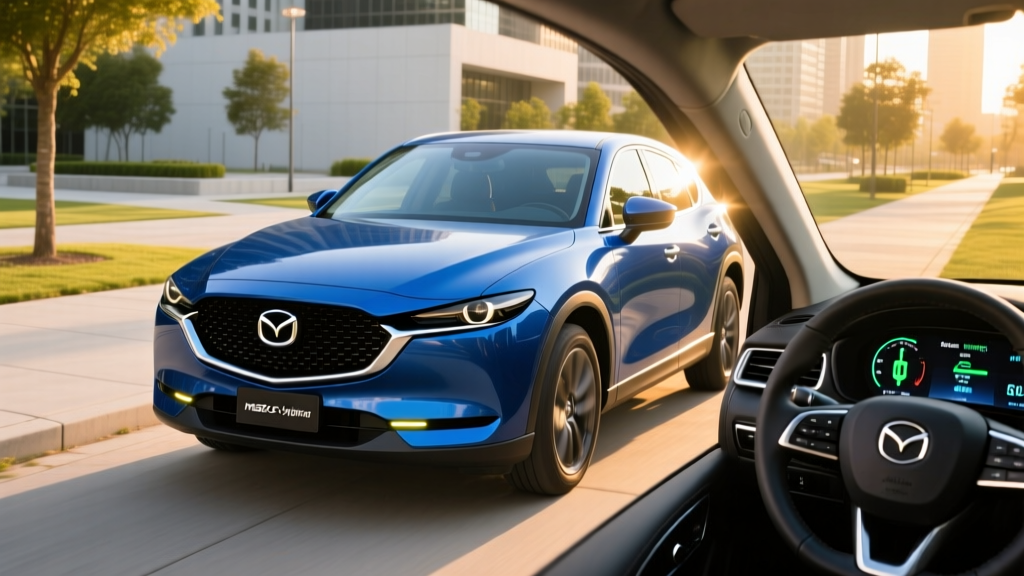
The Mazda CX-50 Hybrid pairs Mazda's rugged crossover design with Toyota's proven hybrid powertrain technology. For 2026, Mazda continues to offer the CX-50 Hybrid across three trims, giving buyers a midsize SUV that delivers strong fuel economy without the range anxiety or charging logistics of a full electric vehicle. This guide breaks down every 2026 Mazda CX-50 Hybrid trim, its EPA-rated efficiency, real-world MPG expectations, powertrain details, and whether any tax incentives apply.
HEV vs PHEV: What the CX-50 Hybrid Actually Is
Before diving into trims, it is essential to understand what you are buying. The Mazda CX-50 Hybrid is a conventional hybrid electric vehicle (HEV), not a plug-in hybrid (PHEV). That distinction matters for your daily routine and your wallet.
| Feature | HEV (CX-50 Hybrid) | PHEV (e.g., Toyota RAV4 Prime) |
|---|---|---|
| Plugs in to charge? | No — self-charging via regenerative braking and engine | Yes — plug in for electric-only driving |
| Electric-only range | ~1 mile at low speed | 35-42 miles typical |
| Battery size | ~1.6 kWh (small buffer) | 18.1 kWh usable |
| Federal tax credit | Not eligible (§30D requires plug-in) | Up to $7,500 if sourcing/income rules met |
| Home charger needed? | No | Yes, Level 2 recommended |
The CX-50 Hybrid's small battery charges automatically through regenerative braking and the gasoline engine. You never plug it in. You simply fuel up at any gas station and drive. The electric motor assists the engine during acceleration and enables brief electric-only movement at low speeds, but the system's primary benefit is dramatically improved fuel efficiency — not electric-only commuting.
2026 Mazda CX-50 Hybrid Trims and Pricing
Mazda offers the CX-50 Hybrid in three trims for the 2026 model year. All trims share the same hybrid powertrain, all-wheel drive, and EPA ratings. The differences come down to interior materials, technology features, and driver-assistance packages.
| Specification | Preferred | Premium | Premium Plus |
|---|---|---|---|
| Base MSRP | $35,395 | $38,595 | $41,795 |
| Drivetrain | AWD (standard) | AWD (standard) | AWD (standard) |
| Combined HP | 219 hp | 219 hp | 219 hp |
| EPA Combined MPG | 38 MPG | 38 MPG | 38 MPG |
| EPA City / Highway | 39 / 37 MPG | 39 / 37 MPG | 38 / 36 MPG* |
| Wheels | 17-inch alloy | 20-inch alloy | 20-inch alloy |
| Seating | SofTex synthetic leather | Leather-trimmed | Nappa leather |
| Audio | 8-speaker MAZDA CONNECT | 12-speaker Bose | 12-speaker Bose |
| Head-up display | No | Yes | Yes |
| Ventilated front seats | No | No | Yes |
*The Premium Plus trim carries a 1 MPG highway penalty due to standard 20-inch wheels and slightly heavier curb weight. EPA data sourced from fueleconomy.gov.
All prices exclude the $1,420 destination charge. Mazda does not currently offer a plug-in hybrid (PHEV) variant of the CX-50. If you need electric-only commuting capability, you would need to look at competitors like the Toyota RAV4 Prime or the Ford Escape PHEV.
Powertrain: Toyota Hybrid Muscle in a Mazda Body
The CX-50 Hybrid's powertrain is sourced directly from Toyota — specifically, the same 2.5-liter four-cylinder hybrid system found in the Toyota RAV4 Hybrid and Highlander Hybrid. This is the result of a deepening collaboration between Mazda and Toyota that includes a shared assembly plant in Huntsville, Alabama, where the CX-50 is built.
Here is the hardware breakdown:
- Engine: 2.5L naturally aspirated inline-4 (Atkinson cycle), producing 176 hp and 163 lb-ft of torque
- Front electric motor: 134 hp / 199 lb-ft
- Rear electric motor (eAWD): 54 hp / 89 lb-ft — powers the rear axle for all-wheel drive
- Combined system output: 219 hp
- Transmission: Toyota eCVT (planetary gearset, not a belt-driven CVT)
- Hybrid battery: ~1.6 kWh nickel-metal hydride (NiMH), located under the rear seat
- 0-60 mph: Approximately 7.8 seconds (per Car and Driver testing)
The eCVT is worth noting: unlike traditional belt-and-pulley CVTs that drone under acceleration, Toyota's planetary gearset eCVT is a fixed-ratio power-split device. It is one of the most reliable transmissions in the industry, with no belts, clutches, or bands to wear out.
Fuel Economy: EPA Ratings vs Real-World MPG
| Driving Condition | EPA Rating (Preferred/Premium) | EPA Rating (Premium Plus) | Real-World Expectation |
|---|---|---|---|
| City | 39 MPG | 38 MPG | 40-44 MPG (hybrids excel in stop-and-go) |
| Highway | 37 MPG | 36 MPG | 33-36 MPG (less regen benefit at steady speed) |
| Combined | 38 MPG | 38 MPG | 36-40 MPG depending on driving mix |
Hybrid vehicles typically exceed their EPA city rating in real-world driving because regenerative braking recovers more energy in stop-and-go traffic. Highway driving is where hybrids lose their advantage somewhat, since the electric motor provides less assistance at sustained high speeds and aerodynamic drag increases.
Based on aggregated owner data from Fuelly and real-world testing by automotive publications, most CX-50 Hybrid owners report combined fuel economy in the 36-40 MPG range. Drivers who do predominantly city and suburban driving frequently see 41+ MPG. Those with long, flat-highway commutes at 75+ mph should expect numbers closer to 33-35 MPG.
Cold weather reduces hybrid efficiency by roughly 5-10% due to increased engine warm-up time and reduced battery performance. In sub-freezing conditions, plan on 34-36 MPG combined rather than 38.
Battery Longevity, Warranty, and Replacement Cost
Mazda CX-50 Hybrid Battery Warranty
- Hybrid battery warranty: 8 years / 100,000 miles (10 years / 150,000 miles in CARB states including California, New York, Massachusetts, and others adopting California emissions standards)
- Powertrain warranty: 5 years / 60,000 miles
- Battery type: Nickel-metal hydride (NiMH) — proven chemistry with decades of Toyota hybrid service history
The CX-50 Hybrid's NiMH battery pack is the same chemistry Toyota has used in the Prius and RAV4 Hybrid for over two decades. These batteries have an exceptionally well-documented longevity record. Data from fleet operators and high-mileage Prius owners shows NiMH packs routinely lasting 150,000-200,000+ miles before significant degradation.
If replacement is eventually needed outside of warranty, a new OEM hybrid battery pack for this Toyota-sourced system typically costs between $2,500 and $4,000 installed at a dealership. Refurbished packs from third-party suppliers run $1,500-$2,500. Individual cell module replacement (only the degraded cells) can bring costs down to $800-$1,500 at independent hybrid specialists.
This is not a cost unique to Mazda — it applies to any Toyota-based hybrid system, and the long track record provides genuine confidence. The IIHS has evaluated the CX-50 for safety ratings, adding another layer of ownership assurance.
Tax Credits and Incentives: What You Actually Qualify For
Here is the straightforward answer: the Mazda CX-50 Hybrid does not qualify for the federal §30D clean vehicle tax credit. That credit, which offers up to $7,500, applies only to plug-in electric vehicles (BEVs and PHEVs) with a minimum battery capacity of 7 kWh. The CX-50 Hybrid's ~1.6 kWh battery falls far short of this threshold.
The IRS specifically defines qualifying vehicles under IRS §30D as plug-in vehicles. Conventional hybrids like the CX-50 Hybrid, Toyota RAV4 Hybrid, and Honda CR-V Hybrid are excluded.
However, some states and local utilities offer smaller incentives for hybrid purchases:
- State hybrid rebates: A handful of states offer modest rebates ($500-$1,500) for HEVs that meet certain emissions standards. Check your state energy office or department of environmental quality.
- Utility company incentives: Some municipal utilities offer rebates for purchasing any high-efficiency vehicle, though these are more commonly targeted at EVs and PHEVs.
- Employer programs: A growing number of employers offer commuter benefits or green vehicle stipends that may apply to hybrids.
For a comprehensive check on state and local incentives, the Alternative Fuels Data Center maintains a searchable database of current programs by zip code.
Who Should Buy the CX-50 Hybrid vs a Full EV or Gas SUV
Choose the CX-50 Hybrid if:
- You cannot install a home Level 2 charger (apartment, condo, street parking)
- You want 38+ MPG without changing any fueling habits
- You frequently take long road trips and don't want to plan around charging stops
- You live in an area with limited public DC fast-charging infrastructure
- You want Toyota hybrid reliability with Mazda's more engaging driving dynamics and premium interior
Choose a PHEV (like the RAV4 Prime) if:
- You can charge at home and your daily commute is under 40 miles
- You want electric-only weekday driving with gas-engine road trip flexibility
- You want to qualify for the $7,500 federal tax credit (if income and sourcing rules are met)
Choose a full EV (like the Tesla Model Y or Hyundai Ioniq 5) if:
- You have reliable home charging and want the lowest per-mile fuel cost
- You want zero tailpipe emissions and minimal drivetrain maintenance
- Your daily driving is under 250 miles and you can plan road-trip charging
The CX-50 Hybrid occupies a specific and practical niche: buyers who want substantially better fuel economy than a gas-only SUV but cannot or do not want to deal with plug-in charging. It is the "set it and forget it" efficiency play.
Pros
- 38 MPG combined — exceptional for an AWD midsize SUV
- Toyota-sourced hybrid system with proven 200,000+ mile longevity
- Standard AWD with dedicated rear electric motor
- No charging infrastructure required
- Strong resale value (Toyota hybrid reputation carries over)
- Premium interior on higher trims rivals luxury competitors
Cons
- No PHEV option — cannot drive on electric power alone for commutes
- No federal tax credit eligibility
- 219 hp is adequate but not quick for a vehicle this size
- Cargo space slightly reduced vs gas CX-50 (battery under rear seat)
- eCVT drone under hard acceleration (common to all power-split hybrids)
- Premium Plus trim with 20-inch wheels sacrifices 1 MPG highway
Frequently Asked Questions
How many MPG does the Mazda CX-50 Hybrid get?
The EPA rates the 2026 CX-50 Hybrid Preferred and Premium trims at 39 city / 37 highway / 38 combined MPG. The Premium Plus trim is rated at 38 city / 36 highway / 38 combined. Real-world owners typically see 36-40 MPG combined, with city-heavy drivers often exceeding 40 MPG.
Does the CX-50 Hybrid need to be plugged in?
No. The CX-50 Hybrid is a conventional HEV. Its small battery recharges through regenerative braking and the gasoline engine. You fuel it at any gas station like a regular vehicle.
Is there a plug-in hybrid (PHEV) version of the CX-50?
Not for the 2026 model year. Mazda has not announced a CX-50 PHEV. If you want a plug-in hybrid with similar dimensions and Toyota hybrid technology, the Toyota RAV4 Prime (42 miles electric-only, up to 94 MPGe) is the closest alternative.
Is the Mazda CX-50 Hybrid reliable?
The CX-50 Hybrid uses Toyota's fourth-generation hybrid system, which has been in production since 2018 across millions of vehicles (RAV4 Hybrid, Camry Hybrid, Highlander Hybrid). This system has one of the strongest reliability records in the automotive industry. The eCVT transmission has no wear-prone friction components. Mazda backs the hybrid battery with an 8-year/100,000-mile warranty (10 years/150,000 miles in CARB states).
What does a CX-50 Hybrid battery replacement cost?
If needed outside of warranty, a new OEM hybrid battery pack costs approximately $2,500-$4,000 installed. Refurbished packs run $1,500-$2,500. Given the proven longevity of Toyota NiMH packs (commonly 150,000-200,000+ miles), most original owners will never need a replacement.
Does the CX-50 Hybrid qualify for any tax credit?
The CX-50 Hybrid does not qualify for the federal §30D clean vehicle credit, which requires plug-in capability and a minimum 7 kWh battery. Some state or utility incentives for high-efficiency vehicles may apply — check the Alternative Fuels Data Center for programs in your area.
How does the CX-50 Hybrid compare to the gas-only CX-50?
The gas-only CX-50 with the 2.5L turbo engine produces up to 256 hp but is rated at just 25 MPG combined. The hybrid trades some peak power (219 hp) for a 52% improvement in fuel economy (38 vs 25 MPG combined). Over 15,000 miles per year at $3.50/gallon, that saves approximately $1,500 annually in fuel costs — enough to offset the hybrid's price premium within 2-3 years.