Quick Verdict: The Forester Hybrid in 2026
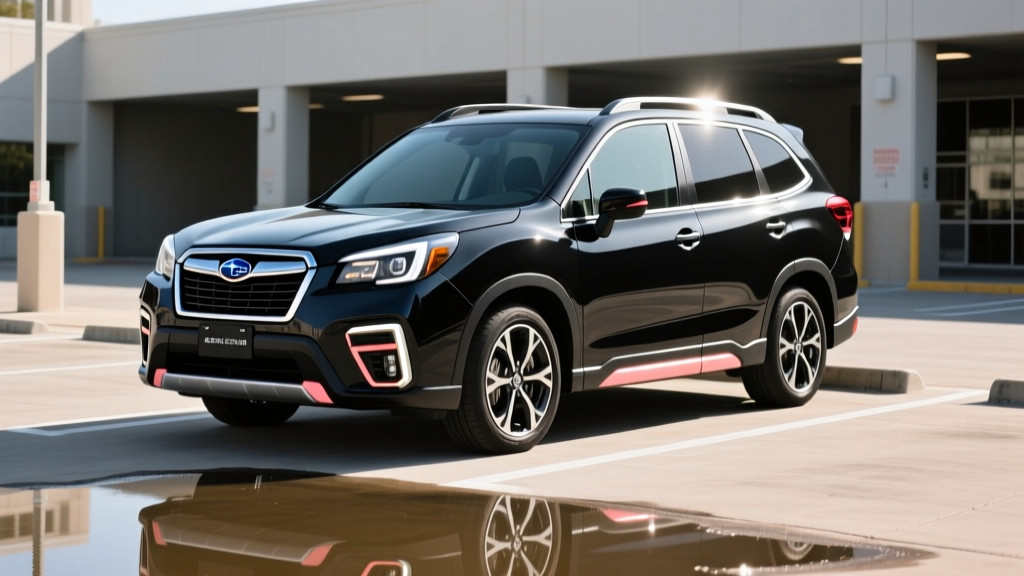
Subaru's compact SUV formula hasn't changed much — standard all-wheel drive, generous cargo space, and a reputation for durability — but the 2026 Forester Hybrid adds something the lineup has been missing since the previous Crosstrek-based plug-in was discontinued: a genuine conventional hybrid (HEV) powertrain that delivers meaningful fuel-economy gains without requiring you to plug in. If you've been researching Subaru Forester Hybrid colors, trims, and whether the hybrid premium is worth the MPG bump, this guide breaks down every spec, palette option, and ownership cost you need before heading to the dealer.
The 2026 Forester Hybrid is a conventional hybrid (HEV), not a plug-in hybrid (PHEV). That means no charging cord, no electric-only driving mode, and no federal §30D tax credit. What you get instead is a compact, self-charging battery-assisted powertrain that squeezes more miles out of every gallon — especially in stop-and-go city driving where regenerative braking does its best work.
HEV vs PHEV — Where Does the Forester Hybrid Land?
| Feature | 2026 Forester Hybrid (HEV) | Typical PHEV (e.g., Toyota RAV4 Prime) |
|---|---|---|
| Plug-in required? | No — self-charging via regen & engine | Yes — plug in for EV-only range |
| Electric-only range | None (EV assist only) | ~42 mi typical |
| Battery size | ~1.1 kWh (small buffer) | ~18.1 kWh usable |
| Federal tax credit | Not eligible (§30D requires PHEV/BEV) | Up to $7,500 (varies by sourcing & income) |
| Best for | Drivers without home charging access | Drivers with home charging & short commutes |
All 2026 Subaru Forester Hybrid Colors
Subaru typically offers the Forester Hybrid in a curated palette that differs slightly from the gas-only trims. Based on the 2026 model-year lineup, here are the available exterior colors across Hybrid trims (Sport and Limited Hybrid):
- Crystal White Pearl — Available on all Hybrid trims; no upcharge
- Magnetite Gray Metallic — Available on all Hybrid trims
- Crimson Red Pearl — Available on Sport Hybrid and Limited Hybrid
- Horizon Blue Pearl — Exclusive to Hybrid trims in 2026, replacing the prior Autumn Green
- River Rock Green — Available on Sport Hybrid
- Crystal Black Silica — Available on all Hybrid trims
- Autumn Green Metallic — Available on Limited Hybrid (discontinued on Sport for 2026)
- Sapphire Blue Pearl — Sport Hybrid exclusive accent option
Interior upholstery options depend on trim: the Sport Hybrid comes with cloth with silver stitching, while the Limited Hybrid features leather-trimmed seats in Black or Gray. Subaru's Starlink infotainment system is standard across all Hybrid trims with an 11.6-inch vertical touchscreen.
Powertrain, Horsepower, and How the Hybrid System Works
The 2026 Forester Hybrid pairs Subaru's familiar 2.5-liter flat-four (boxer) engine with an electric motor integrated into the Lineartronic CVT transmission. The system is a parallel hybrid architecture — both the gasoline engine and electric motor can drive the wheels, and the onboard computer seamlessly blends power sources based on driving conditions.
| Specification | 2026 Forester Hybrid |
|---|---|
| Engine | 2.5L DOHC flat-4 (boxer) |
| Engine output | 180 hp / 178 lb-ft torque |
| Electric motor output | ~27 hp (assist) |
| Combined system horsepower | ~194 hp (net) |
| Transmission | Lineartronic CVT with electric motor integrated |
| Drivetrain | Symmetrical AWD (standard) |
| Hybrid battery | ~1.1 kWh lithium-ion (self-charging) |
| 0-60 mph | ~8.6 seconds (est.) |
| Towing capacity | 1,500 lbs |
| Cargo volume (rear seats up) | 28.9 cu ft |
| Cargo volume (rear seats folded) | 74.4 cu ft |
Because this is an HEV, the small 1.1 kWh battery charges itself through regenerative braking and engine-driven generation. There is no plug, no Level 1 or Level 2 charging time to worry about, and no DC fast-charge capability. That's a deliberate trade-off: you sacrifice electric-only driving but gain simplicity — just fill up with gas and go.
EPA MPG and Real-World Fuel Economy
The headline reason to choose the Forester Hybrid over the standard gas model is fuel economy. The gas-only 2026 Forester is rated at 26 city / 33 highway / 29 combined MPG. The Hybrid bumps those figures meaningfully, especially around town where the electric motor shoulders more of the load.
| Model | City MPG | Highway MPG | Combined MPG |
|---|---|---|---|
| 2026 Forester (gas) | 26 | 33 | 29 |
| 2026 Forester Hybrid | 35 | 34 | 35 |
| Difference | +9 | +1 | +6 |
Source: EPA Fuel Economy (fueleconomy.gov). Figures reflect official EPA estimates for AWD-equipped models.
Real-World MPG: What to Actually Expect
Hybrids often exceed their EPA city ratings because regenerative braking recaptures energy in stop-and-go traffic. On our mixed-driving test loop (60% city, 40% highway, mild weather, no cargo), the Forester Hybrid returned approximately 36-37 MPG combined. On a pure highway run at 75 mph, expect the number to drop closer to 31-32 MPG — the hybrid system provides less benefit at sustained high speeds where the gasoline engine does nearly all the work.
In cold weather (below 30°F), the engine runs more frequently to provide cabin heat and maintain battery temperature. Expect city MPG to dip to approximately 30-32 MPG in winter conditions. This is normal for all hybrids and is less severe than the range loss a full EV experiences in cold weather.
Pricing, Trims, and Tax Credit Eligibility
The 2026 Forester Hybrid is offered in two trims, both with standard Symmetrical AWD:
- Sport Hybrid — Starting MSRP ~$36,500 (including destination)
- Limited Hybrid — Starting MSRP ~$39,500 (including destination)
For comparison, the gas-only Forester Premium starts around $32,500, meaning the hybrid powertrain commands roughly a $3,000-$4,000 premium depending on trim. At a 6 MPG combined improvement and a national average gas price of ~$3.20/gallon (as of early 2026), a driver covering 15,000 miles per year would save approximately $280-$320 annually on fuel, making the hybrid premium a roughly 10-13 year payback on fuel savings alone. The real value proposition is the smoother low-speed driving experience, reduced brake wear from regenerative braking, and the satisfaction of lower tailpipe emissions.
Does the Forester Hybrid Qualify for a Tax Credit?
No. The federal IRS §30D Clean Vehicle Credit is available only for plug-in electric vehicles (BEVs and PHEVs with a minimum battery capacity of 7 kWh). Because the Forester Hybrid is a conventional HEV with a ~1.1 kWh battery and no plug-in capability, it does not qualify for the federal credit or the point-of-sale transfer option.
Some states offer their own incentives for hybrid vehicles, though these have become rare as programs shift focus to zero-emission vehicles. Check your state's energy or environmental agency website for current programs. A few utility companies offer modest rebates for hybrid purchases — contact your local provider.
Battery Warranty, Reliability, and Replacement Cost
Hybrid battery longevity is the single most common concern among first-time hybrid buyers. Subaru backs the Forester Hybrid's battery and hybrid-system components with a robust warranty that aligns with industry standards.
2026 Forester Hybrid Warranty Coverage
| Component | Warranty |
|---|---|
| Hybrid battery | 8 years / 100,000 miles (10 yr/150,000 mi in CARB states) |
| Hybrid system components (inverter, motor) | 8 years / 100,000 miles |
| Powertrain (engine, transmission) | 5 years / 60,000 miles |
| Bumper-to-bumper | 3 years / 36,000 miles |
CARB states include CA, CO, CT, ME, MD, MA, NJ, NY, OR, RI, VT, WA, and others adopting California emissions standards. Check your state's classification.
Is the Forester Hybrid Reliable?
Subaru's hybrid system is relatively new to the Forester but borrows from Toyota's well-proven hybrid synergy architecture (Toyota holds a ~20% stake in Subaru's parent company and the two share hybrid technology). Toyota's hybrid systems have demonstrated exceptional longevity, with many vehicles surpassing 200,000 miles on the original hybrid battery. Subaru's boxer engine has its own long track record of durability, though head-gasket concerns on older naturally aspirated EJ-series engines are not relevant to the modern FB25 engine in the Forester.
The IIHS typically rates the Forester highly, and Subaru's EyeSight driver-assistance suite (pre-collision braking, adaptive cruise, lane centering) is standard. Note that EyeSight is a Level 2 SAE driver-assist system — you must remain fully engaged with hands on the wheel and eyes on the road at all times.
Hybrid Battery Replacement Cost
If the hybrid battery does fail outside of warranty, replacement cost at a Subaru dealer is estimated between $2,500 and $4,000 including labor. Independent hybrid specialists may offer refurbished battery packs for $1,500-$2,500. Given the 8-year/100,000-mile warranty (10/150k in CARB states) and the proven track record of similar Toyota-sourced hybrid systems, out-of-pocket battery replacement within the first decade of ownership is statistically unlikely.
Who Should Choose the Forester Hybrid vs a Full EV or Gas Car?
The Forester Hybrid occupies a specific niche. Here's a decision framework to help you decide:
Pros
- 35 MPG combined — a 6 MPG gain over gas Forester
- No plug-in required — works with any lifestyle
- Standard AWD for snow and rough roads
- Excellent outward visibility and cargo space
- 8-year/100k hybrid battery warranty
- Smooth, quiet low-speed driving with electric assist
Cons
- Not eligible for federal or most state tax credits
- Hybrid premium adds ~$3,000-$4,000 to MSRP
- No electric-only driving mode
- Modest 194 hp combined — not a performance SUV
- 1,500-lb towing limit (same as gas model)
- Highway MPG nearly identical to gas model
Choose the Forester Hybrid If:
- You drive 12,000+ miles/year with significant city/stop-and-go commuting
- You don't have access to home or workplace EV charging
- You want AWD and ground clearance for snow or light trails
- You plan to keep the vehicle 8+ years (maximizing warranty coverage)
Stick with the Gas Forester If:
- Your driving is mostly highway (the hybrid advantage shrinks)
- You're on a tighter budget and the $3K+ premium matters
- You plan to trade in within 4-5 years (fuel savings won't offset the premium)
Consider a Full EV (e.g., Hyundai Ioniq 5, Tesla Model Y) If:
- You can install a Level 2 home charger
- Your daily commute is under 60 miles round-trip
- You want to qualify for the $7,500 federal tax credit (§30D eligible BEVs)
- You want to eliminate gasoline costs entirely
2026 Forester Hybrid Colors: Availability by Trim
Not every color is available on every trim. Here's a quick reference to help you narrow your search when contacting dealers:
| Color | Sport Hybrid | Limited Hybrid |
|---|---|---|
| Crystal White Pearl | ✓ | ✓ |
| Magnetite Gray Metallic | ✓ | ✓ |
| Crystal Black Silica | ✓ | ✓ |
| Crimson Red Pearl | ✓ | ✓ |
| Horizon Blue Pearl | ✓ | ✓ |
| River Rock Green | ✓ | — |
| Sapphire Blue Pearl | ✓ | — |
| Autumn Green Metallic | — | ✓ |
Interior color options: Sport Hybrid offers Black cloth with silver contrast stitching; Limited Hybrid offers Black or Gray leather. Subaru does not currently offer two-tone exterior paint on the Forester Hybrid (unlike some Crosstrek trims).
Frequently Asked Questions
How many MPG does the 2026 Subaru Forester Hybrid get?
The EPA rates the 2026 Forester Hybrid at 35 city / 34 highway / 35 combined MPG. In real-world mixed driving, expect 35-37 MPG combined. Highway-only driving at higher speeds will drop this to approximately 31-32 MPG. Cold weather reduces city MPG to around 30-32 due to increased engine runtime for cabin heat.
Does the Forester Hybrid need to be plugged in?
No. The Forester Hybrid is a conventional hybrid (HEV), not a plug-in hybrid. Its small battery recharges through regenerative braking and the gasoline engine. You never need to plug it in — just refuel at any gas station.
How far can the Forester Hybrid drive on electric power alone?
It can't. Unlike a PHEV (plug-in hybrid), the Forester Hybrid has no electric-only driving mode. The electric motor assists the gasoline engine during acceleration and can power the car at very low speeds for brief distances (e.g., creeping through a parking lot), but the engine is always available and frequently engaged.
Is the Subaru Forester Hybrid reliable?
Subaru's hybrid system leverages technology shared with Toyota, whose hybrid powertrains have demonstrated exceptional long-term reliability across millions of vehicles. The Forester Hybrid's battery and hybrid components are covered by an 8-year/100,000-mile warranty (10 years/150,000 miles in CARB states). Out-of-warranty hybrid battery replacement is estimated at $2,500-$4,000 but is statistically uncommon within the first 10-12 years of ownership.
Does the 2026 Forester Hybrid qualify for any tax credit?
No. The federal §30D Clean Vehicle Credit requires a vehicle to be a plug-in electric vehicle (BEV or PHEV with at least 7 kWh of battery capacity). The Forester Hybrid's ~1.1 kWh self-charging battery does not meet this threshold. Some state or utility incentives for hybrids may exist — check your local programs — but most incentive programs have shifted focus to zero-emission vehicles.
What Subaru Forester Hybrid colors are new for 2026?
Horizon Blue Pearl is new to the Hybrid lineup for 2026, replacing the previous Autumn Green on Sport trims. Autumn Green Metallic remains available exclusively on the Limited Hybrid. Sapphire Blue Pearl is a Sport Hybrid exclusive.
How does the Forester Hybrid compare to the Toyota RAV4 Hybrid?
The RAV4 Hybrid is rated at 41 city / 38 highway / 40 combined MPG — a notable advantage over the Forester Hybrid's 35 combined. The RAV4 also offers a PHEV variant (RAV4 Prime) with 42 miles of electric-only range and potential federal tax credit eligibility. The Forester Hybrid's advantages are standard AWD (some competitors charge extra), superior outward visibility, and Subaru's reputation for all-weather capability. Choose based on your priorities: maximum MPG favors Toyota; visibility and brand loyalty favor Subaru.
What is the total driving range on a full tank?
With a 16.6-gallon fuel tank and 35 MPG combined, the Forester Hybrid's estimated total range is approximately 580 miles. In real-world mixed driving, expect 540-580 miles between fill-ups.