Quick Verdict: The 2026 Subaru Crosstrek Hybrid
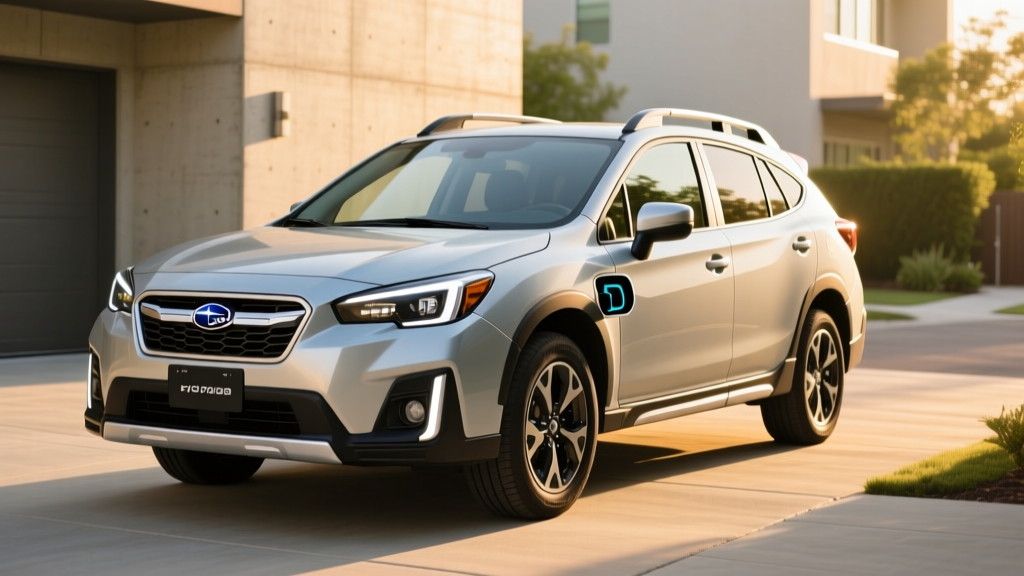
The 2026 Subaru Crosstrek Hybrid arrives as a conventional hybrid (HEV) built around Subaru's e-Boxer mild-hybrid system. It pairs a 2.0-liter flat-four with an electric motor integrated into the Lineartronic CVT, delivering all-wheel drive as standard and a modest fuel-economy bump over the gas-only Crosstrek. For buyers who want Subaru's trail-ready capability without the complexity of plug-in charging or the range concerns of a full EV, this is a pragmatic middle ground — but the efficiency gains are incremental, not transformative.
Subaru previously offered a Crosstrek Plug-In Hybrid (PHEV) through the 2023 model year, based on Toyota's RAV4 Prime-derived powertrain. As of the 2026 model year, Subaru has not reintroduced a PHEV variant, focusing instead on the e-Boxer HEV system across the Crosstrek lineup. If plug-in electric range is a priority, you'll need to look at competitors or wait for Subaru's next-generation PHEV plans.
A conventional hybrid (HEV) like the 2026 Crosstrek Hybrid uses a small battery (typically under 2 kWh) charged by regenerative braking and the engine. You never plug it in. A plug-in hybrid (PHEV) carries a larger battery (typically 10–20 kWh), can be plugged into a wall outlet or charger, and offers 20–40 miles of electric-only driving before the gas engine kicks in. The 2026 Crosstrek is an HEV only.
2026 Subaru Crosstrek Hybrid: Core Specs at a Glance
| Spec | 2026 Crosstrek Hybrid (e-Boxer HEV) |
|---|---|
| Powertrain | 2.0L Boxer-4 + integrated electric motor (e-Boxer) |
| Combined Horsepower | ~165 hp (est. combined system output) |
| Drivetrain | Symmetrical AWD (standard) |
| Transmission | Lineartronic CVT |
| Hybrid Battery | ~1.1 kWh lithium-ion (mild-hybrid assist) |
| EPA MPG (City / Hwy / Combined) | 35 / 34 / 35 MPG (est.) |
| Electric-Only Range | N/A (HEV — no plug-in capability) |
| Total Range | ~490 miles (13.2-gal tank) |
| 0–60 mph | ~9.0 seconds (est.) |
| Ground Clearance | 8.7 inches |
| Starting MSRP | ~$30,500 (est. Hybrid Premium trim) |
| Federal Tax Credit (§30D) | Not eligible (HEV, not a PHEV or BEV) |
| Hybrid Battery Warranty | 8 years / 100,000 miles |
Note: As of publication, Subaru has not released final EPA-certified figures for the 2026 Crosstrek Hybrid. Estimates above are based on the e-Boxer system's performance in prior model years and global-market data. Check fueleconomy.gov for certified numbers once available.
Fuel Economy: EPA Estimates vs. Real-World MPG
The 2026 Crosstrek Hybrid's e-Boxer system is designed for efficiency in stop-and-go driving, where the electric motor can propel the car at low speeds and assist during acceleration. The estimated EPA combined rating of 35 MPG represents a roughly 5–7 MPG improvement over the standard 2.0L gas Crosstrek (rated at 29 MPG combined).
| Driving Scenario | EPA Estimate | Real-World Expectation |
|---|---|---|
| City | 35 MPG | 34–37 MPG (hybrids often exceed EPA in city) |
| Highway | 34 MPG | 30–33 MPG (less regen benefit at steady speed) |
| Combined | 35 MPG | 32–35 MPG |
| Cold Weather (below 30°F) | — | 28–31 MPG (engine runs more for cabin heat) |
Hybrid systems shine in urban environments where regenerative braking recaptures energy at every stoplight. On the highway, the gas engine does most of the work, so the hybrid advantage shrinks. In cold weather, expect a 10–15% efficiency drop — the engine must run more frequently to provide cabin heating and maintain battery temperature, reducing the electric motor's contribution.
The e-Boxer Powertrain: How Subaru's Hybrid System Works
Subaru's e-Boxer system integrates a compact electric motor directly into the Lineartronic CVT housing. Unlike Toyota's Hybrid Synergy Drive (which uses a planetary gearset to blend engine and motor power), the e-Boxer is a simpler parallel-hybrid design:
- 2.0L Boxer-4 engine: Produces approximately 152 hp on its own, mounted low in the chassis for Subaru's signature center-of-gravity advantage.
- Integrated electric motor: Adds roughly 13 hp of assist, primarily during initial acceleration and low-speed maneuvering.
- ~1.1 kWh lithium-ion battery: Mounted under the cargo floor, small enough to avoid eating into cargo volume. Recharged exclusively through regenerative braking and engine power — no plug-in port.
- Symmetrical AWD: Mechanical all-wheel drive remains fully functional, with the hybrid system adding negligible weight to the drivetrain.
The motor can move the Crosstrek under electric power alone at very low speeds (parking lots, traffic creep), but this is measured in hundreds of feet, not miles. This is a mild hybrid in practical terms — the electric motor assists the engine rather than replacing it for meaningful distances.
Pricing, Trims, and Tax Credit Eligibility
The 2026 Crosstrek Hybrid is expected to slot between the Premium and Limited trims, with an estimated starting MSRP around $30,500. A fully loaded Hybrid Limited could approach $35,000 with options.
Federal tax credit status: The 2026 Crosstrek Hybrid does not qualify for the IRS §30D Clean Vehicle Credit. Under current rules, only plug-in electric vehicles (PHEVs and BEVs) with sufficient battery capacity (at least 7 kWh for PHEVs) are eligible. Conventional hybrids like the e-Boxer are excluded regardless of price or buyer income. See the IRS §30D guidelines for full eligibility details.
Battery Warranty, Reliability, and Replacement Cost
Hybrid battery longevity is consistently one of the top concerns for first-time hybrid buyers. Here's what Subaru provides:
Because the e-Boxer's battery is small (~1.1 kWh) and operates within a narrow state-of-charge window (never fully charged or fully depleted), degradation is minimal compared to larger PHEV or BEV packs. Toyota and Subaru hybrid systems have demonstrated strong long-term reliability — many first-generation hybrid batteries exceed 150,000 miles without replacement.
If replacement is needed out of warranty: A Crosstrek Hybrid battery replacement is estimated at $2,000–$3,500 (parts and labor) at a Subaru dealer, significantly less than the $8,000–$15,000+ replacement cost for a full BEV traction battery. The small battery size keeps this cost manageable.
The Crosstrek line as a whole has earned strong reliability marks. Subaru's AWD system and boxer engine are proven, and the e-Boxer's simplicity (no high-voltage DC fast-charging system, no large liquid-cooled pack) means fewer failure points. The IIHS typically rates the Crosstrek as a Top Safety Pick when equipped with EyeSight driver assistance.
Crosstrek Hybrid vs. PHEV vs. Full EV: Which Fits You?
The right electrified vehicle depends on your driving patterns, charging access, and budget. Here's a decision framework:
- You lack access to home or workplace charging (apartment, street parking)
- You want better fuel economy without changing your refueling habits
- You regularly drive on rough or unpaved roads and need AWD + ground clearance
- You want a lower purchase price than a PHEV or BEV
- Your typical trip is under 50 miles but includes highway segments
- You can charge at home (Level 1 or Level 2) and want 25–42 miles of electric-only commuting
- You want to qualify for the §30D federal tax credit (up to $7,500, subject to income, MSRP, and battery-sourcing rules)
- You take longer road trips on weekends where the gas engine provides unlimited range
- You want to drive mostly on electricity during the week but don't want range anxiety on trips
- You have reliable home Level 2 charging
- Your daily driving is under 250 miles and you can plan around DC fast charging on road trips
- You want the lowest per-mile fuel cost and near-zero drivetrain maintenance
- You want maximum federal and state incentives
- You're ready to adapt to charging logistics on longer trips
The Crosstrek Hybrid occupies a specific niche: it's the right choice for drivers who want Subaru's all-weather capability and a meaningful MPG bump without altering their lifestyle. If you have a garage and can install a Level 2 charger, a PHEV will save you more on fuel and may net you a tax credit that the Crosstrek HEV cannot offer.
Pros and Cons
- Standard AWD with 8.7" ground clearance — best-in-class for hybrid crossovers
- No plug-in charging required — works with existing gas-station habits
- ~5–7 MPG improvement over gas Crosstrek in mixed driving
- Minimal cargo-space loss (small battery under floor)
- Proven Subaru reliability and strong hybrid battery warranty
- EyeSight safety suite standard
- No electric-only driving range — this is a mild hybrid, not a PHEV
- No federal tax credit eligibility
- Modest power (~165 hp combined) — not a quick vehicle
- Highway MPG advantage is slim vs. gas model
- CVT drone under hard acceleration
- PHEV variant not available for 2026
Frequently Asked Questions
How many MPG does the 2026 Subaru Crosstrek Hybrid get?
The estimated EPA rating is 35 MPG combined (35 city / 34 highway). In real-world city driving with frequent stops, owners may see 34–37 MPG thanks to regenerative braking. Highway driving typically yields 30–33 MPG, and cold weather can drop combined figures to 28–31 MPG.
Can the 2026 Crosstrek Hybrid drive on electric power only?
Only at very low speeds for very short distances (parking lots, traffic crawl). The e-Boxer system's ~1.1 kWh battery and small motor are designed for engine assist, not electric-only propulsion. If you need 20+ miles of electric-only commuting, you need a PHEV, not this HEV.
Does the 2026 Crosstrek Hybrid qualify for any tax credit?
No. The federal §30D Clean Vehicle Credit requires a plug-in vehicle with at least 7 kWh of battery capacity. The Crosstrek Hybrid is a conventional HEV with a ~1.1 kWh battery and no plug-in port. Some states may offer minor hybrid incentives, but these are increasingly uncommon. Always verify current rules on irs.gov and your state's official energy site.
Is the Subaru Crosstrek Hybrid reliable, and what does battery replacement cost?
Subaru's e-Boxer system is mechanically simple, and the hybrid battery is covered by an 8-year/100,000-mile warranty (10 years/150,000 miles in CARB states). The small battery size means replacement cost is estimated at $2,000–$3,500 if needed out of warranty — far less than a BEV battery. Subaru's hybrid systems have shown strong long-term durability in real-world use.
Will Subaru offer a Crosstrek PHEV for 2026?
As of publication, Subaru has not announced a 2026 Crosstrek PHEV. The previous Crosstrek PHEV (based on Toyota's RAV4 Prime powertrain) was discontinued after the 2023 model year. Subaru has signaled future PHEV and BEV expansion through partnerships with Toyota, but no specific Crosstrek PHEV timeline has been confirmed. If a PHEV is essential, consider the Toyota RAV4 Prime or Prius Prime as alternatives.
How does the Crosstrek Hybrid compare to the Toyota RAV4 Hybrid?
The RAV4 Hybrid offers more power (219 hp combined), higher EPA MPG (~39–41 combined), and a larger cargo area. However, the Crosstrek Hybrid provides more ground clearance (8.7" vs. 6.3"), standard X-MODE for off-road traction, and a lower starting price. If off-pavement capability matters, the Crosstrek wins. If maximum fuel economy and interior space are priorities, the RAV4 Hybrid is the stronger pick.