Quick Verdict: The Efficiency Benchmark
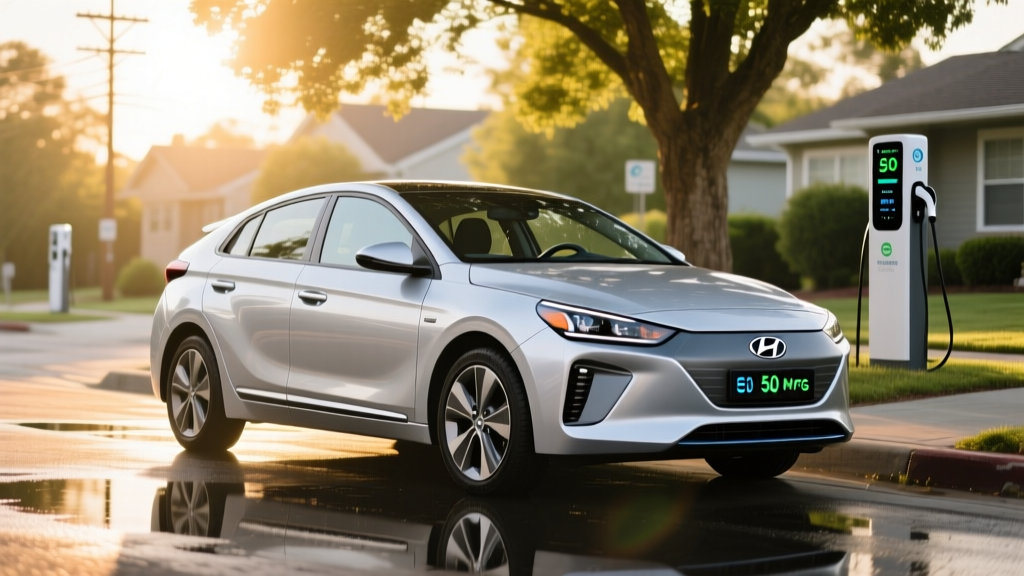
The 2020 Hyundai Ioniq Hybrid remains one of the most fuel-efficient vehicles ever sold in the United States, with an EPA-estimated 58 MPG combined in its Blue trim. Even in 2026, as the used-EV and hybrid market matures, the Ioniq Hybrid holds up as a pragmatic, data-backed choice for buyers who want electrified efficiency without plugging in. Hyundai discontinued the Ioniq nameplate after the 2022 model year, replacing it with the Elantra Hybrid and the Ioniq 5 EV, but the 2020 model year represents a sweet spot: it received a meaningful refresh with updated styling, a larger infotainment screen, and improved safety tech, while retaining the proven 1.6-liter hybrid powertrain that delivers class-leading economy.
This guide covers everything a prospective used buyer needs to know — from exact EPA figures and real-world MPG data to battery warranty coverage, ownership costs, and how the Ioniq Hybrid stacks up against plug-in hybrids and full battery-electric vehicles.
HEV vs PHEV: Understanding What the 2020 Ioniq Hybrid Is (and Isn't)
Before diving into specs, it's essential to clarify the Ioniq lineup, because Hyundai sold three distinct electrified versions under the Ioniq badge for 2020:
| Variant | Type | Needs to Plug In? | EPA Combined | Electric-Only Range |
|---|---|---|---|---|
| Ioniq Hybrid | Conventional HEV | No — charges via regen & engine | 55–58 MPG | N/A (motor assists engine) |
| Ioniq Plug-In Hybrid | PHEV | Yes — 120V or 240V outlet | 52 MPG (gas) / 119 MPGe | 29 miles |
| Ioniq Electric | BEV | Yes — Level 2 or DC fast charge | 136 MPGe | 170 miles (full electric) |
This article focuses on the conventional Ioniq Hybrid (HEV). It does not plug in. It has no electric-only driving mode of meaningful distance. The electric motor assists the gasoline engine and enables engine-off coasting at low speeds, but you fuel it exclusively at a gas station. If you're looking for plug-in capability, the Ioniq PHEV is a separate model with a larger 8.9 kWh battery and a 29-mile electric-only range — we address it in the comparison sections below.
Fuel Economy: EPA Ratings and Real-World MPG
The 2020 Ioniq Hybrid comes in three trims, and fuel economy varies by trim due to wheel size, weight, and equipment differences:
| Trim | City MPG | Highway MPG | Combined MPG | Annual Fuel Cost* |
|---|---|---|---|---|
| Blue | 58 | 60 | 59 | ~$750 |
| SE / SEL | 54 | 57 | 55 | ~$850 |
| Limited | 54 | 57 | 55 | ~$850 |
*Based on 15,000 miles/year at $3.00/gallon regular unleaded (2026 estimate). Source: fueleconomy.gov.
Real-world MPG reality check: The Ioniq Hybrid's Atkinson-cycle 1.6L engine and aggressive regenerative braking mean it tends to meet or slightly exceed its EPA city rating in stop-and-go driving — a characteristic common to well-engineered hybrids. On the highway, sustained speeds above 70 mph will pull numbers down to roughly 48–52 MPG. In cold weather (below 35°F), expect a 5–10% reduction as the engine runs more frequently for cabin heat and the battery is less efficient. Owners on fuel-tracking platforms consistently report lifetime averages of 52–56 MPG across mixed driving, which is exceptional.
Powertrain and Performance Specs
| Specification | 2020 Ioniq Hybrid |
|---|---|
| Engine | 1.6L GDI 4-cylinder (Atkinson cycle) |
| Engine Power | 104 hp @ 5,700 rpm |
| Electric Motor Power | 43 hp (32 kW) |
| Combined System Output | 139 hp |
| Combined Torque | 195 lb-ft |
| Transmission | 6-speed dual-clutch automatic (DCT) |
| Hybrid Battery | 1.56 kWh lithium-ion polymer |
| 0–60 mph | ~8.9 seconds |
| Drivetrain | Front-wheel drive |
| Curb Weight | 3,042–3,186 lbs (varies by trim) |
| Fuel Tank | 11.9 gallons |
| Total Driving Range | ~660–700 miles |
The Ioniq Hybrid uses a 6-speed dual-clutch transmission rather than the continuously variable transmission (CVT) found in the Toyota Prius. This gives it a more natural, stepped acceleration feel that many drivers prefer, though it sacrifices a small amount of efficiency optimization. The 139 combined horsepower is adequate for commuting and highway merging but won't thrill anyone — this is a car optimized for efficiency, not performance.
The 1.56 kWh hybrid battery is small by design. It stores energy captured from regenerative braking and deceleration, then deploys it to assist the engine during acceleration and enable brief engine-off electric driving at very low speeds (under ~15 mph, typically in parking lots or heavy traffic). You will never plug this car in.
Battery Warranty, Reliability, and Replacement Costs
• 10 years / 100,000 miles for the original owner (in most states)
• 8 years / 100,000 miles for subsequent owners (transferable coverage, reduced from 10 years)
• California-emissions states: 10 years / 150,000 miles (original and subsequent owners)
• Coverage triggers if battery capacity drops below approximately 70% of original capacity
Reliability track record: The Ioniq Hybrid's powertrain has proven durable. The 1.6L Kappa engine is simple and well-understood, and Hyundai's lithium-ion polymer hybrid batteries have shown low failure rates. The car consistently earns strong reliability ratings from major evaluators. The IIHS named the 2020 Ioniq a Top Safety Pick when equipped with specific headlights.
Battery replacement cost: If you buy a 2020 Ioniq Hybrid in 2026, the vehicle is six years old. If you're the second owner, the remaining hybrid battery warranty is 8 years / 100,000 miles from the original in-service date — meaning coverage likely extends to approximately 2028 or 100,000 miles, whichever comes first. Out of warranty, a replacement hybrid battery for the Ioniq typically runs $2,000–$3,500 including labor at a dealership. Independent hybrid specialists may offer refurbished units for $1,200–$2,000. Given the low stress placed on the 1.56 kWh pack (it never fully charges or fully depletes), many hybrid batteries last well beyond 150,000 miles without issue.
Hybrid vs PHEV vs EV: Which Fits Your Situation?
The 2020 Ioniq existed in three electrified flavors, and choosing among them — or choosing the Ioniq Hybrid over a competing full EV — depends on your driving patterns and charging access:
Choose the Ioniq Hybrid (HEV) if:
- You cannot charge at home (apartment, street parking, no garage outlet)
- Your commute is long and highway-heavy (40+ miles each way)
- You want maximum simplicity — no charging cables, no range planning
- Your budget is under $18,000 for a used electrified vehicle
- You frequently take road trips exceeding 300 miles
Choose the Ioniq Plug-In Hybrid (PHEV) if:
- You can install a Level 2 charger at home or have reliable workplace charging
- Your daily round-trip commute is under 30 miles (the PHEV covers this on electricity alone)
- You want electric driving for daily errands but gas flexibility for road trips
Choose a full BEV (like the Ioniq Electric or a used Bolt EV) if:
- You have reliable home Level 2 charging
- Your daily driving is under 150 miles
- You want to eliminate gasoline entirely and minimize maintenance
- You value instant torque and silent operation
The Ioniq PHEV comparison, briefly: The 2020 Ioniq Plug-In Hybrid pairs the same 1.6L engine with a larger 61-hp electric motor and an 8.9 kWh battery. It delivers 29 miles of EPA-rated electric-only range and can be charged in approximately 2 hours 15 minutes on a 240V Level 2 outlet. It does not support DC fast charging. Once the battery is depleted, it operates as a conventional hybrid at 52 MPG combined. On the used market in 2026, the PHEV commands a $2,000–$4,000 premium over the standard hybrid.
Pricing and Tax Credit Eligibility
The 2020 Hyundai Ioniq Hybrid is no longer sold new. Here's the pricing landscape for used buyers in 2026:
| Trim (Original MSRP) | Original MSRP | Estimated Used Price (2026) |
|---|---|---|
| Blue | $23,200 | $14,000–$17,000 |
| SE | $24,700 | $15,000–$18,000 |
| SEL | $26,550 | $16,000–$19,500 |
| Limited | $29,300 | $17,500–$21,000 |
Federal tax credit status: The 2020 Ioniq Hybrid (conventional HEV) does not qualify for the federal §30D clean vehicle tax credit. That credit applies only to plug-in electric vehicles (PHEVs and BEVs) with sufficient battery capacity. The Ioniq Hybrid's 1.56 kWh battery falls well below the 7 kWh minimum threshold.
The 2020 Ioniq Plug-In Hybrid originally qualified for a partial federal credit (up to $4,543 based on its battery size), but that credit is only available for new-vehicle purchases, and the Ioniq PHEV is no longer sold new.
Used clean vehicle credit (§25E): Under current IRS rules, a used Ioniq Hybrid does not qualify for the up-to-$4,000 used clean vehicle credit either, because that credit also requires the vehicle to be a plug-in EV or fuel cell vehicle. Conventional hybrids are excluded from all current federal purchase incentives.
State incentives: Some states offer rebates or HOV lane access for hybrids, but these vary widely and change frequently. Check your state's energy office or DMV for current programs.
Pros, Cons, and Ownership Reality
Pros
- Best-in-class fuel economy: 58–59 MPG combined (Blue trim) beats nearly every competitor including the Prius Eco
- Over 660 miles of total range on a single tank — fewer fuel stops on road trips
- Strong safety ratings: IIHS Top Safety Pick, standard forward collision avoidance, lane keeping assist
- Comfortable ride quality: Multi-link rear suspension outperforms the Prius's torsion beam
- Dual-clutch transmission: More natural driving feel than a CVT
- Low running costs: ~$750/year in fuel, minimal maintenance (no plug-in system to maintain)
- Proven reliability: Mature powertrain with extensive real-world track record
Cons
- Modest power: 139 hp combined; highway passing requires planning
- Tight rear seat: Less legroom than the Prius or Elantra Hybrid
- Small cargo area: 26.5 cu ft behind rear seats; the hybrid battery reduces trunk depth
- No plug-in option: Cannot drive on electric power alone for meaningful distances
- Discontinued model: No new production; parts availability may narrow over time
- Road noise: Cabin insulation is adequate but not premium at highway speeds
- Infotainment: The 2020 refresh brought an 8-inch screen, but it feels dated by 2026 standards
Frequently Asked Questions
How many MPG does the 2020 Hyundai Ioniq Hybrid actually get?
The EPA rates the Blue trim at 58 city / 60 highway / 59 combined MPG. The SE, SEL, and Limited trims are rated at 54/57/55 MPG. In real-world mixed driving, owners typically report 52–56 MPG lifetime averages. City-heavy routes can push numbers above the EPA estimate thanks to aggressive regenerative braking, while sustained 75+ mph highway driving may drop to 48–52 MPG.
Does the 2020 Ioniq Hybrid need to be plugged in?
No. The Ioniq Hybrid is a conventional hybrid (HEV). Its small 1.56 kWh battery charges exclusively through regenerative braking and the gasoline engine. You never plug it in. If you want plug-in capability, you need the separate Ioniq Plug-In Hybrid model, which has an 8.9 kWh battery and a 29-mile electric-only range.
How far can the Ioniq Plug-In Hybrid go on electric only?
The 2020 Ioniq PHEV delivers an EPA-rated 29 miles of electric-only driving on a full charge. After the battery depletes, it operates as a conventional hybrid at 52 MPG combined. Total range (electric + gas) exceeds 600 miles. Charging takes about 2 hours 15 minutes on a 240V Level 2 outlet, and it does not support DC fast charging.
Is the 2020 Ioniq Hybrid reliable, and what does battery replacement cost?
Yes, the Ioniq Hybrid has a strong reliability record. The hybrid battery is covered by Hyundai's original 10-year/100,000-mile warranty for the first owner, which transfers to 8 years/100,000 miles for subsequent owners. Out of warranty, a replacement hybrid battery costs approximately $2,000–$3,500 at a dealer, or $1,200–$2,000 from an independent hybrid specialist. Most hybrid batteries last well beyond 150,000 miles.
Does the 2020 Ioniq Hybrid qualify for any tax credit?
No. The conventional Ioniq Hybrid does not qualify for the federal §30D new clean vehicle credit or the §25E used clean vehicle credit. Both credits require plug-in capability (PHEV or BEV) with minimum battery capacity thresholds that the Ioniq Hybrid's 1.56 kWh pack does not meet. Some states may offer separate hybrid incentives — check your state energy office. For current federal credit rules, see IRS.gov clean vehicle tax credits.
How does the Ioniq Hybrid compare to the Toyota Prius?
The 2020 Ioniq Hybrid Blue (59 MPG combined) slightly beats the 2020 Prius Eco (56 MPG combined) on paper. The Ioniq also offers a more conventional driving feel with its 6-speed DCT versus the Prius's CVT. However, the Prius provides more rear-seat legroom, more cargo space, and AWD availability (on non-Eco trims). Both are excellent choices; the Ioniq wins on pure efficiency and driving dynamics, while the Prius wins on practicality and model longevity.
What should I check before buying a used 2020 Ioniq Hybrid?
Verify the remaining hybrid battery warranty (it follows the vehicle, not the owner). Check for any open recalls via NHTSA.gov using the VIN. Review maintenance records — the hybrid system requires no special maintenance, but the DCT transmission fluid should have been changed per schedule. Test the regenerative braking feel and ensure the hybrid system indicator shows normal battery state-of-health. A pre-purchase inspection at a Hyundai dealer can confirm hybrid battery health.