A Hybrid-Only RAV4: What Changed for the Sixth Generation
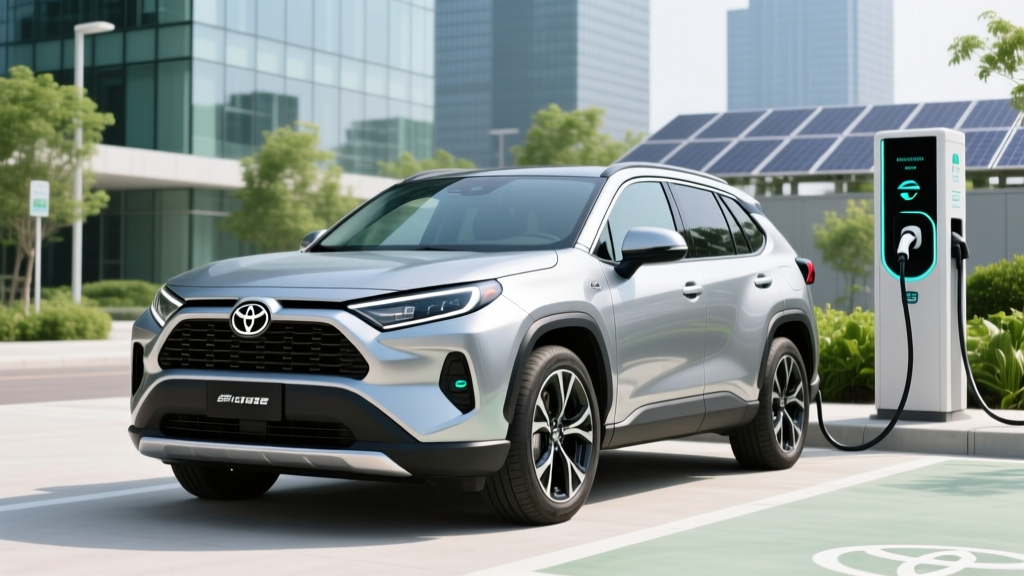
Toyota has made its most consequential RAV4 powertrain decision in two decades: the sixth-generation RAV4 drops the conventional gasoline-only model entirely. When Toyota introduces the sixth-generation RAV4 exclusively with hybrid powertrains, it signals confidence that hybridization is no longer a niche upgrade — it's the default. Buyers now choose between two electrified flavors: the self-charging Hybrid (HEV) and the plug-in Hybrid Prime (PHEV).
This guide breaks down every spec that matters — EPA MPG, electric-only range, battery chemistry, charging logistics, pricing, and federal tax credit eligibility — so you can pick the right sixth-gen RAV4 for your driving pattern and budget.
HEV vs PHEV: Understanding the Two Sixth-Gen RAV4 Powertrains
RAV4 Hybrid (HEV)
A conventional hybrid that never needs to be plugged in. It uses regenerative braking and the gasoline engine to charge a small battery (approximately 1.6 kWh). The electric motor assists the engine during acceleration and enables brief low-speed electric-only driving. You refuel exclusively at a gas station.
RAV4 Prime (PHEV)
A plug-in hybrid with a larger battery (18.1 kWh usable) that you charge via a wall outlet or Level 2 charger. It delivers meaningful electric-only range for daily commuting, then operates as a conventional hybrid once the battery depletes. It has a charge port and qualifies for different incentives.
The distinction matters enormously for ownership cost, daily driving experience, and tax credit eligibility. Confusing the two is the most common mistake RAV4 shoppers make.
Fuel Economy: EPA MPG and Real-World Expectations
| Model | City MPG | Highway MPG | Combined MPG | MPGe (PHEV Electric Mode) |
|---|---|---|---|---|
| RAV4 Hybrid (HEV) FWD | 41 | 38 | 40 | N/A |
| RAV4 Hybrid (HEV) AWD | 39 | 37 | 38 | N/A |
| RAV4 Prime (PHEV) AWD | 40 (hybrid mode) | 36 (hybrid mode) | 38 (hybrid mode) | 94 MPGe |
Source: fueleconomy.gov — EPA estimates. Actual mileage will vary.
Real-World MPG vs. EPA Sticker
Toyota's hybrid system excels in stop-and-go city driving, where the electric motor handles low-speed propulsion and regenerative braking recaptures energy. Many RAV4 Hybrid owners report exceeding the EPA city estimate by 2–4 MPG in genuine urban traffic. Highway driving tells a different story: at sustained 70–80 mph speeds, the gasoline engine carries the full load, and real-world fuel economy typically drops to 33–35 MPG for the AWD HEV — roughly 3–5 MPG below the sticker.
For the Prime in hybrid mode (battery depleted), expect similar highway figures to the standard HEV. In electric mode, the Prime achieves roughly 2.5–3.0 miles per kWh, translating to the 94 MPGe combined EPA rating.
RAV4 Prime: Electric-Only Range and Charging Specs
| Spec | RAV4 Prime (PHEV) |
|---|---|
| Battery Capacity (usable) | 18.1 kWh (lithium-ion, NMC chemistry) |
| EPA Electric-Only Range | 42 miles |
| Real-World Electric Range | 35–42 mi (weather/terrain dependent) |
| Total Combined Range (EV + Gas) | ~520 miles |
| Level 1 Charging (120V, 12A) | ~10.5 hours (0–100%) |
| Level 2 Charging (240V, 32A) | ~2.5 hours (0–100%) |
| DC Fast Charging | Not supported |
| Charge Port | J1772 (Level 1/2 AC only) |
The 42-mile EPA electric range covers the majority of American daily commutes. According to FHWA data, the average one-way commute is roughly 16 miles, meaning most Prime owners can complete daily round trips without burning a drop of gasoline — provided they charge at home overnight.
Critical note on DC fast charging: The RAV4 Prime does not support DC fast charging. This is standard across nearly all PHEVs. The battery is too small to justify the cost and weight of DC hardware, and Level 2 charging fully replenishes it in under three hours. If you need rapid charging, a full BEV is the appropriate choice.
Real-world electric range drops to approximately 30–35 miles in freezing temperatures due to cabin heating demands and reduced battery efficiency. In mild weather with moderate speeds, some owners report stretching to 45+ miles.
Powertrain Output: Horsepower, Acceleration, and Drivetrain
| Spec | RAV4 Hybrid (HEV) | RAV4 Prime (PHEV) |
|---|---|---|
| Engine | 2.5L inline-4 Atkinson cycle | 2.5L inline-4 Atkinson cycle |
| Combined Net Horsepower | 219 hp | 302 hp |
| 0–60 mph | 7.4 seconds | 5.7 seconds |
| Drivetrain | FWD or AWD (e-AWD rear motor) | AWD standard (e-AWD rear motor) |
| Towing Capacity | 1,750 lbs | 1,750 lbs |
The Prime's 302 combined horsepower makes it the quickest RAV4 Toyota has ever produced — quicker, in fact, than many V6 midsize sedans. The HEV's 219 hp is adequate for daily driving and highway merging, though it lacks the effortless punch of the Prime.
Both models use Toyota's e-AWD system, which employs a dedicated rear-axle electric motor rather than a mechanical driveshaft. This provides torque to the rear wheels during acceleration and low-traction situations but does not offer the same continuous engagement as a traditional mechanical AWD system. For snow and rain, e-AWD performs competently; for serious off-roading, it is not a substitute for a body-on-frame 4WD system.
Pricing, Trims, and Federal Tax Credit Eligibility
| Model / Trim | MSRP (est.) | Federal Tax Credit |
|---|---|---|
| RAV4 Hybrid LE (HEV) | $33,500 | Not eligible (§30D requires plug-in) |
| RAV4 Hybrid XLE (HEV) | $35,500 | Not eligible |
| RAV4 Hybrid Limited (HEV) | $39,500 | Not eligible |
| RAV4 Prime SE (PHEV) | $45,500 | Up to $7,500 (see eligibility below) |
| RAV4 Prime XSE (PHEV) | $49,000 | Up to $7,500 (see eligibility below) |
MSRP figures are estimated based on projected 2026 model-year pricing. Confirm with Toyota's official configurator at launch.
Does the RAV4 Qualify for a Federal Tax Credit?
The RAV4 Hybrid (HEV) does not qualify for the IRS §30D Clean Vehicle Credit. Federal law requires a vehicle to have a plug and a minimum battery capacity of 7 kWh to be eligible. Conventional hybrids, regardless of efficiency, are excluded.
The RAV4 Prime (PHEV) may qualify for up to $7,500, but eligibility depends on several requirements that change periodically:
- MSRP cap: SUVs must have an MSRP at or below $80,000 (both Prime trims clear this easily).
- Buyer income cap: Adjusted gross income must not exceed $150,000 (single), $225,000 (head of household), or $300,000 (joint filing).
- Battery sourcing: A percentage of critical minerals and battery components must be sourced from the U.S. or free-trade-agreement partners. This requirement tightens annually and may reduce or eliminate the credit depending on Toyota's supply chain for the specific model year.
- Point-of-sale transfer: Under current IRS rules, you can transfer the credit to the dealer at purchase, reducing your out-of-pocket cost immediately rather than waiting for a tax refund.
Verify current eligibility before purchasing. Battery sourcing requirements in particular have shifted year to year. Consult the IRS §30D guidance and confirm with your Toyota dealer which specific VIN qualifies.
Battery Longevity, Warranty, and Replacement Costs
Toyota Hybrid Battery Warranty
Coverage: 10 years / 150,000 miles (whichever comes first) for the hybrid battery pack on all sixth-generation RAV4 models, transferable to subsequent owners.
Capacity threshold: Toyota warrants the battery against defects and excessive capacity loss below approximately 70% of original capacity during the warranty period.
Powertrain warranty: 5 years / 60,000 miles for the engine, transaxle, and related hybrid components.
Is the Sixth-Gen RAV4 Hybrid Reliable?
Toyota's hybrid system is among the most proven in the automotive industry. The company has sold over 25 million hybrid vehicles globally since the 1997 Prius, and the RAV4 Hybrid has been a top seller since its 2016 introduction. The planetary-gear e-CVT design has no clutch packs, belts, or traditional friction components to wear out — it is mechanically simpler than a conventional automatic transmission.
Historical data from prior-generation RAV4 Hybrids and Primes shows hybrid battery failure rates well under 1% within the first 10 years of ownership. The sixth-generation models benefit from further refinements in thermal management and cell chemistry.
Battery Replacement Cost
Should the hybrid battery require replacement outside of warranty:
- RAV4 Hybrid (HEV): Approximately $3,000–$4,500 for a new OEM battery pack (smaller 1.6 kWh pack, lower cost).
- RAV4 Prime (PHEV): Approximately $8,000–$12,000 for the larger 18.1 kWh pack.
These are current estimates based on prior-generation pricing and may shift with battery commodity costs. Refurbished and third-party replacement options are typically 30–50% less. Given the 10-year/150,000-mile warranty and Toyota's track record, out-of-pocket battery replacement during normal ownership is statistically unlikely.
Hybrid vs PHEV vs EV: Which Sixth-Gen RAV4 Fits You?
Choose the RAV4 Hybrid (HEV) If:
- You don't have access to home or workplace charging
- You want the lowest upfront purchase price
- Your driving is a mix of city and highway with no predictable short-commute pattern
- You want zero change to your refueling habits — gas station only
- You plan to keep the vehicle 10+ years and value Toyota's long-term reliability record
Choose the RAV4 Prime (PHEV) If:
- You can install a Level 2 charger at home (240V outlet or hardwired)
- Your daily round-trip commute is under 40 miles
- You want to drive on electricity most days but need gas flexibility for road trips
- You qualify for the §30D tax credit (income and sourcing requirements met)
- You value the 302 hp performance advantage
Consider a Full EV (BEV) Instead If:
- Your daily driving exceeds 40 miles but is mostly predictable
- You have reliable home charging and access to DC fast chargers for road trips
- You want zero gasoline expenses and minimal drivetrain maintenance
- You're ready to commit to the BEV charging lifestyle
The bottom line: If you can charge at home and your commute is under 40 miles, the Prime's math is compelling — especially with the potential $7,500 credit narrowing the price gap with the HEV. If charging access is uncertain or your mileage pattern is unpredictable, the HEV delivers outstanding efficiency with zero lifestyle change. The sixth-generation RAV4's hybrid-only lineup means there's no wrong choice — only the one that fits your charging situation.
Frequently Asked Questions
How many MPG does the sixth-generation RAV4 Hybrid get?
The RAV4 Hybrid (HEV) achieves an EPA-estimated 41 city / 38 highway / 40 combined MPG in FWD form, and 39/37/38 with AWD. Real-world city driving often exceeds the EPA estimate by 2–4 MPG, while sustained highway driving at 75+ mph typically returns 33–35 MPG.
How far can the RAV4 Prime go on electric only?
The EPA rates the RAV4 Prime at 42 miles of electric-only range. In real-world conditions, expect 35–42 miles depending on temperature, terrain, and speed. Cold weather (below freezing) can reduce this to approximately 30–35 miles due to battery efficiency loss and cabin heating demands.
Do I need to plug in the RAV4 Hybrid (HEV)?
No. The conventional RAV4 Hybrid charges its battery entirely through regenerative braking and the gasoline engine. It has no charge port and you refuel only at gas stations. Only the RAV4 Prime (PHEV) requires plugging in to access its electric-only range.
Does the RAV4 Hybrid or Prime qualify for a federal tax credit?
The standard RAV4 Hybrid (HEV) does not qualify for any federal tax credit — §30D requires a plug-in vehicle. The RAV4 Prime (PHEV) may qualify for up to $7,500 under IRS §30D, subject to buyer income limits, MSRP caps, and battery critical-mineral sourcing requirements. Always verify current-year eligibility on irs.gov before purchasing.
Is the hybrid battery reliable, and what does replacement cost?
Toyota's hybrid batteries carry a 10-year / 150,000-mile warranty and have a strong track record of lasting the life of the vehicle. Failure rates in prior generations are well under 1% within the warranty period. If replacement is needed out of warranty, expect approximately $3,000–$4,500 for the HEV pack and $8,000–$12,000 for the Prime's larger pack.
Can the RAV4 Prime DC fast charge?
No. The RAV4 Prime supports Level 1 (120V) and Level 2 (240V) AC charging only, using a standard J1772 connector. A full Level 2 charge takes approximately 2.5 hours. DC fast charging is not available on any current PHEV in this class due to the small battery size.