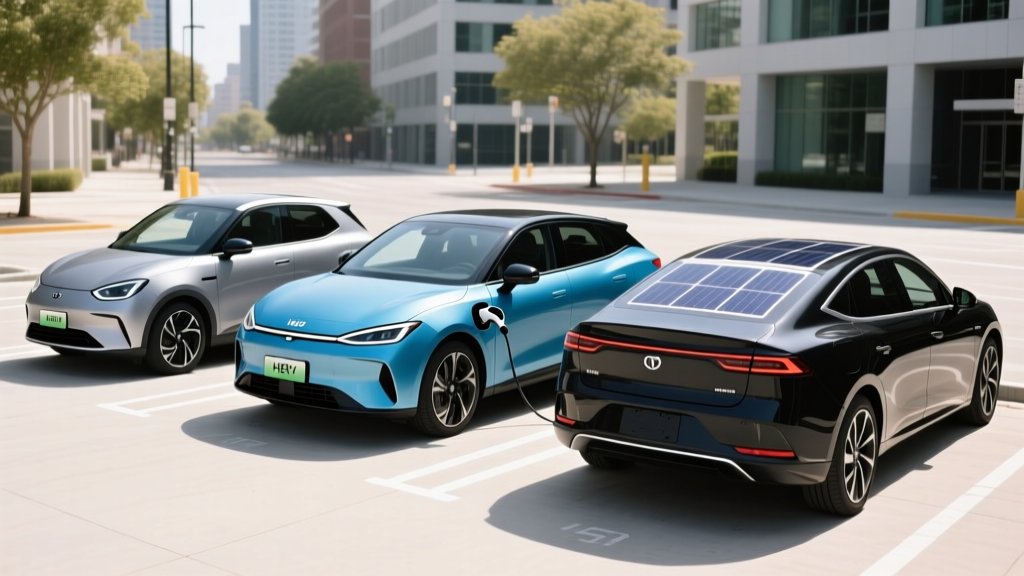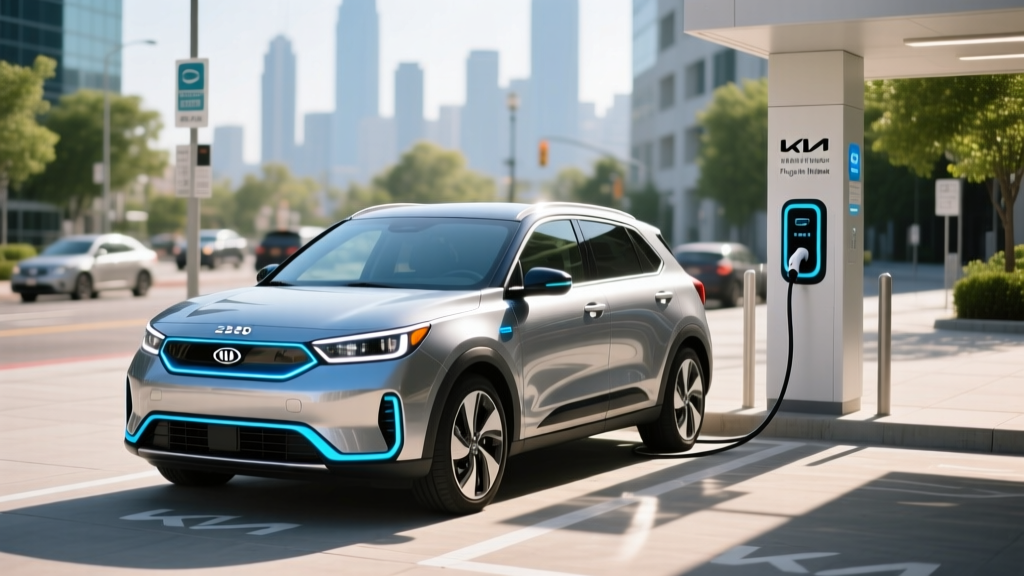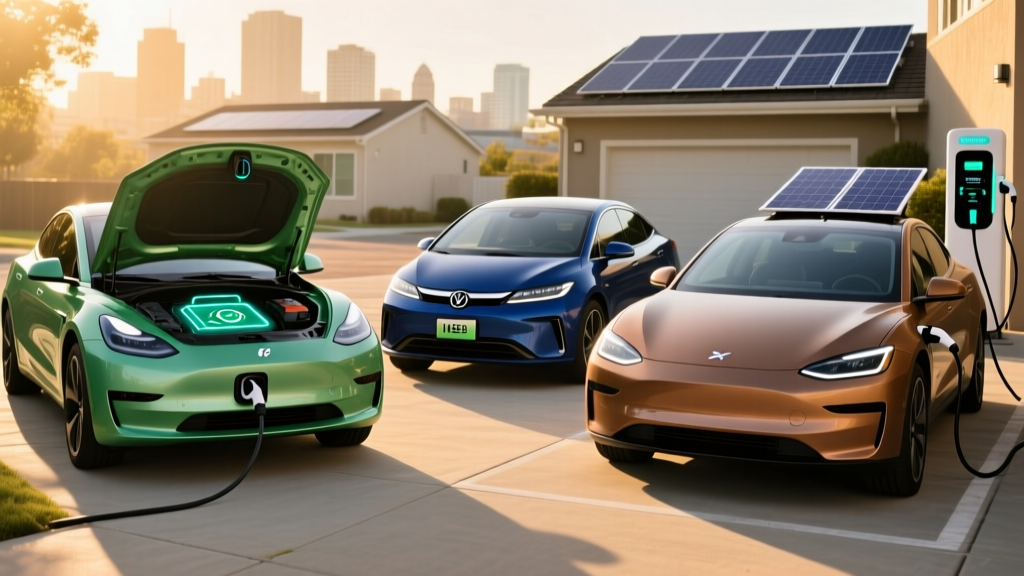
If you've asked yourself "should I buy a hybrid vehicle?" you're not alone. With EV charging infrastructure still uneven across the U.S. and gas prices fluctuating, hybrids — both conventional (HEV) and plug-in (PHEV) — remain one of the smartest ways to cut fuel costs without range anxiety. But the landscape in 2026 is nuanced: PHEVs now routinely offer 35–50 miles of electric-only range, conventional hybrids push past 50 MPG combined, and federal tax credits have shifted significantly.
This guide cuts through the noise. We'll compare the three electrified paths using real EPA data, ownership economics, and a practical decision framework so you can pick the right powertrain for your driving life.
HEV vs PHEV vs EV: What's the Actual Difference?
Before comparing numbers, let's lock down the definitions — confusing these is the single most common mistake buyers make.
| Feature | Conventional Hybrid (HEV) | Plug-In Hybrid (PHEV) | Battery Electric (BEV) |
|---|---|---|---|
| Plugs in to charge? | No — charges via engine + regen | Yes — Level 1 or Level 2 | Yes — Level 1, 2, or DC fast |
| Electric-only range | ~1 mile or less at low speed | 25–50 miles (2026 models) | 220–400+ miles |
| Gas engine? | Yes (primary propulsion assist) | Yes (takes over after battery depletes) | No |
| Tailpipe emissions | Reduced, not zero | Zero on electric; reduced on gas | Zero |
| Federal tax credit (§30D) | Not eligible | Up to $7,500 (if eligible) | Up to $7,500 (if eligible) |
| Home charging needed? | No | Strongly recommended for value | Essential for most owners |
The takeaway: HEVs are gas cars that sip fuel. PHEVs are short-range EVs with a gas backup. BEVs are fully electric. Your daily mileage and charging access determine which makes sense.
Real-World MPG: What Hybrids Actually Deliver
Hybrid fuel economy varies dramatically by model and driving style. Unlike EVs, hybrids often exceed their EPA city rating in real-world stop-and-go traffic because regenerative braking recovers energy that gas cars waste as heat.
| 2026 Model | Type | EPA City | EPA Highway | EPA Combined | Real-World Expectation |
|---|---|---|---|---|---|
| Toyota Prius LE | HEV | 57 MPG | 56 MPG | 57 MPG | 52–60 MPG (city-biased drivers may exceed EPA) |
| Hyundai Tucson Hybrid | HEV | 38 MPG | 38 MPG | 38 MPG | 34–40 MPG |
| Toyota RAV4 Prime | PHEV | 42 mi EV + 38 MPG gas | 42 mi EV + 38 MPG gas | 94 MPGe / 38 MPG | 38–42 mi EV range; 35–39 MPG after depletion |
| Chrysler Pacifica Hybrid | PHEV | 32 mi EV + 30 MPG gas | 32 mi EV + 30 MPG gas | 82 MPGe / 30 MPG | 28–34 mi EV; 27–31 MPG gas |
| Ford Maverick Hybrid | HEV | 42 MPG | 33 MPG | 37 MPG | 35–43 MPG (city driving favors hybrid system) |
Key insight: If most of your driving is city and suburban (under 45 mph average), an HEV like the Prius or Maverick Hybrid will deliver its best numbers. Highway-heavy commutes at 75+ mph reduce hybrid advantage because the gas engine runs continuously and aerodynamic drag dominates.
For PHEVs, the MPGe figure (e.g., 94 MPGe for the RAV4 Prime) only applies when the battery is charged. Once the battery depletes, you're driving a somewhat-heavy conventional hybrid — hence the separate gas-only MPG rating. Check EPA's fueleconomy.gov for the full model-by-model breakdown.
PHEV Electric-Only Range and Charging: The Daily-Commute Test
The entire value proposition of a PHEV hinges on covering your daily driving on electricity alone. Here's what 2026's leading PHEVs deliver:
| 2026 PHEV Model | EV Range (EPA) | Battery (kWh usable) | Level 2 Charge Time (0–100%) | DC Fast Charge? | Combined HP |
|---|---|---|---|---|---|
| Toyota RAV4 Prime | 42 miles | ~14.9 kWh | ~2.5 hours (6.6 kW) | No | 302 HP |
| Jeep Wrangler 4xe | 22 miles | ~17.3 kWh | ~2.5 hours (7.2 kW) | No | 375 HP |
| Hyundai Tucson PHEV | 33 miles | ~13.8 kWh | ~2 hours (7.2 kW) | No | 261 HP |
| BMW X5 xDrive50e | 38 miles | ~25.7 kWh | ~4 hours (7.4 kW) | No | 483 HP |
| Toyota Prius Prime | 44 miles | ~13.6 kWh | ~4 hours (3.5 kW) | No | 220 HP |
Critical detail most buyers miss: Nearly all PHEVs cannot DC fast charge. You're limited to Level 2 (240V) at home or at public stations. That means a full charge takes 2–4 hours, not 20–30 minutes. This is fine for overnight home charging but makes public PHEV charging impractical for quick top-ups.
Real-world EV range for PHEVs drops 15–25% in freezing weather due to cabin heating demands and reduced battery efficiency. A RAV4 Prime rated at 42 miles may deliver only 30–35 miles on a 20°F January morning.
Hybrid and PHEV Pricing: Base MSRP and Tax Credit Eligibility
Hybrids carry a price premium over their gas-only counterparts — typically $1,500–$4,000 for HEVs and $5,000–$9,000 for PHEVs. But fuel savings and potential tax credits narrow the gap.
| 2026 Model | Type | Base MSRP | Federal Tax Credit (§30D) | Effective Price (if eligible) |
|---|---|---|---|---|
| Toyota Prius LE | HEV | $29,445 | $0 (HEVs not eligible) | $29,445 |
| Toyota Prius Prime SE | PHEV | $34,345 | Up to $3,750* | ~$30,595 |
| Ford Maverick Hybrid | HEV | $28,990 | $0 | $28,990 |
| Toyota RAV4 Prime SE | PHEV | $44,515 | Up to $7,500* | ~$37,015 |
| Hyundai Tucson PHEV SEL | PHEV | $40,350 | Up to $3,750* | ~$36,600 |
*Federal §30D credit amounts depend on battery capacity, critical mineral sourcing, and buyer income limits. PHEVs with smaller batteries may qualify for partial credits ($3,750). Full $7,500 requires meeting both critical mineral and battery component thresholds. Income caps: $150K single / $300K joint filers. MSRP caps: $55K for sedans, $80K for SUVs/pickups. Credit can be transferred to the dealer as a point-of-sale discount. Consult IRS.gov §30D guidelines and a tax professional for your specific eligibility.
Conventional hybrids (HEVs) do not qualify for the federal §30D new clean vehicle credit. Some states offer separate rebates for HEVs, but these vary widely. Check your state energy office or DSIRE (Database of State Incentives for Renewables and Efficiency) for local programs.
Battery Longevity: Warranties, Degradation, and Replacement Costs
Battery replacement fear is the top concern we hear from hybrid shoppers. Here's what the data actually shows.
Real-world longevity: Toyota's hybrid synergy drive system has proven exceptionally durable. Prius taxis routinely surpass 300,000 miles on original batteries. Data from fleet operators and owner surveys suggests modern NiMH and lithium-ion hybrid batteries last 12–15 years in typical use before meaningful degradation.
| Battery Type | Typical Chemistry | Replacement Cost (out of warranty) | Expected Lifespan |
|---|---|---|---|
| HEV (e.g., Prius, Camry Hybrid) | NiMH or small Li-ion (1–2 kWh) | $2,000–$4,000 | 12–18 years / 200K+ miles |
| PHEV (e.g., RAV4 Prime) | Li-ion (13–26 kWh) | $6,000–$12,000 | 10–15 years / 150K+ miles |
| BEV (comparison) | NMC or LFP (60–100 kWh) | $10,000–$22,000 | 12–20 years / 200K+ miles |
Hybrid batteries are smaller and experience shallower charge/discharge cycles than BEV batteries, which reduces stress and extends life. PHEV batteries fall in between — larger than HEV but still cycled less aggressively than a full EV. Consumer Reports' long-term testing has consistently shown hybrid battery failure rates under 5% within the warranty period for major manufacturers.
Reliability: How Do Hybrids Compare?
Counterintuitively, hybrids often outperform conventional gas cars in reliability rankings. The reasons are mechanical:
- No traditional starter motor — the hybrid motor-generator handles engine starts, eliminating a common failure point
- Regenerative braking reduces brake wear — many hybrid owners report 80,000+ miles on original brake pads
- CVT/e-CVT transmissions — Toyota's planetary-gear e-CVT has no belts, clutches, or bands to wear out, making it one of the most durable transmissions in production
- Engine runs less — reduced operating hours mean less wear on internal components
According to J.D. Power and Consumer Reports reliability surveys, Toyota and Lexus hybrids consistently rank in the top tier for long-term dependability. Hyundai/Kia PHEVs have shown solid reliability with minor infotainment and software-related complaints rather than powertrain issues.
Decision Framework: Hybrid vs PHEV vs EV — Which Fits You?
Choose a Conventional Hybrid (HEV) If:
- You cannot install a home charger (apartment, street parking, no garage)
- Your budget is under $35,000 and you want maximum fuel savings per dollar
- You drive 15,000+ miles/year with a mix of city and highway
- You want zero behavior change — just gas up and go, with better MPG
- Example pick: Toyota Prius (57 MPG combined, ~$29K base)
Choose a Plug-In Hybrid (PHEV) If:
- You can charge at home (Level 1 outlet is sufficient overnight for most PHEVs)
- Your daily round-trip commute is under 40 miles (covers most U.S. commutes)
- You take road trips 5+ times per year and don't want to plan around chargers
- You want EV-like daily driving with gas-car road-trip freedom
- Example pick: Toyota RAV4 Prime (42 mi EV, 302 HP, ~$44K base)
Choose a Full EV (BEV) If:
- You have reliable home Level 2 charging and your daily driving is under 200 miles
- You want zero tailpipe emissions and the lowest per-mile fuel cost
- You want to eliminate oil changes, transmission fluid, and exhaust maintenance entirely
- You qualify for the full $7,500 federal credit and state incentives
- Example pick: Tesla Model Y Long Range (320 mi range, ~$45K base before credits)
Total Cost of Ownership: 5-Year Comparison
Sticker price tells only part of the story. Here's a 5-year/75,000-mile ownership estimate for a midsize SUV buyer comparing gas, HEV, PHEV, and BEV options. Assumes $3.50/gallon gas, $0.14/kWh electricity, and 12,000 miles/year for gas driving, 15,000 for PHEV (10K electric + 5K gas).
| Cost Factor | Gas SUV (25 MPG) | HEV SUV (38 MPG) | PHEV SUV (33 mi EV + 35 MPG) | BEV SUV (3.5 mi/kWh) |
|---|---|---|---|---|
| Purchase Price (after credits) | $35,000 | $38,000 | $37,000 | $37,500 |
| Fuel/Energy (5 years) | $10,500 | $6,900 | $3,750 | $3,000 |
| Maintenance (5 years) | $4,500 | $3,800 | $3,500 | $2,000 |
| Estimated Depreciation | $14,000 | $15,200 | $16,650 | $18,750 |
| 5-Year Total | $64,000 | $63,900 | $60,900 | $61,250 |
The verdict: HEVs and PHEVs offer the lowest 5-year total cost for most buyers today, primarily because they avoid the steeper depreciation that BEVs have experienced in 2024–2026. PHEVs deliver the best of both worlds if you charge daily — if you never plug in a PHEV, you're carrying 300+ lbs of dead battery weight and paying a premium for nothing.
Frequently Asked Questions
How many MPG does a hybrid get in real-world driving?
It depends on the model and your driving pattern. The 2026 Toyota Prius LE is EPA-rated at 57 MPG combined, and real-world owners report 52–62 MPG depending on conditions. City-heavy driving actually improves hybrid MPG thanks to regenerative braking. Highway-only driving at 75+ MPH may drop 3–5 MPG below the EPA combined figure. SUV hybrids like the Tucson Hybrid deliver 34–40 MPG real-world.
How far can a PHEV go on electric only?
2026 PHEVs range from 22 miles (Jeep Wrangler 4xe) to 44 miles (Toyota Prius Prime). The popular RAV4 Prime delivers 42 miles EPA-rated, which covers the average American's 37-mile daily round-trip commute (FHWA data). Expect 15–25% less range in freezing temperatures.
Do conventional hybrids need to be plugged in?
No. Conventional hybrids (HEVs) charge their small battery entirely through the gas engine and regenerative braking. You never plug them in. Only PHEVs and BEVs require external charging.
Is a hybrid reliable and what does battery replacement cost?
Modern hybrids from Toyota, Honda, Hyundai, and Kia are among the most reliable vehicles on the road. Hybrid battery replacement costs $2,000–$4,000 for HEVs and $6,000–$12,000 for PHEVs out of warranty, but most batteries last 12–18 years. The federally mandated warranty covers 8 years/100,000 miles minimum, extending to 10 years/150,000 miles in CARB states.
Does a hybrid qualify for any tax credit?
Conventional hybrids (HEVs) do not qualify for the federal §30D clean vehicle credit. Only plug-in vehicles (PHEVs and BEVs) are eligible. PHEV credit amounts range from $3,750 to $7,500 depending on battery capacity, critical mineral sourcing, and battery component origin. Buyer income caps apply ($150K single / $300K joint). Check IRS.gov for current rules and eligible model lists.
Should I buy a hybrid vehicle or just go full electric?
Choose a hybrid if you lack home charging, frequently drive 300+ miles without stopping, live in an area with sparse public chargers, or want the lowest purchase price. Choose a full EV if you can charge at home, your daily driving is under 200 miles, and you want to eliminate gas and minimize maintenance. A PHEV is the ideal middle ground for most households that can charge at home but still take road trips.
What happens if my hybrid battery dies on the road?
In an HEV, a complete hybrid battery failure will trigger a warning and the vehicle will enter a limp mode — you should stop driving and have it towed. This is extremely rare within the warranty period. In a PHEV, if the high-voltage battery fails, the vehicle may still operate on the gas engine alone depending on the architecture, but performance will be severely limited. Both scenarios are covered under the 8–10 year powertrain warranty.
Bottom Line: The Hybrid Sweet Spot in 2026
The answer to "should I buy a hybrid vehicle?" comes down to three questions: Can you charge at home? How far do you drive daily? And how often do you road-trip?
Hybrid Advantages
- 35–57 MPG with zero behavior change (HEV)
- No charging infrastructure needed (HEV)
- Lower upfront cost than most BEVs
- Proven long-term reliability (12–18 year battery life)
- Road-trip freedom — gas up anywhere in 5 minutes
- Reduced brake wear from regen braking
Hybrid Limitations
- HEVs don't qualify for federal tax credit
- PHEVs can't DC fast charge (2–4 hr Level 2 only)
- PHEVs lose value if you never plug them in
- Still burning gas — not zero-emission
- Higher complexity than a pure EV (two powertrains)
- Resale value may lag BEVs as charging infrastructure grows
If you can't charge at home, a conventional HEV like the Prius or Maverick Hybrid is the most practical fuel-saving choice available. If you can charge at home and your commute is under 40 miles, a PHEV gives you electric daily driving with gas-engine insurance for road trips. And if your lifestyle supports it, a full EV offers the lowest operating cost and zero tailpipe emissions.
There's no wrong answer among electrified vehicles — just the one that fits your miles, your parking situation, and your budget.