The Great Hybrid Drivetrain Showdown: Which Architecture Reigns Supreme?
When shopping for a hybrid or plug-in hybrid electric vehicle (PHEV), most buyers focus on EPA fuel economy estimates, exterior styling, or cargo space. However, the true heart of any electrified vehicle lies beneath the metal: its drivetrain architecture. Not all hybrids are created equal. The way a vehicle blends gasoline and electric power fundamentally alters its driving dynamics, long-term reliability, and real-world efficiency.
According to the Alternative Fuels Data Center, hybrid electric vehicles combine an internal combustion engine with one or more electric motors, which use energy stored in batteries. But the mechanical handshake between these components varies wildly. Today, we are putting the three dominant hybrid architectures in a head-to-head product showdown: the Series Hybrid, the Parallel Hybrid, and the Series-Parallel (Power-Split) Hybrid. We will dissect the engineering, evaluate real-world champion vehicles for each category, and help you decide which setup belongs in your driveway.
Contender 1: The Series Hybrid (The EV Impersonator)
The Concept: In a pure series hybrid, the internal combustion engine is completely disconnected from the drive wheels. Instead, the gas engine acts solely as an onboard generator. It fires up to spin a generator, which produces electricity to either charge the battery pack or directly feed the electric traction motor that actually turns the wheels.
The Real-World Champion: Nissan X-Trail e-POWER / Nissan Note e-POWER
Nissan’s e-POWER system is the undisputed king of the modern series hybrid market. Because the wheels are driven 100% of the time by the electric motor, a series hybrid delivers the instant, linear torque and buttery-smooth acceleration of a battery-electric vehicle (BEV), without the range anxiety.
Pros & Cons of the Series Architecture
- Pro - EV Driving Dynamics: No gear shifts, no engine lag, and immediate throttle response. The Environmental Protection Agency (EPA) notes that electric motors provide maximum torque at zero RPM, making series hybrids incredibly punchy off the line.
- Pro - Engine Optimization: Because the engine doesn't need to rev and drop with vehicle speed, engineers can tune it to run constantly at its absolute most efficient RPM range when generating power.
- Con - Highway Inefficiency: Energy conversion is the enemy of efficiency. Converting mechanical energy (engine) to electrical energy (generator), and back to mechanical energy (drive motor) results in heat loss. On long highway cruises where a direct mechanical link is more efficient, series hybrids suffer a fuel economy penalty.
- Con - The Drone Factor: Under hard acceleration, the engine may rev to a high, constant RPM to generate maximum electricity, creating a droning sound disconnected from the vehicle's actual road speed.
Contender 2: The Parallel Hybrid (The Traditionalist)
The Concept: In a parallel hybrid, both the internal combustion engine and the electric motor are mechanically connected to the transmission and can turn the drive wheels independently or simultaneously. This setup usually relies on a traditional multi-speed automatic or dual-clutch transmission rather than a continuously variable transmission (CVT).
The Real-World Champion: Hyundai Tucson PHEV / Kia Sportage PHEV
Hyundai Motor Group utilizes a highly effective parallel architecture for its PHEVs, sandwiching a powerful electric motor between the turbocharged gas engine and a traditional 6-speed automatic transmission. This setup utilizes a clutch pack to engage or disengage the engine from the drivetrain.
Pros & Cons of the Parallel Architecture
- Pro - Highway Dominance: At 75 MPH, the clutch locks the gas engine directly to the transmission. There are zero energy conversion losses, making parallel hybrids incredibly efficient on long road trips and highway commutes.
- Pro - Familiar Driving Feel: Enthusiasts and traditionalists love the parallel setup because it actually shifts gears. You get the rhythmic, engaging feel of a traditional automatic transmission rather than the endless drone of a CVT.
- Pro - Towing and Hauling: The combined mechanical torque of the engine and motor, multiplied through physical transmission gears, makes parallel hybrids excellent for towing small trailers or boats.
- Con - City Clunkiness: Transitioning between electric-only mode, gas-only mode, and blended mode requires physical clutches to engage and disengage. This can result in slight hesitation, jerky low-speed maneuvers, and less refined stop-and-go traffic behavior.
- Con - Maintenance Complexity: You have a traditional transmission with physical gears, clutch packs, and transmission fluid that requires servicing, alongside the high-voltage electrical components.
Contender 3: The Series-Parallel Hybrid (The Master Blended)
The Concept: Also known as a "power-split" hybrid, this architecture uses a planetary gearset to seamlessly blend the traits of both series and parallel systems. The computer can power the wheels using just the electric motor (series-like), just the gas engine, or a mathematically perfect blend of both, all without a traditional gearbox or shifting clutches.
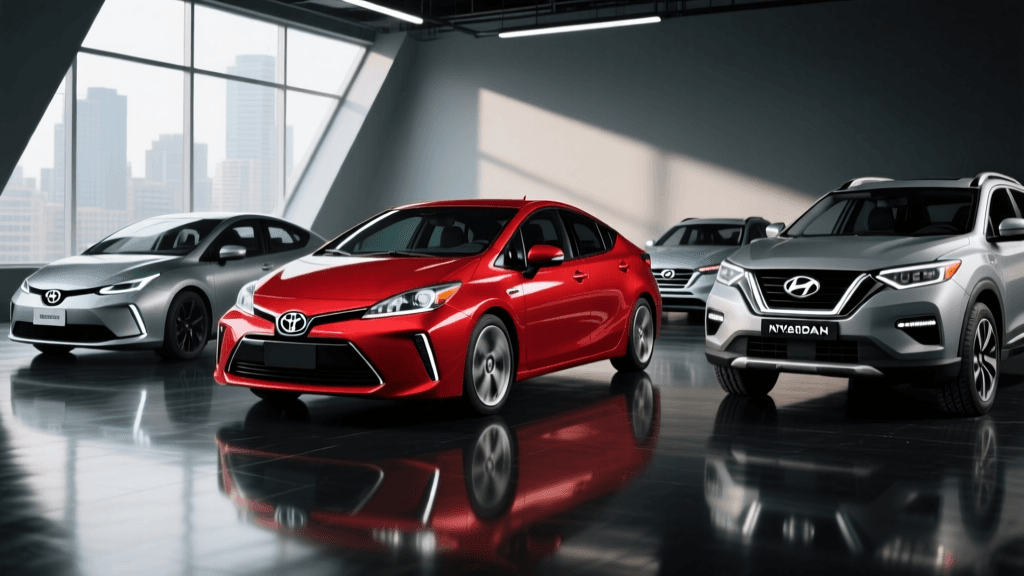
The Real-World Champion: Toyota RAV4 Hybrid / Toyota Prius (Toyota Hybrid System)
Toyota’s Hybrid Synergy Drive (now simply the Toyota Hybrid System) is the gold standard of the series-parallel architecture. By utilizing a planetary gearset that acts as an infinitely variable e-CVT, Toyota has created a drivetrain that is legendary for its bulletproof reliability and stellar real-world fuel economy.
Pros & Cons of the Series-Parallel Architecture
- Pro - The Best of Both Worlds: It operates as a series hybrid at low speeds for maximum city efficiency, and seamlessly locks into a parallel-style direct mechanical link at highway speeds to eliminate energy conversion losses.
- Pro - Unmatched Reliability: The e-CVT planetary gearset has no shifting clutches, no torque converters, and no traditional belts or chains to snap. It is widely considered one of the most reliable automotive transmissions ever engineered.
- Pro - Seamless Transitions: The computer blends gas and electric power so smoothly that the driver rarely notices when the internal combustion engine wakes up or shuts off.
- Con - The "Rubber Band" Effect: Under heavy throttle, the e-CVT holds the engine at a high, steady RPM while the vehicle speed catches up. This acoustic disconnect can feel unnatural to drivers accustomed to traditional gear shifts.
- Con - Towing Limitations: While highly capable, the planetary gearset is not designed for the extreme mechanical shock loads of heavy towing, limiting the towing capacity of vehicles like the RAV4 Hybrid compared to its turbocharged gas counterparts.
Head-to-Head Comparison Matrix
| Feature | Series Hybrid (Nissan e-POWER) | Parallel Hybrid (Hyundai PHEV) | Series-Parallel (Toyota Hybrid System) |
|---|---|---|---|
| City Efficiency | Excellent (Pure EV torque) | Good (Clutch transitions cause drag) | Superior (Seamless low-speed EV blending) |
| Highway Efficiency | Poor/Moderate (Energy conversion loss) | Excellent (Direct mechanical lock) | Excellent (Mechanical power-split lock) |
| Driving Feel | Smooth, linear, EV-like | Engaging, traditional gear shifts | Smooth, but prone to high-RPM drone |
| Maintenance | Moderate (Inverter/Gen cooling) | High (Transmission fluid, clutches) | Low (Planetary gearset requires minimal service) |
| Best Use Case | Urban delivery, city commuting | Highway road trips, light towing | Do-it-all daily driving, long-term ownership |
Real-World Scenarios: Which Architecture Wins?
Scenario A: The Dense Urban Commuter
If your daily drive consists of crawling through gridlock, stopping at school zones, and navigating tight city streets, the Series Hybrid or Series-Parallel Hybrid takes the crown. Because these systems can shut off the gas engine entirely and creep on electric torque, they eliminate idling emissions and provide a serene, quiet cabin experience. Parallel hybrids can feel jerky in heavy traffic as the transmission hunts for the right gear and the clutch packs repeatedly engage and disengage.
Scenario B: The Highway Warrior & Road Tripper
If you regularly drive 70+ miles on the interstate, the Parallel Hybrid shines brightest. The ability to physically lock the engine to the transmission via a mechanical clutch bypasses the electrical system entirely, preventing the energy conversion losses that plague series hybrids at high speeds. Furthermore, parallel hybrids like the Tucson PHEV offer a more engaging, traditional driving feel that reduces highway hypnosis and fatigue over long distances.
Scenario C: The "Buy It For Life" Owner
If your goal is to buy a vehicle, drive it for 200,000 miles with nothing but routine oil changes, and then hand it down to your teenager, the Series-Parallel (Toyota) architecture is the undisputed champion. The absence of a traditional friction-based transmission, combined with a computer system that prevents the battery from ever dropping below 40% or charging above 80% state-of-charge, results in legendary longevity. It is the ultimate set-it-and-forget-it powertrain.
The Final Verdict
There is no single "best" hybrid architecture; the winner of this showdown depends entirely on your lifestyle.
Choose a Series Hybrid if you want the exact driving dynamics of a pure electric vehicle but lack the home charging infrastructure required to support a full EV. Choose a Parallel Hybrid if you prioritize highway fuel economy, enjoy traditional gear shifts, and need the mechanical torque multiplication required for weekend towing or hauling. Finally, choose a Series-Parallel Hybrid if you want a master-of-all-trades vehicle that offers brilliant city and highway efficiency, wrapped in a package renowned for its multi-decade reliability.
By understanding the mechanical handshake happening beneath your feet, you can look past the marketing jargon and select the hybrid drivetrain that perfectly aligns with your daily reality.