The Great Hybrid Drivetrain Showdown: Series vs. Parallel vs. Series-Parallel
When shopping for a fuel-efficient vehicle, the term 'hybrid' is often used as a catch-all label, but the engineering beneath the hood varies drastically from one model to the next. Understanding these differences is not just an exercise in automotive trivia; it directly impacts your daily driving experience, fuel economy, and long-term maintenance costs. The hybrid market is currently dominated by three distinct architectures: series, parallel, and series-parallel. Each system manages the relationship between the internal combustion engine and the electric motor in a unique way, optimizing for different driving environments and use cases.
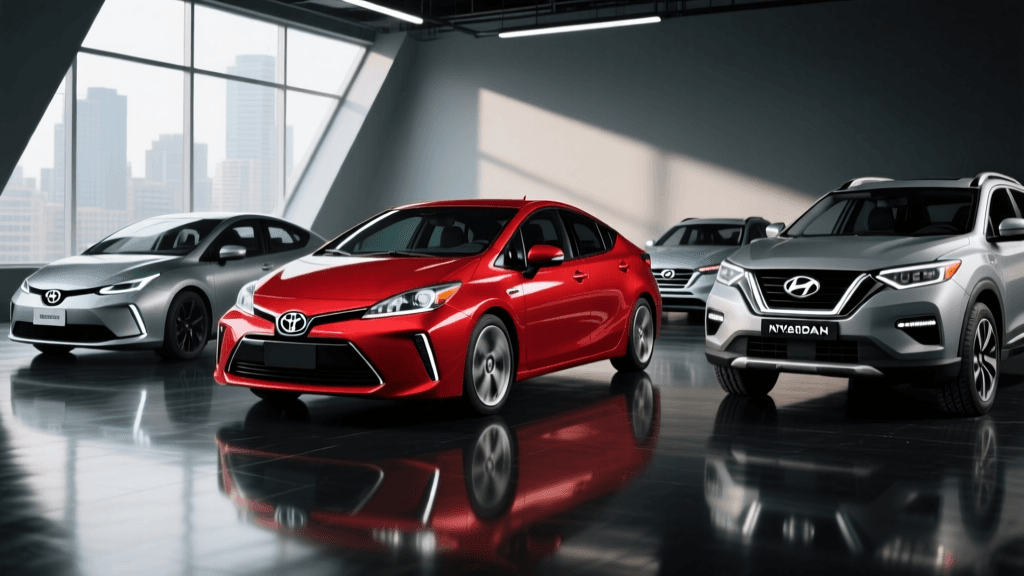
In this head-to-head product showdown, we are moving beyond generic spec sheets to pit three distinct hybrid architectures against one another. We will examine the series hybrid setup found in the Nissan Rogue e-POWER, the traditional parallel hybrid system utilized in the Hyundai Sonata Hybrid, and the legendary series-parallel power-split device that defines the Toyota Prius. By the end of this guide, you will know exactly which drivetrain layout deserves a spot in your driveway based on your specific commuting habits, highway mileage, and city driving requirements.
Round 1: The Series Hybrid (The Range Extender)
In a pure series hybrid architecture, the internal combustion engine is completely disconnected from the drive wheels. Instead, the gas engine acts solely as an onboard generator, producing electricity to either charge the battery pack or feed power directly to the electric traction motor. The electric motor is the only component responsible for turning the wheels. According to the Alternative Fuels Data Center, this setup provides a driving experience that closely mimics a fully electric vehicle (EV), offering instant torque and smooth, linear acceleration without the mechanical lag of a traditional transmission shifting gears.
Product Spotlight: Nissan Rogue e-POWER
Nissan's e-POWER system is the premier example of a modern series hybrid in the mainstream crossover segment. Under the hood of the Rogue e-POWER, a 1.5-liter variable-compression turbocharged three-cylinder engine generates electricity. Because the engine is decoupled from the wheels, it can operate at its absolute peak thermal efficiency RPM, regardless of vehicle speed. This results in exceptional city fuel economy and a remarkably quiet cabin, as the engine only hums to life when the battery requires replenishment or during heavy acceleration demands.
Pros: EV-like smoothness, zero transmission shift shock, optimized engine efficiency in stop-and-go traffic, and regenerative braking capabilities that mirror pure EVs.
Cons: Highway efficiency can suffer compared to parallel systems because energy is lost during the conversion from mechanical to electrical, and back to mechanical energy at sustained high speeds.
Round 2: The Parallel Hybrid (The Direct Drive)
In a parallel hybrid system, both the internal combustion engine and the electric motor are mechanically connected to the transmission and can drive the wheels directly. They can work in tandem to provide maximum acceleration, or the vehicle can rely solely on the gas engine during high-speed cruising. The U.S. Department of Energy's Fuel Economy Guide notes that parallel hybrids are highly effective at maintaining efficiency during highway driving, as the mechanical connection avoids the energy conversion losses inherent in series setups.
Product Spotlight: Hyundai Sonata Hybrid
Hyundai employs a sophisticated parallel hybrid architecture in the Sonata Hybrid. Unlike competitors that use planetary gearsets or continuously variable transmissions (CVTs), Hyundai sandwiches a 39-kW electric motor between the 2.0-liter gasoline engine and a traditional six-speed automatic transmission. This Active Air Flap and hybrid starter-generator (HSG) setup means the car shifts through physical gears. For driving enthusiasts who despise the 'rubber-band' effect of CVTs, the Sonata Hybrid offers a familiar, engaging, and direct driving feel while still delivering impressive combined fuel economy.
Pros: Superior highway fuel efficiency, traditional and engaging shifting feel, excellent high-speed passing power, and reduced energy conversion losses.
Cons: Slightly less smooth than a series hybrid at low speeds, and the engine must occasionally operate outside its optimal efficiency band to match vehicle speed and gear ratios in city traffic.
Round 3: The Series-Parallel Hybrid (The Power Split)
The series-parallel hybrid, often referred to as a 'power-split' system, is the most complex and versatile of the three. It uses a planetary gearset to seamlessly blend the characteristics of both series and parallel architectures. At low speeds, the system operates as a series hybrid, using the engine to generate electricity for the motor. At higher speeds, it acts as a parallel hybrid, allowing the engine to drive the wheels directly while the electric motor assists or generates power. As outlined by the EPA's Green Vehicles Guide, this adaptability allows series-parallel vehicles to achieve top-tier efficiency across a wide variety of driving conditions.
Product Spotlight: Toyota Prius
The Toyota Prius is the undisputed king of the series-parallel layout. Toyota's Hybrid Synergy Drive uses an electronically controlled e-CVT that is not a belt-and-pulley system, but rather a brilliant planetary gearset. This allows the computer to constantly and infinitely adjust the power split between the gas engine and the electric motors. Whether you are crawling through downtown traffic or cruising at 75 mph on the interstate, the Prius continuously recalculates the most efficient way to route power, making it the ultimate jack-of-all-trades in the hybrid market.
Pros: Unmatched versatility, exceptional combined city and highway MPG, seamless power delivery, and proven long-term reliability.
Cons: High mechanical and software complexity, and the e-CVT can result in elevated engine drone during hard acceleration (often called the 'hybrid groan').
Head-to-Head Specification & Performance Table
| Feature | Series (Nissan Rogue e-POWER) | Parallel (Hyundai Sonata Hybrid) | Series-Parallel (Toyota Prius) |
|---|---|---|---|
| Engine Drives Wheels? | No (Generator Only) | Yes (Direct Mechanical Link) | Yes (Via Planetary Gearset) |
| Transmission Type | Single-Speed Reduction | 6-Speed Automatic | e-CVT (Power Split Device) |
| City Efficiency | Excellent | Good | Exceptional |
| Highway Efficiency | Good | Excellent | Exceptional |
| Driving Feel | Smooth, EV-like | Traditional, Geared Shifts | Linear, CVT-like |
| Best Use Case | Urban Commuting & Suburbs | Highway Cruising & Road Trips | Mixed Driving & Ride-Share |
How to Choose the Right Hybrid Architecture for Your Lifestyle
Choosing between these three architectures requires an honest assessment of your daily driving routine. If your commute consists primarily of stop-and-go city traffic, school drop-offs, and suburban errands, the Series Hybrid (Nissan Rogue e-POWER) is a phenomenal choice. The electric motor handles all low-speed propulsion, providing a quiet, jerk-free ride while the engine sips fuel at a steady RPM in the background. You get the benefits of an EV without the range anxiety or the need to install a home charger.
Conversely, if you are a road warrior, a regional sales representative, or someone who regularly drives long stretches of interstate highway, the Parallel Hybrid (Hyundai Sonata Hybrid) is your best ally. Parallel systems shine at sustained speeds of 65 to 80 mph. Because the engine is physically locked to the wheels via the transmission, there is zero energy wasted converting mechanical power to electricity and back again. Furthermore, the physical gears provide a more engaging driving dynamic and better engine braking on long mountain descents.
For the vast majority of buyers who experience a mixed bag of driving conditions—perhaps a congested highway commute followed by weekend grocery runs and occasional road trips—the Series-Parallel Hybrid (Toyota Prius) remains the gold standard. The power-split device eliminates the compromises of the other two systems, ensuring that whether you are idling at a red light or passing a semi-truck on the freeway, the drivetrain is operating at peak mathematical efficiency. It is the ultimate set-it-and-forget-it efficiency machine.
Final Verdict
The hybrid market has evolved far beyond the early days of the first-generation Prius. Today, automakers are intentionally selecting specific hybrid architectures to suit distinct vehicle personalities and target demographics. Nissan's commitment to the series hybrid e-POWER system delivers an electric-car experience for the masses, Hyundai's parallel setup preserves the traditional driving dynamics that many sedan buyers still crave, and Toyota's mastery of the series-parallel layout continues to set the benchmark for overall fuel economy. By matching the drivetrain architecture to your specific daily mileage and road conditions, you can maximize your fuel savings and elevate your daily driving experience.