If you've been researching electrified vehicles, you've likely encountered the term series hybrid — and found conflicting explanations. Unlike conventional hybrids that blend gas and electric power at the wheels, a series hybrid uses its gasoline engine exclusively as an onboard generator. The engine never drives the wheels. Instead, it produces electricity that either feeds the electric motor directly or replenishes the battery. This architecture is more commonly known today as an Extended-Range Electric Vehicle (EREV).
In 2026, the series hybrid/EREV segment is small but growing, headlined by the upcoming Ram 1500 Ramcharger and historically represented by vehicles like the BMW i3 REx (discontinued but widely available used). China's market has embraced EREVs aggressively — brands like Li Auto sell hundreds of thousands annually — but the U.S. lineup remains limited. Here's everything you need to know about how series hybrids work, what they deliver in efficiency and range, and whether one belongs in your driveway.
What Defines a Series Hybrid (and How It Differs From Other Hybrids)
In a series hybrid, the powertrain follows a single path: battery → electric motor → wheels. The gasoline engine is mechanically disconnected from the drivetrain. When the battery depletes to a set threshold, the engine starts, spins a generator, and produces electricity to sustain the battery or power the motor. You're always driving an electric vehicle — the engine is simply a mobile power plant.
Contrast this with other hybrid architectures:
HEV vs PHEV vs Series Hybrid (EREV)
| Architecture | Engine Drives Wheels? | Plug-In? | Electric-Only Range | Example (2026) |
|---|---|---|---|---|
| Conventional HEV (parallel/power-split) | Yes | No | ~0.5–1 mi at low speed | Toyota Prius |
| PHEV (parallel/power-split) | Yes | Yes | 25–45 mi typical | Toyota RAV4 Prime |
| Series Hybrid / EREV | No | Yes | 40–69 mi typical | Ram 1500 Ramcharger |
Key distinction: A conventional hybrid (HEV) never needs to be plugged in and recharges its small battery through regenerative braking and engine operation. A PHEV or EREV has a larger battery you charge via a plug, enabling meaningful electric-only driving before the engine assists.
2026 Ram 1500 Ramcharger: The Flagship Series Hybrid
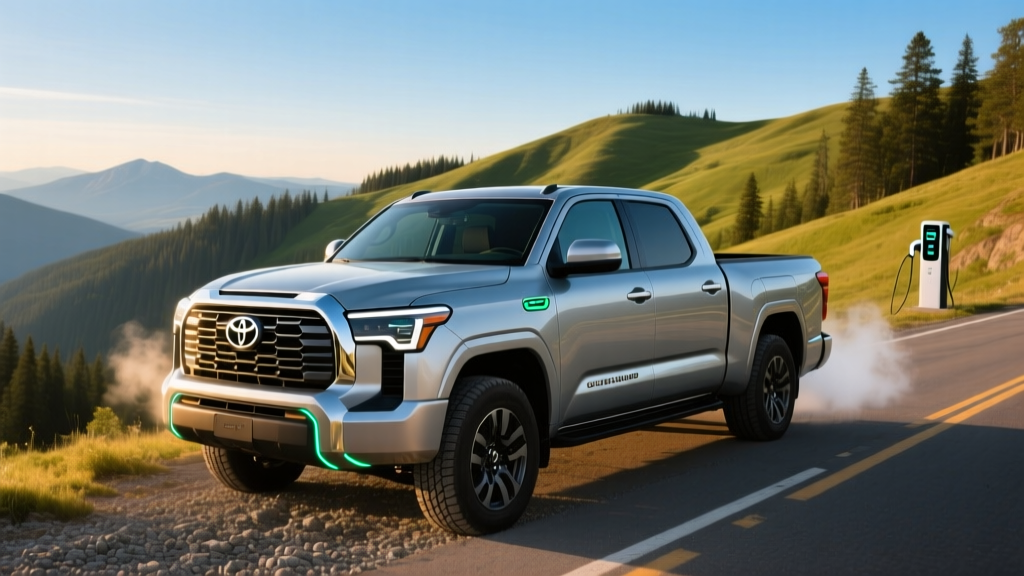
The most prominent new series hybrid in the U.S. market is the 2026 Ram 1500 Ramcharger, Stellantis's range-extended electric pickup. Ram positions it as the solution for truck buyers who want electric daily driving without range anxiety on long hauls or job-site duty. Here are the key specifications based on Ram's published data:
| Specification | 2026 Ram 1500 Ramcharger |
|---|---|
| Architecture | Series hybrid (EREV) — engine never drives wheels |
| Battery (usable) | 92 kWh (NMC lithium-ion) |
| Electric-only range | 69 miles (EPA est.) |
| Total range (battery + fuel) | ~690 miles (EPA est.) |
| Onboard generator | 3.6L Pentastar V6, 174 kW output |
| Electric motors | Dual-motor AWD: 250 kW front + 238 kW rear |
| Combined system output | 663 hp / 615 lb-ft torque |
| 0–60 mph | 4.4 seconds (est.) |
| Max DC fast charge | ~150 kW (10–80% in ~30 min, est.) |
| Level 2 charging | ~11 kW onboard charger |
| Towing capacity | ~14,000 lbs (max, properly equipped) |
| Base MSRP | ~$60,000 (est., before incentives) |
Note: The Ramcharger was announced for the 2026 model year with preliminary specifications. Final EPA certification figures and pricing may shift at launch. Always verify with Ram's official site and fueleconomy.gov before purchasing.
How Many MPG Does a Series Hybrid Get?
This question requires a nuanced answer because a series hybrid's efficiency depends entirely on whether you're driving on battery or burning fuel through the generator.
On battery alone: You're consuming zero gasoline. Efficiency is measured in MPGe (miles per gallon equivalent) or kWh/100mi. For the Ramcharger, Ram targets roughly 2.0–2.5 kWh/mi on electric power, which translates to approximately 130–150 MPGe in electric mode — comparable to other large electric trucks like the Ford F-150 Lightning.
On generator (charge-sustaining) mode: Once the battery depletes, the V6 fires up to generate electricity. The engine runs at a relatively constant, efficient RPM since it's decoupled from road speed variations. Expect roughly 18–22 MPG combined in this mode — not class-leading for a truck, but competitive with conventional V6 pickups under load. The key advantage is that for most daily commutes under 69 miles, the engine never runs at all.
| Driving Scenario | MPG / MPGe | Notes |
|---|---|---|
| Electric-only (first 69 mi) | ~140 MPGe | Zero gas consumed; cost depends on local electricity rates |
| Charge-sustaining (generator running) | ~18–22 MPG | Engine runs at optimized RPM; varies with load and terrain |
| Blended (daily 40-mi commute with charging) | Effectively infinite MPG | If you charge nightly and stay under 69 mi, engine never starts |
Real-world vs. EPA: Series hybrids, like full EVs, tend to see reduced electric range in cold weather (expect 15–25% loss below freezing due to battery chemistry and cabin heating demands). Highway driving at sustained 75+ mph also reduces electric range. However, unlike parallel PHEVs, there's no mechanical handoff between electric and gas drive — the transition to generator mode is seamless, often imperceptible except for engine noise.
Electric-Only Range and Total Range: What You Can Actually Expect
Range Reality Check
EPA electric-only range: 69 miles (Ramcharger)
Real-world expectation:
- Mild weather, city/suburban: ~60–69 miles (regen braking helps)
- Highway (70–75 mph): ~50–58 miles
- Cold weather (below 32°F): ~45–55 miles
Total combined range (battery + 26-gal fuel tank): ~690 miles EPA est.
Once the battery is depleted, you're driving a ~5,500-lb truck with a generator. Range per gallon in charge-sustaining mode is modest, but the combined 690-mile total eliminates any range anxiety for road trips or remote job sites.
Charging: Speeds, Connectors, and Home Setup
The Ramcharger supports both Level 2 AC charging and DC fast charging — a significant advantage over many PHEVs that only accept slow AC charging.
| Charging Level | Power (kW) | Miles of EV Range/Hour | Full Charge Time |
|---|---|---|---|
| Level 1 (120V household) | ~1.4 kW | ~4 mi/hr | ~65+ hours (impractical) |
| Level 2 (240V home/public) | ~11 kW | ~30 mi/hr | ~8–9 hours (overnight) |
| DC Fast Charge | ~150 kW peak | ~200+ mi/hr (peak) | 10–80% in ~30 min (est.) |
Connector: The Ramcharger is expected to use the NACS (North American Charging Standard) connector, giving it native access to Tesla Superchargers — a growing advantage as the industry consolidates around NACS. Adapters will likely be available for legacy CCS stations.
Home charging recommendation: A Level 2 home charger (40–48 amp circuit) is essential for daily use. Budget $500–$1,200 for the charger unit and $800–$2,500 for professional electrician installation (240V circuit, permit, possible panel upgrade). Most Ramcharger owners will wake up to a full 69-mile electric range every morning — enough to cover the average American commute without ever starting the generator.
Series Hybrid vs PHEV vs Full EV: Which Fits Your Life?
Choosing between a series hybrid, a parallel PHEV, and a battery-electric vehicle (BEV) comes down to three questions: Can you charge at home? How far do you drive daily? And do you regularly take trips that exceed ~300 miles?
Choose Based on Your Pattern
Choose a series hybrid (EREV) if:
- You want electric daily driving but frequently tow, haul, or drive to remote areas with unreliable charging infrastructure
- You need a truck or large vehicle where BEV range drops significantly under load
- You can charge at home but can't guarantee public charging on road trips
Choose a PHEV (e.g., RAV4 Prime, Wrangler 4xe) if:
- Your daily commute is under 35 miles and you want the flexibility of a gas engine for longer trips
- You prefer an established model with years of reliability data
- You want a lower entry price than most EREVs
Choose a full BEV (e.g., F-150 Lightning, Model Y) if:
- You can charge at home and your daily driving is under 250 miles
- You want zero tailpipe emissions and minimal maintenance (no engine oil, filters, or spark plugs)
- You have access to reliable DC fast charging for road trips
Pricing, Tax Credits, and Total Ownership Cost
The 2026 Ram 1500 Ramcharger is estimated to start around $60,000 before incentives, with higher trims reaching $75,000+. This positions it as a premium offering, though competitive with similarly equipped full-electric trucks.
Federal tax credit (§30D): Under current IRS rules, PHEVs and EREVs may qualify for up to $7,500 in federal tax credits — but eligibility depends on multiple factors:
- MSRP cap: Vans/SUVs/pickups must be under $80,000 MSRP; sedans under $55,000
- Buyer income cap: AGI ≤ $150,000 (single), $225,000 (head of household), $300,000 (joint)
- Battery sourcing: Critical minerals and battery components must meet escalating domestic-content thresholds (2026 requirements are stricter than prior years)
- Point-of-sale transfer: You can transfer the credit to the dealer at purchase for an immediate price reduction, rather than waiting to claim it on your tax return
- Minimum battery capacity: ≥ 7 kWh (the Ramcharger's 92 kWh easily exceeds this)
Important: Battery sourcing rules change annually. Consult a tax professional and check the latest fueleconomy.gov tax credit listings before assuming eligibility. State incentives (e.g., California, Colorado, New York) may stack on top.
Battery Warranty, Reliability, and Replacement Costs
Hybrid & EREV Battery Warranty Standard
Federal law mandates that hybrid and PHEV/EREV batteries carry a minimum warranty of 8 years / 100,000 miles (in California and states adopting CARB standards, this extends to 10 years / 150,000 miles). The warranty typically guarantees the battery will retain at least 70% of its original capacity.
Reliability outlook: Series hybrids have an inherent reliability advantage: the engine operates in a narrow, optimized RPM band as a generator, avoiding the wide load variations and thermal cycling of a conventional drivetrain. There's no transmission in the traditional sense — just a single-speed reduction gear from the electric motors to the axles. The primary wear components are the battery pack and the generator engine, both of which are well-understood technologies.
Battery replacement cost: If the 92 kWh NMC pack in the Ramcharger needs replacement out of warranty (likely 12–15+ years from now based on current degradation curves), expect a cost in the range of $12,000–$18,000 including labor — comparable to other large-format EV battery replacements today. However, NMC batteries in thermally managed systems (as the Ramcharger uses) typically degrade only 10–15% over 150,000 miles, meaning most owners will never face an out-of-pocket replacement.
The V6 generator engine requires standard maintenance — oil changes, coolant, air filter — but at reduced intervals compared to a conventional truck since it runs far fewer hours. Expect roughly 50–70% fewer engine maintenance events than a gas-only Ram 1500 over the same mileage.
Pros and Cons of the Series Hybrid Approach
✓ Pros
- True EV driving experience (instant torque, one-pedal regen, silent operation) for the first 69 miles
- Zero range anxiety — 690-mile total range and 5-minute refueling at any gas station
- Excellent daily-driver economics if you charge at home (pennies per mile on electricity)
- Full truck capability: 14,000-lb towing, AWD, job-site power
- Engine longevity (runs at constant RPM, minimal thermal cycling)
- NACS connector for Supercharger access on road trips
✗ Cons
- Heavy: dual motors + 92 kWh battery + V6 generator = ~5,500+ lbs, reducing charge-sustaining MPG
- Higher upfront cost than a conventional V6 Ram 1500
- Charge-sustaining MPG (~18–22) is not exceptional for a truck — you're carrying dead weight (the battery) when running on gas
- Complex powertrain: two systems (electric + ICE) mean more components that could need service
- Limited model availability — Ramcharger is the only mainstream U.S. EREV at launch
- Tax credit eligibility is not guaranteed; depends on sourcing rules and your income
Are There Other Series Hybrids Available?
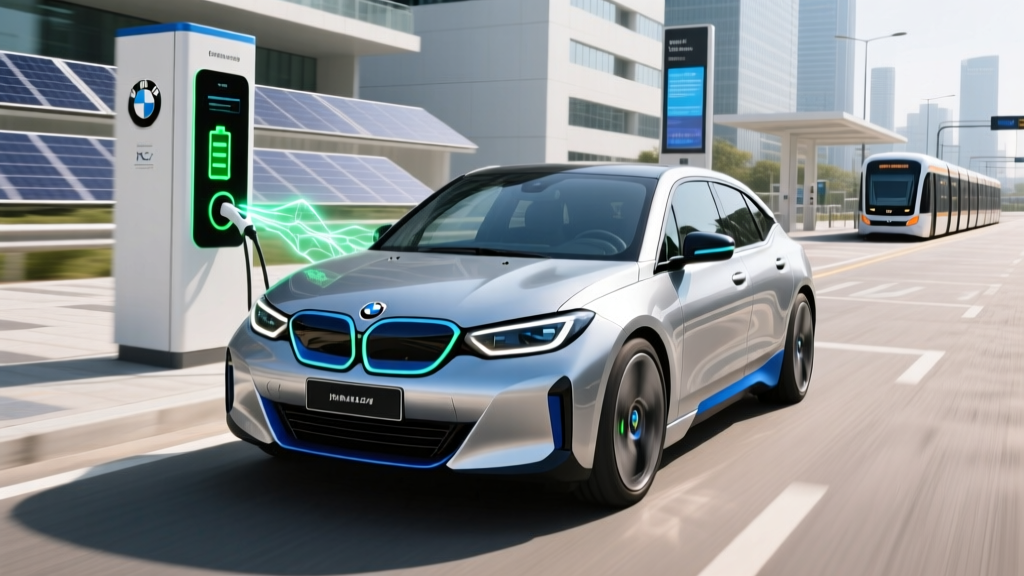
The U.S. market for series hybrids is thin. Historically, the BMW i3 REx (2014–2021) was the most accessible EREV — a small hatchback with a 2-cylinder BMW motorcycle engine as a range extender. It offered ~70–90 miles of electric range and ~150 miles total. Used examples remain popular in the secondary market.
The Chevrolet Volt (2011–2019) operated primarily as a series hybrid in most driving conditions, though it had a mechanical clutch that could couple the engine to the wheels at highway speeds — making it technically a "series-parallel" design. Still, many Volt owners experienced it as an EREV.
In China, series hybrids are booming. Li Auto sells the L7, L8, and L9 EREVs in massive volumes, and BYD's Yangwang brand has explored the architecture. If these brands enter the U.S. market, the EREV segment will expand considerably.
Frequently Asked Questions
How far can a series hybrid go on electric only?
The 2026 Ram 1500 Ramcharger achieves an estimated 69 miles of EPA-rated electric-only range from its 92 kWh battery. Real-world range varies: expect ~60–69 miles in mild city driving, ~50–58 miles at highway speeds, and ~45–55 miles in freezing temperatures. Once depleted, the V6 generator extends total range to approximately 690 miles.
Does a series hybrid need to be plugged in?
Yes — to get the benefit of electric-only driving, you should plug in a series hybrid (EREV) regularly. If you never plug it in, you're simply driving a heavy gas-powered truck with an inefficient energy conversion path (gas → generator → electricity → motor → wheels). The magic of an EREV is cheap overnight home charging that covers your daily needs without burning fuel. That said, unlike a full BEV, the vehicle will still operate indefinitely on gasoline alone if you forget to charge.
Is a series hybrid reliable? What about battery replacement cost?
Series hybrids benefit from a simpler mechanical layout than parallel hybrids — no multi-speed transmission, no engine-to-wheel clutch mechanisms. The generator engine runs at steady RPM, reducing wear. The 92 kWh battery is warrantied for 8 years/100,000 miles federally (10/150,000 in CARB states) with a capacity retention floor of ~70%. Out-of-warranty replacement is estimated at $12,000–$18,000, but modern NMC packs in thermally managed systems rarely require full replacement within the vehicle's practical lifespan.
Does the Ramcharger qualify for the $7,500 federal tax credit?
Eligibility depends on current-year IRS §30D rules, including battery critical-mineral sourcing thresholds, your adjusted gross income, and the vehicle's final MSRP (must be under $80,000 for trucks/SUVs). Because sourcing requirements tighten annually, a vehicle that qualifies in January may not qualify later if supply chains shift. Always verify on fueleconomy.gov at time of purchase and consult a tax professional. The credit can be transferred to the dealer at point of sale for an immediate price reduction.
What's the difference between a series hybrid and a range-extended EV (EREV)?
They are the same thing. "Series hybrid" describes the powertrain architecture (engine in series with the electric motor, not mechanically connected to the wheels). "EREV" (Extended-Range Electric Vehicle) is the marketing term emphasizing that the primary propulsion is electric, with the engine serving only to extend range. Both terms describe vehicles like the Ramcharger and the historic BMW i3 REx.
How does series hybrid efficiency compare to a conventional hybrid like the Prius?
They excel in different scenarios. A Toyota Prius (conventional HEV, ~57 MPG combined) is more efficient in charge-sustaining mode because its Atkinson-cycle engine directly drives the wheels through a power-split device, avoiding the energy conversion losses of gas → electricity → motor. However, a series hybrid like the Ramcharger is far more efficient for daily commutes under 69 miles where it uses zero gasoline. If you plug in nightly, your effective fuel cost is dramatically lower. The tradeoff: series hybrids are heavier and less efficient when the engine is running, but they deliver a pure EV experience for most daily driving.