Quick Verdict: The RAV4 Prime Still Sets the PHEV Benchmark
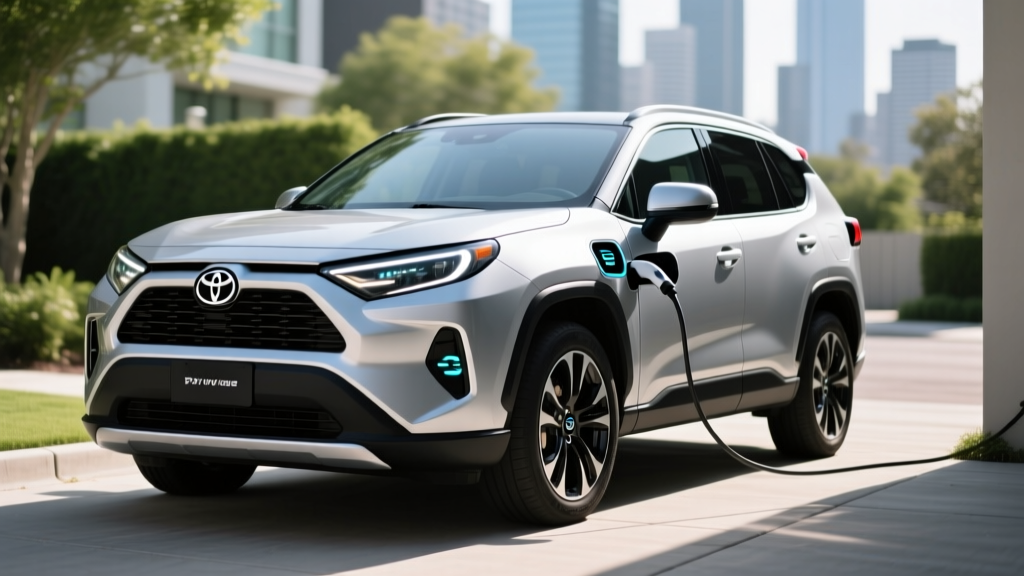
The Toyota RAV4 Prime plug-in hybrid remains one of the most compelling bridge vehicles for buyers who want meaningful electric-only commuting without surrendering the flexibility of a gas engine for road trips. With an EPA-rated 42 miles of electric-only range, 302 combined horsepower, and a practical SUV footprint, it outperforms nearly every competitor in the compact PHEV segment on pure electric distance. For 2026, Toyota continues the formula that has kept the RAV4 Prime on multi-month waitlists since its introduction: a large-for-the-class traction battery, standard all-wheel drive, and Toyota's proven hybrid synergy drive system.
But the RAV4 Prime isn't for everyone. Its DC fast-charging absence, premium pricing, and the evolving federal tax credit landscape mean buyers need to run the numbers carefully. This guide breaks down every spec, real-world expectation, and ownership cost you need to make an informed decision.
HEV vs PHEV: Understanding What the RAV4 Prime Actually Is
Before diving into specs, it's critical to understand the distinction between the conventional RAV4 Hybrid (HEV) and the RAV4 Prime (PHEV), because they serve fundamentally different use cases.
| Feature | RAV4 Hybrid (HEV) | RAV4 Prime (PHEV) |
|---|---|---|
| Plug-in charging | No — self-charging via engine & regen | Yes — plug in to access EV range |
| Electric-only range | ~1 mile at low speed | 42 miles (EPA) |
| Battery capacity | 1.6 kWh (NiMH) | 18.1 kWh (Lithium-ion) |
| Combined horsepower | 219 hp | 302 hp |
| 0-60 mph | 7.4 sec | 5.7 sec |
| EPA combined (gas) | 39 MPG | 35 MPG (charge-sustaining) |
| Starting MSRP | ~$33,000 | ~$44,500 |
| Federal tax credit | None | Up to $7,500 (§30D, if eligible) |
The conventional RAV4 Hybrid never needs to be plugged in. It recovers energy through regenerative braking and the gasoline engine, delivering excellent fuel economy with zero behavior change. The RAV4 Prime, by contrast, has a much larger 18.1 kWh lithium-ion battery that you plug in to charge — typically overnight at home on a Level 2 charger — unlocking 42 miles of pure electric driving before the gasoline engine engages. Once the battery is depleted, it operates as a conventional hybrid.
Electric Range, MPGe, and Fuel Economy: The Numbers
The RAV4 Prime's headline figure is its 42-mile EPA-rated electric-only range. That's among the highest in the compact PHEV class, beating the Ford Escape PHEV (37 miles) and Hyundai Tucson PHEV (33 miles). For many commuters, 42 miles covers a full round-trip daily commute without burning a drop of gasoline.
| Driving Mode | City | Highway | Combined |
|---|---|---|---|
| Electric-only (MPGe) | 102 MPGe | 84 MPGe | 94 MPGe |
| Gasoline (charge-sustaining) | 40 MPG | 36 MPG | 38 MPG |
Real-world expectations: According to fueleconomy.gov, the RAV4 Prime achieves 94 MPGe combined when operating on electricity. In gasoline-only (charge-sustaining) mode, you'll see approximately 38 MPG combined. In practice, many owners report exceeding the EPA city figure in warm weather — Toyota's hybrid system excels in stop-and-go traffic where regenerative braking recovers the most energy. Highway driving at 75+ mph will pull numbers closer to 33-35 MPG in gas mode due to the vehicle's aerodynamic profile and weight.
Range reality check: The 42-mile EV range is an EPA estimate under ideal conditions. Expect approximately 35-38 miles in cold weather (below 40°F) due to cabin heating demands and reduced battery efficiency. In summer with moderate AC use, most owners report achieving 40-44 miles. Highway-speed EV driving (above 65 mph) will reduce range to roughly 30-33 miles due to higher energy consumption at speed.
Total combined range — electric plus a full tank of gasoline — exceeds 600 miles, making this a genuinely road-trip-capable vehicle with no range anxiety.
Powertrain, Performance, and Drivetrain Specs
| Specification | Detail |
|---|---|
| Engine | 2.5L 4-cylinder Atkinson-cycle |
| Engine output | 177 hp / 165 lb-ft |
| Front electric motor | 134 kW (180 hp) |
| Rear electric motor | 40 kW (54 hp) |
| Combined system output | 302 hp |
| 0-60 mph | 5.7 seconds |
| Drivetrain | Electronic AWD (standard) |
| Transmission | eCVT (planetary gearset) |
| Towing capacity | 1,500 lbs |
The RAV4 Prime's 302-horsepower combined output makes it the quickest RAV4 Toyota sells — and one of the quickest vehicles in its price range. The 5.7-second 0-60 mph time handily beats the conventional RAV4 Hybrid (7.4 seconds) and most turbocharged gas competitors. The electronic AWD system uses the rear motor to provide instant torque to the rear axle without a mechanical driveshaft, improving traction in rain and light snow.
The eCVT isn't a traditional belt-driven CVT. Toyota's planetary gearset design blends engine and motor power seamlessly — there are no rubber-band rev surges or drone. Under electric-only acceleration, the experience is smooth and quiet, characteristic of EV driving.
Charging: Battery Size, Charge Times, and the DC Fast-Charge Gap
| Charging Method | Power | 0-100% Time | Infrastructure |
|---|---|---|---|
| Level 1 (120V household) | ~1.4 kW | ~12 hours | Standard outlet |
| Level 2 (240V, 16A) | ~3.3 kW | ~5.5 hours | Home charger / public L2 |
| Level 2 (240V, 32A) | ~6.6 kW | ~2.5 hours | Upgraded onboard charger (XSE trim) |
| DC Fast Charge | Not supported | N/A | N/A |
The RAV4 Prime's 18.1 kWh lithium-ion battery is large for a PHEV, which is why it delivers class-leading EV range. However, it's important to understand the charging limitations:
No DC fast charging. Unlike some competitors (the Mitsubishi Outlander PHEV supports DC fast charging), the RAV4 Prime is limited to AC Level 2 charging. For most PHEV owners who charge at home overnight, this is a non-issue — the battery is small enough that a Level 2 home charger fills it completely while you sleep. But if you're relying on public charging during road trips, you won't be able to top up quickly at a DC fast charger.
Onboard charger matters by trim. The SE base trim comes with a 3.3 kW onboard charger, requiring about 5.5 hours for a full charge. The XSE trim offers an available 6.6 kW onboard charger upgrade, cutting that to roughly 2.5 hours — a significant advantage if you charge mid-day at a workplace Level 2 station.
Level 1 charging is viable for low-mileage drivers. If you drive less than 30 miles per day and can plug into a standard 120V outlet overnight, Level 1 charging will recover roughly 12 miles of range per hour — enough to refill the battery in about 12 hours. It's slow, but for a PHEV with a smaller battery, it's adequate for many households.
Pricing, Trims, and Federal Tax Credit Eligibility
For 2026, the RAV4 Prime is offered in two trims:
| Trim | Base MSRP | Key Features |
|---|---|---|
| SE | ~$44,500 | 3.3 kW charger, SofTex seats, 8" touchscreen, 18" wheels |
| XSE | ~$48,500 | 6.6 kW charger available, panoramic roof, 9" touchscreen, premium audio |
Federal tax credit (§30D): The RAV4 Prime may qualify for up to $7,500 in federal tax credits under the Inflation Reduction Act's Section 30D clean vehicle credit. However, eligibility depends on several factors that change periodically:
- MSRP cap: SUVs must have an MSRP at or below $80,000 — the RAV4 Prime qualifies.
- Buyer income cap: Modified AGI must not exceed $150,000 (single), $225,000 (head of household), or $300,000 (joint).
- Battery sourcing: Critical minerals and battery components must meet phased-in domestic-content thresholds. Toyota's supply chain has been adjusting to meet these requirements — confirm current-year eligibility with your dealer and a tax professional before purchasing.
- Point-of-sale transfer: As of 2024, eligible buyers can transfer the credit to the dealer at purchase, reducing the purchase price directly rather than waiting for a tax refund.
Important caveat: Battery sourcing requirements tighten annually. A vehicle that qualified for the full $7,500 in 2024 may qualify for a reduced amount or none at all in 2026 depending on Toyota's supply chain compliance. Always verify current eligibility on the IRS clean vehicle credit page and with your tax advisor before counting on the credit in your budget.
Reliability, Battery Warranty, and Long-Term Ownership Costs
Toyota Hybrid Battery Warranty: Toyota covers the RAV4 Prime's hybrid battery with a 10-year / 150,000-mile warranty (whichever comes first) in all 50 states. This covers defects and capacity loss below a specified threshold. The broader hybrid system components (inverter, motor, control module) are also covered under this warranty.
Toyota's hybrid system reliability is among the best-documented in the industry. The Prius, now in its fifth generation with over 25 years of real-world data, has demonstrated that Toyota's hybrid battery packs routinely exceed 200,000 miles with minimal degradation. The RAV4 Prime uses a lithium-ion pack rather than the nickel-metal hydride found in older Toyota hybrids, but Toyota's conservative battery management — including a large buffer that prevents the pack from reaching true 0% or 100% state of charge — protects long-term cell health.
Battery replacement cost: If the battery does need replacement out of warranty, expect a cost between $4,000 and $6,500 for the pack, plus labor. However, based on Toyota's track record, most hybrid batteries outlast the typical ownership period. Many owners report less than 5% degradation over the first 100,000 miles.
General reliability: The RAV4 platform is Toyota's highest-volume nameplate globally. The eCVT planetary gearset has no belts, chains, or friction clutches to wear out, and the Atkinson-cycle 2.5L engine is under-stressed compared to turbocharged competitors. According to IIHS ratings, the RAV4 Prime earns top marks in crashworthiness. Long-term maintenance costs are low — no timing belt (chain-driven), no transmission fluid changes under normal use, and regenerative braking significantly extends brake pad life.
Who Should Buy the RAV4 Prime — And Who Shouldn't
Choose the RAV4 Prime if:
- Your daily commute is under 40 miles round-trip and you can charge at home
- You want EV-like daily driving but need gas-engine flexibility for road trips
- You live in an area with limited public DC fast-charging infrastructure
- You value AWD and want a proven reliability track record
- You want strong acceleration (302 hp, 5.7s 0-60) without a performance EV price tag
Choose a full BEV (like the Tesla Model Y or Hyundai Ioniq 5) if:
- You have reliable home charging and your daily driving rarely exceeds 200 miles
- You want zero gasoline expenses and minimal maintenance (no oil changes, no engine)
- DC fast charging is available on your common road-trip routes
- You want the lowest per-mile energy cost (electricity is cheaper than gasoline in most markets)
Choose the conventional RAV4 Hybrid (HEV) if:
- You cannot install a home charger (apartment, street parking, no garage)
- Your budget is closer to $35,000 and you don't qualify for the EV tax credit
- You want simplicity — no plug, no cable, no charging behavior to manage
Pros
- Class-leading 42-mile EV range
- 302 hp / 5.7s 0-60 — quickest in class
- Standard AWD with dedicated rear motor
- 10-year / 150,000-mile hybrid battery warranty
- 600+ mile total range (EV + gas)
- Strong resale value and Toyota reliability
- Potential $7,500 federal tax credit
Cons
- No DC fast charging capability
- Premium pricing — $10,000+ over RAV4 Hybrid
- Tax credit eligibility uncertain due to sourcing rules
- Long dealer waitlists in many markets
- 1,500-lb towing capacity (below gas RAV4)
- Base SE trim limited to slower 3.3 kW charging
Hybrid vs PHEV vs EV: Which Powertrain Fits Your Life?
The RAV4 Prime sits at a specific point on the electrification spectrum. Here's how to think about where you land:
| Factor | HEV (RAV4 Hybrid) | PHEV (RAV4 Prime) | BEV (e.g., Tesla Model Y) |
|---|---|---|---|
| Home charging needed? | No | Yes (for EV benefit) | Yes (essential) |
| Daily EV miles | ~0 | ~42 | 250-330 |
| Gas station visits | Regular | Rare (if commuting on EV) | Never |
| Road-trip ease | Excellent | Excellent (gas backup) | Requires planning |
| Maintenance cost | Low | Low-Moderate | Lowest |
| Fuel cost per mile | ~$0.10 | ~$0.04 (EV) / $0.10 (gas) | ~$0.03-0.05 |
| Upfront price | Lowest | Moderate-High | Highest (before credits) |
If you can charge at home and your commute fits within 42 miles, the RAV4 Prime lets you drive electrically Monday through Friday and take a 500-mile road trip on Saturday without a second thought. That duality is the PHEV's core value proposition — and the RAV4 Prime executes it better than almost anything else on the market.
Frequently Asked Questions
How many MPG does the RAV4 Prime get?
In electric mode, the RAV4 Prime achieves 94 MPGe combined. When the battery is depleted and it operates as a conventional hybrid, it returns an EPA-estimated 38 MPG combined (40 city / 36 highway). Real-world city driving often exceeds the EPA estimate thanks to Toyota's strong regenerative braking system, with some owners reporting 42-44 MPG in warm-weather city conditions.
How far can the RAV4 Prime go on electric only?
The EPA rates the RAV4 Prime at 42 miles of electric-only range. In real-world conditions, expect 35-38 miles in cold weather and 40-44 miles in mild temperatures at moderate speeds. Highway-speed EV driving above 65 mph will reduce range to approximately 30-33 miles.
Does the RAV4 Prime qualify for a tax credit?
The RAV4 Prime may qualify for up to $7,500 under the federal §30D clean vehicle credit, but eligibility depends on your income, the vehicle's battery sourcing compliance, and MSRP caps. Battery sourcing requirements tighten each year, so confirm current eligibility with the IRS and your tax professional before purchasing. Some states offer additional rebates — check your local energy authority.
Is the RAV4 Prime reliable, and what does battery replacement cost?
Toyota's hybrid systems have a 25+ year track record of exceptional reliability. The RAV4 Prime's hybrid battery is covered by a 10-year / 150,000-mile warranty. Out-of-warranty replacement costs are estimated at $4,000-$6,500, but based on historical Toyota hybrid data, most batteries exceed 200,000 miles without requiring replacement.
Can the RAV4 Prime DC fast charge?
No. The RAV4 Prime does not support DC fast charging. It charges via AC Level 1 (120V, ~12 hours) or Level 2 (240V, 2.5-5.5 hours depending on trim and onboard charger). For most PHEV owners who charge at home overnight, this is sufficient — but it means you cannot top up quickly at public DC fast-charging stations.
Is the RAV4 Prime worth the premium over the RAV4 Hybrid?
If you can charge at home and your daily driving is under 42 miles, the RAV4 Prime can virtually eliminate gasoline use for commuting. The $10,000+ price premium is partially offset by the potential $7,500 federal tax credit and ongoing fuel savings. If you cannot charge at home, the conventional RAV4 Hybrid offers 39 MPG combined at a significantly lower price with no charging behavior required.