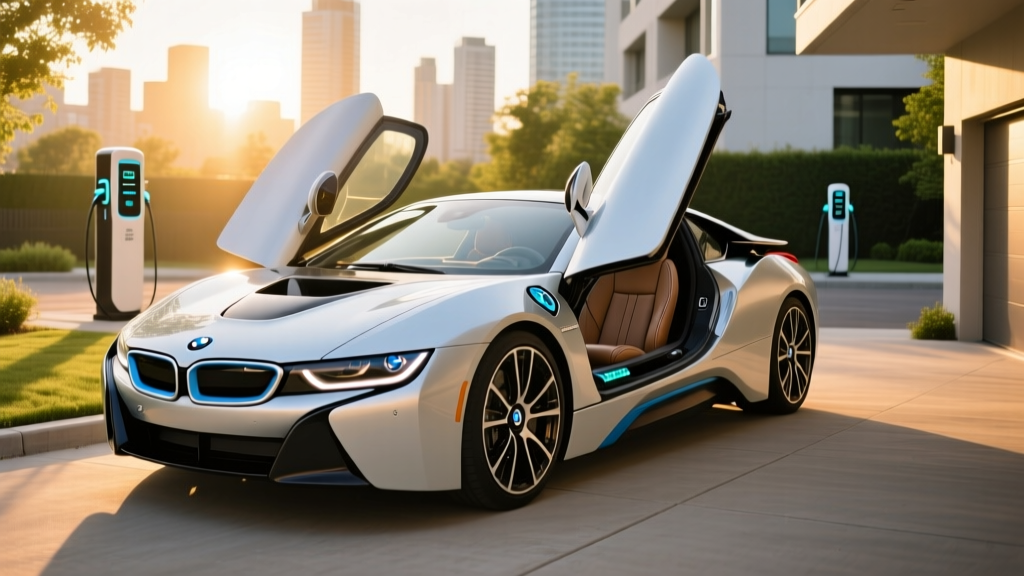
The BMW i8 remains one of the most polarizing electrified vehicles ever built. Launched as a plug-in hybrid sports car, it combined a turbocharged three-cylinder engine with an electric motor in a carbon-fiber body that looked like a concept car you could actually drive. Production ended in 2020, but the i8 has developed a cult following on the used market, and in 2026 it occupies a strange niche: part collectible, part daily-driver PHEV, part gateway drug to full electrification.
If you're searching for a hybrid i8 in 2026, you're likely weighing it against modern PHEVs, full EVs, or conventional sports cars. This guide breaks down everything you need to know — from real-world MPG and electric-only range to battery degradation, reliability, and whether the i8 qualifies for any tax incentives today.
HEV vs PHEV: Where the BMW i8 Fits
The BMW i8 is a plug-in hybrid electric vehicle (PHEV), not a conventional hybrid (HEV). This distinction matters because it defines how you'll use the car day-to-day.
| Feature | Conventional Hybrid (HEV) | Plug-in Hybrid (PHEV) — BMW i8 |
|---|---|---|
| Needs to be plugged in? | No — charges via regen and engine | Yes — for full electric range |
| Electric-only driving | Limited (under 1 mile, low speed) | ~15 miles at highway speeds |
| Battery size | 1–2 kWh | 11.6 kWh (gross, 2019–2020) |
| Fuel economy when battery depleted | Strong (engine optimized) | Moderate (heavy car, small engine) |
| Tax credit eligibility (new) | None | Qualified when new (§30D) |
Conventional hybrids like the Toyota Prius never need a plug — they generate electricity from braking and the engine. The i8, as a PHEV, rewards owners who plug in regularly with silent, zero-tailpipe-emission commuting for short trips. Drive it without charging, and you're hauling a 3,500-pound sports car with a 1.5-liter three-cylinder doing most of the work.
BMW i8 Powertrain and Performance Specs
The i8's powertrain was genuinely innovative when it launched and still holds up in 2026 as an engineering showcase. Here's exactly what's under the carbon-fiber skin:
| Specification | BMW i8 (2019–2020 Final Model Years) |
|---|---|
| Engine | 1.5L turbocharged 3-cylinder (rear axle) |
| Engine output | 228 hp / 236 lb-ft |
| Electric motor | 141 hp / 184 lb-ft (front axle) |
| Combined system output | 369 hp / 420 lb-ft |
| 0–60 mph | 4.2 seconds (EPA) |
| Top speed | 155 mph (electronically limited) |
| Drivetrain | AWD (engine rear, motor front) |
| Transmission | 6-speed automatic (engine) / 2-speed auto (motor) |
| Curb weight | ~3,500 lbs |
| Battery (gross / usable) | 11.6 kWh / ~9.4 kWh |
| Battery chemistry | NMC (nickel manganese cobalt) |
| Onboard charger | 3.7 kW (Level 2 AC only) |
| DC fast charging | Not supported |
The split-axle design means the gasoline engine drives the rear wheels while the electric motor handles the front, creating an all-wheel-drive system without a mechanical connection between axles. It's clever, but it also means the car's behavior changes noticeably depending on battery state of charge.
Fuel Economy: EPA Ratings vs Real-World MPG
The i8's efficiency numbers require context because PHEVs report two sets of figures: MPGe (when the battery is charged) and MPG (when running on gasoline alone).
| Metric | EPA Rating | Real-World Expectation |
|---|---|---|
| Combined MPGe (charged) | 69 MPGe | 60–75 MPGe depending on trip length |
| Gas-only combined MPG | 28 MPG | 24–30 MPG (city favors regen; highway drops) |
| City MPG (gas-only) | 28 MPG | 27–32 MPG (regen helps in stop-and-go) |
| Highway MPG (gas-only) | 29 MPG | 24–27 MPG (aero drag, sporty tuning) |
| Electric-only range | 15 miles | 12–18 miles (temperature and speed dependent) |
| Total combined range | 320 miles | 280–340 miles |
| Fuel tank | 11.1 gallons | — |
According to fueleconomy.gov, the 2019–2020 BMW i8 achieves 69 MPGe when operating on a full charge and 28 MPG combined once the battery is depleted. In practice, owners who charge daily and commute under 15 miles may use almost no gasoline for weeks. But take the i8 on a 300-mile road trip and you'll see that gas-only MPG settle around 25–27 on the highway — respectable for a 369-hp AWD sports car, but not Prius territory.
Cold weather cuts the electric range by roughly 20–30%, dropping usable electric miles to around 10–12 in freezing temperatures. The i8's battery thermal management is passive compared to modern liquid-cooled packs, which means extreme heat or cold affects both range and charging speed more than newer PHEVs.
Charging the i8: What to Expect in 2026
The i8 supports Level 1 (120V household outlet) and Level 2 (240V) AC charging only. There is no DC fast charging capability — a limitation that was acceptable in 2015 but feels dated today.
| Charging Level | Power | Time to Full (0–100%) | Notes |
|---|---|---|---|
| Level 1 (120V) | ~1.4 kW | ~7–8 hours | Standard household outlet; overnight |
| Level 2 (240V) | 3.7 kW | ~2.5–3 hours | Home wallbox or public Level 2 station |
| DC Fast Charge | N/A | N/A | Not supported on any model year |
With the 11.6 kWh battery, you're never waiting long even on Level 2. A full charge in under three hours means you can top up during a workday or between errands. The 3.7 kW onboard charger is the bottleneck — even if you plug into a 7.2 kW or 11.5 kW Level 2 station, the i8 will only draw 3.7 kW.
For used buyers in 2026, this means home charging setup is straightforward: a standard NEMA 14-50 outlet and a portable Level 2 EVSE (like a ChargePoint Home Flex set to 16 amps) will max out the i8's charging capability without requiring a panel upgrade in most homes.
Battery Reliability, Degradation, and Warranty
Original BMW i8 High-Voltage Battery Warranty:
- 8 years / 80,000 miles (whichever comes first)
- Covers defects and capacity loss below ~70% of original capacity
- Transferable to subsequent owners
The i8's 11.6 kWh NMC battery has proven reasonably durable, but it's not immune to age-related degradation. Most 2015–2018 examples in 2026 are now 8–11 years old, meaning original battery warranties have expired or are expiring. The 2019–2020 models (which received the larger 11.6 kWh pack, up from the original 7.1 kWh) still have some warranty coverage remaining through 2027–2028.
Real-world degradation data from owner forums and fleet analysis suggests most i8 batteries lose roughly 10–18% capacity over the first 8 years. That translates to electric-only range dropping from the original 15 miles to around 12–13 miles on an older example. This is moderate — not class-leading, but not alarming either.
Battery replacement cost: If the high-voltage battery fails out of warranty, expect a replacement to cost between $10,000 and $16,000 including parts and labor at a BMW dealer. Third-party hybrid battery specialists can sometimes repair individual modules for $2,000–$5,000. The i8's battery is composed of eight modules, and individual module replacement is possible, which helps contain costs compared to a full pack swap.
The gasoline engine and conventional 12V battery have been largely reliable. The most commonly reported mechanical issues involve the two-speed electric motor transmission (occasional shudder at low speeds) and the complex door hinge mechanisms on the coupe — not powertrain-related, but expensive to fix.
Pricing and Tax Credit Eligibility in 2026
Since the BMW i8 is no longer in production, all purchases in 2026 are on the used market. Here's where pricing stands:
| Model Year | Typical Used Price Range (2026) | Notes |
|---|---|---|
| 2015–2016 | $52,000–$68,000 | 7.1 kWh battery, 13 mi EV range |
| 2017–2018 | $60,000–$78,000 | 7.1 kWh battery, Roadster available (2018) |
| 2019–2020 | $75,000–$105,000+ | 11.6 kWh battery, 15 mi EV range, final edition |
Federal tax credit: The i8 originally qualified for up to $7,500 under IRS §30D when purchased new. However, for used purchases in 2026, the relevant credit is the Used Clean Vehicle Credit (§25E), which offers up to $4,000 or 30% of the sale price (whichever is lower) on used EVs and PHEVs purchased from a dealer for $25,000 or less. Since virtually all used i8s sell well above $25,000, the i8 does not qualify for the used EV tax credit in practice.
For current rules on the used-vehicle credit, consult the IRS §25E page or speak with a tax professional. State-level incentives vary and some states offer rebates on used PHEVs regardless of price — check your state's energy or environmental agency for specifics.
Who Should Buy a Hybrid i8 in 2026?
Pros
- Stunning design that still turns heads in 2026
- Carbon-fiber construction keeps weight low for a PHEV
- AWD with 369 hp — genuinely quick (4.2s to 60)
- Short EV range covers many daily commutes silently
- Strong enthusiast community and growing collectibility
- Butterfly doors and futuristic interior feel special
Cons
- Only 15 miles of electric range — far less than modern PHEVs
- No DC fast charging; 3.7 kW AC max
- Tiny back seats (coupe) or no back seats (Roadster)
- Limited cargo space (~4.7 cu ft)
- Out-of-warranty battery replacement is $10K–$16K
- Run-flat tires, specialized bodywork = high maintenance costs
- Infotainment and driver-assist tech feels dated vs 2026 standards
Choose the i8 if:
You want a weekend sports car that can handle a 10-mile electric commute during the week. You value exclusivity, design, and driving dynamics over practicality. You have home charging access and don't mind higher maintenance costs. You're comfortable buying a used vehicle with an aging high-voltage battery and have budget set aside for potential repairs.
Look elsewhere if:
You need daily practicality, rear seats, cargo space, or modern ADAS features. If your priority is maximum electric range, a 2026 PHEV like the Toyota RAV4 Prime (42 miles EV) or a full EV like the Hyundai Ioniq 5 (310+ miles) will serve you better. If you want a used luxury PHEV with more range, the 2022+ BMW X5 xDrive45e offers 31 miles of electric range with far more utility.
BMW i8 vs Modern Alternatives
| Metric | BMW i8 (2019–2020) | Toyota RAV4 Prime (2026) | BMW X5 xDrive50e (2026) |
|---|---|---|---|
| Type | PHEV sports car | PHEV SUV | PHEV luxury SUV |
| EV range | 15 mi | 42 mi | 38 mi |
| Combined MPG (gas) | 28 | 38 | 25 |
| Combined HP | 369 | 302 | 483 |
| 0–60 mph | 4.2s | 5.7s | 4.6s |
| Battery kWh | 11.6 | 18.1 | 25.7 |
| DC fast charge | No | No | No |
| Used/new price (2026) | $75K–$105K (used) | ~$46K (new) | ~$72K (new) |
| Federal credit (new) | N/A (discontinued) | Up to $7,500* | Up to $7,500* |
*§30D eligibility depends on MSRP caps, buyer income limits, and battery sourcing requirements. Verify at IRS.gov.
The i8 isn't competing with these vehicles on paper — it's competing on emotion. If you cross-shop it against a RAV4 Prime, you're asking the wrong question. The i8 is a collectible sports car that happens to have a plug. The RAV4 Prime is a practical family hauler that happens to be quick.
Frequently Asked Questions
How many MPG does the BMW i8 hybrid get?
The EPA rates the 2019–2020 i8 at 69 MPGe when the battery is charged and 28 MPG combined when running on gasoline alone. Real-world gas-only MPG ranges from 24 to 30 depending on driving style and conditions. City driving with regenerative braking tends to produce better gas-only numbers than sustained highway cruising.
How far can the BMW i8 go on electric only?
The 2019–2020 i8 (11.6 kWh battery) is EPA-rated for 15 miles of electric-only range. In real-world driving, expect 12–18 miles depending on temperature, speed, and terrain. Earlier 2015–2018 models with the smaller 7.1 kWh battery manage around 12–13 miles EPA (roughly 10–14 real-world).
Hybrid vs PHEV vs EV — which is right for me?
If you have home charging and a commute under 15 miles, the i8's PHEV setup lets you drive electric most days while keeping a gas engine for road trips. If you want zero gasoline use, a full EV (like the Tesla Model 3 or Ford Mustang Mach-E) eliminates tailpipe emissions entirely. If you can't charge at home, a conventional hybrid (HEV) like the Toyota Camry Hybrid requires no plug and still delivers strong MPG. The i8 specifically is best for enthusiasts who want a PHEV sports car and accept its practicality trade-offs.
Is the BMW i8 reliable, and what does a battery replacement cost?
The i8's powertrain has been generally reliable, with most issues relating to the complex body (butterfly door hinges, carbon-fiber repair costs) rather than the hybrid system. The high-voltage battery typically degrades 10–18% over 8 years. Out-of-warranty replacement costs $10,000–$16,000 at a dealer, though module-level repairs can cost $2,000–$5,000. The original 8-year/80,000-mile battery warranty still applies to 2019–2020 models through 2027–2028.
Does a used BMW i8 qualify for any tax credit?
Not in most cases. The federal Used Clean Vehicle Credit (§25E) requires a sale price of $25,000 or less, and used i8s sell far above that threshold. The original $7,500 new-vehicle credit (§30D) is no longer available since production ended in 2020. Some state incentives may apply — check your local energy agency. Always consult a tax professional for your specific situation.
Can the BMW i8 charge at Tesla Superchargers or DC fast stations?
No. The i8 only supports AC charging (Level 1 and Level 2) at a maximum of 3.7 kW. It cannot use DC fast chargers of any type — including Tesla Superchargers, Electrify America, or EVgo stations. All charging must be done via the J1772 connector on AC power.