If you've been researching Toyota's best-selling SUV and wondering where is the RAV4 Hybrid made, you're not alone. With global supply chains shifting and buyers paying closer attention to manufacturing origins, the answer matters — both for build-quality expectations and for understanding which RAV4 variants qualify for federal tax incentives. This guide covers every 2026 Toyota RAV4 Hybrid and RAV4 Prime (PHEV) production location, along with the exact MPG figures, powertrain specs, battery warranties, and ownership economics you need before signing a purchase agreement.
RAV4 Hybrid Production Locations: The Full Breakdown
The 2026 Toyota RAV4 Hybrid (HEV) sold in the United States is assembled at Toyota Motor Manufacturing Canada (TMMC) in Cambridge and Woodstock, Ontario. Toyota has produced the RAV4 at its Canadian plants since the model's North American introduction, and the hybrid powertrain variant has been built there since the fourth-generation refresh.
However, the RAV4 lineup includes more than just the conventional hybrid. Here's how production maps across the range:
| Model Variant | Assembly Plant | Country |
|---|---|---|
| RAV4 Gas (ICE) | TMMC Cambridge/Woodstock | Canada |
| RAV4 Hybrid (HEV) | TMMC Cambridge/Woodstock | Canada |
| RAV4 Prime (PHEV) | TMMC Cambridge/Woodstock | Canada |
Toyota's Canadian plants are among its highest-quality facilities globally, consistently earning top marks in J.D. Power Initial Quality Studies. For buyers concerned about build consistency, Canadian-assembled RAV4s have a strong track record.
It's worth noting that some RAV4 units sold in other global markets (Japan, Europe, Australia) are assembled at Toyota's Tahara plant in Aichi, Japan or at the Takaoka plant. If you're importing or comparing international specs, the VIN's first character reveals origin: "2" = Canada, "J" = Japan.
HEV vs. PHEV: Understanding the Two RAV4 Hybrid Options
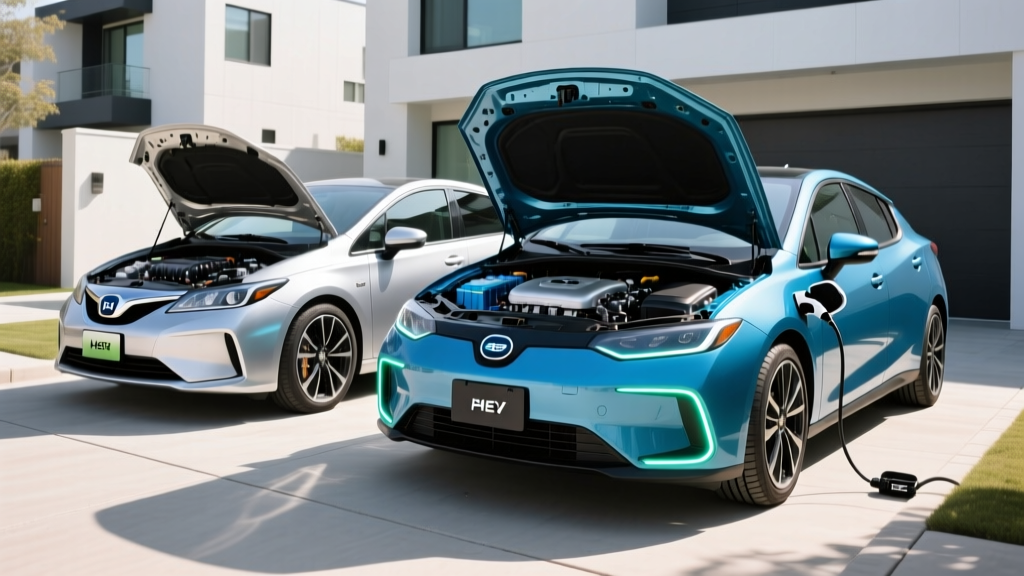
Toyota sells two electrified RAV4 variants in 2026, and confusing them is one of the most common buyer mistakes. Here's the critical distinction:
RAV4 Hybrid (HEV)
- No plug required — the battery recharges via regenerative braking and the gasoline engine
- Small 1.6 kWh nickel-metal hydride (NiMH) traction battery
- Electric motor assists the gas engine at all speeds; cannot drive on electric power alone for meaningful distance
- Fuels like a conventional car — just fill up with regular 87-octane gasoline
- No federal tax credit eligibility under IRS §30D
RAV4 Prime (PHEV)
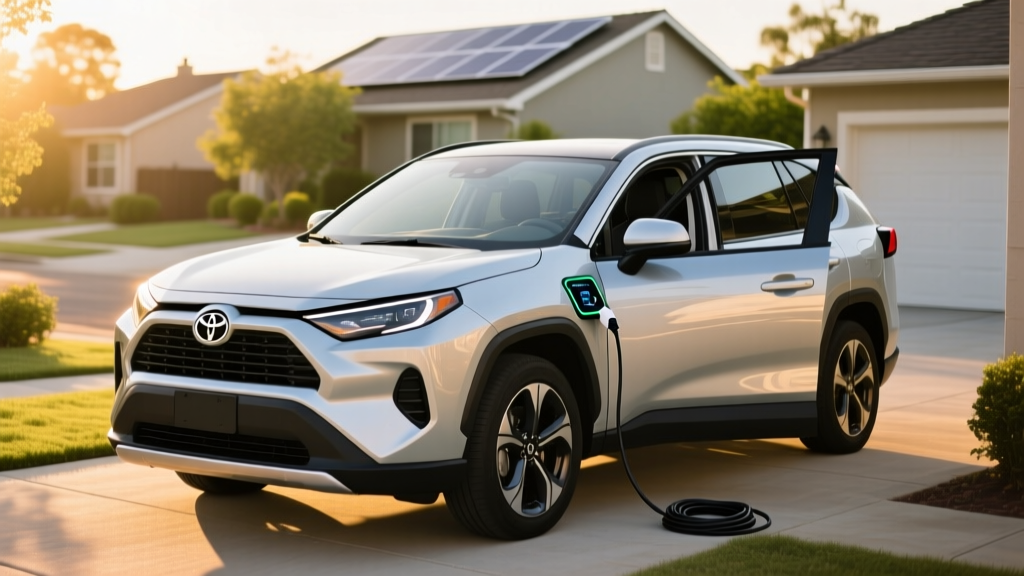
- Plug-in capable — charge from a wall outlet or public station to unlock electric-only driving
- 18.1 kWh lithium-ion traction battery
- EPA-rated 42 miles of electric-only range before the gas engine engages
- Can DC fast charge (CHAdeMO connector on earlier models; verify 2026 connector spec at dealer)
- May qualify for the federal §30D tax credit (up to $7,500) — see eligibility section below
If you never want to think about charging infrastructure, the HEV is the simpler path. If you have home charging access and a commute under 42 miles round-trip, the PHEV can eliminate nearly all daily gasoline consumption.
Fuel Economy: Real MPG for the RAV4 Hybrid and RAV4 Prime
The EPA publishes official fuel-economy figures, but real-world results for Toyota's hybrid system frequently differ — especially in city driving, where regenerative braking recaptures energy that conventional cars waste.
| Model | EPA City | EPA Highway | EPA Combined | Real-World Expectation |
|---|---|---|---|---|
| RAV4 Hybrid AWD (LE/XLE) | 41 MPG | 38 MPG | 40 MPG | 38–43 MPG (city-skewed driving favors HEV) |
| RAV4 Hybrid AWD (Woodland Edition) | 38 MPG | 35 MPG | 37 MPG | 35–39 MPG (all-terrain tires reduce efficiency) |
| RAV4 Prime (PHEV, electric mode) | 94 MPGe combined (electric), 38 MPG combined (gas) | 42 mi EV range; ~400 mi total range | ||
Source: fueleconomy.gov
Real-world note: Toyota's Hybrid Synergy Drive system excels in stop-and-go traffic. Owners who drive predominantly in city conditions often report 42–44 MPG in warm weather — exceeding the EPA city figure. Conversely, sustained highway driving at 75+ MPH in cold weather (below 30°F) can drop the RAV4 Hybrid to 33–35 MPG as the engine runs more frequently for cabin heat and battery thermal management.
Powertrain Specifications: What's Under the Hood
| Specification | RAV4 Hybrid (HEV) | RAV4 Prime (PHEV) |
|---|---|---|
| Engine | 2.5L 4-cylinder Dynamic Force | 2.5L 4-cylinder Dynamic Force |
| Engine HP | 176 hp / 163 lb-ft | 177 hp / 165 lb-ft |
| Front Motor | 88 kW (118 hp) | 134 kW (180 hp) |
| Rear Motor (AWD-i / AWD) | 40 kW (54 hp) | 40 kW (54 hp) |
| Combined Net HP | 219 hp | 302 hp |
| 0–60 MPH | 7.4 seconds | 5.7 seconds |
| Traction Battery | 1.6 kWh NiMH | 18.1 kWh lithium-ion |
| EV-Only Range (PHEV) | N/A | 42 miles (EPA) |
| Level 2 Charge Time (PHEV) | N/A (no plug) | ~2.5 hours at 6.6 kW (240V) |
| DC Fast Charge (PHEV) | N/A | Available (verify connector) |
| Drivetrain | AWD (electronic rear motor) | AWD (electronic rear motor) |
| Fuel Type | Regular 87-octane | Regular 87-octane |
The RAV4 Prime's 302 combined horsepower makes it the quickest RAV4 Toyota has ever sold — quicker, in fact, than many V6-equipped midsize SUVs. If performance matters alongside efficiency, the PHEV is the clear choice.
Pricing, Trims, and Federal Tax Credit Eligibility
Here's where manufacturing origin intersects directly with your wallet. The IRS §30D Clean Vehicle Credit has strict battery-component and critical-mineral sourcing requirements that vary by model year and production batch.
| Model / Trim | 2026 MSRP (approx.) | Federal Tax Credit |
|---|---|---|
| RAV4 Hybrid LE | $33,425 | Not eligible (HEV — no plug) |
| RAV4 Hybrid XLE | $34,925 | Not eligible |
| RAV4 Hybrid XLE Premium | $36,850 | Not eligible |
| RAV4 Hybrid Woodland Edition | $36,425 | Not eligible |
| RAV4 Hybrid Limited | $39,725 | Not eligible |
| RAV4 Prime SE | $44,915 | Up to $7,500 (verify sourcing) |
| RAV4 Prime XSE | $48,215 | Up to $7,500 (verify sourcing) |
§30D Tax Credit Checklist for the RAV4 Prime (PHEV)
- MSRP cap: SUVs must be at or below $80,000 — both Prime trims qualify
- Buyer income cap: Modified AGI ≤ $150,000 (single), $225,000 (head of household), $300,000 (joint)
- Battery sourcing: Must meet critical-mineral and battery-component requirements per IRS guidance — these thresholds tighten annually. Verify with your dealer at point of sale.
- Point-of-sale transfer: You can transfer the credit to the dealer for an upfront price reduction, or claim it on your tax return (Form 8936)
- Final assembly: Must occur in North America — Canadian assembly qualifies
Source: IRS.gov — Clean Vehicle Credits
Important: The conventional RAV4 Hybrid (HEV) does not qualify for any federal tax credit because it lacks a plug and does not meet the §30D definition of a qualified plug-in electric vehicle. Some states offer rebates for hybrids — check your state energy office or AFDC incentive database for local programs.
Battery Warranty, Reliability, and Replacement Costs
Toyota Hybrid Battery Warranty
Coverage: 10 years / 150,000 miles (whichever comes first) on the hybrid traction battery, effective for 2020 and newer model years.
What's covered: Defects in materials/workmanship and capacity loss below a defined threshold (typically ~60–70% of original capacity, per Toyota's warranty documentation).
Transferability: Fully transferable to subsequent owners — a meaningful resale-value advantage.
Toyota's hybrid battery track record is among the best in the industry. The RAV4 Hybrid's 1.6 kWh NiMH battery operates within a conservative state-of-charge window (roughly 40–80%), which dramatically reduces degradation compared to full EVs that regularly cycle from 10–100%. Real-world data from fleet operators and high-mileage owners shows most Toyota hybrid batteries retain 85–90%+ capacity at the 10-year mark.
Replacement cost if out of warranty:
- RAV4 Hybrid (NiMH): $2,500–$3,500 for a new OEM battery pack, plus ~$300–$500 labor
- RAV4 Prime (lithium-ion): $5,000–$7,000+ for a new OEM pack, plus labor
- Refurbished/remanufactured options: $1,500–$2,500 for the HEV battery from third-party suppliers
For context, the vast majority of RAV4 Hybrid owners will never need a battery replacement within the vehicle's useful life. Toyota's Hybrid Synergy Drive has powered millions of vehicles worldwide (including the Prius, Camry Hybrid, and Highlander Hybrid) with a failure rate well below 1% within the warranty period.
Who Should Choose the RAV4 Hybrid vs. a Full EV or Gas SUV?
Choose the RAV4 Hybrid (HEV) If:
- You want maximum MPG without ever plugging in
- You lack access to home or workplace charging
- Your budget is $33,000–$40,000
- You want proven reliability with minimal drivetrain complexity
- You regularly drive in city or suburban stop-and-go conditions (where the hybrid system shines)
- You plan to keep the vehicle 8–12 years and want strong resale value
Choose the RAV4 Prime (PHEV) If:
- You have Level 2 home charging (240V) and a commute under 42 miles
- You want electric-only daily driving with gas-engine freedom for road trips
- You qualify for the §30D credit (income and sourcing requirements met)
- Performance matters — 302 hp and 5.7-second 0–60 is sports-sedan territory
- You want to future-proof against rising gas prices without range anxiety
RAV4 HEV vs. PHEV vs. Full EV (like the bZ4X or Tesla Model Y)
Choose the HEV if charging access is zero and you want simplicity. Total cost of ownership is lowest for buyers who drive 10,000–12,000 miles/year and cannot install a home charger.
Choose the PHEV if you can charge at home but still need road-trip flexibility. The RAV4 Prime covers most daily commutes electrically while eliminating range anxiety on longer drives. It's the bridge solution for apartment dwellers with workplace charging or homeowners planning a future full-EV transition.
Choose a full EV if you have reliable home Level 2 charging, drive under 250 miles daily, and want zero tailpipe emissions plus the lowest per-mile fuel cost (electricity at $0.14/kWh ≈ $1.20/gallon equivalent). EVs also have fewer moving parts — no oil changes, no transmission fluid, no exhaust system.
Frequently Asked Questions
How many MPG does the 2026 RAV4 Hybrid get?
The EPA rates the 2026 RAV4 Hybrid AWD at 41 city / 38 highway / 40 combined MPG. In real-world city-dominant driving, owners frequently report 42–44 MPG thanks to Toyota's regenerative braking system. Sustained highway driving above 75 MPH or in cold weather can reduce this to 33–36 MPG.
How far can the RAV4 Prime go on electric only?
The 2026 RAV4 Prime achieves an EPA-rated 42 miles of electric-only range on its 18.1 kWh lithium-ion battery. Combined with the gas engine, total range exceeds 400 miles. Actual EV range varies with temperature — expect 34–38 miles in cold weather (below 35°F) due to cabin heating demand and reduced battery efficiency.
Does the RAV4 Hybrid qualify for a tax credit?
The conventional RAV4 Hybrid (HEV) does not qualify for the federal §30D Clean Vehicle Credit because it is not a plug-in vehicle. The RAV4 Prime (PHEV) may qualify for up to $7,500, subject to buyer income limits ($150K single / $300K joint), MSRP caps (under $80K for SUVs — both trims qualify), and battery-sourcing requirements. Always verify current-year eligibility on IRS.gov and with your dealer before purchase.
Is the RAV4 Hybrid reliable? What does a battery replacement cost?
Yes — Toyota's Hybrid Synergy Drive is among the most proven electrified powertrains globally, with millions of units in service. The hybrid battery is warranted for 10 years / 150,000 miles. Out-of-warranty replacement runs $2,500–$3,500 for the HEV's NiMH pack and $5,000–$7,000+ for the Prime's lithium-ion pack. Most owners never need a replacement.
Is the RAV4 Hybrid made in the USA or Japan?
Neither. The 2026 RAV4 Hybrid sold in North America is assembled at Toyota Motor Manufacturing Canada (TMMC) in Cambridge and Woodstock, Ontario. Some global-market RAV4s are built in Japan (Tahara or Takaoka plants). Check the first character of the VIN: "2" indicates Canada; "J" indicates Japan.
Can I charge the regular RAV4 Hybrid at home?
No. The conventional RAV4 Hybrid (HEV) has no charging port. Its small 1.6 kWh battery recharges entirely through regenerative braking and the gasoline engine. Only the RAV4 Prime (PHEV) has a charging port and can be plugged in at home (120V Level 1 or 240V Level 2).
Does the RAV4 Prime support DC fast charging?
The RAV4 Prime has offered DC fast-charge capability on certain model years (typically via CHAdeMO connector). For the 2026 model year, confirm the specific connector type and availability with your dealer, as Toyota has been transitioning toward CCS/NACS standards across its lineup. Level 2 home charging at 6.6 kW fully replenishes the battery in approximately 2.5 hours.