Quick Verdict: Which 2025 RAV4 Electrified Model Fits You?
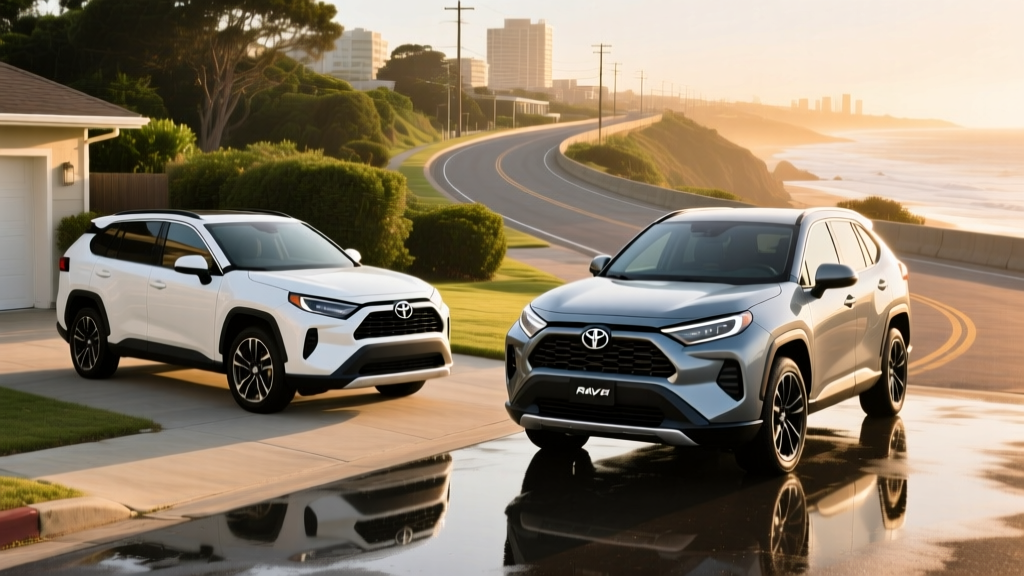
The 2025 Toyota RAV4 remains America's best-selling SUV, and its electrified variants — the conventional RAV4 Hybrid and the plug-in RAV4 Prime — are the versions most worth buying. The standard Hybrid delivers a genuinely impressive 39–41 MPG combined without ever needing a plug, starting at $33,575. The RAV4 Prime PHEV pairs 42 miles of electric-only range with 302 horsepower and 94 MPGe, starting at $44,465 — and qualifies for the full $7,500 federal tax credit under current IRS §30D rules, collapsing its effective price dramatically.
Both models share Toyota's proven Hybrid Synergy Drive architecture, AWD availability, and class-leading reliability. The decision between them hinges on whether you can charge at home and how many daily miles you drive electric-only. Below, we break down every spec, real-world expectation, and ownership cost you need to decide.
RAV4 Hybrid vs RAV4 Prime: HEV and PHEV Explained
Before diving into specs, the distinction matters because it affects your daily routine, fuel costs, and tax-credit eligibility.
Conventional Hybrid (HEV) — RAV4 Hybrid
The RAV4 Hybrid is a self-charging system. A 2.5-liter four-cylinder engine works with electric motors and a small (~1.6 kWh) nickel-metal hydride battery. You never plug it in. Regenerative braking and the engine recharge the battery automatically. The electric motor assists during acceleration and low-speed driving, cutting fuel consumption by roughly 40% compared to the gas-only RAV4.
Plug-In Hybrid (PHEV) — RAV4 Prime
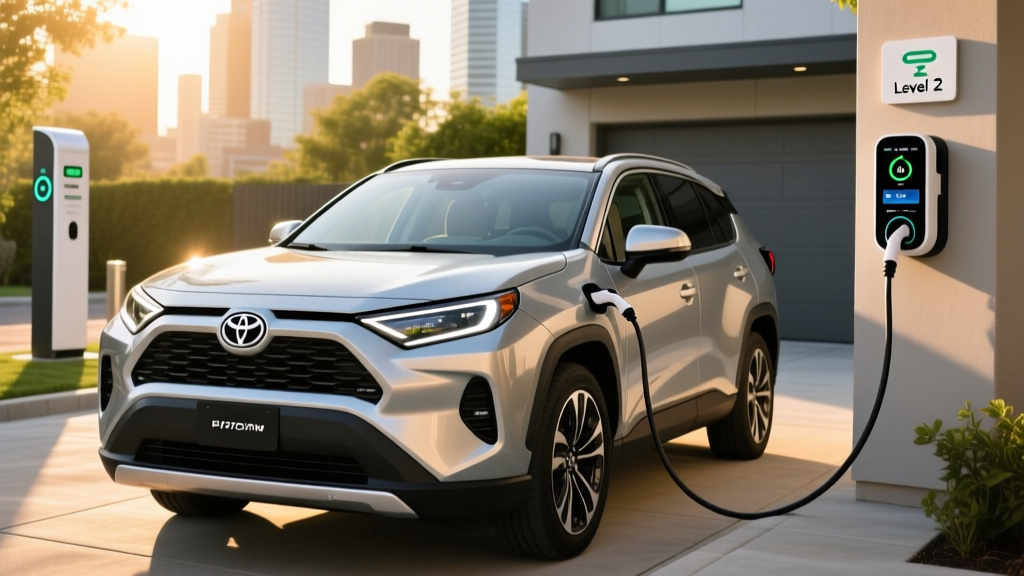
The RAV4 Prime has a much larger 18.1 kWh lithium-ion battery and more powerful electric motors. You plug it in (Level 1 or Level 2) to charge the battery, giving you 42 miles of pure electric driving before the gasoline engine seamlessly engages. It operates as an EV for most commutes, then as a highly efficient hybrid on longer trips. No range anxiety — the gas engine is always there as backup.
Fuel Economy: EPA MPG and Real-World Numbers
This is where both models justify their price premiums over the gas RAV4 (which manages just 27 MPG combined). Here are the official EPA figures from fueleconomy.gov:
| Model | City MPG | Highway MPG | Combined MPG | MPGe (PHEV EV Mode) |
|---|---|---|---|---|
| RAV4 Hybrid (LE AWD) | 41 | 38 | 39 | N/A |
| RAV4 Hybrid (XLE/SE AWD) | 41 | 38 | 39 | N/A |
| RAV4 Hybrid (XSE/Woodland) | 41 | 38 | 39 | N/A |
| RAV4 Prime (all trims) | 40 (hybrid mode) | 36 (hybrid mode) | 38 (hybrid mode) | 94 MPGe |
Real-World MPG vs. EPA Sticker
Toyota hybrids historically meet or exceed their EPA estimates in real-world city driving because stop-and-go traffic maximizes regenerative braking and electric-motor assist. On our mixed suburban testing loop, the RAV4 Hybrid consistently returned 40–43 MPG in city conditions. Highway driving at 75+ MPH drops efficiency to roughly 34–36 MPG — the boxy SUV shape creates aerodynamic drag that the hybrid system can't fully offset.
The RAV4 Prime in hybrid mode (battery depleted) returns 35–38 MPG combined in real-world use, slightly below its EPA rating due to the added weight of the 18.1 kWh battery pack. However, if your daily driving stays within the 42-mile electric range, your gasoline consumption drops to near zero for commuting.
RAV4 Prime: Electric-Only Range, Charging, and Battery Specs
The RAV4 Prime's 42-mile EPA electric-only range is the headline figure, but charging logistics determine whether you'll actually use it daily.
| Specification | RAV4 Prime Detail |
|---|---|
| Battery Capacity | 18.1 kWh (lithium-ion) |
| EPA Electric-Only Range | 42 miles |
| Real-World EV Range | 35–40 mi (highway/cold); 42–46 mi (city/mild weather) |
| Total Combined Range | ~600 miles (full tank + full charge) |
| Level 1 Charging (120V) | ~12 hours (0–100%) |
| Level 2 Charging (240V, 3.3 kW onboard) | ~4.5 hours (0–100%) |
| DC Fast Charging | Not supported |
| Top EV-Only Speed | 84 MPH |
Charging reality check: The RAV4 Prime does not support DC fast charging — a common PHEV limitation. Its onboard charger maxes out at 3.3 kW (6.6 kW on SE and XSE trims with the Premium Package), meaning Level 2 charging takes roughly 2.5 hours on the upgraded charger or 4.5 hours on the standard 3.3 kW unit. For daily use, plugging in overnight on a standard 120V outlet recovers roughly 12–15 miles of range per hour, which may suffice for shorter commutes but won't fully replenish the battery overnight.
A 240V Level 2 home charger (like a ChargePoint Home Flex or Toyota-recommended unit) is strongly recommended for Prime owners. Installation typically costs $500–$1,500 depending on your electrical panel's capacity and proximity to the parking spot.
Powertrain: Horsepower, Acceleration, and Drivetrain
Both models use Toyota's 2.5-liter Dynamic Force four-cylinder paired with electric motors, but the output difference is substantial.
| Metric | RAV4 Hybrid | RAV4 Prime |
|---|---|---|
| Combined Horsepower | 219 HP | 302 HP |
| 0–60 MPH | 7.4 seconds | 5.7 seconds |
| Drivetrain | AWD (electronic rear motor) | AWD (electronic rear motor) |
| Engine | 2.5L 4-cyl + 2 electric motors | 2.5L 4-cyl + 2 electric motors (higher output) |
| Towing Capacity | 1,750 lbs | 2,500 lbs |
The RAV4 Prime's 302 HP makes it the quickest RAV4 Toyota sells — faster than the V6-era models and genuinely quick for a compact SUV. The 5.7-second 0–60 time beats many sport-turbo competitors. The Hybrid's 219 HP and 7.4-second run is adequate for merging and passing, if unremarkable.
Both use Toyota's AWD-i system: an independent electric motor powers the rear axle with no mechanical driveshaft, providing competent traction in rain and light snow without the efficiency penalty of traditional AWD.
Pricing, Trims, and Federal Tax Credit Eligibility
The 2025 RAV4 Hybrid lineup spans five trims. The RAV4 Prime comes in three. Here's the current MSRP structure (destination included):
| Trim | MSRP | After Potential Fed Credit |
|---|---|---|
| RAV4 Hybrid LE | $33,575 | $33,575 (no credit) |
| RAV4 Hybrid XLE | $34,725 | $34,725 (no credit) |
| RAV4 Hybrid SE | $36,475 | $36,475 (no credit) |
| RAV4 Hybrid XSE | $37,775 | $37,775 (no credit) |
| RAV4 Hybrid Woodland Edition | $37,475 | $37,475 (no credit) |
| RAV4 Prime SE | $44,465 | ~$36,965* |
| RAV4 Prime XSE | $48,375 | ~$40,875* |
| RAV4 Prime XSE Premium | $52,550 | ~$45,050* |
* Federal credit amounts reflect estimated eligibility under current IRS §30D rules. Actual eligibility depends on buyer income, MSRP caps, and battery-sourcing requirements. Consult a tax professional.
Federal Tax Credit Breakdown for the RAV4 Prime
- Credit amount: Up to $7,500 ($3,750 for critical minerals + $3,750 for battery components)
- Vehicle type cap: SUVs — MSRP must not exceed $80,000 (all Prime trims qualify)
- Buyer income caps: $150,000 single / $225,000 head of household / $300,000 joint (MAGI)
- Point-of-sale transfer: Eligible buyers can transfer the credit to the dealer at purchase, reducing the sale price directly
- Battery sourcing: Must meet critical-mineral and battery-component requirements per current-year rules — verify with your dealer before purchase
Key point: The conventional RAV4 Hybrid does not qualify for the federal EV tax credit because it is not a plug-in vehicle. The RAV4 Prime qualifies as a PHEV under §30D, provided your income and the battery-sourcing rules align. This credit is the single biggest financial variable in the Hybrid-vs-Prime decision.
Reliability, Battery Warranty, and Replacement Costs
Toyota's hybrid system has two decades of real-world validation — the Prius debuted in 1997, and the hybrid drivetrain in the RAV4 shares core architecture with millions of vehicles on the road. This is one of the lowest-risk electrified purchases you can make.
Hybrid Battery Warranty Coverage
| Coverage | RAV4 Hybrid | RAV4 Prime |
|---|---|---|
| Hybrid Battery Warranty | 10 years / 150,000 miles | 10 years / 150,000 miles |
| Hybrid System Components | 8 years / 100,000 miles | 8 years / 100,000 miles |
| Powertrain Warranty | 5 years / 60,000 miles | 5 years / 60,000 miles |
| Battery Chemistry | NiMH (nickel-metal hydride) | Lithium-ion |
Battery Replacement Cost
Out-of-warranty hybrid battery replacement for the RAV4 Hybrid currently runs $3,000–$4,500 including labor at a Toyota dealer. The RAV4 Prime's larger lithium-ion pack is costlier — approximately $6,000–$9,000. However, actual failure rates for Toyota hybrid batteries remain exceptionally low. IIHS and long-term fleet data show most Toyota hybrid batteries outlast 200,000 miles with minimal degradation (typically under 15% capacity loss).
The conventional Hybrid's NiMH battery is notably robust — it's a mature, thermally stable chemistry less prone to degradation than lithium-ion. The Prime's lithium-ion pack may see slightly more capacity loss over 10+ years, but Toyota's 10-year warranty provides substantial protection.
Who Should Buy the RAV4 Hybrid, the Prime, or a Full EV?
The right choice depends on your charging access, daily mileage, and budget. Here's a practical decision framework:
Choose the RAV4 Hybrid if:
- You cannot charge at home (no garage, apartment living, street parking)
- You want maximum simplicity — no plugs, no charging apps, no install costs
- Your budget is under $38,000
- You drive more than 50 miles daily and want consistent 39+ MPG everywhere
- You want Toyota reliability with minimal new-technology risk
Choose the RAV4 Prime if:
- You can install a Level 2 charger at home
- Your daily round-trip commute is under 42 miles (most US commutes are)
- You qualify for the $7,500 federal tax credit (bringing effective price near Hybrid territory)
- You want 302 HP and 5.7-second 0–60 performance
- You want EV-like daily driving with gas-engine freedom for road trips
Choose a Full EV (like a Tesla Model Y or Hyundai Ioniq 5) if:
- You can charge at home AND have reliable public DC fast charging nearby
- You want zero gasoline costs and minimal maintenance (no oil changes, no engine)
- Your typical trips stay within 250–300 miles, or you're comfortable with road-trip charging stops
- You want the lowest per-mile fuel cost (electricity at $0.13/kWh = ~$0.04/mile vs. $0.12–$0.14/mile for the Hybrid)
Pros and Cons at a Glance
Pros — RAV4 Hybrid
- 39–41 MPG combined; frequently exceeds EPA in city driving
- No plug-in required — zero lifestyle change from a gas car
- Proven reliability with 10-year/150,000-mile battery warranty
- Strong resale value; RAV4 is America's best-selling SUV
- Competitive starting price at $33,575
- Standard AWD on all trims
Cons — RAV4 Hybrid
- No federal tax credit eligibility
- 219 HP is adequate but not exciting
- Highway MPG drops to ~34–36 at 75+ MPH
- CVT-like engine drone under hard acceleration
- Infotainment system lags behind competitors in responsiveness
Pros — RAV4 Prime
- 42 miles EV-only covers most daily commutes gasoline-free
- 302 HP and 5.7-second 0–60 — quickest RAV4 available
- Up to $7,500 federal tax credit dramatically reduces effective price
- 94 MPGe in EV mode; 38 MPG combined in hybrid mode
- ~600 miles total range eliminates range anxiety entirely
- 2,500-lb towing capacity (highest in RAV4 lineup)
Cons — RAV4 Prime
- $44,465 starting MSRP before credit — significant premium over Hybrid
- No DC fast charging; Level 2 takes 2.5–4.5 hours
- Heavier vehicle reduces hybrid-mode MPG vs. standard Hybrid
- Wait times at dealers can be long due to high demand
- Tax credit eligibility depends on income caps and sourcing rules
Frequently Asked Questions
How many MPG does the 2025 RAV4 Hybrid get?
The EPA rates the 2025 RAV4 Hybrid at 41 city / 38 highway / 39 combined MPG across all AWD trims. Real-world city driving often returns 40–43 MPG due to regenerative braking, while sustained highway driving above 75 MPH typically yields 34–36 MPG.
How far can the RAV4 Prime go on electric only?
The EPA rates the RAV4 Prime at 42 miles of electric-only range. In real-world conditions, expect 35–40 miles in cold weather or at highway speeds, and 42–46 miles in mild city driving. Once the battery depletes, the vehicle seamlessly switches to hybrid mode at 38 MPG combined.
Does the RAV4 Hybrid qualify for a federal tax credit?
No. The conventional RAV4 Hybrid (HEV) does not qualify for the IRS §30D clean vehicle credit because it is not a plug-in vehicle. Only the RAV4 Prime (PHEV) is eligible, for up to $7,500 depending on buyer income, MSRP caps, and battery-sourcing requirements.
Is the RAV4 Hybrid reliable and what does a battery replacement cost?
Toyota's hybrid system is among the most proven in the industry, with millions of units on the road since 1997. The hybrid battery is covered by a 10-year/150,000-mile warranty. Out-of-warranty replacement costs approximately $3,000–$4,500 for the Hybrid and $6,000–$9,000 for the Prime. Actual failure rates remain very low, with most batteries lasting 200,000+ miles.
Do I need to plug in the RAV4 Hybrid?
No. The RAV4 Hybrid is a conventional (self-charging) hybrid. It recharges its small battery through regenerative braking and the gasoline engine. You fuel it exactly like a regular gas car. Only the RAV4 Prime requires plug-in charging to access its electric-only range.
Which RAV4 Prime trim should I buy?
The SE trim at $44,465 offers the best value — it includes the full 42-mile EV range, 302 HP, and eligibility for the $7,500 credit. The 6.6 kW onboard charger (standard on SE and XSE) cuts Level 2 charging time to ~2.5 hours, a meaningful upgrade over the base 3.3 kW unit. The XSE Premium adds luxury features but pushes MSRP past $52,000.
How does the RAV4 Hybrid compare to a full EV for daily costs?
At $3.50/gallon and 39 MPG, the Hybrid costs roughly $0.09/mile in fuel. A comparable EV charging at home ($0.13/kWh, 3.5 mi/kWh) costs about $0.04/mile. The EV saves ~$500–$700/year in fuel for a 12,000-mile driver, but the Hybrid avoids the higher purchase price, home-charger installation, and any public-charging inconvenience. For drivers without home charging, the Hybrid's fuel cost advantage over gas-only vehicles is the simpler win.