Quick Verdict: The 2018 Malibu Hybrid Still Delivers in 2026
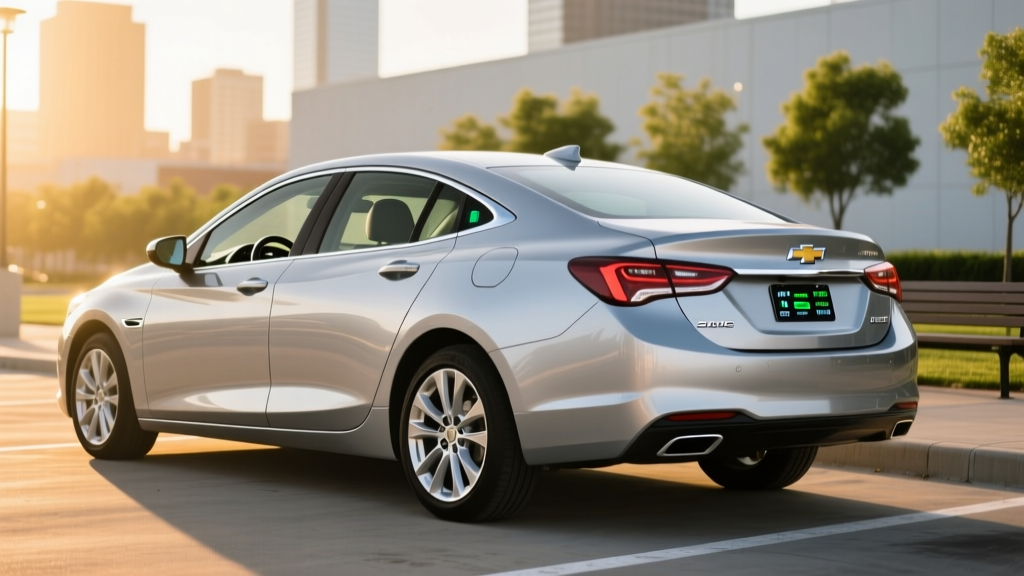
The 2018 Chevrolet Malibu Hybrid is a conventional hybrid (HEV) — meaning it never plugs in — that pairs a 1.8-liter four-cylinder engine with a two-motor electric drive system to achieve an EPA-estimated 46 MPG combined. In 2026, with used examples trading between roughly $11,000 and $17,000 depending on mileage and condition, it remains one of the most fuel-efficient midsize sedans available on the secondary market. For buyers who want serious fuel savings without altering their fueling habits, the Malibu Hybrid is a pragmatic, data-backed choice.
| Spec | Value |
|---|---|
| EPA City / Highway / Combined | 49 / 43 / 46 MPG |
| Combined Horsepower | 182 hp |
| Engine | 1.8L 4-cylinder + 2 electric motors |
| Hybrid Battery | 1.5 kWh (80-cell lithium-ion) |
| Transmission | 2-motor EVT (no fixed gears) |
| 0–60 mph | ~7.5 seconds |
| Fuel Tank | 13.0 gallons |
| Total Range (est.) | ~598 miles |
| Original MSRP (2018) | $28,985 (base, before destination) |
| Used Price Range (2026) | ~$11,000–$17,000 |
| Hybrid Battery Warranty (original) | 8 years / 100,000 miles |
HEV vs PHEV: What the Malibu Hybrid Actually Is
It's essential to distinguish this car from plug-in hybrids. The 2018 Malibu Hybrid is a conventional hybrid (HEV). It recovers energy through regenerative braking and its gasoline engine, storing that energy in a small 1.5 kWh lithium-ion battery. You never plug it in. The electric motors assist the engine during acceleration and can drive the car at low speeds for brief distances, but there is no meaningful electric-only range — perhaps a mile or so at parking-lot speeds before the engine kicks in.
| Feature | 2018 Malibu Hybrid (HEV) | Typical PHEV (e.g., Prius Prime) |
|---|---|---|
| Plugs in? | No | Yes |
| Electric-only range | ~1 mile (low speed only) | 25–40 miles |
| Battery size | 1.5 kWh | 13–18 kWh |
| Federal tax credit (new) | None | Up to $7,500 (§30D) |
| Refueling | Gas station only | Gas station + Level 1/2 charging |
If you were shopping in 2018, the Malibu lineup also included the gas-only Malibu (29 MPG combined with the 1.5T) and a Malibu Hybrid. Chevrolet did not offer a Malibu PHEV. Buyers who wanted plug-in capability from GM in that era had to look at the now-discontinued Chevrolet Volt.
Fuel Economy: EPA Numbers and Real-World MPG
| Driving Cycle | EPA Estimate | Real-World Expectation |
|---|---|---|
| City | 49 MPG | 47–53 MPG |
| Highway | 43 MPG | 39–45 MPG |
| Combined | 46 MPG | 43–48 MPG |
According to fueleconomy.gov, the 2018 Malibu Hybrid earns 49 city / 43 highway / 46 combined MPG. That city-heavy advantage is typical of conventional hybrids: regenerative braking and electric-motor assist shine in stop-and-go traffic, where a gas-only car wastes the most fuel.
Real-world note: Owner-reported data on fuel-economy tracking sites frequently shows combined averages in the 43–48 MPG range. Highway-dominant commutes tend to pull the number toward the low-to-mid 40s, while city-heavy driving can push it above the EPA combined estimate. In cold weather (below 35°F), expect a 5–10% reduction as the engine runs more often to provide cabin heat and the battery operates less efficiently. At an average of $3.30 per gallon (2026 national average), 46 MPG translates to roughly $0.072 per mile in fuel cost — about half what a comparable 25-MPG gas sedan costs.
Powertrain: How the Two-Motor Hybrid System Works
The 2018 Malibu Hybrid uses a powertrain derived from the second-generation Chevrolet Volt's Voltec architecture, adapted for a non-plug-in application. Here's the hardware:
- Engine: 1.8-liter direct-injection 4-cylinder producing 122 hp and 129 lb-ft of torque
- Electric motors: Two permanent-magnet motors integrated into the transaxle, together contributing to a system output of 182 hp
- Transmission: Electronically variable transmission (EVT) using the two motor/generators to blend power — there are no fixed gear ratios, which is why the driving experience is smooth and stepless
- Battery: 80-cell, 1.5 kWh lithium-ion pack located behind the rear seats
The result is a 0–60 mph time of approximately 7.5 seconds — adequate for merging and passing, though not sporty. The two-motor system can operate in several modes: pure electric at very low speeds, engine-only at steady highway cruise, or blended power for hard acceleration. The transitions between modes are well-managed; most drivers won't notice when the engine starts or stops.
One trade-off of the battery placement: trunk space is reduced from the gas Malibu's 15.8 cubic feet to 11.6 cubic feet, and the rear seats do not fold flat due to the battery partition. This is a real limitation for buyers who regularly haul cargo.
Battery Longevity, Warranty, and Replacement Cost
Original Hybrid Battery Warranty: 8 years / 100,000 miles (whichever comes first), covering defects and capacity loss below a functional threshold. In states that follow California Air Resources Board (CARB) rules, hybrid-related components may carry extended coverage of 10 years / 150,000 miles.
For a 2018 model in 2026, the original 8-year / 100,000-mile battery warranty has expired for most vehicles unless the car was first sold very late in the 2018 calendar year and remains under 100,000 miles. Buyers should verify warranty status with a Chevrolet dealer using the VIN before purchasing.
Degradation reality: The 1.5 kWh battery in the Malibu Hybrid is small and is never fully charged or fully depleted — the hybrid system keeps it in a narrow state-of-charge window (roughly 40–60%) to maximize longevity. This is fundamentally different from a full EV battery that cycles through a wider range. As a result, hybrid battery packs of this generation typically last 150,000–200,000+ miles before significant degradation. Real-world failure rates for GM's Voltec-era hybrid batteries have been low compared to early-generation hybrid packs from other manufacturers.
Replacement cost: If the hybrid battery does fail out of warranty, a new OEM replacement pack from Chevrolet runs approximately $2,500–$3,500 including labor at a dealership. Independent hybrid specialists and refurbished battery options can reduce this to $1,500–$2,500. Given the battery's track record, this should be viewed as a low-probability cost rather than a looming certainty.
Reliability and Ownership Costs
The 2018 Malibu Hybrid benefits from a relatively simple mechanical layout: the EVT has no traditional gear sets or clutches to wear, regenerative braking reduces brake pad wear (many owners report 80,000+ miles on original pads), and the 1.8L engine is lightly stressed. NHTSA gave the 2018 Malibu a 5-star overall safety rating, and the IIHS rated it Good in most crashworthiness categories.
Common issues reported by owners and mechanics include:
- 12V auxiliary battery drain: Like many hybrids, if the car sits unused for extended periods, the 12V battery can deplete. A trickle charger or regular driving prevents this.
- Infotainment glitches: The 2018 MyLink system can be slow to respond; this is a software annoyance, not a mechanical concern.
- Coolant system maintenance: The hybrid system has its own coolant loop; the inverter coolant should be inspected per the maintenance schedule (~every 5 years / 150,000 miles).
Insurance costs for the Malibu Hybrid tend to run 5–10% higher than the gas-only Malibu due to the specialized powertrain, but still well below EV insurance premiums. Expect roughly $1,400–$1,800 annually depending on your profile and state.
Tax Credits and Incentives: What Applies in 2026
The 2018 Chevrolet Malibu Hybrid is a conventional hybrid (HEV), not a plug-in. Under current IRS rules (IRS §30D), the federal clean vehicle tax credit of up to $7,500 applies only to new plug-in electric vehicles and fuel-cell vehicles — not to conventional hybrids.
For used buyers in 2026: The IRS §25E used clean vehicle credit (up to $4,000 or 30% of sale price, whichever is less) also requires the vehicle to be a plug-in EV or fuel-cell vehicle. The Malibu Hybrid does not qualify.
However, some states and local utilities offer rebates or incentives for purchasing any high-efficiency or hybrid vehicle. Check with your state's energy office and local utility for programs that may apply. These vary significantly by jurisdiction and change frequently.
Who Should Buy the 2018 Malibu Hybrid — and Who Shouldn't
Pros
- 46 MPG combined — real fuel savings vs gas sedans
- Smooth, quiet powertrain with seamless engine/motor transitions
- No plug-in charging required — gas-and-go simplicity
- Strong safety ratings (5-star NHTSA)
- Low cost of entry on the used market ($11K–$17K)
- Reduced brake wear from regenerative braking
Cons
- Trunk reduced to 11.6 cu ft; no fold-flat rear seats
- No electric-only driving range (not a PHEV)
- No federal tax credit eligibility
- Infotainment system feels dated by 2026 standards
- Original battery warranty likely expired on most examples
Choose the 2018 Malibu Hybrid if: You want maximum fuel efficiency without changing your fueling routine, your budget is under $18,000, you mostly drive in city or mixed conditions, and you don't regularly need a large trunk.
Choose a PHEV instead if: You have home charging access, your daily commute is under 30 miles, and you want electric-only driving for most trips while keeping a gas engine for road trips. Consider a used Volt, Prius Prime, or Clarity PHEV.
Choose a full EV instead if: You have reliable home or workplace charging, want zero tailpipe emissions, qualify for the used-EV tax credit (§25E, up to $4,000), and your daily driving stays within 200–250 miles.
Stick with a gas car if: You drive very few miles annually (under 8,000), where the fuel savings won't offset the hybrid's purchase premium, or you need maximum cargo space.
Frequently Asked Questions
How many MPG does the 2018 Chevrolet Malibu Hybrid get?
The EPA rates it at 49 city / 43 highway / 46 combined MPG. Real-world averages typically fall between 43 and 48 combined, with city-dominant drivers sometimes exceeding 50 MPG and highway-dominant drivers seeing the low 40s.
Does the 2018 Malibu Hybrid need to be plugged in?
No. It is a conventional hybrid (HEV). The battery charges itself through regenerative braking and the gasoline engine. There is no plug and no charging cord.
How far can it drive on electric power alone?
Effectively zero meaningful distance. The electric motors can move the car at very low speeds (parking lots, creeping in traffic) for perhaps a mile, but the 1.8L engine starts almost immediately under any real driving load. This is not a PHEV with electric-only range.
Is the hybrid battery reliable, and what does replacement cost?
GM's 1.5 kWh hybrid battery has a strong reliability record. The system keeps the battery in a narrow charge window to minimize degradation, and packs routinely last 150,000–200,000+ miles. Out-of-warranty replacement runs $1,500–$3,500 depending on whether you use a refurbished or new OEM pack.
Does the 2018 Malibu Hybrid qualify for any federal tax credit?
No. Federal tax credits under §30D (new) and §25E (used) apply only to plug-in electric vehicles and fuel-cell vehicles. The Malibu Hybrid is a conventional HEV and is ineligible. Check your state and local utility for possible hybrid-specific incentives.
How does it compare to a Toyota Camry Hybrid?
The 2018 Camry Hybrid LE is rated at 51 city / 53 highway / 52 combined — a clear advantage, particularly on the highway. The Camry also retains more trunk space (15.1 cu ft) and has a longer track record for hybrid reliability. However, used Camry Hybrids typically command $2,000–$4,000 more than the Malibu Hybrid. The Malibu wins on value; the Camry wins on efficiency and cargo.
What maintenance does the hybrid system require?
Beyond standard oil changes and tire rotations, the hybrid-specific maintenance is minimal: the inverter coolant should be inspected and replaced per the schedule (typically every 150,000 miles), and the hybrid air intake filter (located near the battery) should be cleaned periodically to ensure proper battery cooling. No hybrid-specific service is needed at every oil change.