The Ultimate Hybrid Drivetrain Showdown
When shopping for a hybrid vehicle, the marketing brochures often throw around terms like "Series," "Parallel," and "Series-Parallel" without explaining what they actually mean for your daily commute. As a buyer, understanding these architectural differences is the key to maximizing your fuel economy, minimizing maintenance costs, and ensuring the vehicle matches your specific driving habits.
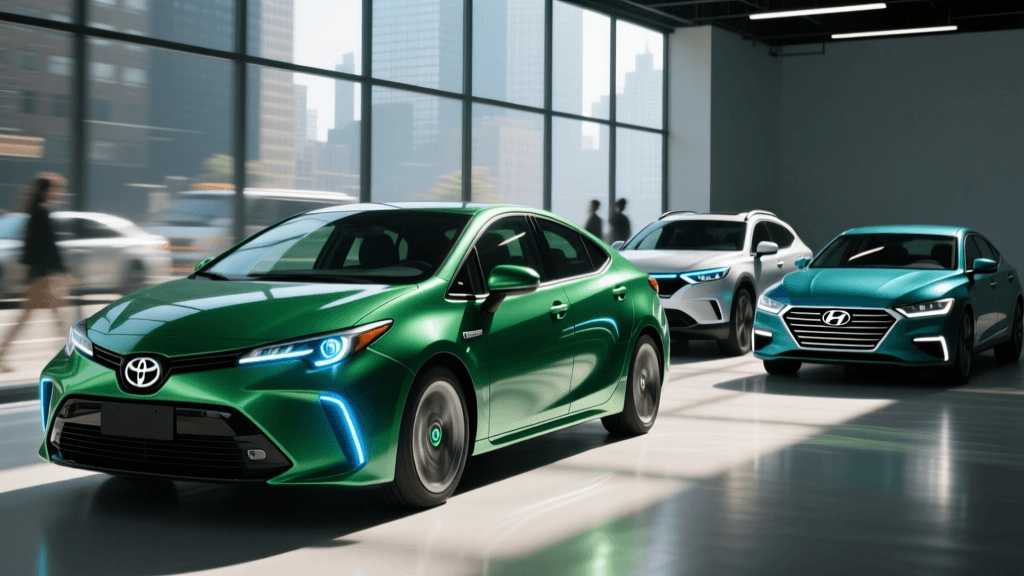
Instead of a dry engineering lecture, we are putting these three distinct hybrid architectures into a head-to-head product showdown. To illustrate the real-world differences, we have selected three champion vehicles that perfectly represent each drivetrain layout: the Nissan Rogue e-Power (Series), the Hyundai Sonata Hybrid (Parallel), and the legendary Toyota Prius (Series-Parallel). Let the battle begin.
Contender 1: The Series Hybrid (Nissan Rogue e-Power)
In a pure Series Hybrid system, the internal combustion engine is completely disconnected from the drive wheels. Instead, the engine acts solely as an onboard generator, creating electricity to either charge the battery pack or power the electric traction motor that actually turns the wheels. The Nissan Rogue e-Power (sold as the X-Trail e-Power in global markets) is the premier modern example of this technology.
The Driving Experience
Because the wheels are always driven by an electric motor, the Rogue e-Power delivers the instant torque, smooth acceleration, and quiet low-speed cruising of a full electric vehicle (EV). You never feel a traditional transmission shifting gears because there isn't one connecting the engine to the road.
Pros and Cons
- Pros: Unmatched city fuel economy; EV-like driving dynamics; regenerative braking feels natural and strong; no complex mechanical linkage between engine and wheels reduces certain drivetrain wear items.
- Cons: Energy conversion losses (mechanical to electrical, then back to mechanical) hurt highway efficiency. Under heavy acceleration, the engine RPM can drone at a high, steady pitch to generate maximum electricity, a phenomenon often called the "motorboat effect," though Nissan uses active noise cancellation to mitigate this.
According to the U.S. Department of Energy's Alternative Fuels Data Center, series hybrids excel in stop-and-go traffic where the electric motor's efficiency and regenerative braking can recapture energy that would otherwise be lost as heat.
Contender 2: The Parallel Hybrid (Hyundai Sonata Hybrid)
In a Parallel Hybrid architecture, both the internal combustion engine and the electric motor are mechanically connected to the transmission and can turn the wheels directly. The Hyundai Sonata Hybrid utilizes a traditional 6-speed automatic transmission with a powerful electric motor sandwiched between the engine and the gearbox, replacing the traditional torque converter.
The Driving Experience
The Sonata Hybrid feels the most like a conventional gasoline car. When you step on the gas, the engine and motor work in tandem, and you can feel the distinct, rhythmic shifts of the 6-speed automatic transmission. At highway speeds, a clutch can lock the engine directly to the wheels, bypassing the electric motor entirely to eliminate energy conversion losses.
Pros and Cons
- Pros: Exceptional highway fuel economy due to direct mechanical connection; familiar driving dynamics for traditional car buyers; smaller, lighter battery packs are often sufficient, reducing overall vehicle weight and replacement costs.
- Cons: Less smooth in low-speed, stop-and-go traffic compared to series systems; the traditional automatic transmission introduces more moving parts, clutches, and fluid that require long-term maintenance.
Parallel systems are highly efficient on long, steady highway cruises. The Environmental Protection Agency (EPA) notes that parallel configurations allow the gasoline engine to operate at its most efficient RPM range during high-speed cruising while the electric motor provides low-end torque for passing.
Contender 3: The Series-Parallel Hybrid (Toyota Prius)
The Series-Parallel Hybrid (often called a "Power-Split" or "Full Hybrid") is the undisputed king of versatility. The Toyota Prius utilizes a planetary gearset—Toyota calls it the Hybrid Synergy Drive—that seamlessly blends the series and parallel architectures. This mechanical computer allows the car to operate as a pure EV, a series hybrid, a parallel hybrid, or any combination in between, all without a traditional multi-gear transmission.
The Driving Experience
The Prius offers a seamless, gearless acceleration curve similar to a Series hybrid, but with the high-speed efficiency of a Parallel hybrid. The transition between gas and electric power is virtually imperceptible. The latest generation Prius has also addressed historical complaints about sluggish acceleration, offering a combined 196 horsepower that makes it genuinely quick off the line.
Pros and Cons
- Pros: The best overall combined MPG across all driving scenarios; incredibly reliable eCVT transmission with no belts, pulleys, or friction clutches to wear out; seamless power delivery.
- Cons: The planetary gearset limits the maximum torque that can be applied, which is why heavy-duty trucks rarely use this specific layout; the driving feel can still feel slightly disconnected or "rubber-bandy" under hard acceleration compared to geared parallel systems.
Head-to-Head Comparison Chart
| Feature | Nissan Rogue e-Power (Series) | Hyundai Sonata (Parallel) | Toyota Prius (Series-Parallel) |
|---|---|---|---|
| Engine Drives Wheels? | No (Generator Only) | Yes (Via Transmission) | Yes (Via Planetary Gearset) |
| Transmission Type | Single-Speed Reduction | 6-Speed Automatic | eCVT (Power-Split Device) |
| Best Driving Scenario | City / Stop-and-Go | Highway / Steady Cruising | Mixed / All-Around Commute |
| Low-Speed Smoothness | Excellent (EV-like) | Good (Minor shift shocks) | Excellent (Seamless) |
| Highway Efficiency | Good (Conversion losses) | Excellent (Direct drive) | Excellent (Mechanical lock) |
| Long-Term Maintenance | Low (No gearbox) | Medium (Trans fluid/clutches) | Very Low (No friction parts) |
Which Hybrid Architecture Should You Buy?
Choosing the right hybrid isn't just about picking the highest EPA estimate; it's about matching the drivetrain to your specific lifestyle, commute, and long-term ownership goals.
Buy the Series Hybrid (Nissan e-Power) If:
You live in a densely populated urban environment, deal with heavy rush-hour traffic, and want the smooth, quiet, and instant-torque experience of an EV without ever worrying about range anxiety or finding a charging station. The series layout shines when speeds are low and braking is frequent, allowing the regenerative system to constantly top up the small battery buffer.
Buy the Parallel Hybrid (Hyundai Sonata) If:
Your commute consists primarily of long, high-speed highway stretches, or if you frequently take road trips. The direct mechanical connection between the engine and the wheels at speeds over 45 MPH eliminates the energy conversion losses found in series systems. Furthermore, if you are a driving enthusiast who prefers the tactile feel of actual gear shifts and traditional engine braking, the parallel layout with a stepped automatic transmission will feel the most natural.
Buy the Series-Parallel Hybrid (Toyota Prius) If:
You want the ultimate "set it and forget it" appliance that excels at everything. If your week involves crawling through city traffic on Monday, taking a long highway road trip on Wednesday, and running local errands on the weekend, the power-split device will automatically optimize the drivetrain for maximum efficiency in real-time. Additionally, if you plan to keep the vehicle for 10+ years, Toyota's eCVT transmission is widely regarded by mechanics as one of the most bulletproof, low-maintenance drivetrains ever engineered, largely due to the absence of traditional friction clutches and torque converters.
Final Verdict on Hybrid Tech
The hybrid market has evolved far beyond the early days of the first-generation Prius. Today, the Nissan Rogue e-Power proves that series hybrids can deliver premium EV-like comfort for the masses, while the Hyundai Sonata Hybrid demonstrates that parallel systems can offer engaging, traditional driving dynamics without sacrificing fuel economy. Yet, the Toyota Prius remains the benchmark, proving that the series-parallel power-split architecture is still the most versatile and efficient compromise for the average global driver. Evaluate your daily route, prioritize your driving feel preferences, and choose the architecture that works for you.