The Shifting Landscape of Automotive Maintenance
As the global automotive industry accelerates its transition toward full electrification, consumers are increasingly caught in a transitional paradox. Battery Electric Vehicles (BEVs) promise a future of minimal moving parts, while traditional Internal Combustion Engine (ICE) vehicles offer established, albeit aging, servicing networks. Sitting squarely in the middle is the Hybrid and Plug-in Hybrid Electric Vehicle (PHEV). For buyers looking at the long-term horizon, a critical question emerges: how will hybrid car maintenance costs compare to gas and electric vehicles as we approach 2030 and beyond?
Understanding the future of hybrid servicing requires looking past today's oil change receipts. It demands an analysis of shifting supply chains, the evolution of battery chemistry, and the rise of predictive telematics. In this comprehensive outlook, we break down the projected 10-year maintenance realities of hybrids versus their gas and electric counterparts, providing actionable advice for future-proofing your next automotive purchase.
Current Baseline: Hybrid vs. Gas vs. EV Maintenance
To forecast the future, we must first establish the current baseline. According to data from the U.S. Department of Energy's Alternative Fuels Data Center, electric vehicles generally cost significantly less to maintain than ICE vehicles because they lack complex exhaust systems, multi-gear transmissions, and require no engine oil. But where do hybrids fall?
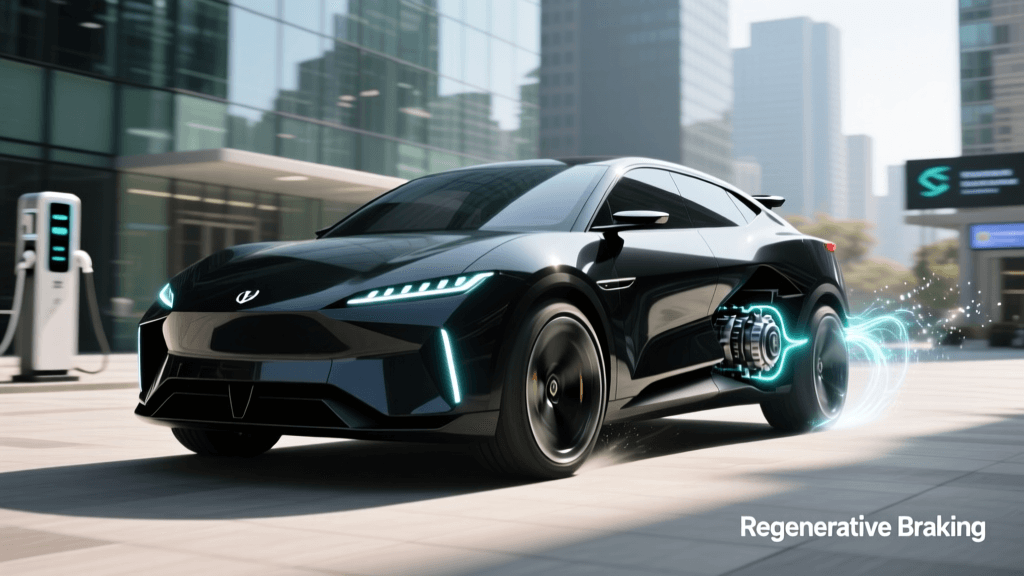
Hybrids possess a dual-nature. They carry an ICE (requiring oil changes, spark plugs, and coolant flushes) and an electric drivetrain (requiring inverter cooling and battery health monitoring). However, they also benefit from regenerative braking. By using the electric motor to slow the vehicle, hybrids drastically reduce the friction applied to traditional brake pads and rotors. It is not uncommon for a Toyota Prius or Ford Escape Hybrid to reach 100,000 miles on its original factory brake pads.
Furthermore, many modern hybrids utilize an electronically controlled continuously variable transmission (eCVT). Unlike traditional belt-driven CVTs that are prone to slipping and require expensive fluid flushes, Toyota's hybrid eCVT relies on a planetary gearset. With no belts, pulleys, or clutches to wear out, this drivetrain component is virtually bulletproof, drastically reducing long-term transmission repair risks compared to gas-powered counterparts.
10-Year Projected Maintenance Cost Comparison (2025–2035)
The following table illustrates estimated 10-year/120,000-mile maintenance costs across the three primary drivetrains, factoring in current industry averages and near-term depreciation of service parts.
| Component Category | Gas (ICE) | Hybrid / PHEV | Electric (BEV) |
|---|---|---|---|
| Routine Fluids & Filters | $2,500 | $1,800 | $400 |
| Brake System (Pads/Rotors) | $1,200 | $350 | $300 |
| Drivetrain & Engine Repairs | $1,500 | $800 | $200 |
| Battery / Electrical Risk | $150 (Starter/Alternator) | $1,200 (Amortized) | $800 (Amortized) |
| Total Est. 10-Yr Cost | $5,350 | $4,150 | $1,700 |
Future Trend 1: The 'Legacy Tax' on ICE Components
As we look toward 2030, the most significant threat to hybrid maintenance costs is not the battery—it is the gas engine. Major automakers, including General Motors, Honda, and Volvo, have committed billions of dollars to EV R&D while simultaneously winding down the development of new ICE architectures.
This pivot will inevitably trigger what industry analysts call a 'Legacy Tax.' As the production volume of small-displacement turbocharged engines and complex hybrid-specific emission control systems decreases, the aftermarket supply chain will pivot toward EV motors, power electronics, and battery recycling. By 2032, sourcing specific replacement parts for a 2024 PHEV—such as a specialized turbocharger actuator, an exhaust gas recirculation (EGR) valve, or a high-pressure fuel pump—may become subject to low-volume pricing and extended lead times. While your hybrid's electric motor will remain cheap to service, maintaining its gasoline generator could become increasingly expensive as the decade progresses.
Future Trend 2: Predictive Diagnostics and OTA Updates
The future of hybrid maintenance is proactive, not reactive. Modern PHEVs like the Toyota RAV4 Prime, Jeep Wrangler 4xe, and Hyundai Tucson Plug-In Hybrid are essentially rolling data centers equipped with hundreds of sensors. The industry is rapidly moving toward Over-The-Air (OTA) updates that do more than just change the infotainment interface; they refine thermal management algorithms and enable predictive diagnostics.
In the near future, your hybrid will notify you and your dealership of a failing water pump or a degrading battery cell weeks before a catastrophic failure occurs. By shifting maintenance from a 'run-to-failure' model to a 'predictive replacement' model, owners will avoid the collateral damage that often inflates repair bills. For instance, replacing a $150 coolant pump before it leaks and destroys a $3,000 hybrid inverter will keep long-term hybrid ownership costs remarkably stable, narrowing the gap with BEVs.
Future Trend 3: Battery Degradation and Solid-State Horizons
The elephant in the room for any hybrid buyer is the high-voltage battery replacement cost. Currently, replacing a degraded PHEV battery pack can cost between $4,000 and $8,000 out of warranty. However, research from Argonne National Laboratory's Total Cost of Ownership model indicates that battery degradation rates are slowing, and cycle life is extending well beyond the vehicle's usable lifespan.
Current liquid-cooled Lithium-ion packs in premium hybrids are routinely outlasting their 10-year/150,000-mile federal mandates. More importantly, the industry is moving toward modular battery architectures. Instead of replacing an entire 18 kWh pack because one cell group has degraded, specialized EV/hybrid technicians will increasingly replace individual modules for a fraction of the cost. Furthermore, as solid-state battery technology begins trickling down into the PHEV market toward the end of the decade, we expect to see batteries that are less susceptible to thermal degradation, virtually eliminating the 'battery anxiety' that plagues long-term hybrid ownership projections.
Actionable Advice: Future-Proofing Your Hybrid Purchase
If you are buying a hybrid or PHEV today with the intention of holding it through 2030 and beyond, adopt the following strategies to minimize your long-term maintenance exposure:
- Prioritize Active Thermal Management: Only purchase hybrids and PHEVs equipped with active liquid cooling for the high-voltage battery. Air-cooled hybrid batteries (found in some older or budget models) degrade significantly faster in extreme climates, drastically increasing the likelihood of an out-of-pocket replacement.
- Choose High-Volume Powertrains: To avoid the impending 'Legacy Tax' on ICE parts, buy hybrids that share engines with millions of other vehicles. For example, Toyota's 2.5L Dynamic Force engine is used across millions of hybrids and gas cars globally. The aftermarket will support these engines with cheap, abundant parts for decades, unlike low-volume, complex turbocharged setups.
- Leverage Extended Powertrain Warranties: Because hybrids rely on complex power-split devices and inverters, purchase an OEM-backed extended warranty that specifically covers the hybrid transaxle and power electronics. Third-party warranties often have loopholes regarding 'hybrid-specific' components.
- Utilize Regenerative Braking Settings: Maximize your vehicle's regenerative braking modes (often labeled as 'B' mode or adjustable via steering wheel paddles). This not only captures more kinetic energy to charge the battery but acts as a primary braking force, ensuring your mechanical brake rotors last well past 120,000 miles.
Conclusion
The narrative that hybrids are a 'worst of both worlds' maintenance liability is fundamentally outdated. While BEVs will always hold the crown for the lowest absolute maintenance costs due to their mechanical simplicity, hybrids offer a highly competitive middle ground. Thanks to regenerative braking, bulletproof eCVT transmissions, and the impending rise of predictive diagnostics, hybrid maintenance costs are projected to remain remarkably stable through 2030. By understanding the shifting supply chain and choosing vehicles with high parts commonality and robust thermal management, buyers can confidently leverage hybrid technology as a cost-effective bridge to the fully electric future.