The Toyota Prius has been the benchmark for hybrid efficiency for over two decades, but the current fifth-generation model (introduced for 2023 and carried into 2025) represents a dramatic leap in both performance and design. If you've ever wondered how the Prius hybrid engine works — how it seamlessly blends gasoline and electric power to deliver class-leading fuel economy — the answer lies in Toyota's latest Hybrid Synergy Drive system. This guide breaks down the exact engineering, real-world efficiency data, and ownership economics so you can decide if the Prius fits your driving life.
The Toyota Hybrid Synergy Drive: How the Prius Powertrain Actually Works
At its core, the 2025 Toyota Prius uses a series-parallel hybrid architecture. Unlike a simple series hybrid (where the engine only generates electricity) or a parallel hybrid (where both engine and motor drive the wheels through a fixed mechanical link), Toyota's system can operate in multiple modes simultaneously, managed by a power-split device — essentially a planetary gearset that acts as a continuously variable transmission (eCVT).
Here is how the system distributes power in real-world driving:
- EV Mode (low-speed, light load): The gasoline engine shuts off entirely. The front-mounted electric motor (and rear motor on AWD trims) propels the car using energy from the hybrid battery. This is why the Prius excels in stop-and-go city traffic.
- Normal Driving: The 2.0-liter four-cylinder engine and electric motor(s) work together. The power-split device blends torque from both sources, sending the optimal mix to the wheels while the engine operates in its most efficient RPM range.
- Hard Acceleration: Both the engine and electric motor deliver maximum combined output (194 hp FWD / 196 hp AWD). The battery provides supplemental energy beyond what the engine alone can supply.
- Deceleration and Braking: The electric motor reverses its function, acting as a generator to capture kinetic energy that would otherwise be lost as heat. This regenerative braking recharges the hybrid battery — no plug required.
- Engine Charging: When the battery state of charge drops below a threshold, the gasoline engine spins the generator to replenish it, even while driving at steady highway speeds.
The key engineering insight: the Prius never needs to be plugged in. It is a conventional hybrid electric vehicle (HEV), meaning all electrical energy ultimately comes from burning gasoline — but the hybrid system recaptures and redistributes that energy far more efficiently than a conventional engine could alone.
2025 Prius HEV vs. Prius Prime PHEV: Which Powertrain Is Which?
Toyota sells two distinct Prius models. Confusing them is one of the most common buyer mistakes, so let's be precise:
| Attribute | Prius (HEV) | Prius Prime (PHEV) |
|---|---|---|
| Powertrain Type | Conventional Hybrid — no plug | Plug-in Hybrid — charges via outlet |
| Engine | 2.0L 4-cylinder + electric motor(s) | 2.0L 4-cylinder + larger electric motor |
| Combined HP | 194 hp (FWD) / 196 hp (AWD) | 220 hp (FWD only) |
| Hybrid Battery | ~1.0 kWh (Li-ion, sealed) | 13.6 kWh (Li-ion) |
| EPA Combined MPG | 57 MPG (FWD LE) | 52 MPG combined (hybrid mode) |
| Electric-Only Range | Not applicable (EV mode only at low speed) | 44 miles (SE trim) / 40 miles (XSE) |
| MPGe (electric mode) | N/A | 127 MPGe |
| Charging Required? | No — self-charging via regen + engine | Yes — Level 1 (~11 hr) or Level 2 (~4 hr) |
| DC Fast Charging? | No | No |
| Base MSRP (2025) | ~$28,350 (LE) | ~$33,475 (SE) |
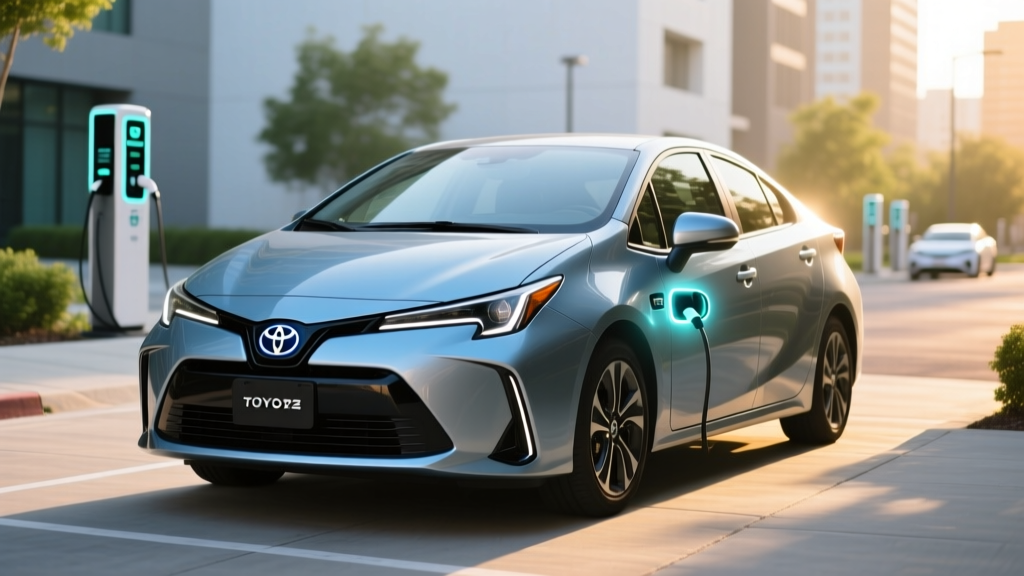
The Prius Prime is the plug-in variant. Its larger 13.6 kWh battery enables genuine electric-only driving at highway speeds for up to 44 miles. Once that battery depletes, it reverts to hybrid mode and operates much like the standard Prius — just slightly heavier. If you can charge at home nightly, the Prime effectively becomes a short-range EV for your commute with a gas engine as backup. If you lack charging access, the standard HEV delivers outstanding efficiency without any infrastructure requirement.
Fuel Economy Breakdown: EPA Ratings vs. Real-World MPG
The 2025 Prius LE (FWD) carries an EPA rating of 57 MPG combined — broken down as 57 city / 56 highway, according to fueleconomy.gov. The XLE and Limited trims, with larger 19-inch wheels and added weight, drop to 52 MPG combined (52 city / 52 highway). AWD trims rate at 54 MPG combined (LE) or 49 MPG (XLE/Limited).
| Trim | Drivetrain | City MPG | Highway MPG | Combined MPG |
|---|---|---|---|---|
| LE | FWD | 57 | 56 | 57 |
| XLE / Limited | FWD | 52 | 52 | 52 |
| LE | AWD | 53 | 54 | 54 |
| XLE / Limited | AWD | 49 | 50 | 49 |
Real-world note: Hybrids tend to meet or exceed EPA city ratings because regenerative braking recovers energy in stop-and-go driving. Highway MPG may fall 2–4 MPG below the sticker at sustained 75+ mph speeds due to aerodynamic drag. In cold weather (below 30°F), expect a 5–10% efficiency drop as the engine runs more frequently to maintain cabin heat and battery temperature. Many Prius owners report averaging 55–60 MPG in mixed suburban driving — a rare case where the EPA estimate is conservative.
Performance and Driving Dynamics
The current Prius shed its reputation as a slow, appliance-like commuter. The 2.0-liter Dynamic Force engine produces 150 hp and 139 lb-ft of torque on its own; combined with the electric motor system, total output reaches 194 hp (FWD) or 196 hp (AWD). The result is a 0–60 mph time of approximately 7.2 seconds for the FWD model — competitive with many turbocharged compact sedans.
The AWD-e variant adds a rear-mounted electric motor (no mechanical driveshaft) that engages automatically during acceleration and low-traction conditions, providing additional grip without the fuel-economy penalty of a traditional AWD system.
| Specification | 2025 Prius LE FWD | 2025 Prius Prime SE |
|---|---|---|
| Engine | 2.0L I4 + e-motor | 2.0L I4 + e-motor |
| Combined HP | 194 hp | 220 hp |
| 0–60 mph | ~7.2 sec | ~6.6 sec |
| Transmission | eCVT (power-split) | eCVT (power-split) |
| Battery Capacity | ~1.0 kWh | 13.6 kWh |
| Cargo Volume | 23.8 cu ft | 20.3 cu ft |
| Base MSRP | $28,350 | $33,475 |
Battery Warranty, Lifespan, and Replacement Cost
Toyota Hybrid Battery Warranty: 10 years / 150,000 miles (whichever comes first) for 2020 and newer models. Prior to 2020, coverage was 8 years / 100,000 miles. This applies to both the HEV and Prime PHEV hybrid batteries. The warranty covers defects and capacity loss below a functional threshold — Toyota guarantees the battery will retain sufficient capacity for normal hybrid operation throughout the warranty period.
How long does a Prius hybrid battery actually last? Real-world data from fleet operators and long-term owners shows that Toyota's NiMH and lithium-ion hybrid batteries routinely last 150,000–200,000+ miles before needing service. The hybrid battery in the standard Prius is small (~1.0 kWh) and is never deeply cycled — the system keeps it between roughly 40% and 80% state of charge, which dramatically extends cycle life.
Replacement cost: If the hybrid battery does fail outside of warranty, a new OEM replacement for the current-generation Prius typically costs between $2,500 and $4,000 installed, depending on the trim and battery type. Third-party refurbished batteries are available for $1,500–$2,500. For the Prius Prime, the larger 13.6 kWh PHEV battery is more expensive to replace — expect $5,000–$7,000 OEM — but it carries the same 10-year/150,000-mile warranty.
Tax Credits and Incentives: What You Actually Qualify For
Here is where the HEV vs. PHEV distinction matters for your wallet:
- Prius HEV (conventional hybrid): Does not qualify for the federal §30D clean vehicle tax credit. The IRS limits this credit to plug-in vehicles with a battery capacity of at least 7 kWh. No federal purchase incentive applies.
- Prius Prime (PHEV): Qualifies for up to $3,750 under the §30D federal tax credit, provided you meet income caps ($150,000 single / $300,000 joint modified AGI), the vehicle MSRP is under $55,000 (sedan cap), and the battery meets critical-mineral and component-sourcing requirements. As of 2025, the Prius Prime meets the sourcing requirements for the partial credit. Always verify current eligibility on the IRS clean vehicle credit page before purchasing, as sourcing rules update periodically.
The point-of-sale transfer option allows you to apply the credit as an immediate discount at the dealership rather than waiting to claim it on your tax return. Your dealer must be registered with the IRS Energy Credits Online system to process this.
State incentives vary widely. Some states (California, Colorado, New York, and others) offer additional rebates or HOV lane access for PHEVs. Check your state's energy office or DMV for current programs — these change frequently and are outside the scope of federal rules.
Who Should Buy the Prius — and Who Should Look Elsewhere?
Choose the Prius HEV if:
- You lack access to home or workplace charging (apartment, street parking)
- You want maximum MPG with zero behavior change — just fill up with gas
- Your budget is under $30,000 and you want a proven, reliable daily driver
- You drive mostly city and suburban routes where regen braking maximizes efficiency
- You want AWD availability for light snow without the fuel penalty of a traditional AWD
Choose the Prius Prime PHEV if:
- You can charge at home (Level 1 overnight is sufficient for the 44-mile range)
- Your daily commute is under 44 miles round-trip — you may burn gas only on road trips
- You want EV-like daily driving with gas-engine flexibility for longer trips
- You want to claim the ~$3,750 federal tax credit (subject to eligibility)
- You want the extra 220 hp and quicker acceleration
Hybrid vs. PHEV vs. Full EV — which fits you?
- HEV (Prius): Best if you cannot charge at home, drive long or unpredictable distances, or want the lowest upfront cost. You sacrifice nothing in convenience — just drive and refuel normally.
- PHEV (Prius Prime): Best if you can charge at home, have a short-to-moderate commute, and want to reduce gas consumption to near-zero on weekdays while keeping gas-engine range for weekends and road trips. The ideal bridge for those not ready for a full EV.
- Full EV (e.g., Tesla Model 3, Hyundai Ioniq 6): Best if you have reliable home charging, want zero tailpipe emissions, the lowest per-mile fuel cost, and don't mind planning longer road trips around DC fast-charging stops. Higher upfront cost but the lowest operating cost over time.
Frequently Asked Questions
How many MPG does the 2025 Prius get?
The most efficient trim, the Prius LE FWD, is EPA-rated at 57 MPG combined (57 city / 56 highway). Higher trims with larger wheels rate at 52 MPG combined. Real-world driving often matches or slightly exceeds these numbers in city conditions, while sustained highway speeds above 75 mph may yield 2–4 MPG less than the sticker.
How far can the Prius Prime go on electric only?
The 2025 Prius Prime SE achieves an EPA-rated 44 miles of electric-only range. The XSE trim, with larger wheels, rates at 40 miles. Once the battery depletes, the car seamlessly switches to hybrid mode — you are never stranded. Total combined range (electric + gas tank) exceeds 400 miles.
Does the Prius hybrid battery need to be plugged in?
No. The standard Prius HEV is entirely self-charging. It recovers energy through regenerative braking and uses the gasoline engine to recharge the small hybrid battery as needed. You will never see a charge port on the standard Prius. Only the Prius Prime (PHEV) has a plug.
Is the Prius reliable, and what does a battery replacement cost?
Toyota's hybrid system is among the most proven in the industry, with millions of units on the road globally. The hybrid battery is warranted for 10 years / 150,000 miles. Out-of-warranty replacement for the HEV battery costs approximately $2,500–$4,000 installed (OEM). Most hybrid batteries last 150,000–200,000+ miles in real-world use. According to NHTSA, the current-generation Prius has no major powertrain-related recalls as of early 2025.
Does the Prius qualify for any tax credit?
The standard Prius HEV does not qualify for any federal tax credit. The Prius Prime PHEV qualifies for up to $3,750 under the §30D federal clean vehicle credit, subject to buyer income caps, MSRP limits, and battery-sourcing requirements. Verify current eligibility at irs.gov before purchasing, as rules update periodically. State-level incentives may also apply depending on your jurisdiction.
Can the Prius Prime DC fast charge?
No. The Prius Prime supports Level 1 (120V household outlet, ~11 hours for a full charge) and Level 2 (240V, ~4 hours). It does not have a DC fast-charging port. Given the small 13.6 kWh battery and 44-mile electric range, Level 2 overnight charging is more than sufficient for daily use.