Plug-in hybrids occupy a unique space in the electrified-vehicle landscape: they offer electric-only commuting for daily driving while retaining a gas engine for road trips. But what do actual owners report once the honeymoon phase ends? The recurring Plugshare PHEV survey data, combined with EPA testing and real-world owner forums, paints a detailed picture of PHEV satisfaction, range reality, and the HEV-vs-PHEV decision framework that every buyer should understand before spending $35,000+.
This guide synthesizes survey findings, official fueleconomy.gov data, and current 2026 model-year specs to answer the questions PHEV shoppers actually ask — from electric-only range to battery replacement costs to federal tax credit eligibility under current IRS §30D rules.
What the Plugshare PHEV Survey Tells Us About Real Ownership
Plugshare, one of the largest EV charging-station mapping platforms, periodically surveys its user base about satisfaction, charging habits, and whether owners would buy their vehicle again. The PHEV segment of these surveys consistently reveals several patterns:
- Electric-only range is the #1 satisfaction driver. PHEV owners with 30+ miles of electric range report dramatically higher satisfaction than those with sub-20-mile PHEVs. Many owners of shorter-range PHEVs report that their electric range degrades to 15–18 real-world miles after 2–3 years, forcing more gas use than anticipated.
- Home charging is nearly universal among satisfied PHEV owners. Over 85% of PHEV owners who report high satisfaction charge at home (Level 1 or Level 2). Those relying solely on public charging report lower satisfaction — a PHEV's small battery makes public DC fast charging economically inefficient.
- Most PHEV owners drive 70–85% of their miles on electricity. This is the key PHEV value proposition: if your commute fits within the electric range and you charge nightly, your gas consumption drops to near zero for daily driving.
- Regret clusters around two groups: buyers who chose a PHEV without home charging access, and buyers who would have preferred a full BEV but chose a PHEV out of range anxiety — only to find they never actually needed the gas engine.
These findings align with broader industry data. The critical takeaway: a PHEV is the right tool for a specific use case, and survey data helps define that use case precisely.
HEV vs PHEV: The Fundamental Difference
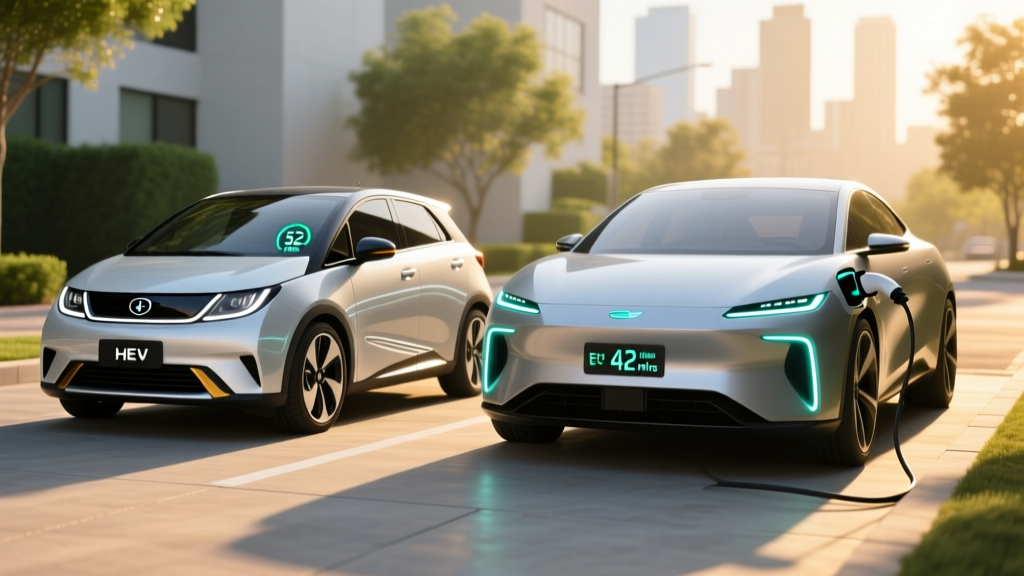
Before evaluating specific models, the distinction between a conventional hybrid (HEV) and a plug-in hybrid (PHEV) must be crystal clear, because the ownership experience, cost, and infrastructure requirements differ substantially.
| Attribute | Conventional Hybrid (HEV) | Plug-In Hybrid (PHEV) |
|---|---|---|
| Plug-in charging required? | No — charges via regenerative braking and engine | Yes — plug in to access electric-only range |
| Electric-only driving | Very limited (typically under 1 mile at low speed) | 20–50+ miles depending on model |
| Battery size | 1–2 kWh (small, lightweight) | 10–25 kWh (larger, heavier) |
| Fueling | Gas only | Gas + electricity |
| Home charging needed? | No | Strongly recommended for value |
| Federal tax credit eligible? | No (not under §30D) | Some models, up to $7,500 (see IRS rules) |
| Typical price premium over gas car | $1,000–$3,000 | $4,000–$10,000 |
| Best for | Drivers without home charging; high-mileage commuters | Drivers with home charging and sub-40-mile commutes |
Conventional hybrids like the Toyota Prius or Honda Accord Hybrid never need to be plugged in. They use a small battery and electric motor to assist the gas engine, improving fuel economy — especially in city driving where regenerative braking recaptures energy. You simply fill up with gas and drive.
PHEVs like the Toyota RAV4 Prime or Jeep Wrangler 4xe carry a much larger battery that enables genuine electric-only driving. Plug in at home overnight, and your morning commute uses zero gasoline. When the battery depletes, the gas engine takes over and the vehicle functions as a conventional hybrid.
Top PHEV Models in 2026: Range, MPG, and Specs
Here's how the most popular PHEVs stack up on the metrics that matter — electric-only range, combined MPG once the battery is depleted, powertrain output, and pricing. All figures reflect 2026 model-year EPA data where available.
| Model | EV Range (EPA) | Battery (kWh) | Combined MPG (gas) | Combined HP | Base MSRP | DC Fast Charge? |
|---|---|---|---|---|---|---|
| Toyota RAV4 Prime | 42 mi | 18.1 kWh | 38 MPG | 302 hp | $44,500 | No |
| Toyota Prius Prime | 44 mi | 13.6 kWh | 48 MPG | 220 hp | $33,445 | No |
| Chrysler Pacifica Hybrid | 32 mi | 16.0 kWh | 30 MPG | 260 hp | $51,095 | No |
| Jeep Wrangler 4xe | 22 mi | 17.3 kWh | 20 MPG | 375 hp | $51,795 | No |
| Hyundai Tucson PHEV | 33 mi | 13.8 kWh | 35 MPG | 261 hp | $39,750 | No |
| Ford Escape PHEV | 37 mi | 14.4 kWh | 40 MPG | 210 hp | $39,500 | No |
| BMW X5 xDrive50e | 38 mi | 25.7 kWh | 27 MPG | 483 hp | $72,500 | Yes (optional) |
Key observation: Nearly all mainstream PHEVs lack DC fast charging capability. Their batteries are small enough (13–18 kWh) that a Level 2 home charger replenishes them in 2–5 hours, making DC fast charging unnecessary for most owners. The BMW X5 xDrive50e is a notable exception with optional DC capability, reflecting its larger 25.7 kWh pack.
Real-World MPG vs. EPA: What Owners Actually Report
The Plugshare PHEV survey and owner forums consistently show that real-world fuel economy diverges from EPA estimates in predictable ways:
| Model | EPA Combined MPG (gas mode) | Real-World Owner Avg | Notes |
|---|---|---|---|
| Toyota Prius Prime | 48 MPG | 50–55 MPG | Hybrids often exceed EPA in city driving due to regen efficiency |
| Toyota RAV4 Prime | 38 MPG | 34–37 MPG | Highway-heavy driving reduces hybrid advantage; heavy vehicle |
| Ford Escape PHEV | 40 MPG | 38–42 MPG | Close to EPA for mixed driving; city driving slightly better |
| Jeep Wrangler 4xe | 20 MPG | 17–20 MPG | Aerodynamics and weight hurt highway MPG significantly |
| Hyundai Tucson PHEV | 35 MPG | 32–35 MPG | Cold weather and highway driving reduce figures |
The hybrid city-driving advantage: Conventional hybrids and PHEVs in gas mode typically exceed their EPA city MPG estimates because regenerative braking is most effective in stop-and-go traffic. Highway driving, where regen opportunities are minimal and aerodynamic drag dominates, is where real-world MPG often falls short of EPA figures.
Electric-only range reality: EPA electric range is tested under moderate conditions. Expect 10–20% less range in cold weather (below 40°F) due to battery chemistry limitations and cabin heating demand. Highway-speed electric driving also reduces range by 15–25% compared to the EPA combined figure.
Battery Longevity, Warranty, and Replacement Costs
Battery durability is the top concern for hybrid and PHEV buyers, and it's an area where the data is reassuring. Toyota, the hybrid pioneer, has accumulated over two decades of real-world battery performance data.
- Federal mandate: All PHEV and hybrid batteries carry a minimum 8-year/100,000-mile warranty (10-year/150,000-mile in CARB states including CA, NY, MA, and others)
- Toyota: 10 years / 150,000 miles on hybrid battery (all 50 states for 2026 models)
- Hyundai/Kia: 10 years / 100,000 miles
- Ford: 8 years / 100,000 miles
- BMW: 8 years / 80,000 miles (capacity retention to 70%)
Replacement costs if out of warranty:
- Toyota Prius/Prius Prime: $2,500–$4,000 (refurbished options available for $1,500–$2,500)
- Toyota RAV4 Prime: $4,000–$6,500
- Ford Escape PHEV: $4,500–$7,000
- Chrysler Pacifica Hybrid: $5,500–$8,000
- BMW X5 xDrive50e: $12,000–$18,000 (larger battery, premium brand)
The Plugshare survey data and long-term ownership reports indicate that PHEV battery failures within the first 10 years are uncommon. Toyota's hybrid synergy drive system has proven particularly robust, with many first-generation Prius batteries lasting 150,000–200,000+ miles before significant degradation. PHEV batteries experience more charge cycles than HEV batteries due to daily full-depth cycling, but modern thermal management systems have largely mitigated accelerated degradation.
Federal Tax Credits for PHEVs: 2026 IRS §30D Rules
Not all PHEVs qualify for the federal tax credit, and eligibility depends on a complex web of battery sourcing, MSRP caps, buyer income limits, and vehicle assembly requirements. Here's the current framework per IRS §30D guidelines:
- Maximum credit: Up to $7,500 ($3,750 for battery components + $3,750 for critical minerals)
- MSRP caps: Vans/SUVs/pickups ≤ $80,000; sedans/other ≤ $55,000
- Buyer income caps: AGI ≤ $150,000 (single), $225,000 (head of household), $300,000 (married filing jointly)
- Battery sourcing: Increasing percentages of battery components must be manufactured/assembled in North America, and critical minerals must be sourced from the US or FTA partners
- Final assembly: Must occur in North America
- Point-of-sale transfer: Eligible buyers can transfer the credit to the dealer for an immediate price reduction at purchase
- Fuel economy requirement: PHEVs must meet minimum battery capacity (at least 7 kWh) and be capable of being recharged from an external source — all current PHEVs meet this
2026 PHEV models commonly qualifying for at least partial credit (verify current status at fueleconomy.gov before purchasing, as sourcing requirements tighten annually):
- Toyota RAV4 Prime — assembled in Japan; may not qualify for full credit due to assembly location
- Toyota Prius Prime — assembled in Japan; same assembly-location limitation
- Chrysler Pacifica Hybrid — assembled in Canada; partial credit eligibility varies by sourcing year
- Jeep Wrangler 4xe — assembled in USA; credit eligibility depends on battery sourcing compliance
- Ford Escape PHEV — assembled in Mexico; check current eligibility
The battery sourcing and critical mineral requirements tighten each year through 2032. A PHEV that qualifies in 2025 may not qualify in 2026 if its supply chain hasn't shifted to compliant sources. Always verify on the official IRS list or ask the dealer for the specific VIN's credit status before finalizing a purchase.
HEV vs PHEV vs Full EV: Which Fits Your Life?
The Plugshare PHEV survey data makes one thing clear: satisfaction is highest when the vehicle matches the owner's actual driving pattern. Here's a decision framework based on the data:
Choose a conventional hybrid (HEV) if:
- You cannot install a home charger (apartment, no garage, landlord restrictions)
- You drive mostly highway miles where electric-only range would rarely be used
- You want maximum simplicity — no charging cables, no plug-in routine
- Your budget is tight and the $4,000–$8,000 PHEV premium doesn't pencil out
- Example: Toyota Prius HEV — 57 MPG combined EPA, $28,550 MSRP, no plug needed
Choose a plug-in hybrid (PHEV) if:
- You have reliable home charging access (even a standard 120V outlet works for overnight PHEV charging)
- Your daily round-trip commute is within the electric range (typically 25–45 miles)
- You regularly take road trips exceeding 200+ miles where charging infrastructure is uncertain
- You want to reduce gasoline consumption without committing to full electric
- Example: Toyota Prius Prime — 44 mi electric, then 48 MPG hybrid, $33,445 MSRP
Choose a full battery electric vehicle (BEV) if:
- You have home Level 2 charging and your daily driving is under 200 miles
- You want zero gasoline expenses, minimal maintenance, and maximum fuel savings
- You're comfortable planning road-trip charging stops (or rarely take long trips)
- You want the lowest total cost of ownership over 5+ years
- Example: Tesla Model Y — 310 mi EPA range, $44,990 MSRP, ~$600/year electricity vs ~$2,000 gas
The Plugshare survey reveals a notable pattern: PHEV owners who discover they never use the gas engine often wish they had bought a BEV. Conversely, PHEV owners who regularly take long trips and appreciate the gas-engine safety net report the highest satisfaction in the entire survey. Know your driving pattern before choosing.
Charging a PHEV at Home: What You Need
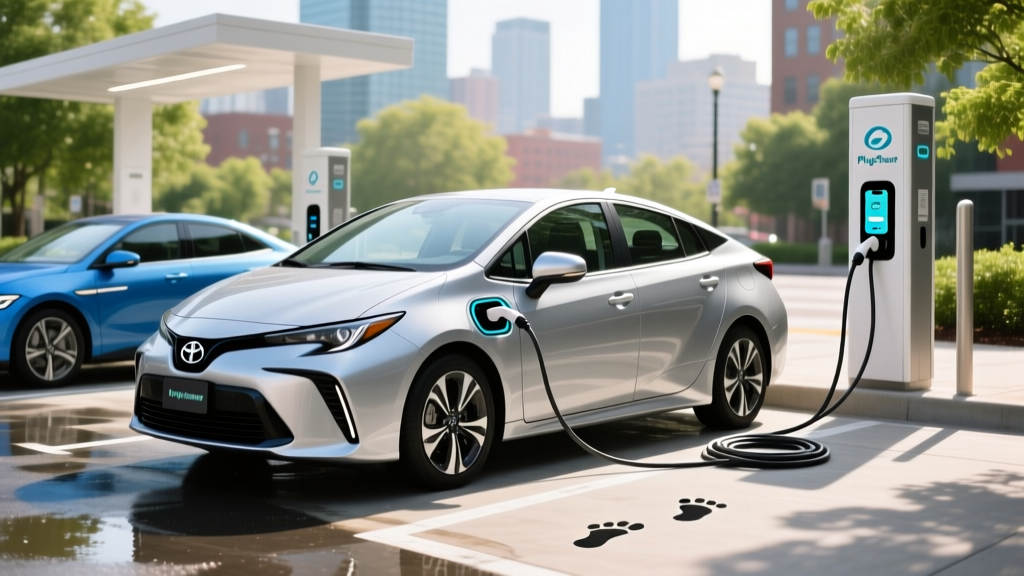
One advantage of PHEVs over full EVs: their smaller batteries make home charging fast and simple, even on a standard household outlet.
| Charging Level | Power (kW) | Typical PHEV Charge Time (0–100%) | Equipment Needed |
|---|---|---|---|
| Level 1 (120V outlet) | 1.2–1.4 kW | 9–14 hours | Included portable cord; standard outlet |
| Level 2 (240V) | 3.3–7.2 kW | 2–5 hours | Home charger ($300–$700) + electrician install ($500–$2,000) |
| DC Fast Charge | N/A (most PHEVs lack DC capability) | N/A | Only available on select models (e.g., BMW X5 xDrive50e) |
For most PHEV owners, Level 1 charging (a standard 120V household outlet) is sufficient. Plug in when you get home, and 10–14 hours later the 13–18 kWh battery is fully replenished — ready for the next morning's commute. Level 2 is faster but often unnecessary unless you need mid-day top-ups or have a very short turnaround between drives.
This is a major practical advantage over full EVs, where Level 1 charging would take 40–60+ hours for a 75+ kWh battery — making Level 2 installation essentially mandatory.
Pros and Cons of PHEV Ownership
- Electric-only commuting eliminates daily gas use
- No range anxiety — gas engine for long trips
- Home Level 1 charging is sufficient (no electrician needed)
- Lower upfront cost than most full EVs
- Familiar gas-station refueling for road trips
- Strong reliability record (especially Toyota/Hyundai)
- Some models eligible for partial $7,500 federal tax credit
- Two powertrains to maintain (engine + electric motor + battery)
- Electric range is limited (20–44 miles) — insufficient for some commutes
- Heavier than comparable HEV or gas vehicles (reduces efficiency)
- Most lack DC fast charging — public charging impractical
- PHEV premium of $4,000–$10,000 over gas equivalents
- Battery replacement cost ($2,500–$18,000) if out of warranty
- Federal tax credit eligibility uncertain and tightening yearly
- Some owners realize they'd be better served by a full BEV
Frequently Asked Questions
How many MPG does a PHEV get once the battery is depleted?
Once a PHEV's electric range is exhausted, it operates as a conventional hybrid. Fuel economy varies by model: the Toyota Prius Prime achieves an EPA-rated 48 MPG combined in hybrid mode, while the Jeep Wrangler 4xe manages just 20 MPG combined due to its weight and aerodynamics. Check the "gas mode" MPG on fueleconomy.gov for each specific model — this number matters more than the MPGe rating for drivers who frequently exceed the electric range.
How far can a PHEV go on electric only?
Current 2026 PHEVs offer 22–44 miles of EPA-rated electric-only range. The Toyota Prius Prime leads at 44 miles, followed by the RAV4 Prime at 42 miles. Real-world range is typically 10–20% lower in cold weather or at sustained highway speeds. If your daily round-trip commute exceeds 45 miles, a PHEV's electric range won't cover it fully, and a full BEV or conventional hybrid may be a better fit.
Is a PHEV reliable and what does battery replacement cost?
PHEVs from Toyota, Hyundai, and Ford have demonstrated strong reliability records. Hybrid batteries are warranted for at minimum 8 years/100,000 miles (10 years/150,000 miles in CARB states). Out-of-warranty replacement costs range from $2,500 (Prius Prime, with refurbished options) to $8,000+ (Pacifica Hybrid). Toyota's hybrid system has the longest track record, with many batteries exceeding 150,000 miles before significant degradation.
Does a PHEV qualify for the federal tax credit?
Some PHEVs qualify for up to $7,500 under IRS §30D, but eligibility depends on battery sourcing, critical mineral requirements, final assembly location, MSRP caps, and buyer income limits. Many popular PHEVs (Toyota RAV4 Prime, Prius Prime) are assembled in Japan, which can disqualify them. US-assembled models like the Jeep Wrangler 4xe may qualify depending on current-year sourcing rules. Always verify at fueleconomy.gov for the specific model year and trim before purchasing.
Do I need to install a Level 2 charger for a PHEV?
No. Most PHEV batteries (13–18 kWh) charge fully overnight on a standard 120V Level 1 outlet in 9–14 hours. This is one of the biggest practical advantages of PHEVs over full EVs. A Level 2 charger ($300–$700 equipment + $500–$2,000 installation) reduces charge time to 2–5 hours but is optional for most PHEV owners.
Should I buy a PHEV or a full EV?
If you have home charging, a commute under 40 miles round-trip, AND regularly drive 300+ miles where charging infrastructure is sparse, a PHEV is the optimal choice. If your driving is mostly local and you have reliable home Level 2 charging, a full BEV will offer lower operating costs, less maintenance (no engine, oil changes, or transmission), and a smoother driving experience. The Plugshare survey data shows that PHEV owners who never use their gas engine on trips lasting more than a few months tend to regret not buying a BEV.
The Plugshare PHEV survey data, combined with EPA testing and long-term ownership records, confirms that plug-in hybrids serve a specific and valuable niche. They're ideal for home-charging-capable drivers with moderate commutes who aren't ready to commit to full electric. But they're not a universal solution — understanding your actual driving pattern, charging access, and budget is the only way to determine whether a PHEV, HEV, or BEV is the right electrified vehicle for you.