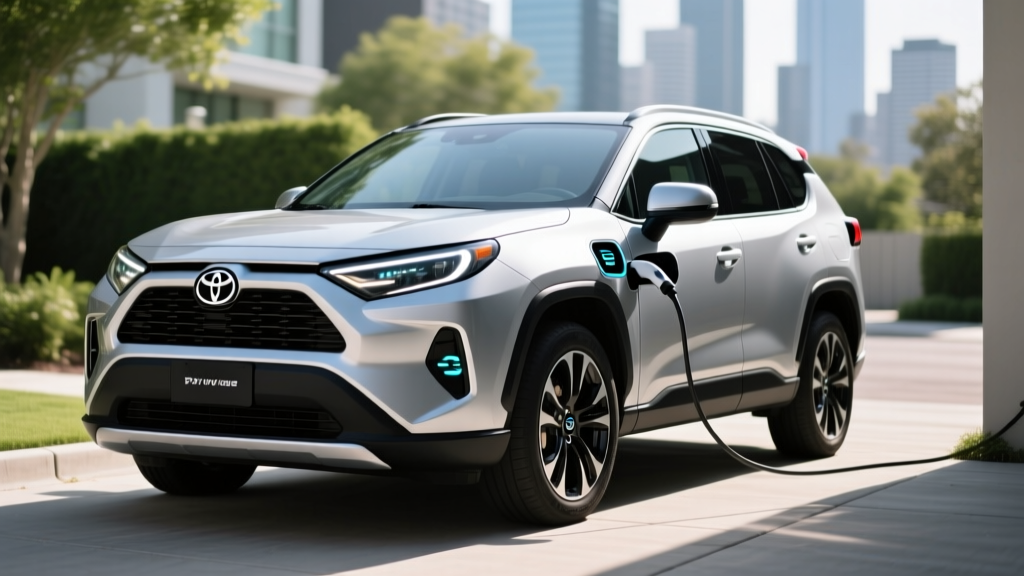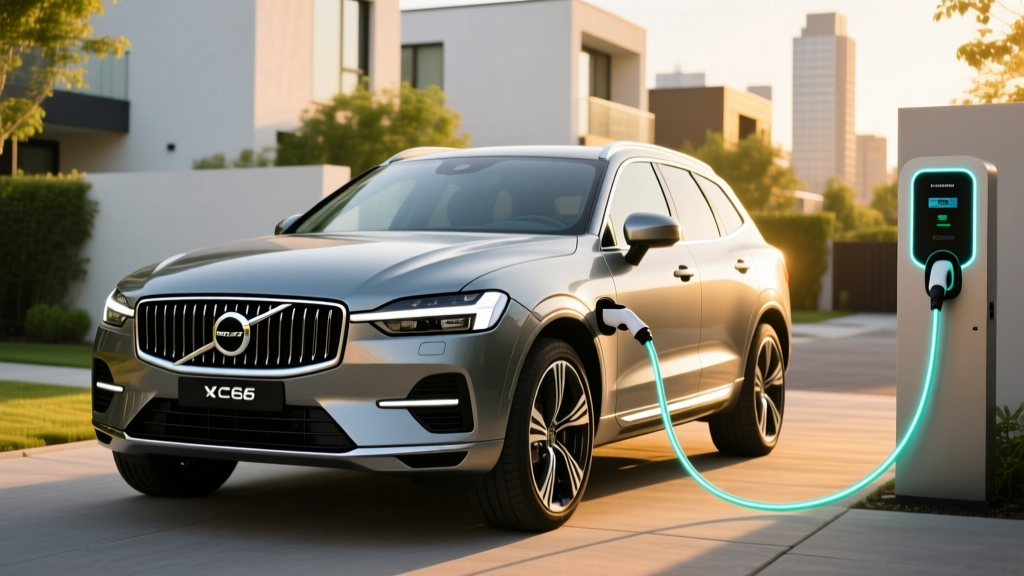
The Volvo XC60 Recharge occupies a specific niche: a luxury compact SUV that delivers genuine electric-only commuting range without the charging infrastructure dependency of a full battery-electric vehicle. For 2026, Volvo continues to refine its T8 plug-in hybrid powertrain, pairing a turbocharged and supercharged four-cylinder engine with a rear-axle electric motor for a combined 455 horsepower and an EPA-estimated 35 miles of electric-only driving. This guide breaks down exactly what that means for your daily commute, your wallet, and your next road trip.
HEV vs PHEV: What the Volvo XC60 Recharge Actually Is
Volvo sells the XC60 in two distinct electrified configurations, and confusing them at the dealership is easy if you don't know the difference.
XC60 Mild Hybrid (B5/B6) — Conventional Hybrid
- How it works: A 48-volt integrated starter-generator recovers energy during braking and assists the gas engine. There is no plug and no meaningful electric-only driving.
- Electric-only range: 0 miles. The electric motor assists only at low speeds and during start-stop.
- Charging: None required. You fuel it like a conventional car.
- EPA MPG: Approximately 25 city / 32 highway / 28 combined (AWD B5).
- Who it's for: Buyers who want mild efficiency gains with zero behavior change.
XC60 Recharge (T8) — Plug-In Hybrid (PHEV)
- How it works: A larger 18.8 kWh (usable ~14.9 kWh) lithium-ion battery powers a 143-hp rear electric motor independently or in combination with the 312-hp front gas engine.
- Electric-only range: 35 miles EPA.
- Charging: Plug in via Level 1 (120V) or Level 2 (240V). No DC fast charging.
- EPA MPGe: 63 MPGe combined (electric + gas); 28 MPG combined on gas alone after battery depletes.
- Who it's for: Commuters with home charging who want EV-like daily driving plus gas-engine road trip capability.
This article focuses on the XC60 Recharge T8 plug-in hybrid, since that's where the meaningful electrification lives.
Electric-Only Range, Battery Specs, and Charging
The XC60 Recharge carries an 18.8 kWh gross battery pack (approximately 14.9 kWh usable, with the buffer protecting longevity). Volvo uses a lithium-ion NMC (nickel manganese cobalt) chemistry optimized for energy density in a compact package. Here's what that translates to in practice:
- EPA electric-only range: 35 miles
- Real-world expectation (mixed driving, moderate climate): 30–33 miles
- Highway-heavy at 70 mph: ~26–28 miles (aerodynamic drag reduces EV efficiency significantly above 60 mph)
- Cold weather (below 32°F): ~22–26 miles (battery chemistry and cabin heating draw reduce usable capacity)
For a 25-mile round-trip commute with home charging, the XC60 Recharge can operate as a pure EV most days of the year.
| Spec | Value |
|---|---|
| Battery gross / usable capacity | 18.8 kWh / ~14.9 kWh |
| Battery chemistry | NMC (nickel manganese cobalt) lithium-ion |
| Level 1 charging (120V, 12A) | ~1.4 kW; full charge in ~10–11 hours |
| Level 2 charging (240V, 32A) | ~5.0 kW peak; full charge in ~3 hours |
| DC fast charging (CCS/NACS) | Not supported |
| Charge port location | Left front fender |
| Onboard charger rating | ~5.0 kW (single-phase) |
The lack of DC fast charging is a deliberate trade-off. Most PHEVs in this segment — the BMW X3 xDrive30e, Audi Q5 TFSI e, Mercedes GLC 350e — also skip DC fast charging because the battery is small enough that Level 2 replenishes it in a few hours. If you need rapid public charging, a full BEV is the better path.
Powertrain: 455 HP and All-Wheel Drive
The T8 powertrain is one of the most potent in the luxury compact PHEV segment. Here's the breakdown:
- Front axle: 2.0-liter turbocharged and supercharged inline-4 producing 312 hp and 295 lb-ft of torque
- Rear axle: Permanent-magnet electric motor producing 143 hp and 228 lb-ft
- Combined system output: 455 hp and 523 lb-ft of torque
- Drivetrain: eAWD (electric all-wheel drive — no mechanical driveshaft to the rear; the motor handles rear traction)
- Transmission: 8-speed automatic (torque-converter)
- 0–60 mph: 4.5 seconds (Volvo-estimated, independently verified in the 4.3–4.6 range)
The eAWD system is worth noting. Because the rear wheels are driven solely by the electric motor, traction distribution is managed electronically rather than mechanically. In Pure EV mode, the XC60 Recharge is effectively rear-wheel drive. When the gas engine engages or extra traction is needed, power flows to both axles.
Fuel Economy: EPA MPG and Real-World Numbers
| Mode | City | Highway | Combined |
|---|---|---|---|
| Charge-sustaining (gas only, battery depleted) | 26 MPG | 29 MPG | 28 MPG |
| Charge-depleting + gas (MPGe) | 65 MPGe | 61 MPGe | 63 MPGe |
| Electric-only efficiency | 73 MPGe (2.3 kWh/mile equivalent) | ||
Real-world MPG observations: PHEVs are uniquely sensitive to how often you charge. If you plug in nightly and your commute falls within the 35-mile electric envelope, you may burn fuel only a handful of times per month — effectively achieving 80–100+ MPGe in mixed use. If you never plug in and treat it as a conventional hybrid, expect 26–30 MPG combined, which is competitive with the mild-hybrid XC60 B5 but not transformative. The EPA's fueleconomy.gov listing provides the standardized breakdown.
On the highway, the XC60 Recharge's charge-sustaining MPG dips slightly because the battery adds roughly 350 lbs over the mild-hybrid variant. City driving is where the electric motor's low-speed torque and regenerative braking shine, often pushing real-world city numbers above the EPA estimate when the battery has charge to contribute.
Pricing, Trims, and Federal Tax Credit Eligibility
For 2026, the XC60 Recharge lineup is structured as follows (MSRP before destination):
| Trim | MSRP | Key Features |
|---|---|---|
| Core T8 eAWD | $59,050 | 19" wheels, Google built-in, panoramic roof, heated front seats |
| Plus T8 eAWD | $63,250 | + Pilot Assist, 360° camera, wireless phone charging, head-up display |
| Ultimate T8 eAWD | $68,050 | + Harman Kardon audio, ventilated front seats, Nappa leather, 20" wheels |
| Polestar Engineered T8 eAWD | $72,350 | + Öhlins dampers, Polestar-tuned chassis, 21" wheels, gold brake calipers |
Destination charge adds $1,195.
Does the XC60 Recharge Qualify for the §30D Federal Tax Credit?
The IRS §30D Clean Vehicle Credit provides up to $7,500 for qualifying new PHEVs, but eligibility depends on multiple criteria that change annually. As of 2026, the XC60 Recharge must satisfy:
- MSRP cap: SUVs must be at or below $80,000. All XC60 Recharge trims qualify.
- Buyer income cap: AGI must not exceed $150,000 (single), $225,000 (head of household), or $300,000 (joint). Check your prior-year or current-year AGI, whichever is lower.
- Battery component sourcing: A percentage of battery components must be manufactured or assembled in North America (threshold increases annually under the Inflation Reduction Act).
- Critical minerals sourcing: A percentage of critical minerals must be sourced from the US or a free-trade-agreement partner.
- Final assembly: Must occur in North America. Volvo's US assembly status for the XC60 should be verified at fueleconomy.gov at time of purchase.
Critical caveat: Volvo manufactures the XC60 primarily in Sweden and China. If final assembly does not occur in North America, the vehicle does not qualify for the §30D new-vehicle credit regardless of other factors. Always verify the VIN on the IRS tool before purchase. The credit can be transferred to the dealer at point of sale as a price reduction if eligible.
Battery Warranty, Reliability, and Replacement Cost
- Hybrid battery warranty: 8 years / 100,000 miles (whichever comes first), covering defects and capacity loss below a specified threshold (typically 70% of original capacity)
- Powertrain warranty: 4 years / 50,000 miles
- Bumper-to-bumper: 4 years / 50,000 miles
- Complimentary scheduled maintenance: 3 years / 36,000 miles (Volvo's factory-included program)
Volvo's T8 powertrain has been in production since 2015 (with the larger 18.8 kWh battery arriving for the 2022 model year). Long-term reliability data for the current-generation battery pack is still maturing, but Volvo's PHEV systems have not been flagged for widespread battery failures in the way some early-generation PHEVs from other brands were. The 8-year/100,000-mile battery warranty aligns with the federal minimum mandated for PHEV/BEV traction batteries and matches competitors like BMW and Audi.
Out-of-warranty battery replacement cost: If the high-voltage pack requires replacement after the warranty period, expect a parts-and-labor estimate in the $8,000–$12,000 range based on current Volvo dealer pricing for the 18.8 kWh module. This is lower than full BEV battery replacements (which can exceed $15,000–$20,000) because the pack is physically smaller. However, it's a meaningful cost to factor into long-term ownership planning if you intend to keep the vehicle past 10 years.
XC60 Recharge vs Full EV vs Gas: Which Fits You?
Choose the XC60 Recharge PHEV if:
- Your daily commute is under 35 miles round-trip and you can charge at home (Level 1 or Level 2).
- You take road trips of 200+ miles several times a year and don't want to plan around public charging infrastructure.
- You want luxury-SUV refinement with meaningful fuel savings but aren't ready for a full BEV.
- You live in a region with extreme cold, where BEV range loss (20–40%) would be disruptive.
Choose a full BEV (e.g., Volvo EX60, BMW iX, Tesla Model Y) if:
- You have reliable home Level 2 charging and access to DC fast chargers for road trips.
- You want zero tailpipe emissions and the lowest per-mile energy cost.
- You drive mostly in urban/suburban settings and rarely exceed 250 miles in a single day.
Choose the mild-hybrid XC60 B5/B6 if:
- You cannot charge at home (apartment, street parking, no electrical access).
- You want the lowest purchase price and don't care about electric-only driving.
- Your annual mileage is low and fuel cost savings would be negligible.
Pros and Cons
Pros
- 35 miles of real electric-only range covers most commutes
- 455 hp provides effortless passing power and confident highway merging
- Standard eAWD with no mechanical drivetrain compromise
- Premium interior quality with Google built-in infotainment
- Strong safety credentials (IIHS Top Safety Pick+ historically)
- Can operate as a conventional hybrid if you forget to plug in
Cons
- No DC fast charging — irrelevant for most PHEV use, but limits flexibility
- $59,050 starting price is steep; rivals like the Hyundai Tucson PHEV start ~$20K lower
- Charge-sustaining MPG (28 combined) is average, not exceptional
- Federal tax credit eligibility uncertain due to non-US assembly — verify VIN
- Cargo space slightly reduced vs mild-hybrid due to battery placement (22.4 cu ft behind rear seats vs 25.8)
- Only ~5.0 kW onboard charger — Level 2 top-ups are adequate but not rapid
Frequently Asked Questions
How many MPG does the plug-in hybrid Volvo XC60 get?
On gas alone (battery depleted), the EPA rates it at 26 city / 29 highway / 28 combined MPG. When factoring in electric-only driving, it achieves 63 MPGe combined. Your actual fuel consumption depends entirely on how often you plug in — charge nightly with a short commute, and you may visit a gas station only for road trips.
How far can the XC60 Recharge go on electric only?
The EPA rates it at 35 miles of electric-only range. In real-world mixed driving, expect 30–33 miles. Highway speeds and cold weather reduce this to 22–28 miles. The total combined range (electric + full gas tank) exceeds 460 miles.
Does the Volvo XC60 plug-in hybrid qualify for the $7,500 federal tax credit?
Possibly, but it's not guaranteed. The XC60 Recharge's MSRP falls under the $80,000 SUV cap, but the vehicle must meet battery-sourcing requirements and have North American final assembly to qualify under IRS §30D rules. Volvo builds the XC60 primarily outside the US. Always verify eligibility using your specific VIN on the IRS tool and consult a tax professional before relying on the credit.
Is the Volvo XC60 Recharge reliable, and what does battery replacement cost?
Volvo's T8 PHEV system has been in production since 2015 with no widespread battery failure patterns reported. The hybrid battery is warrantied for 8 years / 100,000 miles. Out-of-warranty replacement runs approximately $8,000–$12,000. The conventional powertrain components (turbocharged engine, 8-speed automatic) are well-established in Volvo's lineup.
Can I charge the XC60 Recharge at a DC fast charger?
No. The XC60 Recharge supports only Level 1 (120V) and Level 2 (240V) AC charging, with a maximum onboard charger rate of approximately 5.0 kW. A full charge on Level 2 takes about 3 hours. This is typical for PHEVs — the battery is small enough that DC fast charging infrastructure isn't necessary for daily use.
How does the XC60 Recharge compare to the BMW X3 xDrive30e and Audi Q5 TFSI e?
The XC60 Recharge offers more horsepower (455 vs ~292 for the X3 and ~362 for the Q5) and comparable or slightly better electric range. The BMW X3 xDrive30e and Audi Q5 55 TFSI e are direct competitors with similar pricing, though the Volvo's power advantage is significant. Charging speeds and battery capacities are in the same ballpark across all three.
Do I need a Level 2 home charger for the XC60 Recharge?
You don't need one, but it's strongly recommended. Level 1 (standard 120V outlet) will fully recharge the battery in roughly 10–11 hours — adequate if you plug in overnight with a long parking window. Level 2 (240V, like a dryer outlet or dedicated EV charger) cuts that to ~3 hours, giving you flexibility to top up between errands. A basic Level 2 home installation runs $500–$1,500 depending on your electrical panel capacity.