The Only Plug-In Hybrid Van You Can Actually Buy
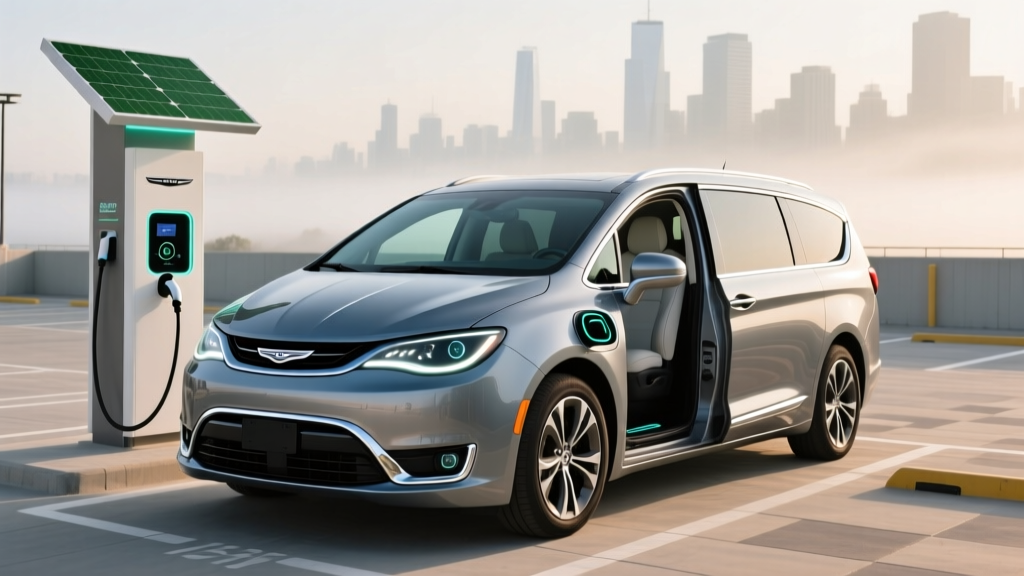
If you've been searching for a plug-in hybrid van, your options narrow quickly to exactly one: the Chrysler Pacifica PHEV. While Toyota offers the Sienna as a conventional hybrid (no plug), and Kia/Hyundai sell electrified SUVs, the Pacifica remains the sole minivan in the U.S. market with a plug and meaningful electric-only range. For families who want school-run electric commuting with gas-powered road trip flexibility, it occupies a unique niche.
This guide covers the 2026 Chrysler Pacifica PHEV in detail — its powertrain, real-world efficiency, charging requirements, and how it stacks up against both the conventional hybrid Sienna and a full battery-electric alternative like the upcoming electric van segment. We'll also clarify the critical HEV vs. PHEV distinction, because choosing wrong here means either missing out on electric miles or paying for a plug you'll never use.
HEV vs. PHEV — What's the Difference?
Conventional Hybrid (HEV): A small battery (typically 1–2 kWh) recharges through regenerative braking and the engine. You never plug it in. The Toyota Sienna is an HEV — it achieves excellent MPG but offers zero electric-only miles.
Plug-In Hybrid (PHEV): A larger battery (16 kWh in the Pacifica) can be charged from a wall outlet or charger. This enables 30+ miles of pure electric driving before the gas engine engages. Once the battery depletes, it operates like a regular hybrid.
Why it matters: If you can charge at home and your daily driving is under ~30 miles, a PHEV lets you drive on electricity most days while keeping a gas tank for longer trips. An HEV saves fuel without any lifestyle change but never eliminates it.
2026 Chrysler Pacifica PHEV: Powertrain and Key Specs
The Pacifica PHEV pairs a 3.6-liter Pentastar V6 engine with two electric motors and a 16 kWh lithium-ion battery pack (usable capacity approximately 13.5 kWh). Combined system output is 260 horsepower, routed through a dedicated continuously variable transmission (e-CVT). Front-wheel drive is standard — all-wheel drive is not available on the PHEV variant (it is on the gas-only Pacifica).
| Specification | Value |
|---|---|
| Combined Horsepower | 260 hp |
| Engine | 3.6L V6 + dual electric motors |
| Battery (Total / Usable) | 16 kWh / ~13.5 kWh |
| EPA Electric-Only Range | 32 miles |
| EPA MPGe (Electric + Gas) | 82 MPGe combined |
| EPA MPG (Gas-Only, After Battery Depletes) | 30 MPG combined (30 city / 31 hwy) |
| Total Combined Range (EV + Gas) | ~520 miles |
| Level 2 Charge Time (240V, 32A) | ~2 hours (0–100%) |
| Level 1 Charge Time (120V) | ~14 hours |
| DC Fast Charging | Not supported |
| Drivetrain | FWD only (no AWD on PHEV) |
| 0–60 mph | ~7.1 seconds |
| Cargo Volume (Behind 3rd Row) | 32.3 cu ft |
| Battery Warranty | 10 years / 100,000 miles |
Fuel Economy: EPA Numbers vs. Real-World MPG
The EPA rates the Pacifica PHEV at 82 MPGe combined when operating in electric mode (the MPGe metric converts electricity consumption into a gasoline-equivalent figure for comparison). Once the battery is depleted and the van runs on gasoline alone, the rating drops to 30 MPG combined — split as 30 city / 31 highway, according to fueleconomy.gov.
| Mode | City | Highway | Combined |
|---|---|---|---|
| Electric (MPGe) | 84 | 80 | 82 |
| Gas-Only (MPG) | 30 | 31 | 30 |
Real-world expectations: PHEVs tend to reward city and suburban driving, where regenerative braking recaptures energy and low-speed electric propulsion is most efficient. Owners who charge nightly and drive under 30 miles daily report effectively running on electricity 80–90% of the time, with fuel consumption limited to weekend road trips. On sustained highway drives at 70+ mph after battery depletion, expect closer to 27–29 MPG — slightly below the EPA sticker, which is typical for a heavy, boxy vehicle at highway speeds. In cold weather (below 30°F), electric-only range can drop by 20–30%, reducing your EV miles to roughly 22–25 before the engine kicks in.
Charging: What You Need to Plug In at Home
The Pacifica PHEV uses a standard J1772 connector for AC charging. It does not support DC fast charging — a common limitation among PHEVs due to their smaller battery packs, which aren't designed to absorb high charge rates safely.
| Level | Power (kW) | Full Charge Time | Practical Use |
|---|---|---|---|
| Level 1 (120V household) | ~1.4 kW | ~14 hours | Overnight top-up; slow for full recharge |
| Level 2 (240V, 32A) | ~7.7 kW | ~2 hours | Recommended home setup; full charge while you work/sleep |
For most PHEV owners, a Level 2 home charger is the sweet spot. A 240V / 32A wallbox (such as the ChargePoint Home Flex or Emporia Level 2) will fully recharge the Pacifica's 16 kWh pack in about 2 hours — meaning you can easily recharge mid-day if needed. Installation cost for a Level 2 charger typically runs $500–$1,500 total (equipment + electrician), depending on whether your electrical panel needs an upgrade. Since the battery is small, even Level 1 (a standard 120V outlet) can work if you park for 14+ hours at a time, though it's tight for daily full recharges.
One practical note: because the Pacifica PHEV lacks DC fast charging, public charging infrastructure is largely irrelevant for this vehicle. Your home garage is your fueling station, which is the entire point of a PHEV with a manageable battery size.
Pricing, Trims, and Federal Tax Credit Eligibility
The 2026 Chrysler Pacifica PHEV starts at approximately $51,095 MSRP for the base Select trim and climbs to around $58,895 for the Pinnacle trim. These prices position it as a premium minivan — roughly $10,000–$12,000 above the gas-only Pacifica and the hybrid-only Toyota Sienna.
Federal tax credit (§30D): Under current IRS rules, the Pacifica PHEV may qualify for a partial federal tax credit, but eligibility is complex and subject to battery-sourcing and critical-mineral requirements that change annually. As of 2026, many PHEVs see reduced credit amounts (sometimes $3,750 rather than the full $7,500) due to component-sourcing rules. Additionally, the §30D credit has buyer income caps ($150,000 single / $300,000 joint filers) and the vehicle must fall under the $80,000 MSRP cap for vans/SUVs — which the Pacifica does. The credit can now be transferred to the dealer at point of sale, effectively reducing your purchase price upfront. Always verify current eligibility at irs.gov before purchasing, as sourcing requirements are updated periodically.
- Vehicle MSRP must be under $80,000 (van/SUV cap) — Pacifica qualifies ✓
- Buyer AGI under $150K (single) or $300K (joint) — verify your income
- Battery sourcing / critical mineral requirements — check current-year IRS guidance; partial credit may apply
- Point-of-sale transfer available — reduces out-of-pocket cost at the dealer
- Vehicle must be new and for personal use, not resale
Pacifica PHEV vs. Toyota Sienna Hybrid vs. Full EV: Which Fits You?
The plug-in hybrid van question almost always comes down to three paths: the Pacifica PHEV, the Toyota Sienna (conventional HEV), or waiting for a fully electric minivan (such as the announced but not yet widely available electric van offerings from startups and legacy brands). Here's how they compare on the metrics that matter:
| Attribute | Chrysler Pacifica PHEV | Toyota Sienna (HEV) |
|---|---|---|
| Type | Plug-in Hybrid (PHEV) | Conventional Hybrid (HEV) |
| Electric-Only Range | 32 miles | 0 miles (no plug) |
| EPA MPG Combined (Gas) | 30 MPG | 36 MPG |
| EPA MPGe (Electric Mode) | 82 MPGe | N/A |
| Plug Required? | Yes (for EV miles) | No |
| AWD Available? | No (FWD only) | Yes |
| Starting MSRP (2026) | ~$51,095 | ~$39,485 |
| Potential Federal Credit | Up to $7,500 (partial likely) | None (HEV not eligible) |
| Stow 'n Go Seating? | No (battery occupies under-floor space) | No (hybrid battery); removable seats |
| Battery Warranty | 10 yr / 100,000 mi | 10 yr / 150,000 mi |
Decision Framework: Which Van Should You Choose?
Choose the Pacifica PHEV if:
- You can charge at home (garage or driveway with 240V access)
- Your daily driving is under ~30 miles (school runs, errands, commuting)
- You want to minimize gasoline use without range-anxiety on road trips
- You qualify for at least a partial federal tax credit, narrowing the price gap
Choose the Toyota Sienna HEV if:
- You cannot charge at home (apartment, street parking, no garage)
- You want AWD for snow-belt climates
- Lower upfront cost matters more than electric driving
- You drive mostly highway miles where the Sienna's 36 MPG shines
Wait for a full EV minivan if:
- You want zero gasoline and have reliable home + public charging
- You drive under 250 miles daily and can accommodate current EV van limitations
- You're willing to wait for broader model availability and potentially higher pricing
Reliability and Long-Term Ownership
The Pacifica PHEV's powertrain is mechanically mature — the 3.6L Pentastar V6 has been in production for over a decade, and the e-CVT hybrid system has been in the Pacifica since the 2017 model year. Early model years (2017–2019) had some reported issues with the hybrid system's power inverter and software glitches, but Chrysler issued recalls and updates that addressed most concerns in subsequent years.
The high-voltage battery has proven durable. PHEV batteries experience less stress than full EV batteries because they operate in a narrower state-of-charge window (the system maintains a buffer to protect longevity). Owner reports on forums and NHTSA complaint databases show relatively few battery degradation claims for Pacifica PHEVs with under 100,000 miles. The 10-year / 100,000-mile battery warranty provides a strong backstop, and Chrysler defines excessive degradation as falling below approximately 70% of original capacity.
One ownership consideration: the PHEV's battery pack occupies the space normally used for Chrysler's Stow 'n Go second-row seating. This means the second-row seats are removable but do not fold into the floor, reducing cargo flexibility compared to the gas-only Pacifica. If maximum cargo configurability is a priority, this trade-off is worth evaluating in person at a dealer.
✓ Pros
- 32 miles electric covers most daily family driving
- 520+ mile total range eliminates road-trip anxiety
- Federal tax credit reduces effective price
- Mature, proven V6 + hybrid powertrain
- Smooth, quiet electric-mode driving around town
- Minivan practicality with sliding doors and 7-passenger seating
✗ Cons
- No AWD available on PHEV variant
- Stow 'n Go lost — 2nd row seats don't fold into floor
- No DC fast charging (limits public charging utility)
- $51K+ starting price is steep for a minivan
- Highway gas MPG (30) trails the Sienna HEV (36)
- Electric range drops 20–30% in cold weather
Frequently Asked Questions
How many MPG does the Pacifica plug-in hybrid van get?
The EPA rates it at 82 MPGe combined when using its electric charge, and 30 MPG combined (30 city / 31 highway) once the battery depletes and it runs on gasoline alone. In real-world suburban driving with nightly charging, many owners use very little gasoline on a day-to-day basis. On sustained highway road trips, expect 27–29 MPG.
How far can the Pacifica PHEV go on electric only?
The EPA-rated electric-only range is 32 miles. In mild weather with moderate speeds, some drivers report 34–35 miles. In cold weather (below freezing) or at sustained highway speeds, expect 22–26 miles before the gasoline engine engages. For most family routines — school drop-off, grocery runs, commuting within a 15-mile radius — 32 miles covers the full day on electricity.
Does the Pacifica PHEV qualify for a federal tax credit?
It may qualify for a partial or full §30D federal clean vehicle credit, depending on current-year battery-sourcing and critical-mineral requirements set by the IRS. The Pacifica's MSRP falls under the $80,000 van cap. Buyer income limits apply ($150K single / $300K joint). Because sourcing rules change, always check the latest information at irs.gov and confirm with your dealer before purchase. The credit can be applied at point of sale.
Is the Pacifica PHEV reliable, and what does battery replacement cost?
The Pacifica PHEV powertrain has been in production since 2017 and is considered mechanically mature. The high-voltage battery is covered by a 10-year / 100,000-mile warranty. Real-world degradation data shows most Pacifica PHEV batteries retaining 85–90%+ capacity at high mileage. Out-of-warranty replacement, if ever needed, is estimated at $8,000–$12,000, though most owners will trade or sell the vehicle before this becomes relevant.
Can I charge the Pacifica PHEV at a public DC fast charger?
No. The Pacifica PHEV does not have a DC fast-charging port. It charges exclusively via AC (Level 1 at 120V or Level 2 at 240V) using a J1772 connector. This is typical for PHEVs — the 16 kWh battery is small enough that Level 2 charging (about 2 hours for a full charge) is practical, and DC fast charging would add cost and weight without meaningful benefit for a battery this size.
Hybrid vs. PHEV vs. EV — which is right for my family?
If you have home charging and drive under 30 miles daily, the PHEV gives you electric commuting with road-trip freedom — the best of both worlds. If you can't charge at home, a conventional hybrid like the Sienna HEV delivers strong MPG with zero lifestyle change. A full EV eliminates gasoline entirely but requires reliable charging access and acceptance of current range and charging-time limitations. For a family hauler that does it all, the plug-in hybrid van formula is hard to beat — as long as you can plug in at home.