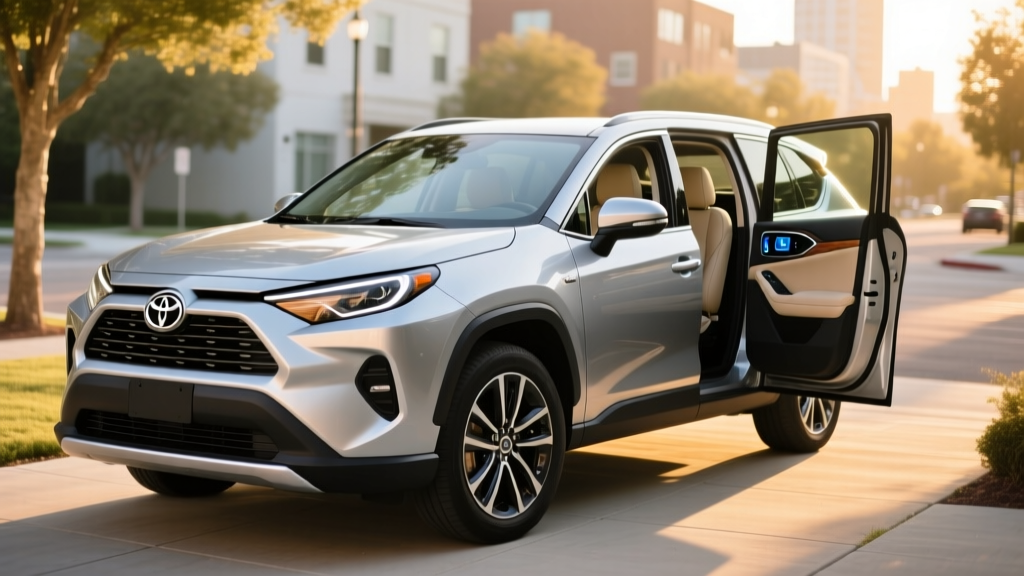
If you're not ready to commit to a fully electric vehicle but want meaningful fuel savings and electric-only commuting, plug-in hybrid electric vehicles (PHEVs) occupy a compelling middle ground. Unlike conventional hybrids that rely solely on regenerative braking and a gas engine to charge a small battery, PHEVs carry a larger battery pack you can charge from a wall outlet — delivering 20 to 50 miles of pure electric driving before the gasoline engine seamlessly takes over.
This guide breaks down how PHEVs work, how they compare to standard hybrids and full EVs, what real-world ownership looks like, and which models lead the segment in 2026.
HEV vs. PHEV: What's the Actual Difference?
The terminology trips up many buyers, and the distinction matters enormously for your wallet and daily routine.
| Feature | Conventional Hybrid (HEV) | Plug-In Hybrid (PHEV) |
|---|---|---|
| Battery size | 0.5–2.0 kWh | 13–25 kWh (usable) |
| Plug-in charging | No — charges via engine + regen | Yes — Level 1 or Level 2 |
| Electric-only range | 0–1 mile at low speed | 20–50+ miles at full speed |
| Federal tax credit | None (as of 2026) | Up to $7,500 (§30D, with caveats) |
| Charging hardware needed | None | Level 1 (120V) included; Level 2 recommended |
| Best for | Drivers who can't charge at home | Drivers with home/work charging + short commutes |
| Example | Toyota Camry Hybrid | Toyota RAV4 Prime |
A conventional hybrid like the Honda Accord Hybrid never needs to be plugged in. Its small battery buffers energy from regenerative braking and the engine, assisting acceleration and enabling brief low-speed electric creep. You just fill it with gas and drive.
A PHEV like the Chrysler Pacifica Hybrid or BMW X5 xDrive50e has a substantially larger battery and a more powerful electric motor. Plug it in overnight on a standard 120V outlet (Level 1), and you'll wake up with 30+ miles of electric range — enough for most round-trip commutes without burning a drop of gasoline. When the battery depletes, the vehicle operates as a conventional hybrid.
Fuel Economy and Electric-Only Range: What the Numbers Say
PHEV efficiency is measured two ways: MPGe (miles per gallon equivalent) when running on electricity, and MPG when the gas engine takes over. Both matter, but which one dominates your experience depends entirely on how often you charge.
| 2026 PHEV Model | Battery (kWh usable) | EV Range (mi) | Combined MPGe | Gas-Only MPG (combined) | Total Range (mi) |
|---|---|---|---|---|---|
| Toyota RAV4 Prime | 14.9 | 42 | 94 MPGe | 38 MPG | ~600 |
| Jeep Wrangler 4xe | 17.3 | 22 | 49 MPGe | 20 MPG | ~370 |
| BMW X5 xDrive50e | 25.7 | 40 | 56 MPGe | 27 MPG | ~460 |
| Chrysler Pacifica Hybrid | 16.0 | 32 | 82 MPGe | 30 MPG | ~520 |
| Hyundai Tucson PHEV | 13.8 | 33 | 80 MPGe | 35 MPG | ~440 |
| Ford Escape PHEV | 14.4 | 37 | 105 MPGe | 40 MPG | ~520 |
Real-world caveat: The EPA electric-range figure assumes moderate temperatures and mixed driving. In winter conditions (below 30°F), expect 20–30% less electric range due to battery chemistry limitations and cabin heating demands. Highway driving at 75+ mph also reduces range versus the EPA's mixed-cycle test. A RAV4 Prime rated at 42 miles may deliver 30–35 miles on a cold January highway commute.
When the battery is depleted, real-world gas-only MPG often matches or slightly exceeds the EPA sticker in city driving — hybrids recapture energy through regenerative braking that gas-only vehicles waste as heat. On sustained highway cruises, some PHEVs fall 1–3 MPG short of their EPA rating because of the added weight of the battery pack.
Powertrain and Performance Specs
Modern PHEVs pair a turbocharged or naturally aspirated gasoline engine with one or more electric motors. The combined output often significantly exceeds the gas-only variant of the same vehicle.
| Model | Engine | Combined HP | 0–60 mph | Drivetrain |
|---|---|---|---|---|
| Toyota RAV4 Prime | 2.5L I4 + 2 motors | 302 hp | 5.7 sec | AWD (e-AWD rear motor) |
| BMW X5 xDrive50e | 3.0L turbo I6 + 1 motor | 483 hp | 4.6 sec | AWD |
| Jeep Wrangler 4xe | 2.0L turbo I4 + 2 motors | 375 hp | 6.0 sec | 4WD |
| Hyundai Tucson PHEV | 1.6L turbo I4 + 1 motor | 261 hp | 7.1 sec | AWD |
| Ford Escape PHEV | 2.5L I4 + 1 motor | 210 hp | 7.8 sec | FWD |
The performance advantage is real: the RAV4 Prime's 302 hp makes it the quickest RAV4 you can buy, and the Wrangler 4xe's 375 lb-ft of instant electric torque transforms off-road crawling. PHEVs are not efficiency compromises — they're often the performance trim of the lineup.
Charging: What You Need to Know Before Buying
PHEV batteries are small enough that charging is straightforward, but the details determine whether you'll actually use electric mode daily.
| Charging Level | Power (kW) | Time to Full (15 kWh battery) | Practical Use |
|---|---|---|---|
| Level 1 (120V household) | 1.2–1.4 kW | 11–13 hours | Overnight charging; sufficient for most PHEVs |
| Level 2 (240V home/public) | 3.3–7.2 kW | 2–4.5 hours | Faster top-ups; ideal if you drive and recharge midday |
| DC Fast Charge | Varies | N/A for most PHEVs | Rarely supported — Mitsubishi Outlander PHEV is an exception |
Critical detail: Most PHEVs do not support DC fast charging. The Mitsubishi Outlander PHEV is a notable exception, accepting up to ~22 kW DC — still far slower than a full EV. For virtually all PHEV owners, a standard 120V outlet (Level 1) handles overnight charging adequately because the battery is only 13–26 kWh. A Level 2 home charger is a convenience upgrade, not a necessity.
The onboard charger matters: the RAV4 Prime's optional 6.6 kW onboard charger (standard on higher trims) cuts Level 2 charging to roughly 2.5 hours, while the base 3.3 kW charger takes about 4.5 hours. Check the trim-level specs before purchasing.
Pricing, Tax Credits, and Total Cost
PHEVs carry a price premium over their gas-only and conventional hybrid siblings — typically $4,000 to $10,000 more — but the federal tax credit can close much of that gap.
Under IRS §30D rules for 2026, qualifying PHEVs are eligible for up to $7,500 in federal tax credits, split into two halves:
- $3,750 if battery components meet North American manufacturing requirements
- $3,750 if critical minerals meet sourcing requirements
- Vehicle MSRP must not exceed $55,000 (sedans/wagons) or $80,000 (SUVs/trucks/vans)
- Buyer AGI must not exceed $150,000 (single), $225,000 (head of household), or $300,000 (joint)
- Credit can be transferred to the dealer at point of sale as an immediate price reduction
- Battery must have ≥7 kWh capacity (all current PHEVs qualify)
Important: Battery-sourcing rules have tightened significantly since 2024. Many previously qualifying models have lost partial or full credit eligibility due to foreign entity of concern (FEOC) restrictions on critical minerals and battery components. Always verify current eligibility on fueleconomy.gov before purchasing.
Representative 2026 pricing (base MSRP, before any credits):
- Toyota RAV4 Prime: ~$44,500
- Hyundai Tucson PHEV: ~$39,500
- Ford Escape PHEV: ~$40,000
- Chrysler Pacifica Hybrid: ~$51,000
- BMW X5 xDrive50e: ~$72,000
- Jeep Wrangler 4xe: ~$52,000
Battery Longevity, Warranty, and Replacement Costs
Hybrid and PHEV battery anxiety is understandable but largely overstated by 2026. Two decades of Toyota Prius data and over a decade of PHEV deployment show that modern lithium-ion hybrid batteries degrade slowly and are engineered with substantial buffer capacity.
Standard PHEV Battery Warranty (2026)
Federal mandate: Minimum 8 years / 100,000 miles for emission-related components including the hybrid battery (10 years / 150,000 miles in CARB states including California, New York, Massachusetts, and others).
Typical capacity retention threshold: Warranty covers the battery if it falls below 60–70% of original capacity within the warranty period.
Real-world degradation: Most PHEV batteries lose 8–15% capacity over the first 8 years based on fleet data — well within the warranty threshold.
If a PHEV battery does require out-of-warranty replacement, costs vary widely:
- Toyota RAV4 Prime: ~$4,000–$6,000 (dealer replacement)
- Chrysler Pacifica Hybrid: ~$6,500–$8,500
- BMW X5 xDrive50e: ~$10,000–$14,000
However, Consumer Reports data and long-term fleet studies indicate that complete hybrid battery failure within the first 150,000 miles is rare. Individual cell module replacement (rather than the entire pack) is increasingly available at independent hybrid specialists for $1,000–$2,500.
PHEV vs. Full EV vs. Gas Car: Which Should You Choose?
The right choice depends on your charging access, commute pattern, and willingness to adapt. Here's a practical decision framework:
Choose a PHEV if:
- You have access to a 120V or 240V outlet at home or work
- Your daily round-trip commute is under 40 miles
- You regularly take longer road trips (300+ miles) where charging infrastructure is sparse
- You want electric commuting without range anxiety
- You live in an apartment or area where installing a Level 2 charger for a full EV is impractical
Choose a full EV (BEV) if:
- You can install Level 2 charging at home
- Your daily driving is under 250 miles and you can plan around DC fast charging on road trips
- You want zero tailpipe emissions and minimal maintenance (no oil changes, no engine)
- You want the lowest per-mile fuel cost (electricity is typically $0.04–$0.06/mile vs. $0.12–$0.18/mile for gas)
Choose a conventional HEV if:
- You have no access to any plug-in charging at home or work
- You want better fuel economy without changing any habits
- You want the lowest purchase price in an electrified vehicle
Stick with a gas car if:
- You drive very few miles per year (under 5,000) — the fuel savings won't offset the purchase premium
- You need maximum towing capacity in a budget-constrained purchase (though PHEVs like the Wrangler 4xe tow 3,500 lbs)
Pros and Cons of Going PHEV
Pros
- Electric-only commuting eliminates daily gas use for short trips
- No range anxiety — gas engine provides 300–600 miles total range
- Often qualifies for federal tax credits (up to $7,500) that conventional HEVs do not
- Stronger performance than gas-only variants (more combined horsepower)
- Lower maintenance than gas cars (regen braking saves brake pads; engine runs less)
- HOV lane access in several states (California, Colorado, Virginia, others)
Cons
- $4,000–$10,000 price premium over conventional hybrid versions
- Reduced cargo space in some models (battery pack under floor or rear seats)
- Gas-only MPG can be lower than a dedicated HEV once battery is depleted (added weight)
- You must actually plug in regularly to capture the value — an unplugged PHEV is just a heavy hybrid
- DC fast charging is rarely available, limiting mid-trip electric replenishment
- Resale value uncertainty as the market shifts toward full EVs
Frequently Asked Questions
How many MPG does a plug-in hybrid get?
It depends on whether the battery is charged. On electricity alone, PHEVs achieve 49–105 MPGe (miles per gallon equivalent). Once the battery depletes, the gas engine delivers 20–40 MPG combined depending on the model. The Ford Escape PHEV leads the segment at 105 MPGe electric and 40 MPG gas-only. For context, check specific models on fueleconomy.gov.
How far can a PHEV go on electric only?
Current 2026 PHEVs offer 20 to 50 miles of EPA-rated electric-only range. The Toyota RAV4 Prime leads at 42 miles; the BMW X5 xDrive50e achieves 40 miles. Real-world range drops 20–30% in freezing temperatures and at sustained highway speeds above 70 mph.
Do I need to install a special charger for a PHEV?
No. Every PHEV comes with a Level 1 (120V) charging cord that plugs into a standard household outlet. Because PHEV batteries are small (13–26 kWh), Level 1 charging overnight (10–13 hours) is sufficient for most owners. A Level 2 (240V) charger reduces charging time to 2–4 hours but is optional, not required.
Is a PHEV reliable, and what does battery replacement cost?
PHEVs from Toyota, Hyundai, and Ford have demonstrated strong reliability records. The hybrid battery is warranted for 8 years/100,000 miles federally (10 years/150,000 miles in CARB states). Out-of-warranty battery replacement ranges from roughly $4,000 for a RAV4 Prime to $14,000 for a BMW X5, though full pack replacement within the first 150,000 miles is uncommon.
Does a plug-in hybrid qualify for a tax credit?
Some do. Under the 2026 IRS §30D rules, qualifying PHEVs can receive up to $7,500 — but eligibility depends on battery component sourcing, critical mineral origin, vehicle MSRP caps ($55K sedans, $80K SUVs), and buyer income limits. The credit can be applied at the point of sale as an instant discount. Always verify the specific model's current status on the IRS website or fueleconomy.gov, as eligibility changes when supply chains shift.
What happens if I never plug in my PHEV?
The vehicle will operate as a conventional hybrid, using the gas engine and regenerative braking to manage the battery. You'll get hybrid-level fuel economy (typically 25–38 MPG combined depending on the model) but forfeit the electric-only range and most of the fuel-cost advantage. You'll also have paid a premium for battery capacity you never use. PHEVs only make financial sense if you plug in regularly.
How long does a PHEV battery last?
Based on long-term fleet data, most PHEV batteries retain 85–92% of their original capacity after 8 years. Complete failure before 150,000 miles is rare. Toyota's hybrid battery track record — spanning millions of Prius, RAV4 Hybrid, and RAV4 Prime units — is among the best in the industry. Hyundai backs its PHEV batteries with a 10-year/100,000-mile warranty.