If you've ever sat in a sweltering parking lot wishing you could run your car's air conditioner without the engine idling, you're not alone. The search for a "plug in air conditioner for car" leads many drivers to an important realization: modern plug-in hybrid electric vehicles (PHEVs) already do exactly this. Their high-voltage traction batteries power electric air conditioning compressors that cool the cabin without a drop of gasoline — whether you're pre-conditioning from your phone, waiting at a school pickup line, or camping in a parking spot.
But not every hybrid can do this. Conventional hybrids (HEVs) like the standard Toyota Camry Hybrid can run A/C briefly on battery, but their small packs deplete quickly and the engine kicks in. PHEVs, with their substantially larger batteries (typically 13–25 kWh), can sustain cabin cooling for hours. Below, we break down how electric A/C works in electrified vehicles, which 2026 PHEVs do it best, and whether this feature alone justifies the plug-in premium.
How Electric Air Conditioning Works in Hybrids and PHEVs
In a conventional gas car, the A/C compressor is belt-driven off the engine — meaning the engine must be running (or at least idling) for the A/C to blow cold. Hybrids and PHEVs replace this with an electric compressor powered directly by the high-voltage traction battery. This is the closest thing to a "plug in air conditioner for car" that exists in production vehicles.
HEV vs PHEV: Air Conditioning Without the Engine
| Feature | Conventional Hybrid (HEV) | Plug-In Hybrid (PHEV) |
|---|---|---|
| Battery size | 1.0–2.0 kWh | 13–25 kWh |
| Electric A/C runtime (engine off) | ~3–10 minutes | 2–8+ hours depending on temp |
| External plug-in charging | No | Yes (Level 1 or Level 2) |
| Pre-conditioning from phone app | Limited or unavailable | Standard on most 2026 models |
| Can cool cabin while parked for hours | No — engine will start | Yes |
The electric compressor draws roughly 1–3 kW while actively cooling. In a PHEV with an 18 kWh battery, that translates to roughly 6–18 hours of continuous A/C operation before the battery is depleted — though real-world draw depends on ambient temperature, cabin size, target temperature, and whether the system is initially cooling a hot-soaked interior or maintaining an already-cool cabin.
Best 2026 PHEVs for Engine-Off Air Conditioning
We evaluated current-model PHEVs based on battery capacity, electric-only range, A/C system capability, and overall value. Larger batteries mean longer engine-off cooling. Here are three standout choices for 2026.
2026 Toyota RAV4 Prime
| Spec | Value |
|---|---|
| Electric-only range (EPA) | 42 miles |
| Total combined range | ~600 miles |
| Battery capacity | 18.1 kWh (lithium-ion) |
| Combined horsepower | 302 hp (2.5L 4-cyl + 2 electric motors) |
| EPA MPG (hybrid mode) | 38 city / 35 hwy / 37 combined |
| MPGe (electric mode) | 94 MPGe combined |
| Level 2 charge time (0–100%) | ~2.5 hours at 6.6 kW |
| DC fast charging | Not available |
| Starting MSRP | ~$44,500 |
| Battery warranty | 10 years / 150,000 miles |
The RAV4 Prime's 18.1 kWh pack is large enough to run the electric A/C compressor for roughly 6+ hours on a full charge. Toyota's pre-conditioning feature lets you start cooling the cabin remotely via the Toyota app while the vehicle is still plugged in, drawing grid power rather than battery — so you leave with a cool cabin and a full battery.
2026 Hyundai Tucson Plug-In Hybrid
| Spec | Value |
|---|---|
| Electric-only range (EPA) | 33 miles |
| Total combined range | ~420 miles |
| Battery capacity | 13.8 kWh (lithium-ion polymer) |
| Combined horsepower | 261 hp (1.6L turbo + electric motor) |
| EPA MPG (hybrid mode) | 35 city / 35 hwy / 35 combined |
| MPGe (electric mode) | 80 MPGe combined |
| Level 2 charge time (0–100%) | ~2 hours at 7.2 kW |
| DC fast charging | Not available |
| Starting MSRP | ~$39,500 |
| Battery warranty | 10 years / 100,000 miles |
Hyundai's Bluelink app supports remote climate control, and the Tucson PHEV's electric compressor is notably quiet. With 13.8 kWh, expect roughly 4–6 hours of sustained engine-off A/C in moderate conditions.
2026 Chrysler Pacifica Hybrid
| Spec | Value |
|---|---|
| Electric-only range (EPA) | 32 miles |
| Total combined range | ~520 miles |
| Battery capacity | 16 kWh (lithium-ion) |
| Combined horsepower | 260 hp (3.6L V6 + 2 electric motors) |
| EPA MPG (hybrid mode) | 30 city / 31 hwy / 30 combined |
| MPGe (electric mode) | 82 MPGe combined |
| Level 2 charge time (0–100%) | ~2 hours at 6.6 kW |
| DC fast charging | Not available |
| Starting MSRP | ~$51,000 |
| Battery warranty | 10 years / 100,000 miles |
The minivan use case is where PHEV A/C really shines: soccer practice wait lines, grocery runs with kids napping in the back, and overnight road trips where the family sleeps in the vehicle. The Pacifica's 16 kWh battery and dual-zone rear climate controls make it the family hauler most likely to benefit from engine-off cooling. Source: fueleconomy.gov.
Real-World MPG: What to Actually Expect
EPA MPG figures are a starting point, not a guarantee. Hybrids and PHEVs frequently exceed their EPA city ratings because regenerative braking recovers more energy in stop-and-go traffic. Highway driving, however, often falls short of sticker numbers due to aerodynamic drag at sustained speed.
| Model | EPA Combined | Real-World City (owner avg) | Real-World Highway (owner avg) |
|---|---|---|---|
| RAV4 Prime (hybrid mode) | 37 MPG | 38–42 MPG | 32–35 MPG |
| Tucson PHEV (hybrid mode) | 35 MPG | 35–38 MPG | 31–34 MPG |
| Pacifica Hybrid (hybrid mode) | 30 MPG | 29–33 MPG | 27–30 MPG |
When operating in electric mode within the PHEV's battery range, fuel consumption drops to zero. A RAV4 Prime owner with a 20-mile round-trip commute who charges nightly may go months without visiting a gas station.
Tax Credits and Incentives for PHEVs in 2026
Not every PHEV qualifies for the federal §30D clean vehicle credit, and eligibility depends on a web of requirements that change frequently. Here's what matters:
- MSRP cap: Vans/SUVs/pickups must be under $80,000; sedans under $55,000
- Buyer income cap: Modified AGI ≤ $150,000 (single), $225,000 (head of household), $300,000 (joint)
- Battery sourcing: Critical minerals and battery components must meet phased-in domestic/free-trade-partner thresholds
- Point-of-sale transfer: Eligible buyers can apply the credit as an instant dealer discount rather than waiting for tax filing
- Assembly: Vehicle must undergo final assembly in North America
As of 2026, the RAV4 Prime and Pacifica Hybrid have historically qualified for partial or full credits depending on battery-sourcing compliance, but the specific dollar amount varies by production batch. The Tucson PHEV, assembled in South Korea, does not qualify for the federal §30D credit due to the North American assembly requirement. Always verify current eligibility at IRS.gov and consult a tax professional before purchasing.
Some states offer additional rebates for PHEVs (California's CVRP, Colorado's innovative motor vehicle credit, etc.), though these are separate from federal rules and vary by jurisdiction. Check your state energy office or DMV for current programs.
Battery Longevity, Warranty, and Replacement Costs
Hybrid Battery Warranty Basics
Federal law mandates that hybrid and PHEV batteries carry a minimum warranty of 8 years / 100,000 miles. In California Air Resources Board (CARB) states, this extends to 10 years / 150,000 miles. Most manufacturers exceed these minimums voluntarily.
PHEV batteries are engineered for longevity, but they do degrade. Expect 10–15% capacity loss over 10 years under normal use — meaning a PHEV with a 33-mile electric range when new might deliver 28–30 miles after a decade. This is gradual and rarely catastrophic.
Out-of-warranty replacement costs vary significantly:
- Toyota RAV4 Prime: ~$4,000–$6,000 (battery pack only)
- Hyundai Tucson PHEV: ~$4,500–$7,000
- Chrysler Pacifica Hybrid: ~$5,500–$8,500
These are ballpark figures for the battery module; labor and diagnostics add to the total. Third-party refurbishment shops are increasingly offering replacements at 30–50% below OEM pricing. The good news: hybrid battery failure rates remain low. Consumer Reports data shows that Toyota and Lexus hybrids, in particular, have very low battery replacement rates within the first 15 years of service.
PHEV vs Full EV vs Gas Car: Which Fits Your Life?
Choose a PHEV if:
- Your daily commute is under 35 miles round-trip (covers most US commutes)
- You can charge at home (Level 1 overnight is sufficient for most PHEVs)
- You take road trips where charging infrastructure is sparse
- You want engine-off A/C for hours without range anxiety
- You're not ready to commit to a full EV but want electric daily driving
Choose a full EV if:
- You have reliable home Level 2 charging
- Your daily driving is under 250 miles
- You want zero tailpipe emissions and minimal maintenance
- You're eligible for the full $7,500 federal tax credit
- You want the lowest per-mile fuel cost (electricity vs gas)
The "plug in air conditioner for car" use case — running cabin cooling without the engine — works in both PHEVs and full EVs. The difference is that a PHEV gives you a gasoline backup for long trips, while an EV offers larger batteries (60–100+ kWh) that can run A/C for a full day or more. If you primarily need engine-off cooling for tailgating, car camping, or waiting in the car, a full EV like the Hyundai Ioniq 5 or Tesla Model Y offers even more thermal runway.
However, if you live in an apartment without charging access, or regularly drive 400+ miles between fuel stops in rural areas, a conventional HEV (non-plug) or a PHEV operated primarily in hybrid mode may be the pragmatic choice. Conventional hybrids still use electric A/C compressors — they just can't sustain engine-off cooling for more than a few minutes.
Frequently Asked Questions
Can I install an aftermarket plug-in air conditioner in my gas car?
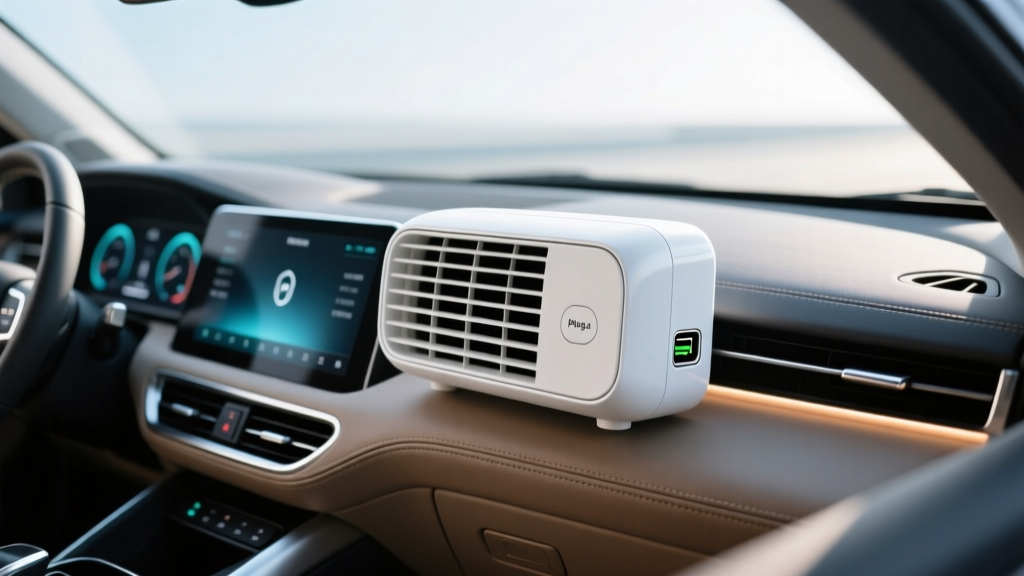
Technically, aftermarket 12V or portable A/C units exist, but they are extremely inefficient, provide minimal cooling, and draw significant current from your car's 12V battery — which is not designed for sustained high loads. The practical answer is no: if engine-off A/C is a priority, a PHEV or EV with an electric compressor is the engineered solution.
How much battery does running the A/C use in a PHEV?
An electric A/C compressor typically draws 1–3 kW. In a PHEV with an 18 kWh battery, running A/C for one hour uses roughly 1–3 kWh, reducing your electric-only range by about 2–7 miles depending on conditions. Maintaining a cool cabin uses far less energy than cooling down a hot-soaked interior, so pre-conditioning while plugged in is the most efficient approach.
Does a conventional hybrid (HEV) need to be plugged in?
No. Conventional hybrids like the Toyota Prius or Honda Accord Hybrid recharge their small batteries entirely through regenerative braking and the gasoline engine. They have no plug. Only PHEVs require (or benefit from) external charging.
Will running the A/C on battery damage the PHEV battery?
No. PHEV battery management systems are designed to prevent deep discharge. The vehicle will automatically start the gasoline engine if the battery drops below its minimum state-of-charge threshold (typically around 15–20%). You cannot accidentally drain the traction battery to a damaging level through A/C use.
How do I pre-condition my PHEV's cabin before driving?
Most 2026 PHEVs support remote climate activation through their companion smartphone apps (Toyota app, Hyundai Bluelink, Uconnect). When the vehicle is plugged in, pre-conditioning draws power from the grid rather than the battery, preserving your full electric range for driving. Set a departure timer and the car will cool (or heat) itself automatically before you get in.
Do PHEVs qualify for the $7,500 federal tax credit?
Some do, but eligibility depends on MSRP caps, buyer income limits, North American assembly, and battery critical-mineral sourcing requirements under IRS §30D rules. Check the current eligible vehicle list at fueleconomy.gov and consult a tax professional. The credit can be transferred to the dealer as a point-of-sale discount if eligible.