The State of the Nissan SUV Hybrid in 2026
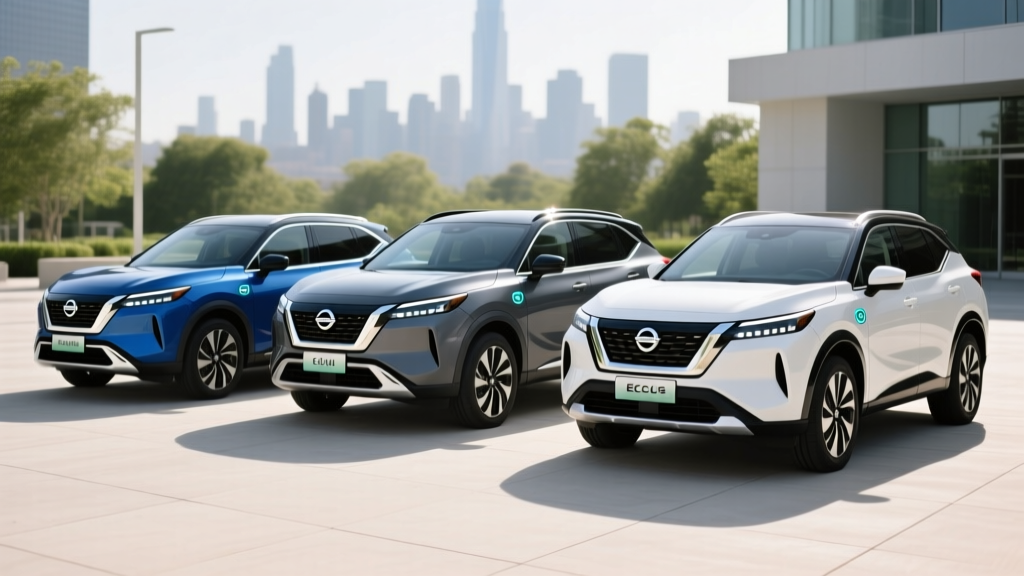
Shoppers searching for a Nissan SUV hybrid are navigating a shifting landscape. For the 2026 model year, Nissan's hybrid strategy in the U.S. centers primarily on the Rogue (sold as the X-Trail in other markets), which has offered a hybrid variant in recent generations, while the broader Nissan lineup has leaned toward its e-POWER series-hybrid system abroad and full EVs like the Ariya at home. The Murano, Pathfinder, and Kicks remain conventional ICE or mild-hybrid vehicles in the U.S. market as of 2026, with no plug-in hybrid (PHEV) SUV currently sold stateside.
This guide breaks down exactly what Nissan offers — and what it doesn't — so you can make an informed decision between a conventional hybrid (HEV), a plug-in hybrid (PHEV), or a full battery-electric vehicle (BEV) for your next SUV purchase.
A conventional hybrid (HEV) uses a small battery charged by regenerative braking and the engine — you never plug it in. A plug-in hybrid (PHEV) has a larger battery (typically 12–25 kWh) that you charge from a wall outlet or public charger, giving you 20–40 miles of electric-only driving before the gas engine takes over. As of 2026, Nissan does not sell a PHEV SUV in the United States. The Rogue Hybrid is an HEV.
2026 Nissan Rogue Hybrid: Powertrain and Efficiency
The Nissan Rogue Hybrid pairs a turbocharged 1.5-liter three-cylinder engine with an electric motor integrated into Nissan's Xtronic CVT transmission. This is a parallel-hybrid architecture — both the engine and motor can drive the wheels, and the system seamlessly blends power sources based on driving conditions.
| Spec | Value |
|---|---|
| Engine | 1.5L turbocharged 3-cylinder |
| Combined System Horsepower | ~201 hp (combined engine + electric motor) |
| Transmission | Xtronic CVT with integrated electric motor |
| Drivetrain | FWD standard; AWD available |
| Hybrid Battery | ~1.5 kWh lithium-ion (not plug-in) |
| Hybrid Type | Conventional HEV (no plug-in charging) |
EPA Fuel Economy
The Rogue Hybrid's efficiency advantage shows up most dramatically in city driving, where the electric motor handles low-speed propulsion and regenerative braking recaptures energy at every stop.
| Configuration | City | Highway | Combined |
|---|---|---|---|
| FWD | ~37 mpg | ~38 mpg | ~38 mpg |
| AWD | ~36 mpg | ~37 mpg | ~36 mpg |
Source: fueleconomy.gov — verify exact figures for your trim and model year, as EPA ratings can shift with mid-year revisions.
Hybrids routinely exceed their EPA city estimates in stop-and-go traffic because regenerative braking is most effective at low speeds. Expect 38–42 mpg in real-world city driving with the FWD Rogue Hybrid. Highway efficiency is more aligned with the sticker — expect 35–38 mpg at 70+ mph, as the engine does most of the work at sustained speeds and aerodynamic drag dominates. In cold weather (below 30°F), plan for a 5–10% reduction due to cabin heating demands and reduced battery efficiency.
Nissan's e-POWER System: Why It Isn't Sold in the U.S.
Internationally, Nissan markets its e-POWER system on the X-Trail (the Rogue's global twin) and other models. e-POWER is a series hybrid — the gasoline engine never drives the wheels directly. Instead, it acts solely as a generator to charge the battery, while an electric motor provides 100% of the propulsion. This gives an EV-like driving feel without any plug-in requirement.
As of 2026, Nissan has not brought e-POWER to the U.S. market. The reasons are regulatory and strategic: U.S. CAFE standards and emissions rules favor different compliance pathways, and Nissan's U.S. electrification roadmap has prioritized the Ariya EV and updated ICE models. If you see "e-POWER" referenced in reviews, understand that it applies to non-U.S. variants.
Pricing, Trims, and Tax Credit Eligibility
The 2026 Nissan Rogue Hybrid is positioned as a mainstream compact SUV, competing with the Toyota RAV4 Hybrid and Honda CR-V Hybrid. Pricing reflects that positioning:
| Trim | Est. MSRP (FWD) | AWD Add-On |
|---|---|---|
| S Hybrid | ~$32,500 | +$1,500 |
| SV Hybrid | ~$35,000 | +$1,500 |
| SL Hybrid | ~$38,500 | +$1,500 |
| Platinum Hybrid | ~$42,000 | +$1,500 |
Does the Nissan Rogue Hybrid Qualify for a Federal Tax Credit?
No. Under current IRS §30D rules, the federal Clean Vehicle Credit of up to $7,500 applies only to plug-in electric vehicles — battery-electric vehicles (BEVs) and plug-in hybrids (PHEVs) with at least 7 kWh of battery capacity. The Rogue Hybrid is a conventional HEV with a ~1.5 kWh battery and no plug-in capability, making it ineligible for the federal EV tax credit.
- ✗ Vehicle must be a BEV or PHEV (plug-in capable)
- ✗ Battery capacity ≥ 7 kWh
- ✗ MSRP caps: $55,000 (sedans), $80,000 (SUVs/trucks/vans)
- ✗ Buyer income caps: $150K single / $300K joint (modified AGI)
- ✗ Critical minerals and battery component sourcing requirements
- ✓ Point-of-sale transfer available for qualifying vehicles
The Rogue Hybrid meets none of the plug-in requirements. Some states offer separate rebates for conventional hybrids — check your state energy office or IRS Clean Vehicle Tax Credits page for current rules.
Battery Warranty, Reliability, and Replacement Cost
Hybrid battery longevity is consistently the top concern for first-time hybrid buyers. Here's what the data shows:
Hybrid system warranty: 8 years / 100,000 miles (federal emissions-related components including the hybrid battery, inverter, and control module). In CARB states (California, New York, Massachusetts, and others adopting California emissions standards), this extends to 10 years / 150,000 miles.
Powertrain warranty: 5 years / 60,000 miles.
How Long Do Nissan Hybrid Batteries Actually Last?
Nissan's hybrid battery packs are lithium-ion and far smaller than those in full EVs — typically around 1.5 kWh. Because the system never fully depletes or fully charges the pack (it operates in a narrow state-of-charge window between roughly 40% and 80%), degradation is minimal. Real-world data from Nissan hybrid owners and fleet studies consistently show hybrid batteries lasting 150,000–200,000+ miles before any meaningful capacity loss.
If replacement is needed out of warranty, a Nissan Rogue Hybrid battery pack typically costs $2,000–$4,000 for the part, plus $500–$1,000 in labor, depending on the dealership and region. Aftermarket and refurbished options can reduce this to $1,500–$2,500.
Nissan Hybrid Reliability Track Record
Nissan's hybrid systems are less widespread than Toyota's, which means there's less long-term fleet data available. However, the Rogue Hybrid's relatively simple parallel-hybrid architecture and small battery pack mean fewer failure points than complex PHEV or full EV powertrains. NHTSA complaint databases show no systemic hybrid battery failure patterns for the Rogue. The CVT transmission, historically a weak point for Nissan, has been substantially improved in recent generations, though it remains a component worth monitoring during ownership.
Hybrid vs. PHEV vs. EV: Which Nissan SUV Fits You?
Since Nissan's U.S. SUV lineup spans conventional hybrid (Rogue Hybrid), full electric (Ariya), and gas-only models (Pathfinder, Kicks, Murano), here's a practical decision framework:
| Factor | Rogue Hybrid (HEV) | Ariya (BEV) | Rogue Gas (ICE) |
|---|---|---|---|
| Combined MPG / MPGe | ~36–38 mpg | ~97–101 MPGe | |
| EPA Range | ~510 miles | ~216–304 miles | |
| Plug-In Required? | No | Yes | |
| Federal Tax Credit | No | Up to $7,500* | |
| Fuel Cost / Mile (est.) | ~$0.09 | ~$0.04 (home) | |
| Base MSRP (est.) | ~$32,500 | ~$40,000 |
*Ariya tax credit eligibility depends on battery sourcing, buyer income, and MSRP caps under §30D. Verify at irs.gov.
- You want better fuel economy without changing your refueling habits
- You don't have access to home or workplace charging
- You regularly take long road trips and don't want to plan around chargers
- You want a lower purchase price than a full EV
Choose the Ariya (BEV) if:
- You can install a Level 2 home charger (240V)
- Your daily commute is under 200 miles round-trip
- You want to minimize per-mile fuel cost and maintenance
- You qualify for the federal tax credit, narrowing the price gap
Consider a PHEV from another brand if:
- You want 25–40 miles of electric commuting plus gas-engine road-trip range
- You can charge at home but still need long-distance flexibility
- Look at the Toyota RAV4 Prime (~42 mi electric), Hyundai Tucson PHEV (~33 mi), or Ford Escape PHEV (~37 mi)
What Nissan's Hybrid Future Looks Like
Nissan has signaled that its e-POWER series-hybrid system will eventually reach more markets, and the company's "Nissan Ambition 2030" plan calls for a mix of EVs, e-POWER hybrids, and ICE vehicles globally. For U.S. buyers, the most likely near-term development would be an e-POWER variant of the Rogue or Pathfinder — which would deliver EV-like acceleration and a smoother driving experience without requiring any plug-in charging. However, as of early 2026, no U.S.-spec e-POWER SUV has been officially announced with a release date.
Nissan also does not currently offer a PHEV SUV in the U.S. If plug-in hybrid capability is a priority — electric-only commuting with gas-engine backup — you'll need to look at competitors like the Toyota RAV4 Prime (42 miles electric, 94 MPGe), the Hyundai Tucson PHEV (33 miles electric), or the Jeep Wrangler 4xe (21 miles electric, for off-road buyers).
Pros and Cons: The Nissan Rogue Hybrid
- No plug-in charging required — refuel at any gas station
- Strong city MPG (~37–38 city, often exceeded in real-world driving)
- Lower upfront cost than comparable EVs
- AWD available for all-weather capability
- 8-year/100,000-mile hybrid system warranty (10yr/150K in CARB states)
- Competitive cargo space and cabin tech for the segment
- No federal tax credit eligibility (§30D requires plug-in)
- No PHEV option — can't do electric-only commuting
- Highway MPG advantage over gas Rogue is modest (~3–5 mpg)
- CVT transmission can feel less responsive than geared automatics
- Less long-term hybrid reliability data than Toyota's system
- e-POWER (superior series hybrid) not available in the U.S.
Frequently Asked Questions
How many MPG does the Nissan Rogue Hybrid get?
The 2026 Nissan Rogue Hybrid achieves an EPA-estimated ~37 mpg city / ~38 mpg highway / ~38 mpg combined in FWD form, and approximately 36/37/36 mpg with AWD. In real-world city driving with frequent stops, owners often see 38–42 mpg thanks to regenerative braking. Highway driving at 70+ mph typically yields 35–38 mpg.
Is the Nissan Rogue Hybrid a plug-in hybrid (PHEV)?
No. The Rogue Hybrid is a conventional hybrid (HEV). It charges its small battery through regenerative braking and the gasoline engine. You never plug it in. Nissan does not currently sell a PHEV SUV in the United States.
How far can the Nissan Rogue Hybrid go on electric only?
Because it's a conventional HEV with a ~1.5 kWh battery, the Rogue Hybrid can only travel 1–2 miles at very low speeds on electric power alone (such as creeping through a parking lot). It is not designed for electric-only commuting. For that capability, you need a PHEV or BEV.
Is the Nissan hybrid battery reliable and what does replacement cost?
Nissan's hybrid battery is covered for 8 years / 100,000 miles (10 years / 150,000 miles in CARB states). Real-world data suggests these batteries routinely last 150,000–200,000+ miles. If replacement is needed out of warranty, expect to pay $2,000–$4,000 for the battery plus $500–$1,000 in labor. Refurbished options can reduce the total to $1,500–$2,500.
Does the Nissan Rogue Hybrid qualify for any tax credit?
The Rogue Hybrid does not qualify for the federal §30D Clean Vehicle Credit, which is limited to plug-in vehicles (BEVs and PHEVs) with at least 7 kWh of battery capacity. Some states may offer separate incentives for conventional hybrids — check your state energy office for current programs. If the federal tax credit is a priority, consider the Nissan Ariya (BEV) or a competitor PHEV like the Toyota RAV4 Prime.
How does the Rogue Hybrid compare to the Toyota RAV4 Hybrid?
The RAV4 Hybrid is the segment benchmark, offering ~41 mpg combined (EPA) with standard AWD and a longer track record of hybrid reliability. The Rogue Hybrid trails by about 3–4 mpg combined but may offer competitive pricing, different styling, and Nissan's ProPILOT Assist driver-aid suite. Both are strong choices; the RAV4 Hybrid has a slight efficiency and resale-value edge, while the Rogue Hybrid may win on dealer incentives or interior preferences.
Should I buy the Rogue Hybrid or just get a full EV?
If you have reliable home charging (Level 2, 240V) and your daily driving is under 200 miles, a full EV like the Nissan Ariya or Hyundai Ioniq 5 will deliver lower per-mile fuel costs (~$0.04/mile vs. ~$0.09/mile), near-zero maintenance, and potential tax-credit savings. If you lack home charging, frequently drive 400+ miles in a day, or live in an apartment without charging access, the Rogue Hybrid gives you meaningful fuel savings with zero lifestyle changes.