Quick Verdict: Is the Nissan Rogue Hybrid Worth It in 2026?
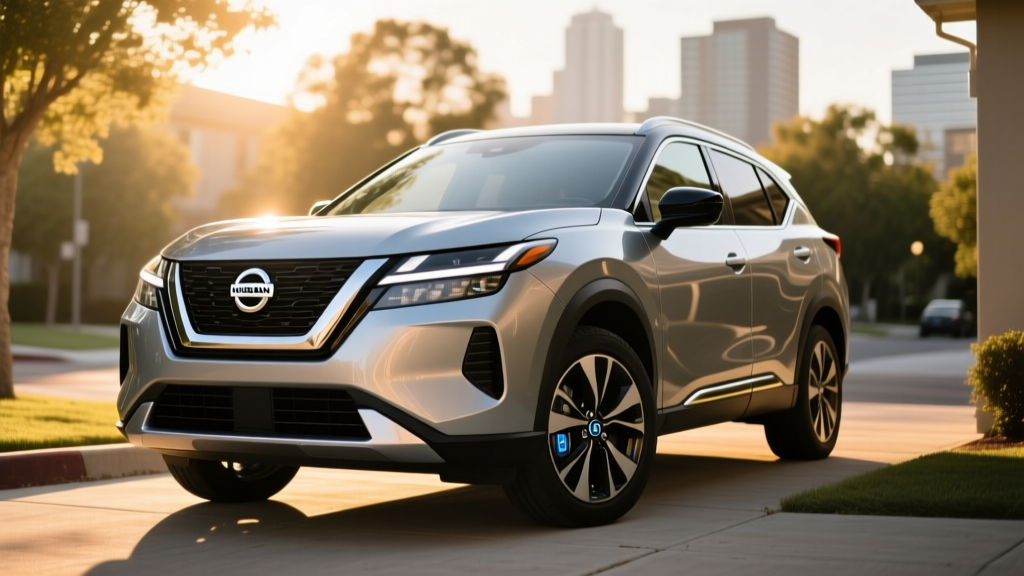
The Nissan Rogue Hybrid occupies a practical middle ground for compact SUV buyers who want meaningful fuel savings without plugging in or changing their driving habits. For 2026, Nissan continues to offer the Rogue with its mild-hybrid powertrain — a 1.5-liter VC-Turbo three-cylinder paired with a small electric motor-generator that assists during acceleration and enables regenerative braking. This is a conventional hybrid (HEV), not a plug-in hybrid (PHEV): you never plug it in, the battery recharges through regen and engine operation, and there is no electric-only driving mode.
If you are searching for a "Nissan Rogue Hybrid" expecting 25 miles of pure electric commuting, this is not that vehicle. The Rogue's hybrid system is designed for incremental efficiency gains — roughly 4-6 MPG better than the non-hybrid Rogue — rather than transformative electrification. For buyers who want plug-in capability in Nissan's lineup, the Nissan Ariya (a full BEV) is the next step up the electrification ladder.
HEV vs PHEV: What's the Difference?
| Feature | Conventional Hybrid (HEV) | Plug-In Hybrid (PHEV) |
|---|---|---|
| Plug in to charge? | No | Yes |
| Electric-only range | None (motor assists only) | 20-45 miles typical |
| Battery size | ~0.5-1.5 kWh | ~10-25 kWh |
| Federal tax credit | No | Up to $7,500 (if eligible) |
| Nissan Rogue availability | Available (mild-hybrid) | Not offered |
The 2026 Nissan Rogue uses a mild-hybrid HEV system. Nissan does not currently offer a Rogue PHEV in the US market.
Powertrain Specs: What's Under the Hood
The 2026 Nissan Rogue's hybrid-assisted powertrain centers on Nissan's variable-compression 1.5-liter VC-Turbo three-cylinder engine. In the hybrid configuration, an integrated motor-generator sits between the engine and the Xtronic CVT (continuously variable transmission), providing torque fill during acceleration and capturing energy during deceleration.
| Specification | 2026 Nissan Rogue Hybrid |
|---|---|
| Engine | 1.5L VC-Turbo DOHC 3-cylinder |
| Hybrid System | Mild-hybrid (motor-generator assist) |
| Combined Horsepower | ~201 hp (engine + motor assist) |
| Combined Torque | ~225 lb-ft |
| Transmission | Xtronic CVT |
| Drivetrain | FWD standard; AWD available |
| 0-60 mph (est.) | ~7.8 seconds |
| Towing Capacity | 1,350 lbs |
| Hybrid Battery Type | Lithium-ion (small capacity, ~1 kWh) |
The variable-compression technology allows the engine to adjust its compression ratio on the fly — higher for efficiency during cruising, lower for power under boost. The motor-generator's primary role is smoothing out the turbo's low-end lag and enabling a more aggressive engine stop-start strategy at traffic lights, which is where the hybrid system earns most of its MPG advantage.
Fuel Economy: EPA Numbers and Real-World MPG
The headline number for any hybrid buyer is fuel economy. Here is how the 2026 Nissan Rogue Hybrid stacks up per EPA estimates on fueleconomy.gov:
| Drivetrain | City MPG | Highway MPG | Combined MPG |
|---|---|---|---|
| FWD | 39 | 37 | 38 |
| AWD | 38 | 36 | 37 |
For comparison, the non-hybrid 2026 Nissan Rogue (same 1.5L VC-Turbo, no motor assist) achieves an EPA-estimated 33 MPG combined with FWD. The hybrid system delivers approximately a 5 MPG improvement — meaningful over 15,000 annual miles, translating to roughly 60-70 fewer gallons of fuel per year at current driving patterns.
Real-World MPG vs EPA Estimates
The Rogue Hybrid's mild-hybrid system performs best in stop-and-go city driving, where regenerative braking and engine stop-start activate frequently. Owners commonly report matching or slightly exceeding the EPA city estimate (39 MPG) in urban commuting. Highway driving at sustained 70-80 mph speeds typically yields 33-35 MPG — below the EPA highway sticker — because the mild-hybrid system provides minimal assistance at steady-state cruising.
Cold-weather note: Expect a 3-5 MPG drop in winter months (below 40°F). The engine runs longer to maintain cabin heat, and the battery's ability to accept regen charge decreases in cold temperatures. This is normal for all hybrids and is less severe than the range loss seen in full EVs.
Pricing, Trims, and Tax Credit Eligibility
The 2026 Nissan Rogue Hybrid is available across multiple trim levels, with the hybrid powertrain typically offered as an upgrade package on SV, SL, and Platinum trims.
| Trim | MSRP (FWD) | MSRP (AWD) | Hybrid Premium vs Gas |
|---|---|---|---|
| SV Hybrid | ~$32,500 | ~$33,900 | +$1,500 |
| SL Hybrid | ~$36,200 | ~$37,600 | +$1,500 |
| Platinum Hybrid | ~$40,500 | ~$41,900 | +$1,500 |
Prices are approximate MSRP figures including destination charge. Dealer pricing may vary.
Does the Nissan Rogue Hybrid Qualify for a Federal Tax Credit?
No. The 2026 Nissan Rogue Hybrid is a conventional mild-hybrid (HEV), not a plug-in electric vehicle. Under current IRS §30D rules, only battery electric vehicles (BEVs) and plug-in hybrids (PHEVs) with sufficient battery capacity and qualifying battery-mineral sourcing are eligible for the federal clean vehicle credit of up to $7,500. Mild-hybrids like the Rogue do not meet the minimum battery capacity threshold and are not eligible.
Some states and local utilities offer rebates for conventional hybrids, but these vary widely by jurisdiction. Check your state's energy office or utility provider for current programs. A tax professional can confirm eligibility for any applicable incentives.
Payback Period: Does the Hybrid Premium Make Sense?
At a $1,500 hybrid premium over the equivalent gas-only Rogue, and saving roughly 65 gallons of fuel per year (at an assumed $3.40/gallon), the payback period is approximately 6.8 years based purely on fuel savings. If gas prices rise above $4.00/gallon, that payback shortens to roughly 5.8 years. For buyers who plan to keep the vehicle 7+ years, the math works. For those who trade in every 3-4 years, the hybrid premium may not be fully recouped at resale.
Battery Warranty, Reliability, and Replacement Cost
Hybrid battery longevity is a top concern for buyers considering their first electrified vehicle. Here is what to expect from the 2026 Nissan Rogue Hybrid's system:
Nissan Hybrid Battery Warranty
- Hybrid Battery Coverage: 8 years / 100,000 miles (whichever comes first)
- Powertrain Warranty: 5 years / 60,000 miles
- Bumper-to-Bumper: 3 years / 36,000 miles
- Capacity Threshold: Nissan covers the hybrid battery against defects and abnormal degradation; specific capacity-retention thresholds are defined in the warranty booklet
In CARB states (California and states adopting California emissions standards), hybrid battery coverage extends to 10 years / 150,000 miles.
How Long Will the Battery Last?
The Rogue Hybrid's lithium-ion battery pack is small (~1 kWh) and is never deeply discharged or fully charged — the vehicle's battery management system keeps it operating in a narrow state-of-charge window (roughly 40-60%). This shallow-cycling strategy dramatically extends battery life. Based on industry data from similar mild-hybrid systems, these batteries routinely last 150,000-200,000+ miles before any measurable capacity loss affects performance.
Hybrid Battery Replacement Cost
If the hybrid battery does fail outside of warranty, replacement costs for Nissan's mild-hybrid systems typically range from $2,000 to $3,500 (parts and labor). This is significantly less than a full-EV battery replacement ($10,000-$20,000+) because the battery is small and relatively accessible. Independent hybrid-battery repair shops can often refurbish or replace individual cells for $800-$1,500, extending the system's life at lower cost.
Overall Reliability
Nissan's VC-Turbo engine and Xtronic CVT have a mixed reliability history. Earlier-generation CVTs (pre-2013) earned a reputation for premature failure, but the current-generation Xtronic in the Rogue has shown substantially improved durability. The mild-hybrid system adds minimal complexity — the motor-generator is a proven, simple component with no high-voltage cabling or large battery pack to worry about. IIHS and NHTSA crash-test ratings for the Rogue platform remain strong, with the vehicle earning top marks in key crashworthiness categories.
Who Should Choose the Rogue Hybrid vs a Full EV or Gas Car
The Nissan Rogue Hybrid is not for everyone. Here is a decision framework to determine whether it fits your situation:
Choose the Nissan Rogue Hybrid If:
- You want 4-6 MPG better fuel economy without changing any habits (no plugging in, no route planning)
- You drive 12,000-18,000 miles per year in mixed city/highway conditions
- You live in an apartment or lack access to home charging, making a PHEV or BEV impractical
- You plan to keep the vehicle 7+ years to recoup the hybrid premium
- You want an AWD compact SUV with strong cargo space (36.5 cu ft behind the second row)
Stick With the Gas-Only Rogue If:
- You trade vehicles every 3-4 years (the hybrid premium won't pay back)
- Your driving is almost entirely highway miles (the mild-hybrid advantage shrinks at steady speed)
- The $1,500 premium strains your budget with no clear payback timeline
Consider a Full EV (Like the Nissan Ariya) If:
- You have access to home Level 2 charging (240V)
- Your daily commute is under 250 miles round-trip
- You want to qualify for the $7,500 federal tax credit (subject to IRS §30D eligibility)
- You want zero tailpipe emissions and dramatically lower per-mile fuel costs (electricity at $0.13/kWh ≈ $4.50 per "gallon equivalent")
Pros
- No plug-in required — fuels like a normal gas car
- Meaningful city MPG improvement (39 EPA city)
- Strong 8-year/100,000-mile hybrid battery warranty
- Spacious cabin with 36.5 cu ft cargo volume
- Available AWD for snow-belt buyers
- ProPilot Assist ADAS included on SL and Platinum trims
Cons
- Not a PHEV — no electric-only driving mode
- No federal tax credit eligibility
- ~6.8-year payback on hybrid premium at current gas prices
- Highway MPG less impressive than city (37 EPA highway)
- CVT drone under hard acceleration
- 1,350-lb towing capacity limits utility for trailers
Frequently Asked Questions
How many MPG does the Nissan Rogue Hybrid get?
The 2026 Nissan Rogue Hybrid achieves an EPA-estimated 39 city / 37 highway / 38 combined MPG with front-wheel drive. AWD models drop slightly to 38/36/37 MPG. In real-world city driving, many owners match or slightly exceed the 39 MPG city figure, while sustained highway driving at 75+ mph typically yields 33-35 MPG.
Does the Nissan Rogue Hybrid need to be plugged in?
No. The Rogue Hybrid is a conventional (mild) hybrid. Its small lithium-ion battery recharges through regenerative braking and the gasoline engine. You fuel it exactly like a standard gas car — there is no plug, no charging cable, and no electric-only driving range.
Is the Nissan Rogue a plug-in hybrid (PHEV)?
No. Nissan does not offer the Rogue as a plug-in hybrid in the US market. The Rogue Hybrid uses a mild-hybrid system that assists the gas engine but cannot drive the vehicle on electric power alone. If you want a Nissan PHEV, you would need to look at previous-generation models (the discontinued Nissan Rogue PHEV was sold in limited markets outside the US) or consider the fully electric Nissan Ariya.
Is the Nissan Rogue Hybrid reliable?
The mild-hybrid system adds minimal mechanical complexity, and the small battery pack is engineered for long life through shallow charge cycling. Nissan backs the hybrid battery with an 8-year/100,000-mile warranty (10 years/150,000 miles in CARB states). The current-generation Xtronic CVT has shown improved reliability over earlier Nissan CVT designs. Overall, the Rogue Hybrid is considered a low-risk electrified choice compared to full EVs or PHEVs with larger, more complex battery systems.
How much does it cost to replace the Nissan Rogue Hybrid battery?
Out-of-warranty replacement for the mild-hybrid battery typically costs $2,000-$3,500 including labor. Independent hybrid specialists can often refurbish the pack for $800-$1,500. Given the battery's small size and shallow-cycling design, most packs last well beyond 150,000 miles without requiring service.
Does the Nissan Rogue Hybrid qualify for any tax credit?
The conventional (mild) hybrid Nissan Rogue does not qualify for the federal §30D clean vehicle credit, which is reserved for plug-in EVs and PHEVs meeting battery-sourcing requirements. Some state or utility programs may offer small rebates for conventional hybrids — check with your local energy provider. Consult a tax professional for guidance on your specific situation.
How does the Rogue Hybrid compare to the Toyota RAV4 Hybrid?
The Toyota RAV4 Hybrid is a full hybrid (not mild-hybrid) with a larger battery and more powerful electric motor, enabling brief low-speed electric-only driving. The RAV4 Hybrid achieves an EPA-estimated 41 MPG combined — about 3-4 MPG better than the Rogue Hybrid. However, the Rogue Hybrid offers a more refined turbocharged engine feel and slightly more cargo space. Both carry strong hybrid battery warranties (8 years/100,000 miles for Nissan, 10 years/150,000 miles for Toyota).