Quick Verdict: The 2015 Prius Plug-In in 2026
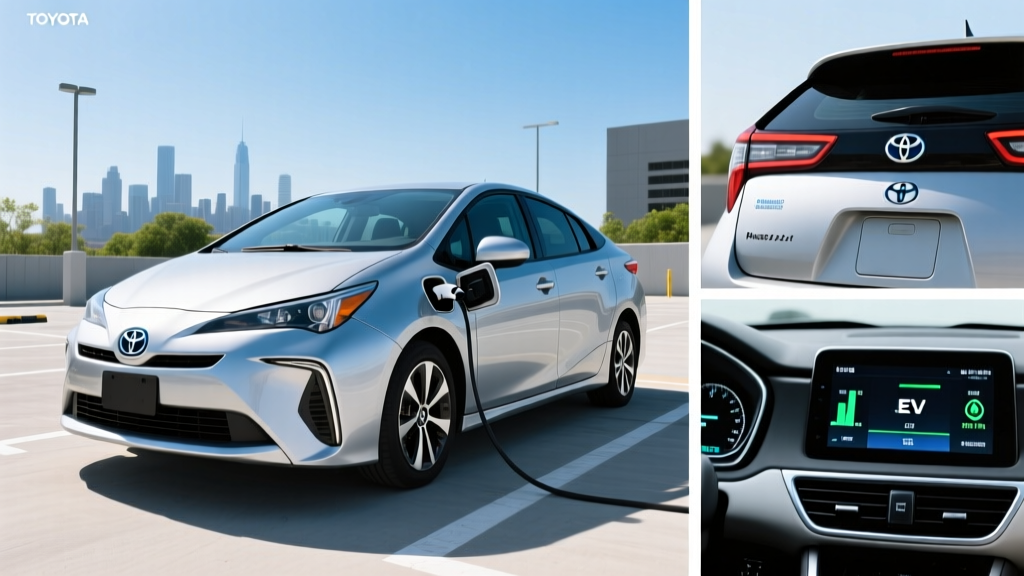
The 2015 Toyota Prius Plug-In Hybrid (sometimes called the Prius PHV) occupies a specific niche in today's used-EV market: it's an entry-level gateway to plug-in ownership for buyers who want a taste of electric driving without committing to a full BEV. With just 11 miles of EPA-rated electric-only range and a modest 4.4 kWh lithium-ion battery, it won't replace a modern EV for daily commuting. But at used prices hovering between $8,000 and $13,000 in early 2026, it remains one of the cheapest ways to plug in and save on fuel.
This guide breaks down the real-world efficiency, battery longevity concerns, and ownership economics you need to evaluate before buying a decade-old plug-in hybrid. We'll also clarify how it differs from the standard 2015 Prius HEV and whether it still qualifies for any incentives.
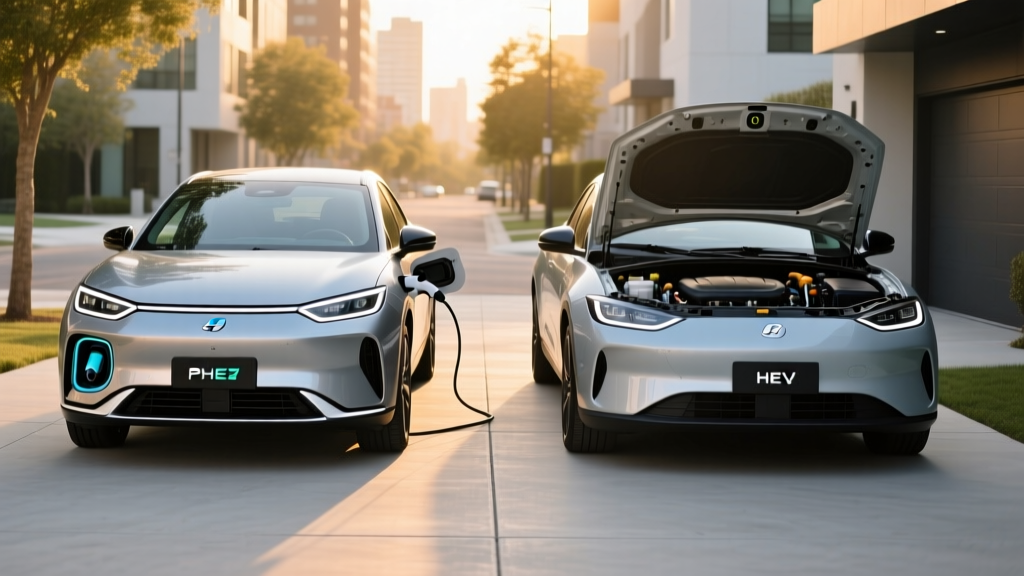
HEV vs PHEV: What the 2015 Prius Plug-In Actually Is
Before diving into specs, it's critical to understand the difference between the two Prius variants sold in 2015:
Conventional Hybrid (HEV) — 2015 Prius Liftback
- Battery: 1.3 kWh nickel-metal hydride (NiMH)
- Plug-in charging: No — charges only via regenerative braking and the engine
- Electric-only driving: Less than 1 mile at very low speeds
- EPA MPG: 50 city / 48 highway / 50 combined
Plug-In Hybrid (PHEV) — 2015 Prius Plug-In
- Battery: 4.4 kWh lithium-ion (usable ~3.5 kWh)
- Plug-in charging: Yes — Level 1 (120V) or Level 2 (240V) via J1772 connector
- Electric-only driving: 11 miles EPA-rated (EV mode, up to 62 mph)
- EPA MPG: 50 combined in hybrid mode; 95 MPGe in EV mode
The standard Prius HEV never plugs in and requires no behavioral change — you just drive it like a gas car and it sips fuel. The Prius Plug-In adds a larger battery and a charge port, giving you a short electric-only commute window before the gasoline engine seamlessly takes over. Once the battery is depleted, it operates identically to a regular Prius hybrid.
Powertrain and Performance Specs
| Specification | 2015 Prius Plug-In |
|---|---|
| Engine | 1.8L 4-cylinder Atkinson-cycle (98 hp) |
| Electric Motor | 60 kW (80 hp) AC synchronous |
| Combined System Output | 134 hp |
| Transmission | eCVT (planetary gearset) |
| Battery Chemistry / Capacity | Lithium-ion / 4.4 kWh total (~3.5 kWh usable) |
| EV-Only Range (EPA) | 11 miles |
| EV-Only Top Speed | 62 mph |
| Total Range (EV + Gas) | ~540 miles (11.9-gal tank) |
| 0–60 mph | ~9.1 seconds |
| Charge Port | J1772 (Level 1 / Level 2 only) |
| DC Fast Charging | Not supported |
| Curb Weight | 3,274 lbs |
The 1.8-liter Atkinson-cycle engine paired with Toyota's Hybrid Synergy Drive eCVT is the same proven powertrain found in the standard Prius, but the Plug-In's lithium-ion pack replaces the NiMH battery. The added weight of the larger battery (~165 lbs more than the standard Prius) slightly affects handling but is imperceptible in daily driving.
Fuel Economy: EPA Ratings vs Real-World MPG
| Mode | City | Highway | Combined |
|---|---|---|---|
| Hybrid (charge-sustaining) | 51 MPG | 49 MPG | 50 MPG |
| EV Mode (MPGe) | — | — | 95 MPGe |
According to fueleconomy.gov, the 2015 Prius Plug-In achieves 50 MPG combined once the battery is depleted — essentially identical to the conventional Prius. In EV mode, it's rated at 95 MPGe.
Real-World Expectations
City driving: Many owners report 52–58 MPG in stop-and-go traffic thanks to aggressive regenerative braking. The EPA city rating of 51 MPG is often conservative for this powertrain.
Highway driving: Expect 44–48 MPG at sustained 70+ mph speeds. Aerodynamic drag and the engine running continuously reduce efficiency versus city use.
Electric range reality: The EPA's 11-mile EV rating assumes moderate temperatures and gentle acceleration. In cold weather (below 40°F), expect 7–9 miles. Aggressive throttle use or highway speeds above 55 mph will also shorten EV range.
Energy consumption in EV mode: Approximately 30–33 kWh/100 miles, which translates to roughly $0.04–$0.06 per mile depending on your local electricity rate.
Charging: Levels, Speeds, and What You Need at Home
The 2015 Prius Plug-In supports only AC charging — there is no DC fast-charge capability. This is a key limitation compared to modern PHEVs like the Toyota RAV4 Prime or Chrysler Pacifica Hybrid, which also lack DCFC but have larger batteries and Level 2 speeds.
| Level | Voltage / Current | Power (kW) | Full Charge Time | Cost to Install |
|---|---|---|---|---|
| Level 1 (Included cord) | 120V / 12A | ~1.4 kW | ~3 hours (0–100%) | $0 (standard outlet) |
| Level 2 (Home/Public) | 240V / 16A | ~3.3 kW | ~1.5 hours (0–100%) | $500–$2,000 (equipment + electrician) |
Key charging details:
- The onboard charger is limited to 3.3 kW, so even a 7.2 kW or 11.5 kW Level 2 station will only deliver 3.3 kW to the car.
- The J1772 connector is the North American standard. If you own a newer EV with a NACS (Tesla-style) port, you'll need a J1772-to-NACS adapter for shared home charging, or simply use the Prius's included Level 1 cord.
- The included Level 1 charging cord has a standard 3-prong plug. A dedicated 15A or 20A circuit is recommended to avoid tripping breakers on shared circuits.
- Preconditioning: The 2015 Plug-In does not offer battery preconditioning — a feature found on modern EVs that warms the battery before fast charging. This is irrelevant here since the car can't DC fast-charge, but it does mean cold-weather EV range drops are more pronounced.
Battery Health, Degradation, and Replacement Costs
Original Toyota Hybrid Battery Warranty
Coverage: 8 years / 100,000 miles (10 years / 150,000 miles in CARB states including California, New York, Massachusetts, and others that follow California emissions standards).
Capacity threshold: Toyota warranted the battery against defects and excessive capacity loss, though the specific retention percentage was not published as clearly as modern EV warranties.
2026 status: A 2015 model is now 11 years old. The original factory warranty has expired for virtually every 2015 Prius Plug-In on the road unless the vehicle has extremely low mileage and is registered in a CARB state with the 10-year provision — and even that window closed in 2025.
Degradation data: The 4.4 kWh lithium-ion pack in the Prius Plug-In has proven reasonably durable. Based on owner reports aggregated by Prius communities and independent testing, most 2015 Plug-In batteries retain 70–85% of their original capacity after 8–10 years and 80,000–120,000 miles. This means real-world EV range may have dropped from 11 miles to roughly 7–9 miles for a typical used example.
Replacement cost (2026 estimates):
- OEM Toyota replacement: $2,500–$3,800 (battery + labor at a dealership)
- Aftermarket/refurbished: $1,200–$2,200 from independent hybrid battery specialists
- Individual cell replacement: Some shops replace only degraded modules for $500–$900, though results vary
Before buying used: Request a hybrid battery health check. A Toyota dealer can pull the battery's internal resistance and capacity data via Techstream diagnostics. Third-party apps like Dr. Prius (via an OBD-II dongle) can also estimate State of Health (SoH). Any battery showing below 65% capacity should be factored into the purchase price as a near-term replacement expense.
Pricing, Tax Credits, and Total Ownership Cost
Original MSRP (2015): $29,275 (base) to ~$33,000 (Advanced trim with navigation and solar roof). When new, the Prius Plug-In qualified for a $2,500 federal tax credit based on its battery capacity under the pre-2023 IRS §30D rules.
Used market pricing (early 2026):
- 80,000–120,000 miles: $8,000–$10,500
- 50,000–80,000 miles: $10,500–$13,000
- Under 50,000 miles (rare): $13,000–$16,000
Used EV tax credit (IRS §25E): The IRS used clean vehicle credit offers up to $4,000 (30% of the sale price, capped at $4,000) for qualifying used EVs and PHEVs purchased from a dealer. However, the 2015 Prius Plug-In faces eligibility hurdles:
- The vehicle must be at least two model years old (met).
- The sale price must be $25,000 or less (usually met at current used prices).
- Buyer income caps apply: $75,000 single / $112,500 head of household / $150,000 married filing jointly (modified AGI).
- The vehicle's original MSRP when new must have been under $80,000 for SUVs/vans/pickups or $55,000 for sedans — the 2015 Prius Plug-In qualifies.
- The battery must have at least 7 kWh capacity for PHEVs — the 2015 Prius Plug-In's 4.4 kWh battery does NOT meet this threshold. This effectively disqualifies it from the §25E used credit.
This is a critical point many sellers overlook. The 2015 Prius Plug-In's small battery falls below the minimum capacity requirement for current federal incentives. Check the latest rules at irs.gov or consult a tax professional before counting on any credit.
| Cost Category | 2015 Prius Plug-In (Used) | 2015 Prius HEV (Used) |
|---|---|---|
| Purchase Price (est.) | $11,000 | $9,500 |
| Fuel/Energy (5 yr, 12k mi/yr) | $3,200 | $4,800 |
| Insurance (5 yr avg.) | $5,500 | $5,200 |
| Maintenance (5 yr) | $2,800 | $2,600 |
| Potential Battery Replacement | $0–$2,500 | $0–$2,000 |
| Estimated 5-Year Total | $22,500–$25,000 | $22,100–$24,100 |
The Plug-In's fuel savings from electric-only miles partially offset its higher purchase price, but the gap is narrow given the small battery. Buyers who can charge at home and have short commutes will see the most benefit.
Reliability: What 10+ Years of Data Tells Us
The third-generation Prius platform (2010–2015) is among the most reliable vehicles Toyota has ever produced. The Hybrid Synergy Drive eCVT has no traditional transmission fluid to change, no clutch to wear, and no belts that snap. Major mechanical failures are rare.
Known issues specific to the Plug-In variant:
- Inverter coolant pump: Some 2012–2015 Plug-In models experienced premature inverter coolant pump failures. Toyota issued a warranty enhancement for this component. Verify whether the recall/service campaign was performed.
- Charge port latch: The J1772 charge port door and latch mechanism can become brittle with age and UV exposure. Replacement cost: ~$150–$300.
- Brake actuator: The regenerative braking system's actuator assembly has a known failure mode across the Gen 3 Prius family. Replacement runs $1,200–$2,000. Listen for unusual brake pedal feel or ABS warning lights during a test drive.
- 12V auxiliary battery: Like all Prius models, the 12V battery (located in the rear cargo area) typically lasts 4–6 years. A dead 12V battery will prevent the car from starting even if the hybrid battery is full.
According to NHTSA recall data, the 2015 Prius Plug-In has relatively few open recalls, but always verify the VIN on NHTSA's site before purchasing.
2015 Prius Plug-In vs. Alternatives: Which Should You Choose?
Pros
- Exceptional fuel economy (50 MPG combined hybrid mode)
- Very low cost to enter plug-in ownership ($8K–$13K used)
- Proven Toyota reliability with abundant parts and service
- Level 1 charging sufficient for overnight top-ups (3 hours)
- Short EV commute eliminates gas use for some drivers
- No range anxiety — gas engine provides 540+ total miles
Cons
- Only 11 miles EV range (7–9 mi real-world, less in cold)
- No DC fast charging capability
- 3.3 kW max Level 2 charge rate is slow by modern standards
- Factory battery warranty expired — replacement is a looming cost
- Does not qualify for federal §25E used-EV credit (battery too small)
- Outdated infotainment, no Apple CarPlay/Android Auto
- Modest 134 hp — underpowered for highway merging
Who Should Buy the 2015 Prius Plug-In?
Choose this PHEV if:
- Your one-way commute is under 10 miles and you can charge at home every night
- You want to reduce gas consumption without committing to a full EV
- Budget is under $15,000 and you prioritize low operating costs
- You already have access to a standard 120V outlet near your parking spot
Choose a full EV instead if:
- You want zero gasoline purchases and zero oil changes
- Your commute is longer and you want meaningful electric-only range (consider a used Chevrolet Bolt EV, Nissan Leaf, or Hyundai Kona Electric)
- You want DC fast charging for road trips
Choose the standard Prius HEV instead if:
- You cannot charge at home or work
- You want lower purchase price and no battery-replacement risk from a larger pack
- You don't need EV-only mode and just want maximum MPG simplicity
Frequently Asked Questions
How many MPG does the 2015 Prius Plug-In get?
The EPA rates it at 51 city / 49 highway / 50 combined MPG in hybrid mode after the battery is depleted. In EV mode, it achieves 95 MPGe. Real-world city driving often yields 52–58 MPG thanks to regenerative braking, while sustained highway driving at 70+ mph typically returns 44–48 MPG.
How far can the 2015 Prius Plug-In go on electric only?
The EPA rates it at 11 miles of electric-only range. In practice, expect 9–11 miles in mild weather with gentle driving, and 7–9 miles in cold weather or with aggressive acceleration. After a decade of battery degradation, many used examples deliver 7–9 miles on a full charge.
Does the 2015 Prius Plug-In qualify for any tax credit in 2026?
No. While it originally qualified for a $2,500 federal credit when new (under pre-2023 rules), the current IRS §25E used clean vehicle credit requires PHEVs to have at least 7 kWh of battery capacity. The 2015 Prius Plug-In's 4.4 kWh battery falls short of this requirement. Some states may offer separate incentives — check your state energy office for details.
Is the 2015 Prius Plug-In reliable, and what does battery replacement cost?
Yes, the Gen 3 Prius platform is among Toyota's most reliable. The hybrid powertrain is proven over billions of fleet and consumer miles. The main risk for a 2026 buyer is the aging lithium-ion traction battery, which is now outside factory warranty. Replacement costs range from $1,200 (aftermarket/refurbished) to $3,800 (OEM dealer replacement). Always get a battery health check before purchase.
Can I charge the 2015 Prius Plug-In at a public fast charger?
No. The 2015 Prius Plug-In does not support DC fast charging. It can only charge via Level 1 (120V household outlet) or Level 2 (240V public or home station) using the J1772 connector. This is perfectly adequate given the small 4.4 kWh battery — a full Level 2 charge takes only about 1.5 hours.
Hybrid vs PHEV vs EV — which is right for me?
HEV (standard Prius): Best if you can't charge anywhere. Plug nothing in, just drive and get 50 MPG.
PHEV (Prius Plug-In): Best if you have home charging and a short commute (under 15 miles). You'll drive electric most weekdays and use gas only for longer trips.
Full EV (BEV): Best if you want zero gas, zero oil changes, and have reliable home or workplace charging. Modern used BEVs like the Chevrolet Bolt (238+ mi range) or Tesla Model 3 (263+ mi) offer far more electric range than any 2015-era PHEV.
What's the difference between the Prius Plug-In and the newer Prius Prime?
Toyota renamed the Plug-In to "Prius Prime" starting with the 2017 model year redesign. The 2017–2022 Prius Prime increased EV range to 25 miles (8.8 kWh battery), and the 2023+ Prius Prime offers 39–44 miles EV range with 220 hp. If your budget allows $18,000+, the newer Prime is a dramatically better PHEV in every measurable spec.