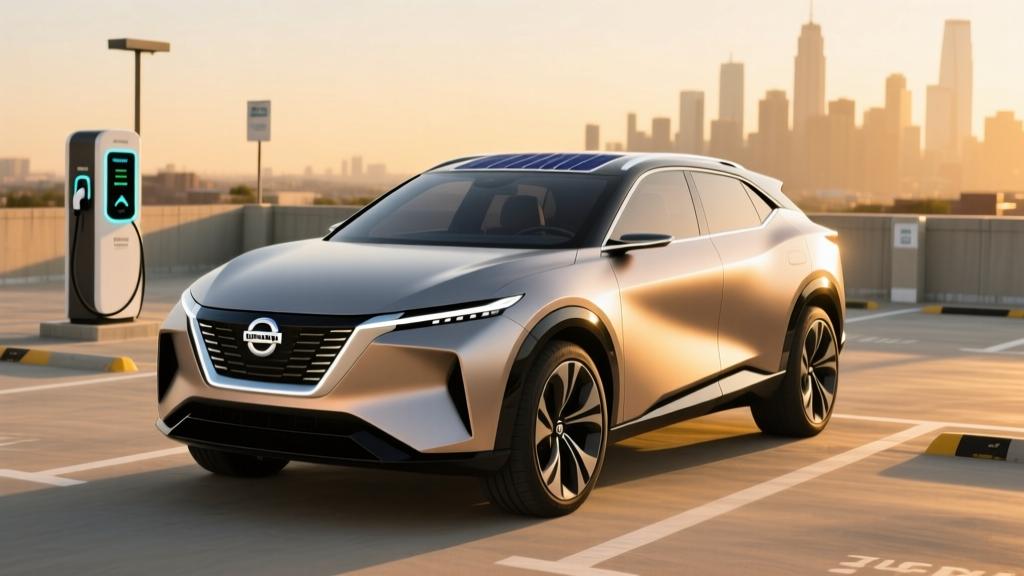
Rumors of a Nissan partnership to develop a new hybrid SUV have circulated for months, and the strategic signals are hard to ignore. As of early 2026, Nissan has not confirmed a specific model or timeline, but industry reports indicate the company is exploring joint powertrain development — likely leveraging Mitsubishi's plug-in hybrid expertise or a broader Renault-Nissan-Mitsubishi Alliance platform — to bring a competitive hybrid SUV to the U.S. market. For buyers weighing their options, this guide explains what a Nissan hybrid SUV would likely deliver, how HEV and PHEV configurations differ, and how to decide if it fits your driving needs.
Why Nissan Is Pursuing a Hybrid SUV Partnership
Nissan was an EV pioneer with the Leaf, but its U.S. lineup has lagged in hybrid offerings compared to Toyota and Hyundai. The Alliance partnership with Renault and Mitsubishi gives Nissan access to proven hybrid architectures — Mitsubishi's Outlander PHEV powertrain, for example, is one of the best-selling plug-in hybrids globally. Talks of deeper collaboration suggest Nissan could adapt this technology for a Rogue-based or entirely new hybrid SUV, filling a gap in its lineup without the multi-billion-dollar cost of developing a standalone system.
From a buyer's perspective, this means a Nissan hybrid SUV could arrive with mature, field-tested technology rather than a first-generation experiment. But until Nissan makes an official announcement, all specs discussed here are projected based on Alliance platforms and current market trends.
HEV vs PHEV: Understanding the Two Hybrid Paths
Nissan will likely offer its hybrid SUV in one or both of these configurations. The distinction matters enormously for your daily driving and fuel costs.
Conventional Hybrid (HEV)
How it works: A small battery (typically 1–2 kWh) and electric motor assist the gasoline engine. The battery recharges through regenerative braking and the engine — no plug-in required.
Best for: Drivers who want better MPG without changing their fueling habits. Ideal for apartment dwellers or those without home charging access.
Plug-In Hybrid (PHEV)
How it works: A larger battery (typically 12–20 kWh) provides 25–40 miles of pure electric driving before the gas engine engages. You plug in to recharge (Level 1 or Level 2).
Best for: Drivers with home or workplace charging who commute under 40 miles daily. You can run mostly on electricity while retaining gas-engine range for road trips.
Projected Specs: What a Nissan Hybrid SUV Could Deliver
Based on the Mitsubishi Outlander PHEV platform and the current Nissan Rogue's architecture, here is a projected specification table for both HEV and PHEV variants. All figures are estimates based on Alliance powertrain data and EPA testing patterns for similar vehicles; final specs will depend on Nissan's official announcement.
| Spec | HEV (Projected) | PHEV (Projected) |
|---|---|---|
| Powertrain | 2.5L 4-cyl + electric motor | 2.4L 4-cyl + dual motors (AWD) |
| Combined Horsepower | ~200 hp | ~248 hp |
| Battery Capacity | ~1.5 kWh (self-charging) | ~20 kWh usable |
| EPA Combined MPG | ~36–38 MPG | ~30 MPG (gas) / 65+ MPGe (combined) |
| EPA City MPG | ~38–40 MPG | N/A (electric mode below 40 mi) |
| EPA Highway MPG | ~33–35 MPG | ~28–30 MPG (after battery depleted) |
| Electric-Only Range (PHEV) | N/A | ~35–38 miles |
| Total Combined Range | ~480–500 miles | ~420–450 miles |
| Level 2 Charge Time (PHEV) | N/A | ~4–5 hours (0–100%) |
| DC Fast Charge (PHEV) | N/A | Likely CHAdeMO or CCS (TBD) |
| Drivetrain | FWD or AWD | AWD standard (twin-motor) |
| Estimated Base MSRP | $32,000–$35,000 | $39,000–$43,000 |
Real-World MPG: What to Actually Expect
Hybrid EPA ratings are a starting point, not a guarantee. Here is how real-world conditions shift the numbers:
- City driving: Conventional hybrids typically exceed their EPA city rating. Regenerative braking recaptures energy in stop-and-go traffic, and the electric motor handles low-speed acceleration where gas engines are least efficient. Expect a Nissan HEV to deliver 38–42 MPG in urban commuting.
- Highway driving: Hybrids lose their advantage at sustained high speeds. The gas engine does most of the work above 55 mph, and aerodynamic drag dominates. Expect 31–34 MPG highway in the HEV — below the combined EPA rating.
- Cold weather: Battery efficiency drops 15–25% in freezing temperatures. The engine runs more often to provide cabin heat (unless a heat pump is included). Expect a 3–5 MPG reduction in winter for the HEV, and a 5–8 mile reduction in electric range for the PHEV.
- PHEV electric mode: The projected 35–38 miles of electric range assumes moderate temperatures and speeds under 65 mph. Highway-speed electric driving in winter could reduce that to 25–28 miles.
| Scenario | HEV Est. MPG | PHEV Est. Electric Miles |
|---|---|---|
| EPA Sticker | 36–38 combined | 35–38 mi |
| City Commute (70°F) | 38–42 | 36–40 mi |
| Highway (75 mph, 70°F) | 31–34 | 30–33 mi |
| Winter City (25°F) | 32–36 | 25–30 mi |
| Winter Highway (25°F) | 28–31 | 22–27 mi |
Tax Credits and Incentives for a Nissan Hybrid SUV
Tax credit eligibility depends heavily on which variant Nissan produces and where its battery components are sourced.
Federal §30D Tax Credit — Current Rules (2026)
- Conventional HEV: Does not qualify for the federal EV tax credit. The §30D credit applies only to plug-in vehicles with a battery capacity of at least 7 kWh.
- PHEV: May qualify for up to $7,500, but only if all of the following are met:
- MSRP does not exceed $80,000 for SUVs/vans/pickups (likely met)
- Buyer AGI is under $150,000 (single) or $300,000 (joint) — per IRS §30D rules
- Battery meets critical-mineral and component-sourcing thresholds (this is the biggest unknown for a Nissan/Mitsubishi platform — Japanese-sourced batteries may or may not meet current FEOC restrictions)
- The credit can be transferred to the dealer at point of sale as an instant discount
Always consult a tax professional and check fueleconomy.gov for the latest eligibility list before purchasing.
Some states offer additional incentives for PHEVs. California's CVRP, for example, has historically offered rebates for qualifying plug-in vehicles, though funding and eligibility change annually. Check your state energy office for current programs.
Battery Warranty, Reliability, and Replacement Costs
Hybrid Battery Warranty — What to Expect
Federal mandate: All hybrid and PHEV batteries sold in the U.S. must carry a minimum warranty of 8 years / 100,000 miles (10 years / 150,000 miles in CARB states including CA, NY, MA, and others).
Nissan's likely coverage: Based on current Nissan warranty structures and Alliance precedent (Mitsubishi offers 10 yr / 100,000 mi on the Outlander PHEV battery), expect at least 8 yr / 100,000 mi, potentially 10 yr / 100,000 mi for the PHEV variant.
Replacement cost: If the battery fails out of warranty, hybrid battery replacement typically costs $2,500–$5,000 for a conventional HEV and $6,000–$10,000 for a PHEV (due to the larger battery pack). However, modern hybrid batteries rarely require full replacement — individual module replacement is often possible at lower cost.
On reliability, Nissan's CVT-equipped models have had mixed histories, but the hybrid powertrain may use a different transmission (Mitsubishi's PHEV system uses a direct-drive setup with no traditional transmission, and Toyota-style planetary gearsets are common in HEVs). A new Alliance-developed system would likely avoid the CVT issues that plagued earlier Nissan models. Long-term reliability data will only be available 2–3 years after launch.
Who Should Choose This Hybrid vs a Full EV or Gas SUV?
Decision Framework
Choose the Nissan HEV if:
- You don't have access to home or workplace charging
- You want a meaningful MPG improvement (36+ combined vs 28–30 for a gas-only Rogue) without changing your fueling routine
- You regularly drive more than 400 miles between fill-ups and don't want to plan around charging
- You want a lower purchase price ($32K–$35K estimated) and simpler ownership
Choose the Nissan PHEV if:
- You can charge at home (even a standard 120V outlet adds ~4 miles/hour, enough for overnight replenishment of 35 miles)
- Your daily commute is under 35 miles — you could drive months without visiting a gas station
- You want the option of electric-only driving for local trips while keeping gas-engine range for road trips
- You may qualify for the $7,500 federal tax credit, effectively bringing the PHEV price close to the HEV
Choose a full EV (like the Nissan Ariya or a competitor) if:
- You have reliable home Level 2 charging
- You rarely drive more than 250 miles in a single day
- You want zero tailpipe emissions and the lowest per-mile fuel cost (~$0.04–$0.06/mi on home electricity vs $0.12–$0.15/mi for a hybrid on gas)
- You're willing to plan road-trip charging stops (15–25 minutes at a DC fast charger)
Pros and Cons: Projected Nissan Hybrid SUV
✓ Projected Pros
- Alliance-derived powertrain with proven field history (Mitsubishi PHEV system in use since 2013)
- HEV variant requires no charging infrastructure
- PHEV variant could deliver 35+ electric miles — enough for most commutes
- AWD standard on PHEV (twin-motor setup)
- Likely qualifies as an SUV for the higher $80K MSRP cap on §30D credit
- Competitive pricing vs Toyota RAV4 Hybrid/PHEV and Hyundai Tucson Hybrid/PHEV
✗ Projected Cons
- Unconfirmed — no official specs, pricing, or timeline from Nissan as of early 2026
- PHEV battery sourcing may not meet §30D FEOC requirements (depends on supply chain)
- Nissan's hybrid lineup has been thin — limited dealer experience vs Toyota/Hyundai
- Highway MPG likely unremarkable (~31–34 HEV) compared to city performance
- PHEV may lack DC fast charging (common limitation in this segment — Outlander PHEV uses CHAdeMO at modest speeds)
- Cold-weather electric range reduction of 20–30% is a real-world factor
How the Nissan Hybrid SUV Stacks Up Against Competitors
Even without official specs, we can project where a Nissan hybrid SUV would land against the segment leaders:
- Toyota RAV4 Hybrid: 41 city / 38 hwy / 39 combined EPA MPG. The benchmark. Nissan would need to match or exceed 36 combined to be competitive.
- Toyota RAV4 Prime (PHEV): 42 miles electric, 94 MPGe combined, ~$44,000 MSRP. A high bar — Nissan's PHEV would likely offer slightly less electric range at a lower price.
- Hyundai Tucson Hybrid: 38 combined MPG, ~$33,000. A close match for the projected Nissan HEV.
- Hyundai Tucson PHEV: 33 miles electric, 80 MPGe, ~$38,000. Nissan would need to match this range to compete.
- Mitsubishi Outlander PHEV: 38 miles electric, 64 MPGe, ~$40,000. The likely donor platform — expect similar performance.
Frequently Asked Questions
How many MPG does the Nissan hybrid SUV get?
Official EPA numbers are not yet available since the vehicle is unannounced. Based on Alliance powertrain data, the conventional HEV is projected to deliver approximately 36–38 MPG combined (38–40 city, 33–35 highway). The PHEV would deliver approximately 65+ MPGe in combined electric/gas operation and roughly 30 MPG after the battery is depleted.
How far can the PHEV go on electric only?
The PHEV variant is projected to offer 35–38 miles of EPA-rated electric-only range, based on the Mitsubishi Outlander PHEV's architecture. Real-world range will vary: expect 36–40 miles in mild city driving and 22–27 miles in cold-weather highway conditions.
Hybrid vs PHEV vs EV — which fits my lifestyle?
Choose the HEV if you lack charging access and want better MPG with zero routine changes. Choose the PHEV if you can charge at home and commute under 35 miles — you'll drive mostly electric while keeping gas range for long trips. Choose a full EV if you have home charging, drive under 250 miles daily, and want the lowest operating cost and zero tailpipe emissions.
Is the Nissan hybrid reliable and what does battery replacement cost?
The underlying Alliance PHEV system (Mitsubishi) has been in production since 2013 with generally strong reliability. Nissan's hybrid battery will carry a minimum 8-year/100,000-mile warranty (10 years in CARB states). Out-of-warranty replacement is estimated at $2,500–$5,000 for the HEV battery and $6,000–$10,000 for the PHEV pack, though module-level repairs are often cheaper.
Does a Nissan hybrid SUV qualify for any tax credit?
The conventional HEV will not qualify for the federal §30D tax credit (it applies only to plug-in vehicles). The PHEV may qualify for up to $7,500, depending on battery sourcing compliance with FEOC rules, buyer income limits ($150K single / $300K joint), and the vehicle's MSRP (must be under $80K for SUVs). Check the IRS clean vehicle credit page and fueleconomy.gov for the definitive eligibility list at time of purchase.
When will the Nissan hybrid SUV be available?
Nissan has not announced an official timeline. Industry reports suggest partnership talks are active as of early 2026, which could mean a model-year 2027 or 2028 launch if development is well underway. We will update this article when Nissan confirms details.
This article is based on industry reporting and projected specifications as of early 2026. All figures are estimates pending Nissan's official announcement. For confirmed specs, always refer to Nissan's press site and fueleconomy.gov.