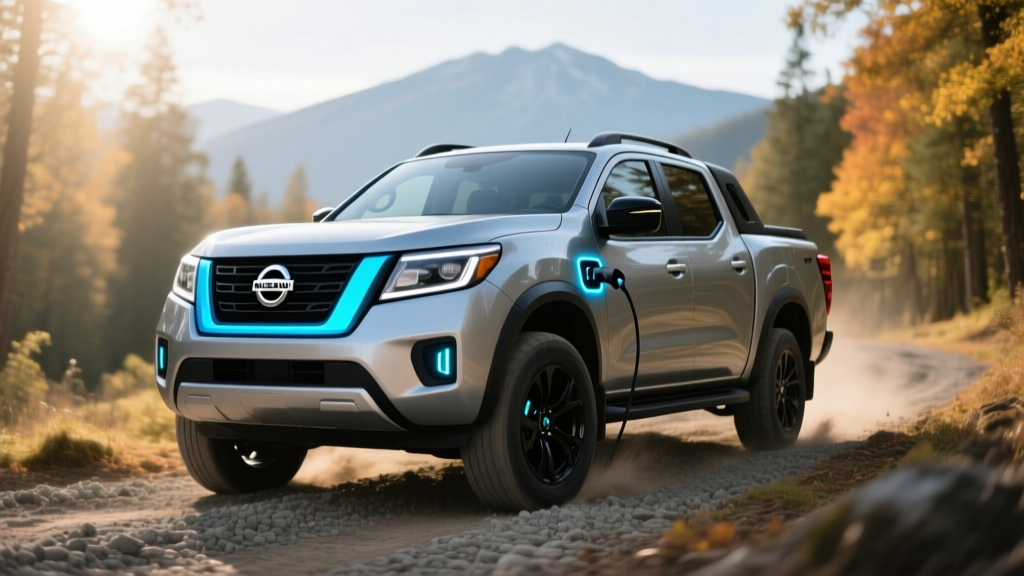
The midsize truck segment has gone hybrid. The Toyota Tacoma offers a hybrid powertrain, and the Ford Maverick hybrid has proven that buyers crave fuel-efficient pickups. This leaves one glaring question for Nissan loyalists: When will we see a Nissan Frontier PRO PHEV — specifically, a plug-in hybrid variant wearing the off-road-ready PRO-4X badge?
As of early 2026, Nissan has not officially confirmed a Frontier plug-in hybrid. However, the company's broader electrification strategy, combined with competitive pressure and the success of the Rogue e-POWER and Ariya EV platforms, strongly suggest that an electrified Frontier is in development. Here, we break down what a Frontier PRO-4X PHEV would likely deliver, how it would stack up, and whether you should wait or look at alternatives available today.
A conventional hybrid (HEV) uses a small battery charged by regenerative braking and the engine — you never plug it in. A plug-in hybrid (PHEV) has a larger battery you charge from a wall outlet or charger, giving it 20–50 miles of electric-only driving before the gas engine kicks in. A Frontier PHEV would fall into the latter category.
What a Nissan Frontier PRO PHEV Powertrain Could Look Like
Based on Nissan's existing e-POWER series-hybrid architecture (used in the Rogue and X-Trail globally) and industry trends, a Frontier PHEV would likely pair a turbocharged four-cylinder engine with one or more electric motors and a battery pack in the 15–20 kWh range. Here's our projected specification breakdown based on platform analysis and competitive benchmarking:
| Attribute | Projected Spec |
|---|---|
| Powertrain | 2.0L turbo 4-cyl + electric motor(s) (PHEV) |
| Combined Horsepower (est.) | 300–340 hp |
| Battery Capacity (est.) | 15–20 kWh (NMC chemistry) |
| Electric-Only Range (est.) | 25–40 miles (EPA) |
| Total Combined Range (est.) | 450–550+ miles |
| EPA MPG Combined (est., charge-sustaining) | 24–28 MPG |
| Level 2 Charge Time (est.) | ~2.5–3.5 hours (7.2 kW onboard charger) |
| DC Fast Charging | Unlikely (most PHEVs lack DC capability) |
| Drivetrain | 4WD (PRO-4X specific) |
| Towing Capacity (est.) | 5,500–6,500 lbs |
Note: All figures above are projected estimates based on Nissan's published electrification roadmap and competitive PHEV truck analysis. Final specs will differ when Nissan makes an official announcement.
Fuel Economy: How Many MPG Would a Frontier PHEV Get?
The current 2026 Nissan Frontier with its 3.8L V6 returns an EPA-rated 21 MPG combined (19 city / 24 highway) in 4WD configuration. A PHEV variant would fundamentally change that equation.
Here's how PHEV fuel economy works in practice: during the first 25–40 miles after a full charge, the truck would run primarily on electricity, using little to no gasoline. The EPA measures this as MPGe (miles per gallon equivalent). Once the battery depletes to a threshold, the gas engine takes over in "charge-sustaining" mode, and you get conventional hybrid-like MPG.
| Mode | City | Highway | Combined |
|---|---|---|---|
| Electric-only (first ~30 mi) | ~100+ MPGe | ~85+ MPGe | ~90+ MPGe |
| Charge-sustaining (hybrid mode) | ~26 MPG | ~24 MPG | ~25 MPG |
Projected figures based on comparable midsize PHEV trucks. Real-world results will vary with driving style, terrain, temperature, and payload.
Real-world expectation: PHEV trucks like the Ford F-150 PowerBoost hybrid and the Jeep Wrangler 4xe demonstrate that actual city MPG in hybrid mode often exceeds the EPA sticker by 1–3 MPG thanks to regenerative braking in stop-and-go traffic. Highway efficiency, however, tends to fall slightly below EPA estimates at sustained 75+ mph speeds. Cold weather can reduce electric-only range by 20–30%, a factor buyers in northern climates should budget for.
Electric-Only Range and Charging: The PHEV Advantage
The defining feature of any PHEV is its electric-only driving range. For a Frontier PRO PHEV, we estimate 25–40 miles of zero-emission driving on a full charge. That covers the daily commute for the majority of American drivers — the average U.S. one-way commute is roughly 16 miles, meaning many owners could drive electric all week and only use gasoline on longer trips or when towing.
Charging a PHEV battery is straightforward:
- Level 1 (120V household outlet): ~10–14 hours for a full charge — adequate for overnight top-ups if your daily electric use is modest.
- Level 2 (240V home charger, ~7.2 kW): ~2.5–3.5 hours — the practical standard for PHEV owners who want a full battery every morning.
- DC Fast Charging: Almost certainly not available. The vast majority of PHEVs (including the Wrangler 4xe, RAV4 Prime, and F-150 PHEV concepts) do not include DC fast-charge capability due to smaller battery sizes and cost considerations. The Frontier PHEV would likely follow this pattern.
Federal law mandates that hybrid and PHEV batteries carry a minimum warranty of 8 years / 100,000 miles (in CARB states like California, this extends to 10 years / 150,000 miles). Nissan currently covers the Rogue hybrid battery at 8 years/100,000 miles with a capacity retention threshold of approximately 60–70%. A Frontier PHEV would carry similar coverage. Out-of-warranty PHEV battery replacement costs typically range from $6,000 to $12,000 depending on pack size and labor.
Frontier PRO PHEV vs. Competitors: How Would It Stack Up?
The midsize truck market is already seeing hybrid action. Here's how a projected Frontier PHEV compares against current or announced rivals:
| Attribute | Toyota Tacoma i-FORCE MAX (HEV) | Ford Maverick Hybrid (HEV) | Nissan Frontier PRO-4X PHEV (Projected) |
|---|---|---|---|
| Powertrain Type | HEV (no plug) | HEV (no plug) | PHEV (plug-in) |
| Combined HP | 326 hp | 191 hp | 300–340 hp (est.) |
| EPA MPG Combined | ~23 MPG | ~37 MPG (FWD) | ~25 MPG + ~30 mi EV |
| Electric-Only Range | None | None | 25–40 mi (est.) |
| Plug-In Required? | No | No | Optional (for EV miles) |
| 4WD Available | Yes | Yes (limited) | Yes (PRO-4X standard) |
| Est. Starting MSRP | ~$42,000 | ~$28,000 | ~$45,000–$50,000 (est.) |
The Maverick hybrid dominates on city MPG and affordability but lacks serious off-road chops and 4WD availability. The Tacoma i-FORCE MAX delivers strong power and genuine off-road capability but offers no electric-only driving. A Frontier PRO-4X PHEV would occupy a unique niche: the only plug-in midsize truck with serious off-road hardware, blending electric commuting with trail capability.
Pricing and Federal Tax Credit Eligibility
Based on the current Frontier PRO-4X MSRP of approximately $41,000 and the premium that PHEV powertrains command across the industry ($5,000–$8,000 above comparable gas models), we estimate a Frontier PRO-4X PHEV would start between $45,000 and $50,000.
Here's where the federal tax credit comes in. Under the current IRS §30D Clean Vehicle Credit, qualifying PHEVs can receive up to $7,500 — but eligibility depends on multiple factors:
- MSRP cap: Trucks/vans/SUVs must have an MSRP at or below $80,000 — a Frontier PHEV would comfortably clear this bar.
- Battery sourcing: The battery's critical minerals and components must meet phased-in domestic/free-trade-agreement sourcing thresholds that tighten each year through 2029.
- Buyer income limits: Modified AGI cannot exceed $150,000 (single), $225,000 (head of household), or $300,000 (joint filers).
- Point-of-sale transfer: As of 2024+, eligible buyers can transfer the credit to the dealer at purchase, reducing the sale price directly rather than waiting for a tax refund.
- FEOC restriction: Vehicles with battery components from a "foreign entity of concern" (effectively certain Chinese suppliers) are disqualified — this is a critical variable for any Nissan PHEV given the company's supply chain.
Bottom line: A Frontier PHEV would likely qualify for at least a partial credit ($3,750–$7,500) depending on how Nissan sources its battery. Buyers should verify eligibility on the fueleconomy.gov tax credit database at time of purchase, as sourcing rules change annually.
Reliability and Long-Term Ownership Costs
Nissan's hybrid and PHEV reliability track record is moderate. The current-generation Rogue e-POWER (sold outside the U.S.) and the older Rogue Hybrid have shown acceptable reliability, though Nissan's CVT transmissions in earlier models drew criticism. A Frontier PHEV would likely use a conventional automatic or a new dedicated hybrid transmission, sidestepping the CVT concern.
Key reliability considerations for any PHEV truck:
- Battery degradation: PHEV batteries typically lose 10–20% capacity over 10 years based on data from the Toyota RAV4 Prime and Prius Prime. Nissan's thermal management system will be critical to longevity.
- Two powertrains to maintain: Unlike a pure EV, a PHEV has both an engine (oil changes, spark plugs, cooling system) and an electric drivetrain. Maintenance costs are higher than an EV but lower than a gas-only truck thanks to reduced brake wear (regenerative braking) and less engine runtime.
- Warranty coverage: Expect Nissan to match the industry standard of 8 years/100,000 miles on the hybrid battery and powertrain components, with the basic vehicle warranty at 3 years/36,000 miles.
- Electric-only commuting (25–40 mi) slashes fuel costs
- PRO-4X off-road hardware retained
- No range anxiety — gas engine for long trips
- Likely qualifies for partial/full federal tax credit
- Strong combined horsepower for towing
- Regenerative braking extends brake life
- Not yet confirmed or available — speculation only
- Premium price over gas Frontier (~$5,000–$8,000 more)
- No DC fast charging (PHEV limitation)
- Two systems to maintain vs. pure EV or pure gas
- Battery adds weight, may reduce payload slightly
- Cold weather reduces EV range by 20–30%
Hybrid vs. PHEV vs. Full EV: Which Truck Is Right for You?
Choosing between a conventional hybrid, a plug-in hybrid, and a full battery-electric truck depends on your driving patterns, charging access, and priorities:
| Factor | HEV (e.g., Tacoma Hybrid) | PHEV (e.g., Frontier PRO PHEV) | Full EV (e.g., Rivian R1T, F-150 Lightning) |
|---|---|---|---|
| Plug in required? | No | Optional (but recommended) | Yes, always |
| Electric-only driving | None | 25–40 miles | 250–400 miles |
| Best for | No home charging; want better MPG | Home charging + long trips + towing | Home charging; mostly <300 mi/day |
| Maintenance | Standard (engine) | Engine + electric | Minimal (no engine) |
| Fuel cost savings | Moderate | High (if plugging in daily) | Highest |
Wait for a Frontier PRO PHEV if: You have home Level 2 charging, commute under 35 miles daily, regularly take road trips or tow, and want PRO-4X off-road capability with electric weekday driving.
Buy a Tacoma i-FORCE MAX HEV instead if: You can't plug in at home, want hybrid fuel savings without behavioral change, and need a truck today.
Consider a full EV truck (R1T, Silverado EV) if: You have reliable home charging, rarely tow over 5,000 lbs, and want the lowest operating costs and zero tailpipe emissions.
Timeline: When Could the Frontier PRO PHEV Arrive?
Nissan's "Ambition 2030" plan commits to launching 27 new electrified models by 2030, including several PHEVs. The Frontier received a major refresh for the 2025 model year, and the next significant powertrain update is expected for the 2027 or 2028 model year. Industry sources suggest Nissan is evaluating both an e-POWER series hybrid and a full PHEV for the Frontier, with the PHEV option better suited to the U.S. market where plug-in infrastructure and tax incentives favor the technology.
Until Nissan makes an official announcement, all specifications remain speculative. We'll update this guide as soon as confirmed details emerge.
Frequently Asked Questions
How many MPG does the Nissan Frontier hybrid get?
Nissan does not currently sell a Frontier hybrid or PHEV as of 2026. The gas-only 2026 Frontier V6 4WD returns 21 MPG combined (19 city / 24 highway) per the EPA. A future PHEV variant is projected to deliver approximately 25 MPG in hybrid mode plus 25–40 miles of electric-only driving.
How far can a Frontier PHEV go on electric only?
Based on competitive analysis and Nissan's PHEV battery sizing in other models, we estimate 25–40 miles of electric-only range. Cold weather and aggressive driving would reduce this by 20–30%.
Is the Nissan Frontier hybrid reliable?
There is no Frontier hybrid yet. Nissan's hybrid systems in the Rogue and X-Trail have shown acceptable reliability. The hybrid battery would carry a minimum 8-year/100,000-mile warranty per federal mandate. Out-of-warranty PHEV battery replacement typically costs $6,000–$12,000.
Does a PHEV truck qualify for the $7,500 federal tax credit?
Yes, PHEVs are eligible under the IRS §30D Clean Vehicle Credit, provided they meet battery sourcing requirements, MSRP caps ($80,000 for trucks), and buyer income limits. The exact credit amount ($3,750 or $7,500) depends on where battery minerals and components are sourced. Always verify on fueleconomy.gov before purchasing.
Should I wait for the Frontier PHEV or buy now?
If you need a truck today and want hybrid efficiency, the Toyota Tacoma i-FORCE MAX is the best available midsize hybrid truck. If you can wait until 2027–2028 and want plug-in capability with PRO-4X off-road hardware, the Frontier PHEV is worth watching — but it remains unconfirmed.
Can a PHEV truck tow as much as a gas truck?
Generally, yes — though the added battery weight can slightly reduce payload capacity. Towing capacity is typically within 90–95% of the gas equivalent. Note that towing heavily while in electric mode will deplete the battery rapidly; most PHEVs switch to hybrid mode automatically under heavy load.