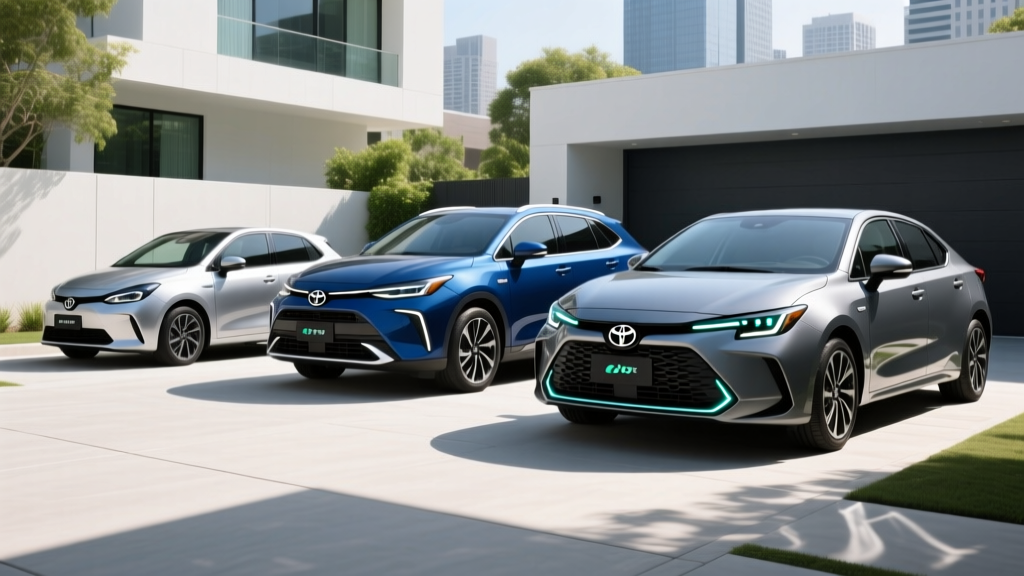
If you've been searching for new Toyota hybrid cars in 2026, you're not alone. Toyota now offers hybrid powertrains on nearly every model it sells — from the compact Prius to the full-size Sequoia SUV — and the lineup has expanded to include both conventional hybrids (HEVs) that never need to be plugged in and plug-in hybrids (PHEVs) that deliver meaningful electric-only range. This guide breaks down the current Toyota hybrid lineup with exact EPA figures, pricing, battery warranties, and the real-world ownership data you need to decide.
HEV vs PHEV: Understanding Toyota's Two Hybrid Types
Before comparing models, it's critical to understand the difference between Toyota's two hybrid architectures. Getting this wrong leads to mismatched expectations at the pump and the charger.
| Feature | Conventional Hybrid (HEV) | Plug-In Hybrid (PHEV) |
|---|---|---|
| Plug in to charge? | No — charges via engine & regen | Yes — Level 1/Level 2 |
| Electric-only driving | Brief, low-speed (1-2 mi) | Extended (25-44 mi typical) |
| Battery size | ~1-2 kWh | ~13-18 kWh usable |
| Federal tax credit | Not eligible (§30D is BEV/PHEV only) | Up to $7,500 if sourcing rules met |
| Best for | No home charging access | Home charging + short commutes |
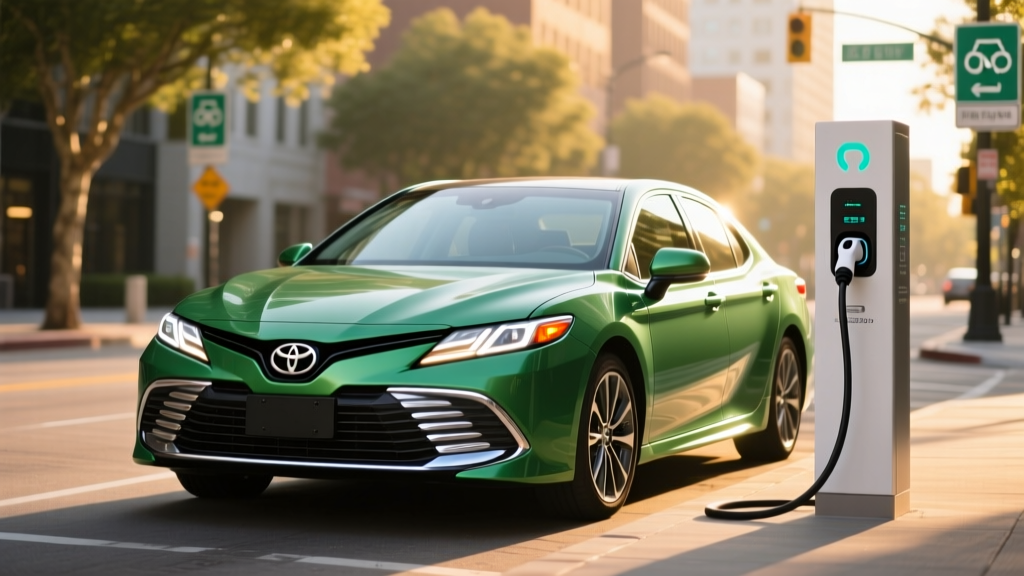
Conventional Toyota hybrids (HEVs) use a small battery paired with a gas engine and electric motor(s). They self-charge through regenerative braking and the engine — you simply fuel them like a gas car and enjoy significantly better MPG. Plug-in hybrids (PHEVs), like the RAV4 Prime and Prius Prime, carry a larger battery you can charge from a wall outlet or Level 2 station, enabling electric-only commutes before the gas engine kicks in.
2026 Toyota Hybrid MPG & Efficiency by Model
The table below covers every new Toyota hybrid car available for the 2026 model year with EPA-rated fuel economy. Note that Toyota hybrids frequently exceed EPA estimates in city driving because the electric motor handles low-speed operation where gas engines are least efficient.
| Model | Type | City MPG | Highway MPG | Combined MPG | Base MSRP |
|---|---|---|---|---|---|
| Prius (FWD) | HEV | 57 | 56 | 57 | $29,445 |
| Prius (AWD-e) | HEV | 53 | 54 | 54 | $30,445 |
| Prius Prime | PHEV | 52 (hybrid) | 48 (hybrid) | 52 / 127 MPGe | $34,045 |
| Corolla Hybrid (AWD) | HEV | 50 | 43 | 47 | $25,275 |
| Camry Hybrid (FWD) | HEV | 53 | 50 | 51 | $30,195 |
| Camry Hybrid (AWD) | HEV | 51 | 49 | 50 | $31,595 |
| Crown (standard) | HEV | 42 | 41 | 41 | $42,350 |
| Venza | HEV | 40 | 37 | 39 | $36,545 |
| RAV4 Hybrid | HEV | 41 | 38 | 40 | $33,575 |
| RAV4 Prime | PHEV | 40 (hybrid) | 36 (hybrid) | 38 / 94 MPGe | $44,515 |
| Highlander Hybrid | HEV | 36 | 35 | 35 | $42,290 |
| Grand Highlander Hybrid | HEV | 36 | 33 | 35 | $45,370 |
| Sienna | HEV | 36 | 36 | 36 | $39,585 |
| Sequoia | HEV | 21 | 24 | 22 | $63,695 |
| Tundra i-FORCE MAX | HEV | 20 | 24 | 22 | $59,965 |
| Tacoma i-FORCE MAX | HEV | 23 | 24 | 23 | $47,195 |
Sources: fueleconomy.gov (EPA estimates), Toyota USA pressroom specifications. MSRP reflects base trim before destination charges. PHEV MPGe reflects combined electric + gas operation.
PHEV Deep Dive: Electric-Only Range & Charging Specs
Toyota currently offers two PHEVs: the Prius Prime and the RAV4 Prime. If you can charge at home, these deliver the most flexibility in the lineup — daily commutes on electricity, road trips on gas.
| Spec | Prius Prime (2026) | RAV4 Prime (2026) |
|---|---|---|
| Electric-only range | 44 miles (EPA) | 42 miles (EPA) |
| Total combined range | ~440 miles | ~600 miles |
| Battery capacity | 13.6 kWh (usable ~10.8 kWh) | 18.1 kWh (usable ~14.4 kWh) |
| Battery chemistry | Lithium-ion (NMC) | Lithium-ion (NMC) |
| Level 1 charge (120V) | ~4 hours (0-100%) | ~12 hours (0-100%) |
| Level 2 charge (240V) | ~4 hours | ~2.5 hours |
| DC fast charging | No | No |
| Combined horsepower | 220 hp | 302 hp |
| 0-60 mph | 6.6 seconds | 5.7 seconds |
| Drivetrain | FWD | AWD (standard) |
Real-world electric range note: EPA estimates 44 miles (Prius Prime) and 42 miles (RAV4 Prime) on electric only. In practice, expect 35-40 miles in cold weather (below 40°F) due to cabin heating draw, and up to 46-48 miles in mild conditions at city speeds. Highway driving at 70+ mph reduces EV range by roughly 20-25%.
Neither Toyota PHEV supports DC fast charging. This is a deliberate trade-off: the smaller batteries charge fully overnight on a standard 120V outlet (Prius Prime) or in a few hours on Level 2 (RAV4 Prime), keeping costs and weight down. For most PHEV owners who charge at home, this is rarely a limitation.
Toyota Hybrid Powertrains: How They Work
Toyota's hybrid system — now in its fifth generation — pairs a gasoline engine with one or more electric motor-generators through a planetary gearset (Toyota's e-CVT). There's no traditional stepped transmission. The system seamlessly blends engine and electric power based on demand.
Key powertrain specs across the lineup:
- Prius: 2.0L 4-cylinder + electric motor = 196 hp (FWD) or 196 hp (AWD-e with rear motor)
- Corolla Hybrid: 2.0L 4-cylinder + electric motors = 196 hp (AWD standard)
- Camry Hybrid: 2.5L 4-cylinder + electric motors = 225 hp (FWD) or 232 hp (AWD)
- RAV4 Hybrid: 2.5L 4-cylinder + electric motors = 219 hp (AWD standard)
- RAV4 Prime: 2.5L 4-cylinder + high-output motors = 302 hp (AWD standard)
- Highlander/Grand Highlander Hybrid: 2.5L 4-cylinder + electric motors = 243 hp
- Sienna: 2.5L 4-cylinder + electric motors = 245 hp (FWD or AWD)
- Tundra/Tacoma i-FORCE MAX: Twin-turbo V6 + electric motor integrated in bell housing = 437 hp / 583 lb-ft (Tundra) or 326 hp / 465 lb-ft (Tacoma)
The i-FORCE MAX powertrains in the Tundra and Tacoma use a different architecture — the electric motor sits between the engine and a conventional 10-speed automatic transmission, prioritizing torque rather than fuel economy. These are performance hybrids, not economy hybrids.
Pricing, Tax Credits & Total Cost
Toyota hybrids carry a price premium over their gas-only equivalents (where both exist), typically $1,000-$3,000 depending on the model. However, since most Toyota models are now hybrid-only (Sienna, Venza, Crown), there's no gas version to compare against.
Federal §30D Tax Credit for PHEVs (2026 rules):
- Maximum credit: up to $7,500 for new PHEVs meeting battery sourcing requirements
- Income caps: $300,000 (joint), $225,000 (head of household), $150,000 (single) modified AGI
- MSRP caps: $80,000 for SUVs/pickups/vans; $55,000 for sedans
- Battery sourcing: critical minerals and battery components must meet escalating domestic/free-trade-partner thresholds — verify current-year compliance on irs.gov
- Point-of-sale transfer: eligible buyers can transfer the credit to the dealer for an immediate price reduction
- Conventional HEVs (non-plug-in): NOT eligible for §30D
As of the 2026 model year, the RAV4 Prime and Prius Prime may qualify for partial or full federal credits depending on battery-component sourcing compliance — which has tightened annually. Confirm eligibility at the point of sale, as Toyota's supply chain adjustments can shift qualification mid-year. Conventional Toyota hybrids (Prius, Camry Hybrid, RAV4 Hybrid, etc.) do not qualify for §30D because they lack plug-in capability.
Real-world cost offset example (RAV4 Prime vs RAV4 Hybrid):
- RAV4 Prime SE base: $44,515 | RAV4 Hybrid XLE base: ~$35,000
- Price gap: ~$9,500
- If eligible for $7,500 credit: net gap drops to ~$2,000
- Annual fuel savings (12,000 mi/yr, 75% on electric at $0.14/kWh): ~$800-$1,200
- Break-even: roughly 2-3 years for qualifying buyers with home charging
Reliability, Battery Warranty & Replacement Costs
Toyota's hybrid battery reliability is among the best-documented in the industry. The company has sold over 25 million hybrid vehicles globally since the original Prius in 1997, and real-world data shows hybrid battery packs routinely lasting 150,000-200,000+ miles with minimal degradation.
Toyota Hybrid Battery Warranty (2026 models):
- Hybrid battery: 10 years / 150,000 miles (whichever comes first) — covers defects and capacity loss below a specified threshold
- Hybrid system components (inverter, motor-generators, control module): 8 years / 100,000 miles
- Transferable to subsequent owners
- Applies to both HEV and PHEV models
Out-of-warranty replacement costs (if needed after 150K+ miles):
- Prius / Corolla Hybrid: $2,000-$3,500 (new OEM pack)
- RAV4 Hybrid: $3,000-$5,000
- RAV4 Prime: $5,000-$7,000 (larger PHEV pack)
- Refurbished/reconditioned packs available for 40-60% less from third-party suppliers
For context, Toyota's 10-year/150,000-mile battery warranty exceeds the federal minimum requirement of 8 years/80,000 miles for hybrid and EV battery packs, and it outlasts most buyers' ownership periods. Data from Consumer Reports consistently ranks Toyota among the most reliable brands for hybrid ownership.
Hybrid vs PHEV vs Full EV: Which Toyota Fits You?
Choose a Toyota HEV (Prius, Camry Hybrid, RAV4 Hybrid) if:
- You don't have access to home or workplace charging
- You want maximum simplicity — no plugs, no charging apps, no route planning
- You frequently take long road trips and don't want to stop for charging
- Your budget is under $35,000-$40,000
- You drive in extreme cold regularly (hybrids handle cold better than EVs)
Choose a Toyota PHEV (Prius Prime, RAV4 Prime) if:
- You can install a Level 2 charger at home or charge reliably at work
- Your daily commute is under 40 miles round-trip (you'll rarely use gas)
- You want EV-like daily driving without range anxiety on road trips
- You qualify for the federal tax credit, narrowing the price gap
- You want the 302-hp RAV4 Prime's performance alongside efficiency
Choose a full BEV (bZ4X or non-Toyota EV) if:
- You have reliable home Level 2 charging
- Your daily driving is under 200 miles and you can plan road-trip charging
- You want zero tailpipe emissions and minimal maintenance (no oil changes, no gas engine)
- You want the full $7,500 federal credit plus potential state rebates
Real-World MPG: What Owners Actually Report
EPA estimates are tested under controlled conditions. In real-world driving, Toyota hybrids show a consistent pattern: city MPG often exceeds the EPA estimate, while highway MPG can fall slightly below it. This is the opposite of gas-only cars and is due to the electric motor handling stop-and-go driving where the engine would otherwise be least efficient.
Typical real-world observations (owner-reported and tested):
- Prius FWD: EPA 57 combined — real-world 54-62 combined (city-heavy drivers often see 60+)
- Camry Hybrid FWD: EPA 51 combined — real-world 48-55 combined
- RAV4 Hybrid AWD: EPA 40 combined — real-world 37-43 combined
- Highlander Hybrid: EPA 35 combined — real-world 32-38 combined
- Sienna: EPA 36 combined — real-world 33-39 combined
Highway-only driving at 75+ mph reduces hybrid efficiency by 5-10% vs the EPA highway estimate, as the engine runs more continuously without regen-braking opportunities. Cold weather (below 30°F) can reduce MPG by 10-15% across all hybrid models due to increased engine runtime for cabin heat and reduced battery efficiency.
Pros of New Toyota Hybrid Cars
- Class-leading MPG across most segments (57 combined in the Prius)
- No charging infrastructure needed for HEVs
- 10-year/150,000-mile hybrid battery warranty
- Proven long-term reliability with decades of data
- PHEV options offer 42-44 miles electric-only for commuters
- Strong resale values — Toyota hybrids hold value better than most competitors
- RAV4 Prime delivers 302 hp alongside 94 MPGe
Cons of New Toyota Hybrid Cars
- PHEVs do not support DC fast charging
- Conventional HEVs do not qualify for the §30D federal tax credit
- RAV4 Prime carries a ~$11,000 premium over the RAV4 Hybrid
- Toyota's infotainment and driver-assist tech trails some competitors
- Limited PHEV selection (only 2 models vs competitors with more)
- Sequoia and Tundra hybrids prioritize power over efficiency (22 MPG combined)
Frequently Asked Questions
How many MPG do new Toyota hybrid cars get?
It varies by model. The most efficient is the 2026 Prius FWD at 57 MPG combined (57 city / 56 highway). The Camry Hybrid achieves 51 combined, the RAV4 Hybrid gets 40 combined, and the Highlander Hybrid delivers 35 combined. Truck-based hybrids like the Sequoia and Tundra i-FORCE MAX return around 22 combined — they prioritize torque, not economy.
How far can the Toyota RAV4 Prime and Prius Prime go on electric only?
The Prius Prime delivers 44 miles of EPA-rated electric-only range, while the RAV4 Prime provides 42 miles. In real-world conditions, expect 35-40 miles in cold weather and up to 48 miles in mild conditions at moderate speeds. Once the battery is depleted, both switch to hybrid mode and continue on gasoline.
Do Toyota hybrids need to be plugged in?
No. Conventional Toyota hybrids (HEVs) — including the Prius, Camry Hybrid, RAV4 Hybrid, Highlander Hybrid, and Sienna — never need to be plugged in. They charge their own small battery through regenerative braking and the gas engine. Only the PHEV models (Prius Prime, RAV4 Prime) benefit from being plugged in, and even they can operate normally on gas alone if you never charge them.
Are Toyota hybrid batteries reliable and what does replacement cost?
Toyota hybrid batteries are among the most reliable in the industry, with documented cases exceeding 200,000 miles on the original pack. Toyota covers the hybrid battery for 10 years or 150,000 miles. Out-of-warranty replacement runs $2,000-$5,000 for most HEV models and $5,000-$7,000 for the RAV4 Prime's larger PHEV pack. Refurbished packs are available for significantly less.
Do new Toyota hybrid cars qualify for any tax credit?
Conventional Toyota hybrids (HEVs) do not qualify for the federal §30D clean vehicle credit — that credit is reserved for plug-in vehicles (BEVs and PHEVs). The Toyota PHEVs (Prius Prime and RAV4 Prime) may qualify for up to $7,500 depending on battery-sourcing compliance, your income, and MSRP caps. Rules tighten annually, so verify current eligibility on irs.gov or with your tax professional before purchasing. Some states offer additional hybrid or PHEV rebates — check your state's energy office for details.
Should I buy a Toyota hybrid or a full EV?
If you have reliable home charging, a commute under 200 miles, and are comfortable planning road-trip charging, a full EV eliminates gas entirely and offers the lowest operating costs. If you lack home charging, frequently drive long distances, live in extreme cold, or simply want zero lifestyle change, a Toyota HEV delivers excellent MPG with no behavioral adjustment. A Toyota PHEV splits the difference — electric commutes with gas road-trip freedom.
What's the cheapest new Toyota hybrid car in 2026?
The 2026 Corolla Hybrid starts at approximately $25,275 with standard AWD and 47 MPG combined, making it the most affordable entry point into Toyota's hybrid lineup. The Prius FWD starts at $29,445 with 57 MPG combined if you want maximum efficiency.
Always verify current pricing, trim availability, and tax credit eligibility with your local Toyota dealer and irs.gov before purchasing. Specifications reflect 2026 model year data and are subject to change.