Quick Verdict: The 2010 Prius in 2026
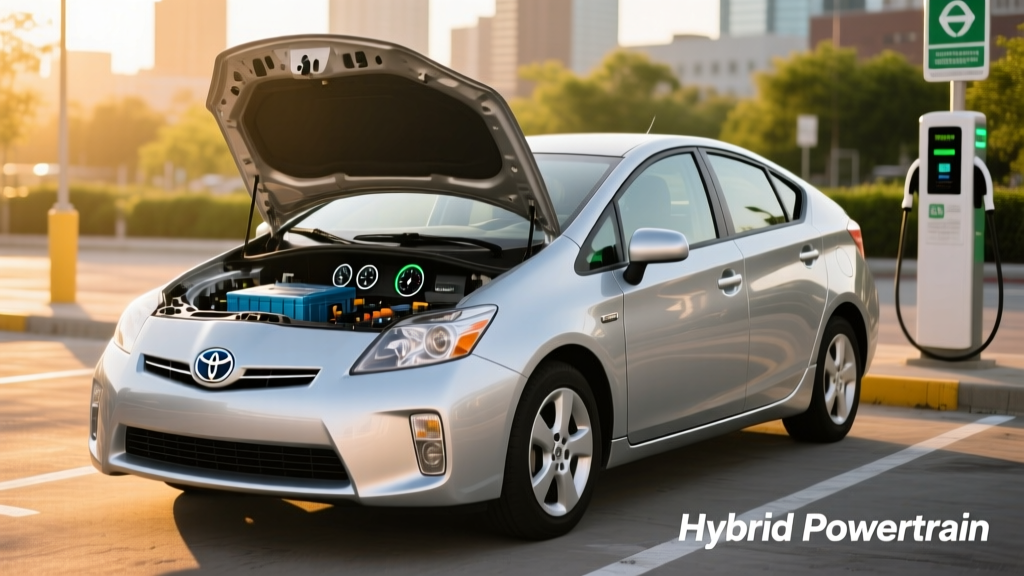
The 2010 Toyota Prius (third generation) remains one of the most fuel-efficient vehicles ever sold in the United States, with an EPA-estimated 50 MPG combined. Sixteen years after its debut, it continues to attract budget-conscious buyers looking for a reliable, ultra-efficient daily driver on the used market. With examples selling between $4,000 and $8,500 in 2026 depending on mileage and condition, the 2010 Prius occupies a unique niche: a proven hybrid workhorse that costs less than a single year of fuel in a comparable midsize sedan.
But buying a 16-year-old hybrid comes with specific risks — primarily the traction battery. This guide covers the exact specs, real-world fuel economy data, battery longevity, replacement costs, and ownership economics you need to evaluate a 2010 Prius today.
2010 Toyota Prius: Core Specifications
| Specification | Value |
|---|---|
| Powertrain Type | Conventional Hybrid (HEV) — no plug-in required |
| Gas Engine | 1.8L inline-4 (2ZR-FXE), 98 hp @ 5,200 rpm |
| Electric Motor | Permanent magnet AC synchronous, 80 hp (60 kW) |
| Combined System Output | 134 hp (net) |
| Transmission | Planetary eCVT (power-split device) |
| Hybrid Battery | 1.3 kWh (usable ~0.5 kWh), Nickel-Metal Hydride (NiMH), 201.6V nominal |
| EPA Fuel Economy | 51 city / 48 highway / 50 combined MPG |
| Fuel Tank Capacity | 11.9 gallons |
| Total Driving Range | ~595 miles (EPA estimate) |
| 0–60 mph | 9.8 seconds |
| Curb Weight | 3,042 lbs |
| Cargo Volume | 21.6 cu ft (rear seats up) / 39.6 cu ft (folded) |
| Drivetrain | Front-wheel drive |
The 2010 model year marked the launch of the third-generation Prius. Toyota upsized the gasoline engine from 1.5L to 1.8L, boosting combined output from 110 hp to 134 hp while simultaneously improving fuel economy. This was a significant engineering achievement — more power and better mileage in the same package.
Fuel Economy: EPA Ratings vs. Real-World MPG
| Driving Cycle | EPA Rating | Real-World Expectation |
|---|---|---|
| City | 51 MPG | 48–55 MPG |
| Highway | 48 MPG | 42–47 MPG |
| Combined | 50 MPG | 44–50 MPG |
The 2010 Prius achieves its best fuel economy in stop-and-go city driving, where regenerative braking recovers kinetic energy and the electric motor handles low-speed propulsion. This is the inverse of a conventional gas car, which is least efficient in city traffic. According to fueleconomy.gov, the Prius's 51 MPG city rating remains competitive with many 2026 compact hybrids.
Real-world fuel economy varies based on several factors:
- Highway driving at 75+ mph: Expect 42–45 MPG. Aerodynamic drag increases significantly at higher speeds, and the hybrid system provides less benefit on sustained high-speed runs.
- Cold weather (below 35°F): Fuel economy drops 10–15% as the engine runs more frequently to maintain cabin heat and warm up the catalytic converter. Expect 40–44 MPG combined in winter conditions.
- Battery age: A degraded hybrid battery forces the gas engine to cycle on more frequently, reducing MPG by 3–8% depending on state of health.
- Tire condition: The 2010 Prius shipped with low-rolling-resistance tires. Replacement with standard all-season tires can reduce fuel economy by 2–4 MPG.
Hybrid (HEV) vs. Plug-In Hybrid (PHEV): What the 2010 Prius Is — and Isn't
The 2010 Toyota Prius is a conventional hybrid electric vehicle (HEV). It has no plug, no external charging port, and no meaningful electric-only driving range. The small 1.3 kWh NiMH battery charges exclusively through regenerative braking and the gasoline engine. You never plug it in — you simply fill it with gasoline and drive.
This is fundamentally different from a plug-in hybrid (PHEV) like the later Prius Prime, which features a larger battery (8.8 kWh in the 2017–2022 generation, 13.6 kWh in the 2023+ generation), a charging port, and 25–44 miles of electric-only range before the gas engine engages.
| Attribute | 2010 Prius (HEV) | 2025 Prius Prime (PHEV) |
|---|---|---|
| Plug-in Charging | No — gas only | Yes — Level 1 (120V) or Level 2 (240V) |
| Battery Capacity | 1.3 kWh (NiMH) | 13.6 kWh (lithium-ion) |
| Electric-Only Range | ~0.5 miles at low speed | 44 miles (EPA) |
| Combined MPG / MPGe | 50 MPG | 52 MPG (gas) / 127 MPGe (electric+gas) |
| Total Range | ~595 miles | ~440 miles (gas) + 44 miles (electric) ≈ 484 miles |
| Federal Tax Credit | None (expired) | Up to $3,750 (§30D, income/MSRP dependent) |
| Used Market Price (2026) | $4,000–$8,500 | N/A (new only, ~$33,000+ MSRP) |
If you're cross-shopping a used 2010 Prius against a newer PHEV, the decision framework is straightforward: the 2010 HEV wins on upfront cost and simplicity; a PHEV wins if you have home charging and a short commute that can be completed on electric power alone.
Hybrid Battery: Lifespan, Degradation, and Replacement Cost
The 2010 Prius uses a Nickel-Metal Hydride (NiMH) battery pack — a mature, well-understood chemistry that Toyota has refined over decades. NiMH batteries degrade more gradually than early lithium-ion packs, typically losing 10–20% of their original capacity over 150,000–200,000 miles. Because the Prius hybrid system only uses a narrow state-of-charge window (roughly 40–80% SoC), the battery is never deeply cycled, which extends its operational life.
Real-world data from owner communities and fleet operators indicates:
- Median battery lifespan: 150,000–200,000 miles or 12–15 years, whichever comes first.
- Failure mode: Individual cell imbalance is more common than total pack failure. A single weak cell can trigger dashboard warning lights and reduce fuel economy.
- Warning signs: Check Engine light with code P0A80 (hybrid battery malfunction), rapid state-of-charge fluctuations on the energy monitor, reduced MPG, and the engine running more frequently than expected.
Battery Replacement Options and Costs (2026)
| Option | Cost Range | Warranty | Notes |
|---|---|---|---|
| New OEM Toyota Battery | $2,200–$2,800 (part) + $300–$500 (labor) | 3 years / unlimited miles | Available through Toyota dealers; most expensive option |
| Refurbished / Reconditioned Pack | $800–$1,400 (installed) | 1–3 years (varies by vendor) | Uses tested cells from salvaged packs; quality varies significantly by supplier |
| New Aftermarket Pack | $1,500–$2,200 (installed) | 3–5 years | Companies like Green Bean Battery and Dorman offer direct-fit replacements |
| Individual Cell / Module Replacement | $200–$600 | None to 1 year | Requires diagnostic capability to identify weak modules; DIY-friendly for skilled owners |
For a vehicle worth $4,000–$8,500, a $2,500+ OEM battery replacement may not be economically justified. Most 2010 Prius owners opt for refurbished packs or aftermarket replacements in the $1,000–$1,800 range. Before purchasing any used 2010 Prius, request a hybrid battery health report from a qualified Toyota technician — this typically costs $100–$150 and can reveal cell imbalance before it becomes a problem.
Reliability, Maintenance, and Long-Term Ownership
The third-generation Prius (2010–2015) has an extensive reliability track record. According to NHTSA data, the 2010 model has relatively few safety recalls, though buyers should verify that the following campaigns have been completed:
- Brake actuator assembly (recall 14V-648): Some 2010–2012 Prius vehicles experienced brake booster assembly failures. Toyota replaced the brake actuator under recall at no cost.
- Hybrid system software update: Early third-gen models received software updates to address inverter cooling and hybrid system control logic.
Beyond the hybrid battery, the 2010 Prius is mechanically straightforward:
- Engine: The 2ZR-FXE is a proven, timing-chain-driven engine with no known systemic failure modes. Regular oil changes (0W-20 synthetic, every 10,000 miles) are sufficient.
- eCVT transmission: The planetary gearset power-split device has no clutches, bands, or torque converter to wear out. Transmission fluid changes every 60,000 miles are recommended but not always followed by previous owners.
- Inverter coolant pump: The inverter cooling system has a dedicated electric water pump that can fail around 120,000–150,000 miles. Replacement runs $300–$500.
- 12V auxiliary battery: Located in the rear cargo area, this conventional lead-accent battery typically lasts 4–6 years. A dead 12V battery will prevent the car from starting even if the hybrid battery is fully charged.
- Brakes: Thanks to regenerative braking handling most deceleration, the friction brake pads on a Prius routinely last 80,000–120,000 miles — two to three times longer than a conventional car.
Who Should Buy the 2010 Prius — and Who Shouldn't
Pros
- 50 MPG combined — still top-tier efficiency in 2026
- Low purchase price: $4,000–$8,500 on the used market
- Proven reliability with 15+ years of real-world data
- Spacious hatchback cargo area (39.6 cu ft with seats folded)
- Low maintenance costs: long-life brakes, no plug-in infrastructure needed
- Excellent city fuel economy — ideal for urban commuters and rideshare drivers
Cons
- Hybrid battery replacement risk ($800–$2,800) on a 16-year-old vehicle
- Modest 134 hp — slow acceleration and highway merging requires planning
- Outdated infotainment: no Apple CarPlay, Android Auto, or modern safety tech
- No federal tax credit eligibility (HEV credit expired in 2010)
- Road noise and ride quality lag behind 2026 compact hybrids
- Original factory warranty fully expired
Choose the 2010 Prius If:
- You need a sub-$8,000 vehicle with the lowest possible fuel cost
- Your driving is predominantly city or suburban (under 55 mph)
- You don't have access to home or workplace EV charging
- You want a hatchback for cargo versatility without paying SUV prices
- You're comfortable budgeting $1,000–$1,500 for a potential battery replacement
Look Elsewhere If:
- You primarily drive highway miles at 75+ mph (a modern turbo-diesel or PHEV may match your MPG)
- You need modern ADAS features like automatic emergency braking or lane-keeping assist
- You want electric-only commuting (consider a used PHEV like the 2017+ Prius Prime or a used BEV)
- You're unwilling to accept the financial risk of a potential hybrid battery failure
Tax Credits and Incentives: What Applies in 2026?
The 2010 Toyota Prius does not qualify for any federal tax credit. The original Hybrid Electric Vehicle tax credit under IRC §30B (up to $3,150 for the Prius) expired after Toyota reached its 60,000-unit cap in 2007 — well before the 2010 model year. The current §30D Clean Vehicle Credit applies only to new plug-in electric vehicles and fuel cell vehicles; conventional hybrids like the 2010 Prius are ineligible regardless of purchase year.
For used EV buyers, the §25E Used Clean Vehicle Credit (up to $4,000 or 30% of sale price, whichever is less) applies only to used BEVs and PHEVs purchased from a dealer — not to conventional HEVs. A used 2010 Prius does not qualify.
Some states and local utilities offer rebates for any fuel-efficient vehicle purchase, but these programs vary widely by jurisdiction. Check your state energy office or utility provider for current programs.
2010 Prius vs. Alternatives: Where It Stands in 2026
| Vehicle | Type | EPA Combined | Used Price (2026) | Battery Risk |
|---|---|---|---|---|
| 2010 Toyota Prius | HEV | 50 MPG | $4,000–$8,500 | Moderate (NiMH, 16 yrs old) |
| 2010 Honda Insight | HEV | 41 MPG | $3,500–$6,500 | Moderate (NiMH, IMA system) |
| 2012 Ford Fusion Hybrid | HEV | 39 MPG | $4,500–$7,500 | Moderate (NiMH) |
| 2017 Toyota Prius Prime | PHEV | 54 MPG + 25 mi EV | $14,000–$18,000 | Low (lithium-ion, newer) |
| 2017 Chevrolet Bolt EV | BEV | 238 mi range | $10,000–$14,000 | Low–Moderate (60 kWh NMC) |
The 2010 Prius's 50 MPG combined remains best-in-class for the used-HEV segment. The Honda Insight, its original competitor, delivers 9 fewer MPG and has a less refined hybrid system (Integrated Motor Assist). The Ford Fusion Hybrid offers a more comfortable ride but sacrifices 11 MPG. For buyers with home charging access, a used BEV like the Chevrolet Bolt EV eliminates fuel costs entirely but requires charging infrastructure investment.
Frequently Asked Questions
How many MPG does the 2010 Toyota Prius get?
The EPA rates the 2010 Prius at 51 MPG city, 48 MPG highway, and 50 MPG combined. In real-world driving, most owners report 46–50 MPG combined, with city-dominant driving yielding 52+ MPG and sustained highway driving at 75+ mph dropping to 42–45 MPG. Cold weather reduces fuel economy by 10–15%.
Does the 2010 Prius need to be plugged in?
No. The 2010 Prius is a conventional hybrid (HEV), not a plug-in hybrid. Its 1.3 kWh battery charges exclusively through regenerative braking and the gasoline engine. You fuel it like any other car — with gasoline at a gas station. There is no charging port, no plug, and no electric-only driving mode.
How long does the 2010 Prius hybrid battery last?
Toyota's NiMH hybrid batteries in the 2010 Prius typically last 150,000–200,000 miles or 12–15 years. Many original batteries are still functioning in 2026, though at reduced capacity. The original warranty (8 yr/100,000 mi, or 10 yr/150,000 mi in CARB states) has expired for all 2010 models. Budget $800–$1,800 for a refurbished or aftermarket replacement if the battery fails.
What does it cost to replace the hybrid battery in a 2010 Prius?
Replacement costs range from $200–$600 for individual module repair, $800–$1,400 for a refurbished pack, $1,500–$2,200 for a new aftermarket pack, or $2,500–$3,300 for a new OEM Toyota battery with labor. Most owners choose refurbished or aftermarket packs given the vehicle's $4,000–$8,500 market value.
Is the 2010 Prius reliable?
Yes, with caveats. The powertrain (engine + eCVT) is among the most reliable Toyota has ever produced. The primary reliability concern in 2026 is hybrid battery age — at 16 years old, many original batteries are approaching or past their expected lifespan. Other known issues include the inverter coolant pump ($300–$500 replacement), brake actuator (covered under recall), and oil consumption on some early third-gen engines. A pre-purchase inspection by a Toyota-qualified technician is strongly recommended.
Does the 2010 Prius qualify for any tax credit?
No. The original hybrid vehicle tax credit expired for Toyota in 2007, and the current §30D Clean Vehicle Credit applies only to new plug-in electric and fuel cell vehicles. The §25E used EV credit also excludes conventional hybrids. There are no federal tax incentives for purchasing a used 2010 Prius in 2026. Some state or utility programs may offer efficiency rebates — check local resources.
Should I buy a 2010 Prius or a newer used EV?
It depends on your budget and charging access. If you lack home or workplace charging and need a sub-$8,000 vehicle, the 2010 Prius is difficult to beat on fuel cost alone. If you have Level 2 home charging and can spend $10,000–$15,000, a used BEV like the Chevrolet Bolt EV (238-mile range) or a used PHEV like the Prius Prime (25-mile EV range + 54 MPG) will deliver lower operating costs and a more modern driving experience. The 2010 Prius makes the most sense as an ultra-budget, no-plug-required efficiency play.
How does the 2010 Prius compare to the current-generation Prius?
The 2025 Toyota Prius delivers 57 MPG combined (LE trim) — 7 MPG more than the 2010 model — along with 194 hp, modern safety features (Toyota Safety Sense 3.0), and available all-wheel drive. However, it starts at approximately $28,000 MSRP. The 2010 Prius costs roughly one-quarter of that price while delivering 88% of the fuel efficiency, making it a compelling value proposition for budget-focused buyers willing to accept older technology and battery replacement risk.