Quick Verdict: The Outlander PHEV SEL at a Glance
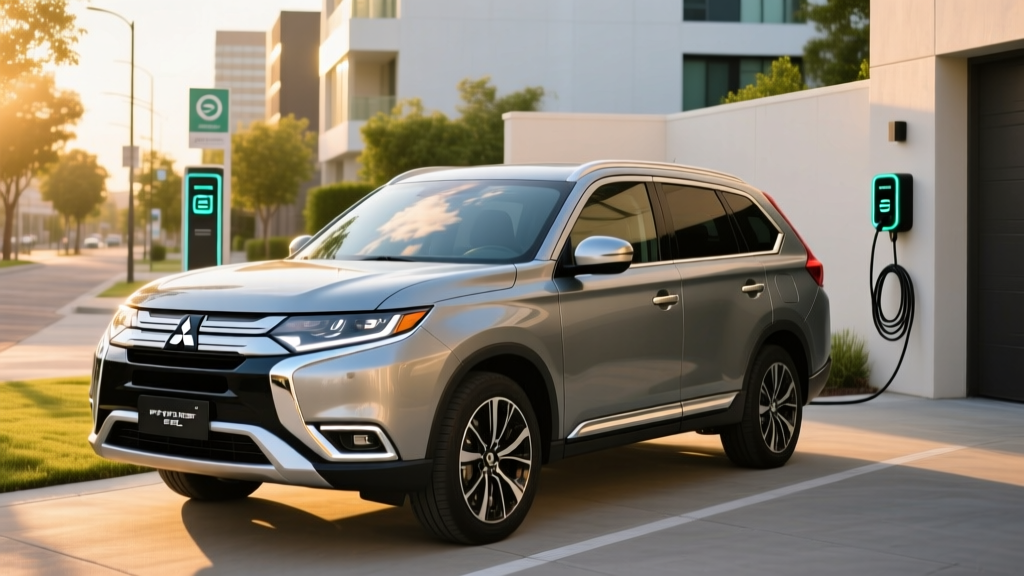
The 2026 Mitsubishi Outlander PHEV SEL occupies a specific niche in the plug-in hybrid market: a three-row, seven-seat SUV that lets most commuters handle daily driving on electricity alone while retaining a gasoline engine for longer trips. With an EPA-rated 38 miles of electric-only range, standard all-wheel drive, and the rare ability to accept DC fast charging, the SEL trim sits near the top of the Outlander PHEV lineup and bundles the features most buyers actually want — leatherette seating, a 9-inch infotainment display, and Mitsubishi's Super All-Wheel Control (S-AWC) system.
But the Outlander PHEV isn't without trade-offs. Its gasoline engine is coarse under hard acceleration, third-row space is tight for adults, and its total electric range falls short of rivals like the Toyota RAV4 Prime. If your commute is under 35 miles round-trip and you have access to home charging, this PHEV can meaningfully cut your fuel bills. If you're ready to go fully electric, a BEV like the Hyundai Ioniq 5 or Tesla Model Y will deliver lower running costs and zero tailpipe emissions.
HEV vs PHEV: What's the Difference Here?
Conventional Hybrid (HEV): A standard hybrid like the Toyota Highlander Hybrid uses a small battery (typically 1–2 kWh) charged solely by regenerative braking and the gasoline engine. You never plug it in. It improves fuel economy across all driving conditions but offers no meaningful electric-only range.
Plug-in Hybrid (PHEV): The Mitsubishi Outlander PHEV carries a much larger 20 kWh battery pack that you can charge from a wall outlet or charging station. This enables 38 miles of electric-only driving before the 2.4-liter gasoline engine engages. Think of it as an EV for short trips and a hybrid for long ones.
The Outlander is sold exclusively as a PHEV in the United States — there is no conventional HEV version. If you want a non-plug-in hybrid three-row SUV, you'll need to look at competitors like the Kia Sorento Hybrid or Toyota Grand Highlander Hybrid.
Fuel Economy and Electric Range: The Numbers That Matter
| Metric | EPA Rating | Real-World Expectation |
|---|---|---|
| Combined MPGe (electric + gas) | 64 MPGe | 55–65 MPGe with regular charging |
| Gas-only combined MPG | 26 MPG | 24–28 MPG depending on terrain |
| Electric-only range | 38 miles | 30–36 miles (highway/cold weather) |
| Total combined range | ~420 miles | ~380–420 miles |
| City MPG (gas-only) | 25 MPG | 25–28 MPG (regen helps in stop-and-go) |
| Highway MPG (gas-only) | 27 MPG | 24–26 MPG at 70+ mph |
According to fueleconomy.gov, the Outlander PHEV achieves 64 MPGe when operating in combined electric and gasoline mode. Once the battery depletes, the 2.4-liter inline-four and twin electric motors deliver 26 MPG combined — respectable for a 4,700-pound AWD SUV, though not class-leading.
Real-world caveat: The 38-mile electric range assumes moderate temperatures and mixed driving. In winter conditions below freezing, expect that figure to drop to roughly 28–32 miles due to battery chemistry limitations and cabin heating demands. Highway driving at 75 mph will also reduce electric range to approximately 30–33 miles. If you charge nightly at home, however, most weekday commutes can be completed without burning a drop of gasoline.
Powertrain, Battery, and Charging Specs
| Specification | Detail |
|---|---|
| Engine | 2.4L inline-4 Atkinson cycle |
| Engine output | 126 hp / 147 lb-ft torque |
| Front electric motor | 114 hp / 188 lb-ft |
| Rear electric motor | 134 hp / 144 lb-ft |
| Combined system output | 248 hp / 332 lb-ft (est.) |
| Battery capacity | 20 kWh (lithium-ion) |
| Usable battery capacity | ~17.5 kWh |
| Drivetrain | S-AWC (twin-motor AWD, no mechanical link to rear) |
| 0–60 mph | ~7.1 seconds |
| Level 1 charging (120V) | ~8 hours (0–100%) |
| Level 2 charging (240V) | ~3.5–4 hours (0–100%) |
| DC fast charging (CHAdeMO) | ~25 min (0–80%), peak ~22 kW |
| Towing capacity | 1,500 lbs |
The Outlander PHEV's twin-motor AWD system is one of its engineering highlights. Unlike many AWD SUVs that use a driveshaft to send power rearward, the Outlander PHEV uses a dedicated rear electric motor, giving it precise torque vectoring and strong traction in snow and rain. The trade-off is that under heavy load or low battery, the gasoline engine must simultaneously power the front wheels and generate electricity for the rear motor, which reduces efficiency.
Battery and Powertrain Warranty
Mitsubishi covers the Outlander PHEV's main drive battery for 10 years / 100,000 miles (whichever comes first), with a capacity retention threshold of approximately 70%. The powertrain warranty runs 10 years / 100,000 miles as well, and the basic limited warranty covers 5 years / 60,000 miles. These are among the longest warranties in the segment and a significant confidence signal for used buyers.
DC Fast Charging: A Rare PHEV Advantage
The Outlander PHEV is one of very few plug-in hybrids that supports DC fast charging via a CHAdeMO connector. At a public DC station, you can add roughly 80% charge in about 25 minutes. However, note that CHAdeMO infrastructure is shrinking in the U.S. as most networks have standardized on CCS and NACS (Tesla's connector). Before relying on DC fast charging, verify that CHAdeMO stations exist along your typical routes. Apps like PlugShare can help you locate compatible chargers.
2026 Outlander PHEV SEL Pricing and Tax Credit Eligibility
The 2026 Mitsubishi Outlander PHEV SEL carries a starting MSRP of approximately $43,090 (including destination). This positions it between the base ES trim (~$40,490) and the top SEL Black Edition / GT trims ($45,000+).
Federal Tax Credit: Does It Qualify?
Under the IRS §30D Clean Vehicle Credit rules, the Outlander PHEV may qualify for a partial or full federal tax credit, but eligibility depends on several factors that change frequently:
- MSRP cap: SUVs must have an MSRP at or below $80,000 — the Outlander PHEV SEL clears this easily.
- Buyer income cap: Modified adjusted gross income must not exceed $150,000 (single), $225,000 (head of household), or $300,000 (joint filers).
- Battery sourcing: A percentage of critical minerals and battery components must be sourced from the U.S. or free-trade-agreement countries. This requirement tightens each year, and many PHEVs have seen their credit amounts reduced or eliminated as sourcing rules tighten.
- Point-of-sale transfer: As of 2024, eligible buyers can transfer the credit to the dealer at purchase, reducing the out-of-pocket cost immediately rather than waiting for a tax refund.
Check the current eligibility status on the fueleconomy.gov tax credit page and consult a tax professional before relying on a specific credit amount. State incentives vary widely — some states like Colorado, California, and New York offer additional rebates for PHEVs, while others offer none.
Who Should Buy the Outlander PHEV SEL — And Who Shouldn't
Pros
- 38-mile electric range covers most daily commutes
- Standard twin-motor AWD with S-AWC — excellent in snow
- DC fast charging capability (rare for PHEVs)
- Three rows / 7 seats (small, but available)
- 10-year/100,000-mile battery and powertrain warranty
- No range anxiety — gas engine for long trips
Cons
- Gas engine is noisy and unrefined under hard acceleration
- Third row is cramped — best for small children only
- CHAdeMO DC connector is losing infrastructure support
- Gas-only MPG (26 combined) trails some hybrid-only competitors
- Electric range shorter than RAV4 Prime (42 mi) and Sorento PHEV (32 mi, but lower price)
- Cargo space reduced by battery pack placement
Choose the Outlander PHEV SEL if:
- Your daily round-trip commute is under 35 miles and you can charge at home overnight.
- You need AWD for snow or rain but don't want a full EV in a region with sparse charging.
- You want the option of three-row seating for occasional use.
- You value a long factory warranty and plan to keep the vehicle 7+ years.
Look elsewhere if:
- You drive more than 50 miles daily and want maximum electric range (consider the RAV4 Prime or a BEV).
- You need a genuinely usable third row for adults (consider the Kia Sorento PHEV or a minivan).
- You want the lowest possible fuel cost — a full EV charged at home will always cost less per mile than a PHEV running on gasoline.
Reliability, Battery Lifespan, and Replacement Cost
Mitsubishi's PHEV system has been in production since 2012 (the original Outlander PHEV launched in Japan), giving it one of the longest track records of any plug-in hybrid on the market. The 2.4-liter Atkinson-cycle engine is a proven, low-stress design, and the twin-motor layout eliminates the traditional transmission — fewer moving parts means fewer failure points.
Long-term battery degradation data from earlier-generation Outlander PHEVs suggests the lithium-ion pack retains approximately 80–85% of its original capacity after 100,000 miles. Mitsubishi's 10-year/100,000-mile battery warranty provides a backstop: if capacity drops below the warranted threshold, the manufacturer will repair or replace the pack at no cost.
Out-of-warranty battery replacement for the Outlander PHEV typically ranges from $5,000 to $8,000 including labor, based on dealer estimates and parts availability. This is a significant expense, though it's unlikely to be needed within the first decade of ownership given the warranty coverage.
Real-World MPG: What Owners Actually Report
Owner-reported data on platforms like Fuelly and Spritmonitor consistently shows Outlander PHEV drivers averaging 50–70 MPGe when they charge regularly, with gas-only segments returning 24–27 MPG. Drivers who rarely charge the battery and treat it as a conventional hybrid typically see 25–27 MPG combined — only marginally better than a non-hybrid compact SUV. The lesson: a PHEV only delivers its efficiency advantage if you actually plug it in.
Outlander PHEV SEL vs. Key Competitors
| Spec | Mitsubishi Outlander PHEV SEL | Toyota RAV4 Prime XSE | Kia Sorento PHEV EX |
|---|---|---|---|
| Electric range | 38 mi | 42 mi | 32 mi |
| Gas-only MPG (combined) | 26 MPG | 38 MPG | 33 MPG |
| Combined HP | 248 hp | 302 hp | 261 hp |
| Battery size | 20 kWh | 18.1 kWh | 13.8 kWh |
| DC fast charge | Yes (CHAdeMO) | No | No |
| Third row | Yes (7 seats) | No (5 seats) | Yes (7 seats) |
| AWD standard | Yes | Yes | Yes |
| Starting MSRP (est.) | ~$43,090 | ~$46,500 | ~$42,090 |
| Battery warranty | 10 yr / 100k mi | 10 yr / 150k mi | 10 yr / 100k mi |
The RAV4 Prime offers more electric range, better gas-only efficiency, and significantly more power, but it commands a higher price, has no third row, and is frequently subject to limited dealer availability. The Sorento PHEV is a closer match in price and seating but offers less electric range and no DC fast charging. The Outlander PHEV's unique combination of DC charging, three rows, and a long warranty makes it a compelling choice for a specific buyer profile.
Frequently Asked Questions
How many MPG does the Mitsubishi Outlander PHEV get?
The EPA rates the 2026 Outlander PHEV at 64 MPGe combined when using both electric and gasoline power. Once the battery is depleted, it returns 26 MPG combined on gasoline alone (25 city / 27 highway). Real-world results vary: drivers who charge daily and commute short distances may burn very little fuel, while those who rarely charge will see 24–28 MPG.
How far can the Outlander PHEV go on electric only?
The EPA-rated electric-only range is 38 miles. In real-world conditions — particularly highway speeds above 65 mph or temperatures below 40°F — expect 28–35 miles before the gasoline engine activates. Preconditioning the cabin while plugged in can help preserve range in cold weather.
Hybrid vs PHEV vs EV — which is right for me?
A conventional hybrid (HEV) is best if you cannot charge at home and want better MPG without changing habits. A PHEV like the Outlander is ideal if you can charge at home, have a short commute, but still need the flexibility of a gas engine for road trips. A full EV (BEV) delivers the lowest per-mile cost, the smoothest driving experience, and zero tailpipe emissions — but requires reliable access to charging and willingness to plan longer trips around charging stops.
Is the Outlander PHEV reliable, and what does battery replacement cost?
The Outlander PHEV system has been in production since 2012 and is generally regarded as reliable. The 10-year/100,000-mile battery warranty covers capacity loss below ~70%. Out-of-warranty battery replacement is estimated at $5,000–$8,000. Regular maintenance costs are moderate — the gasoline engine still requires oil changes, but the electric motors and regenerative braking reduce wear on brake pads.
Does the Outlander PHEV qualify for a federal tax credit?
Eligibility for the §30D federal tax credit depends on current IRS rules regarding battery component sourcing, critical minerals, buyer income, and MSRP caps. The Outlander PHEV's MSRP is well under the $80,000 SUV cap, but sourcing requirements may reduce or eliminate the credit amount. Always verify current eligibility on irs.gov and consult a tax professional before purchasing.
Can I charge the Outlander PHEV at home?
Yes. Using a standard 120V household outlet (Level 1), a full charge takes approximately 8 hours — sufficient for overnight charging. A 240V Level 2 home charger reduces that to about 3.5–4 hours. Given the 20 kWh battery, a Level 2 installation (typically $500–$1,500 for equipment and electrician labor) is worthwhile if you drive more than 20 miles daily on electric power.
What happens when the battery runs out while driving?
The gasoline engine seamlessly engages and the Outlander PHEV operates as a conventional series-parallel hybrid. You won't be stranded — the vehicle continues to drive normally using gasoline, with regenerative braking recovering small amounts of energy. The transition is nearly imperceptible under normal driving conditions.