Quick Verdict: Is the Countryman Hybrid Worth Leasing?
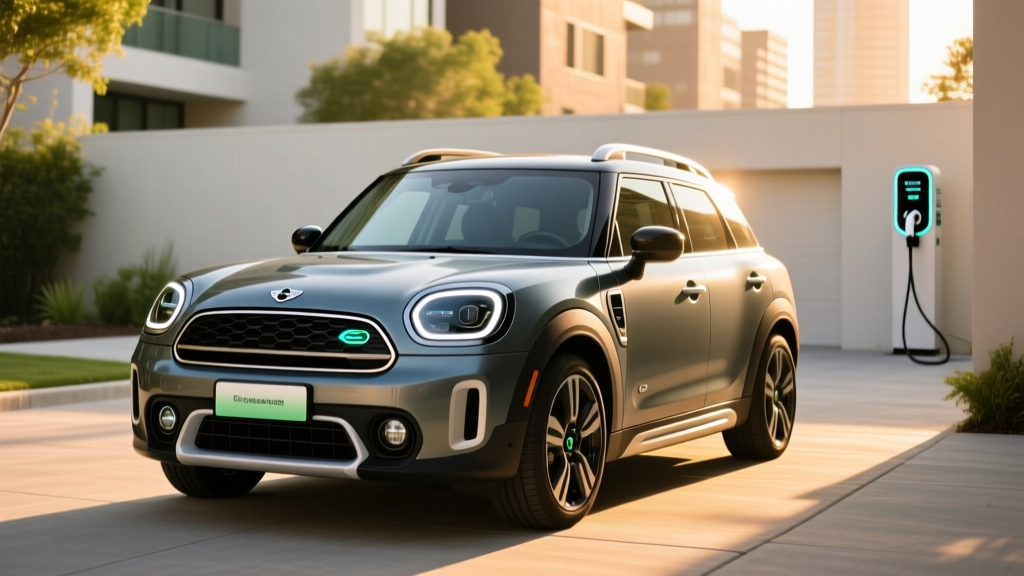
The 2026 Mini Cooper Countryman is offered in two electrified flavors: a conventional hybrid (HEV) that never needs plugging in, and a plug-in hybrid (PHEV) that delivers roughly 30 miles of electric-only driving before the gas engine takes over. For lease shoppers, the distinction matters enormously — the HEV is the lower-friction, no-charger-required choice, while the PHEV rewards anyone with home or workplace charging access with dramatically lower fuel bills on short commutes. Neither variant currently qualifies for the full federal §30D tax credit on new purchases, but leasing can sometimes surface manufacturer incentives that offset monthly costs.
HEV vs PHEV: Which Countryman Hybrid Are You Actually Leasing?
Mini markets both powertrains under the "Countryman" nameplate, and the difference is easy to miss on a dealer lot. Here is what separates them:
| Attribute | Countryman HEV (Conventional Hybrid) | Countryman PHEV (Plug-In Hybrid) |
|---|---|---|
| Plugs in? | No — regenerative braking charges battery | Yes — Level 1 or Level 2 AC charging |
| Battery size | ~1.5 kWh (small buffer) | ~16.3 kWh usable (NMC chemistry) |
| Electric-only range | N/A (motor assists engine only) | EPA est. ~30 miles |
| Total combined range | ~450+ miles | ~380+ miles (electric + gas) |
| Best for | Apartment dwellers, no charger access | Home/workplace chargers, short commutes |
If your daily round-trip commute falls under 25 miles and you can install a Level 2 home charger (or already have workplace charging), the PHEV lets you burn almost zero gasoline on weekdays while retaining full gas-engine range for weekend road trips. If you lack reliable charging access, the HEV is the pragmatic pick — it operates like a traditional car but sips fuel thanks to electric motor assist.
Fuel Economy: EPA MPG and Real-World Expectations
The EPA publishes separate ratings for the HEV and PHEV variants. Here is how they stack up according to fueleconomy.gov data for the current-generation Countryman:
| Powertrain | City MPG | Highway MPG | Combined MPG | MPGe (PHEV electric mode) |
|---|---|---|---|---|
| Countryman HEV | 29 | 33 | 31 | N/A |
| Countryman PHEV (charge-sustaining) | 27 | 30 | 28 | ~82 MPGe |
Real-world note: Conventional hybrids like the Countryman HEV frequently exceed their EPA city rating in stop-and-go traffic, where regenerative braking recaptures the most energy. Expect 32–34 MPG city in moderate climates. Highway driving at 75+ MPH reduces efficiency to roughly 28–30 MPG for the HEV due to aerodynamic drag — a factor the EPA highway test partially captures but real interstate speeds amplify.
For the PHEV, the combined MPG figure (28) applies only after the battery is depleted. While the battery holds charge, your effective "fuel economy" depends entirely on how many electric-only miles you log. A 20-mile round-trip commute charged nightly could mean weeks between fill-ups.
Electric-Only Range and Charging (PHEV)
The Countryman PHEV's 16.3 kWh usable battery delivers an EPA-estimated 30 miles of electric-only range. In real-world conditions — particularly below 40°F or at sustained highway speeds — expect 22–26 miles before the 1.5-liter turbocharged three-cylinder engine fires up.
EPA Electric-Only Range: 30 miles
Real-World Expectation: 22–28 miles (temperature and speed dependent)
Total Combined Range (Electric + Gas): ~380 miles
Charging Times
| Charging Level | Power | 0–100% Time | Notes |
|---|---|---|---|
| Level 1 (120V household outlet) | ~1.4 kW | ~11–12 hours | Overnight top-up; adequate for low-mileage drivers |
| Level 2 (240V home/public) | ~7.4 kW | ~2.5 hours | Recommended for daily full recharges |
| DC Fast Charging | N/A | N/A | Not supported on Countryman PHEV |
The Countryman PHEV uses a standard J1772 connector for AC charging. It does not support DC fast charging — a common limitation among PHEVs due to their smaller battery packs. A full Level 2 charge in roughly 2.5 hours means you can top up during a workday or between errands if a public Level 2 station is accessible.
Powertrain and Performance
| Specification | Countryman HEV | Countryman PHEV |
|---|---|---|
| Engine | 1.5L turbo 3-cylinder + electric motor | 1.5L turbo 3-cylinder + electric motor |
| Combined horsepower | ~170 hp | ~240 hp |
| 0–60 mph | ~8.2 sec | ~6.7 sec |
| Drivetrain | ALL4 AWD | ALL4 AWD (rear motor-driven) |
| Transmission | 7-speed dual-clutch automatic | 6-speed automatic |
| Cargo volume (rear seats up) | ~17.6 cu ft | ~15.8 cu ft (battery packaging) |
The PHEV's power advantage is noticeable: the rear-axle electric motor provides instant torque and all-wheel-drive traction without a mechanical driveshaft. It is the more engaging variant to drive, particularly in Sport mode where both power sources deploy simultaneously. The HEV trades some acceleration for simplicity and a marginally lower curb weight.
Lease Pricing, Incentives, and Tax Credits
Leasing a Countryman hybrid involves several cost layers. As of early 2026, approximate pricing looks like this:
| Trim / Variant | MSRP (approx.) | Estimated Lease (36 mo, 10k mi/yr) |
|---|---|---|
| Countryman HEV Classic | $37,000 | $420–$480/mo |
| Countryman HEV Signature | $40,500 | $470–$530/mo |
| Countryman PHEV SE ALL4 | $43,000 | $490–$560/mo |
| Countryman PHEV JCW ALL4 | $49,000 | $580–$660/mo |
Federal Tax Credit Eligibility
- §30D New Clean Vehicle Credit: The Countryman PHEV does not currently meet the full $7,500 credit due to battery component and critical mineral sourcing requirements under the Inflation Reduction Act. Always verify current eligibility at irs.gov.
- Lease Loophole (§45W Commercial Credit): When you lease, the lessor (finance company) technically owns the vehicle and may pass through a portion of the $7,500 commercial clean vehicle credit as a capitalized cost reduction. Ask the dealer explicitly whether Mini Financial is applying any "lease cash" or credit pass-through.
- State Incentives: Several states (CA, CO, NY, MA, among others) offer additional rebates for PHEVs, typically $1,000–$2,500. Check your state energy office for current programs.
- HEV Ineligibility: The conventional Countryman HEV does not qualify for any federal plug-in vehicle credit — it lacks sufficient battery capacity and plug-in capability.
The lease-vs-buy math hinges on whether the dealer applies lease cash. A $3,000 cap cost reduction on a 36-month lease saves roughly $83/month — meaningfully narrowing the gap between the PHEV and HEV trims.
Battery Warranty, Reliability, and Replacement Cost
Hybrid/PHEV Battery Warranty: 8 years / 100,000 miles (whichever comes first)
Coverage: Defects and capacity loss below ~70% of original capacity
Estimated out-of-warranty replacement: $4,500–$7,000 (PHEV); $1,500–$2,500 (HEV small battery)
Mini (parented by BMW) has built hybrids since the early 2010s, and the group's NMC battery packs have demonstrated manageable degradation in real-world fleet data. PHEV batteries, cycled less aggressively than full EV batteries (thanks to the gas engine backup), typically retain 85–92% capacity after 8 years of normal use, according to BMW-group longevity reports.
The Countryman's conventional hybrid battery is far smaller and cheaper to replace — a relief for long-term owners. For lease customers, battery degradation is largely a non-issue: you will return the vehicle well within the warranty window.
Overall reliability ratings for the current-generation Countryman are mixed, as is typical for Mini. Electronics and infotainment glitches remain the most common complaint rather than powertrain issues. The hybrid system itself has proven robust across BMW-group applications.
Who Should Lease the Countryman Hybrid — And Who Shouldn't?
Choose the Countryman HEV if:
- You cannot install a home charger or lack workplace charging
- You want lower monthly payments and minimal behavioral change from a gas car
- Your daily driving exceeds 50 miles (the PHEV advantage diminishes)
Choose the Countryman PHEV if:
- Your round-trip commute is under 30 miles and you can charge nightly
- You want EV-like quietness on weekdays with gas-engine freedom on weekends
- The dealer is passing through lease cash or a cap cost reduction
Consider a full BEV instead if:
- You have reliable home Level 2 charging and rarely drive more than 250 miles in a day
- You want to eliminate oil changes, spark plugs, and exhaust system maintenance entirely
- Models like the Hyundai Ioniq 5, Tesla Model Y, or Volvo EX40 better fit your range and cargo needs
Pros and Cons at a Glance
Pros
- PHEV delivers genuine 22–30 mile electric commute with zero tailpipe emissions on short trips
- HEV requires no charging infrastructure — plug-and-play efficiency
- ALL4 AWD standard on both variants; confident in rain and light snow
- Premium interior with distinctive Mini design language and solid build quality
- 36-month lease cycle keeps you within full battery warranty coverage
Cons
- PHEV does not support DC fast charging — limits road-trip utility on electric power
- Cargo space reduced on PHEV due to battery packaging (~1.8 cu ft loss)
- No full federal $7,500 tax credit on purchase; lease credit pass-through varies
- Real-world electric range drops to ~22 miles in cold weather or at highway speeds
- Mini reliability ratings trail mainstream competitors like Toyota and Honda
Frequently Asked Questions
How many MPG does the Mini Countryman Hybrid get?
The conventional HEV achieves an EPA-estimated 29 city / 33 highway / 31 combined MPG. The PHEV rates 28 combined MPG once the battery is depleted, but delivers ~82 MPGe when operating on electric power. Real-world city MPG for the HEV often reaches 32–34 in stop-and-go driving.
How far can the Countryman PHEV go on electric only?
The EPA estimates 30 miles of electric-only range. Real-world testing in moderate temperatures yields 26–28 miles; cold weather (below 40°F) or sustained highway speeds above 65 MPH can reduce this to 20–24 miles.
Does the Countryman Hybrid qualify for a tax credit?
The PHEV does not currently qualify for the full $7,500 §30D federal credit on purchases due to battery sourcing requirements. However, leasing may unlock a commercial credit pass-through from the lessor. The HEV qualifies for no federal plug-in credit. Check fueleconomy.gov for the latest status.
Is the Countryman Hybrid reliable, and what does battery replacement cost?
The hybrid powertrain has proven reliable across BMW-group applications. The PHEV battery is warranted for 8 years/100,000 miles. Out-of-warranty PHEV battery replacement runs approximately $4,500–$7,000; the HEV's smaller battery costs $1,500–$2,500. Lease customers will not face this expense.
Can I charge the Countryman PHEV at home?
Yes. A standard 120V outlet (Level 1) fully recharges the battery in about 11–12 hours. A 240V Level 2 home charger reduces this to roughly 2.5 hours. Most PHEV owners install a basic Level 2 unit ($500–$1,200 installed) for daily convenience.
Hybrid vs PHEV vs EV — which fits me?
If you have no charging access, choose the HEV. If you can charge at home and commute under 30 miles round-trip, the PHEV gives you the best of both worlds. If you have reliable charging and rarely exceed 250 miles daily, a full EV eliminates more maintenance and offers lower per-mile energy costs.