The Core Architecture: Where Internal Combustion Meets Electrons
The transition toward vehicle electrification has introduced a spectrum of hybrid technologies, leaving many buyers confused by the alphabet soup of MHEV, HEV, and PHEV acronyms. To make an informed purchasing decision, it is critical to look past marketing jargon and examine the hard data regarding how these drivetrains operate, their energy storage capacities, and their real-world efficiency metrics.
At a foundational level, all hybrid vehicles combine an Internal Combustion Engine (ICE) with at least one electric traction motor and an Energy Storage System (ESS), typically a lithium-ion or nickel-metal hydride battery pack. According to the U.S. Department of Energy's Alternative Fuels Data Center, the primary goal of any hybrid system is to optimize the power delivery, capturing kinetic energy that would otherwise be lost as heat during braking and using it to supplement or replace gasoline consumption.
However, the way these components are integrated—whether in series, parallel, or series-parallel (power-split) configurations—dictates the vehicle's performance, fuel economy, and total cost of ownership. Let us break down the data behind the three primary hybrid architectures available in today's market.
Mild Hybrids (MHEV): The 48-Volt Efficiency Bump
Mild Hybrid Electric Vehicles (MHEVs) represent the entry point into electrification. Unlike full hybrids, an MHEV cannot propel the vehicle using electric power alone. Instead, it utilizes a 48-volt electrical architecture paired with a Belt-Driven Starter Generator (BSG) or an Integrated Starter Generator (ISG).
Technical Specifications & Data Points
- Battery Capacity: Typically 0.5 kWh to 1.2 kWh.
- Voltage: 48V system (compared to the standard 12V lead-acid).
- Efficiency Gain: 5% to 12% improvement in combined MPG over non-hybrid equivalents.
- Primary Function: Smoothing out auto start-stop events, providing brief torque fill during acceleration, and powering auxiliary electronics.
From a data perspective, the 48V MHEV system shines in urban stop-and-go traffic. By allowing the engine to shut off while coasting and restarting instantly via the ISG, vehicles like the 2024 Audi Q5 or the Genesis GV70 MHEV variants eliminate the parasitic fuel loss of idling. However, because the battery is too small to move the vehicle's curb weight (often exceeding 4,000 lbs), the electric motor strictly acts as a supplemental assist.
Full Hybrids (HEV): The Power-Split Paradigm
Full Hybrids (HEVs) are the undisputed champions of urban fuel efficiency without requiring a change in driver behavior or access to charging infrastructure. The most famous iteration of this is Toyota’s Hybrid System (THS), which utilizes a planetary gearset known as a power-split device. This allows the vehicle to operate on the gas engine alone, the electric motor alone, or a seamless combination of both.
Technical Specifications & Data Points
- Battery Capacity: 1.0 kWh to 2.5 kWh (e.g., the 2024 Toyota Prius uses a 1.3 kWh Li-ion pack).
- Voltage: 200V to 300V+.
- Efficiency Gain: 30% to 50% improvement over conventional ICE vehicles; combined MPG ratings frequently exceed 50 MPG.
- EV-Only Range: Usually less than 1 mile at very low speeds (under 25 mph).
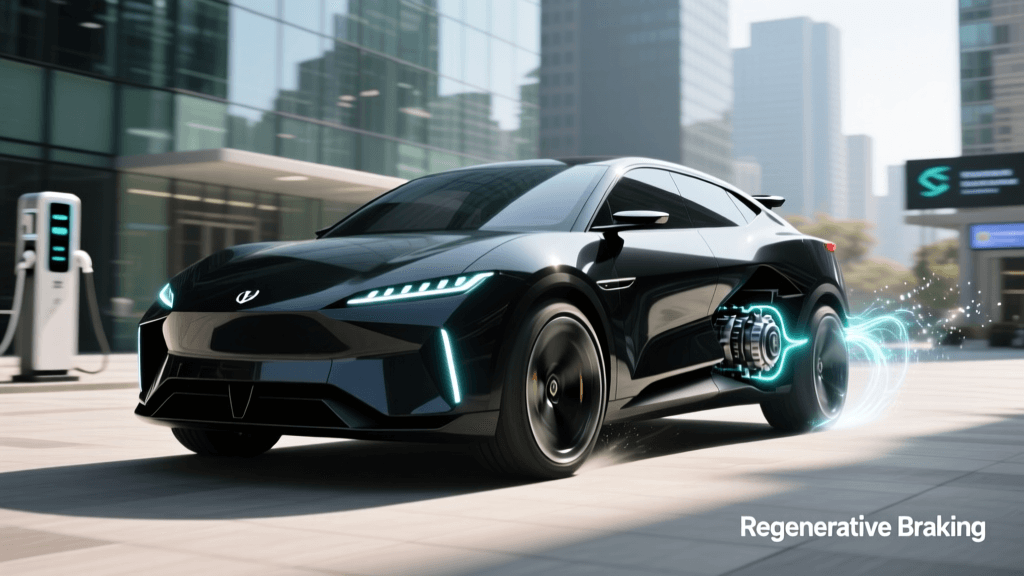
The data behind regenerative braking in HEVs is staggering. The U.S. Department of Energy notes that regenerative braking can recapture up to 70% of the kinetic energy normally lost during deceleration. In a 2024 Toyota RAV4 Hybrid, this recaptured energy is continuously cycled through the 1.6 kWh battery, allowing the 2.5-liter Atkinson-cycle engine to shut off frequently in city driving, resulting in an EPA-estimated 41 MPG city rating—a massive advantage over highway driving where the electric motor provides less relative benefit.
Plug-In Hybrids (PHEV): The Dual-Drivetrain Solution
Plug-In Hybrid Electric Vehicles (PHEVs) bridge the gap between traditional hybrids and fully electric vehicles (EVs). PHEVs feature significantly larger battery packs and more powerful electric motors, paired with an onboard charger that allows the battery to be replenished via the electrical grid.
Technical Specifications & Data Points
- Battery Capacity: 10.0 kWh to 20.0+ kWh (e.g., the Jeep Wrangler 4xe uses a 17.3 kWh pack; the RAV4 Prime uses 18.1 kWh).
- EV-Only Range: 25 to 45 miles on a single charge.
- Charging Time: 2 to 3 hours on a 240V Level 2 charger; 8 to 12 hours on a 120V Level 1 outlet.
- Power Output: Combined system horsepower often exceeds 300 hp due to the high-output electric motor.
The PHEV data profile is highly dependent on user behavior. If a PHEV owner charges daily and commutes 30 miles round-trip, their gasoline consumption drops to near zero. The Environmental Protection Agency (EPA) highlights that PHEVs produce significantly lower tailpipe emissions when operated in EV mode, but warns that failing to charge a PHEV regularly results in a heavy vehicle (due to battery weight) operating solely as an HEV, which can sometimes yield worse highway MPG than a lighter, dedicated full hybrid.
Data-Driven Drivetrain Comparison Matrix
To visualize the engineering differences, review the data table below comparing average metrics across the 2024 model year landscape for midsize SUVs and sedans.
| Metric | Mild Hybrid (MHEV) | Full Hybrid (HEV) | Plug-In Hybrid (PHEV) |
|---|---|---|---|
| Battery Size | 0.5 - 1.2 kWh | 1.0 - 2.5 kWh | 10.0 - 20.0 kWh |
| System Voltage | 48V | 200V - 300V | 350V - 400V+ |
| EV-Only Capability | No (Assist Only) | Yes (Under 1 mile / low speed) | Yes (25 - 45 miles at highway speeds) |
| Avg. MSRP Premium | +$500 - $1,500 | +$1,500 - $3,000 | +$5,000 - $9,000 |
| Ideal Use Case | Highway cruising, towing | Urban commuting, ride-share | Short commutes with charging access |
Total Cost of Ownership (TCO) & Efficiency Analysis
Understanding the drivetrain is only half the battle; analyzing the 5-year Total Cost of Ownership (TCO) reveals which technology makes financial sense. Let us run a data scenario based on 15,000 miles driven annually, a gas price of $3.50 per gallon, and residential electricity at $0.16 per kWh.
Scenario A: The Full Hybrid (HEV) Commuter
Driving a 50 MPG HEV requires 300 gallons of fuel annually (15,000 / 50). At $3.50/gallon, the yearly fuel cost is $1,050. Over five years, fuel costs total $5,250. Because HEVs do not require home charging infrastructure, the barrier to entry is low, and battery degradation data shows modern NiMH and Li-ion HEV packs routinely last 150,000+ miles without replacement.
Scenario B: The Plug-In Hybrid (PHEV) Optimizer
Assume a PHEV with a 35-mile EV range. If the driver commutes 30 miles daily and charges at home, 75% of their annual mileage (11,250 miles) is covered by electricity. This requires roughly 3,125 kWh annually, costing $500. The remaining 3,750 miles are driven on gas at 35 MPG (107 gallons), costing $374. Total annual energy cost: $874. Over five years, energy costs total $4,370, easily offsetting the $5,000+ initial MSRP premium when factoring in the $3,750 federal tax credit (if applicable to specific PHEV models meeting battery sourcing requirements).
Which Drivetrain Fits Your Data Profile?
The data clearly indicates that there is no single "best" hybrid technology; the optimal choice is entirely dependent on your specific driving metrics and infrastructure access.
- Choose an MHEV if: You frequently tow heavy loads or drive predominantly on highways where regenerative braking opportunities are minimal, but you want modern stop-start refinement and slight parasitic loss reductions.
- Choose an HEV if: You live in an apartment or lack access to a dedicated parking space with a 240V outlet, and your driving consists of heavy stop-and-go urban traffic where regenerative braking maximizes the small battery's potential.
- Choose a PHEV if: You have a predictable daily commute under 40 miles, own a home where a Level 2 charger can be installed, and frequently take long road trips where the ICE eliminates range anxiety.
By aligning your personal mileage data with the engineering realities of MHEV, HEV, and PHEV architectures, you can maximize both your fuel savings and your long-term automotive satisfaction.