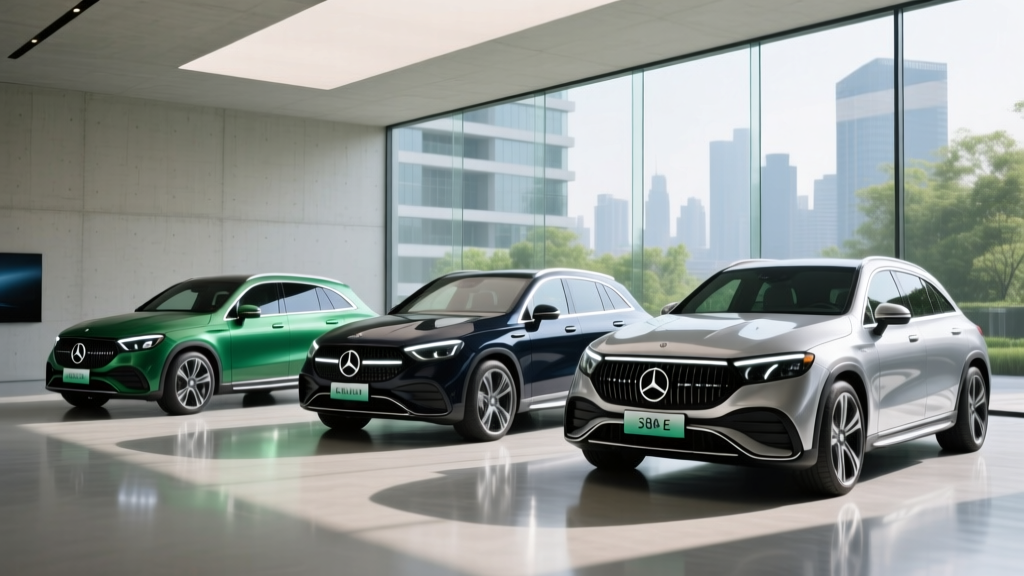
If you've been asking are any Mercedes hybrid, the answer is a definitive yes — and the 2026 lineup is one of the most extensive among luxury automakers. Mercedes-Benz currently offers both conventional hybrids (HEVs) with mild-hybrid 48-volt systems and plug-in hybrids (PHEVs) with substantial electric-only range across its sedan, SUV, and coupe lines. But choosing the right one requires understanding the real-world trade-offs between self-charging HEVs, plug-in PHEVs, and full battery-electric (BEV) alternatives.
This guide covers every current Mercedes-Benz hybrid and plug-in hybrid available to U.S. buyers in 2026, with exact EPA fuel economy figures, battery specs, pricing, and the ownership realities that spec sheets alone won't tell you.
Mercedes-Benz Hybrid vs. Plug-In Hybrid: What's the Difference?
Before diving into specific models, it's critical to distinguish between the two types of electrified Mercedes-Benz vehicles, because they serve fundamentally different use cases.
Conventional Hybrid (HEV) — Mild-Hybrid 48V System
- How it works: A small integrated starter-generator (ISG) and 48-volt battery assist the gasoline engine during acceleration, enable smooth stop-start, and recover energy during braking. You never plug it in.
- Electric-only driving: None (or coasting only for brief moments). The electric motor assists but doesn't independently propel the car at highway speeds.
- Typical efficiency gain: 2–5 MPG improvement over a comparable non-hybrid, primarily in city driving.
- Best for: Drivers who want marginally better fuel economy with zero behavior change — no charging, no planning.
Plug-In Hybrid (PHEV)
- How it works: A larger high-voltage battery (typically 20–30 kWh) and a more powerful electric motor allow genuine electric-only driving for 30–50+ miles. You plug in to recharge (Level 1 or Level 2 AC; some support DC fast charging).
- Electric-only driving: Full electric propulsion at highway speeds for a meaningful distance before the gas engine kicks in.
- Typical efficiency gain: If you charge daily, most commutes are 100% electric. Combined MPGe ratings can exceed 50 MPGe.
- Best for: Drivers with home or workplace charging who commute under 50 miles round-trip but still want gas-engine range for road trips.
Mercedes-Benz labels its mild-hybrid models with terms like "EQ Boost" or simply notes the 48-volt ISG in the powertrain description. Its PHEV models carry the "e" badge — for example, S 580e or GLC 350e.
2026 Mercedes-Benz PHEV Lineup: Specs, Range, and Pricing
The plug-in hybrid models represent the most significant electrification in the Mercedes-Benz lineup short of going full BEV. Here's what's available for the 2026 model year.
| Model | Powertrain | Combined HP | Battery (kWh) | EPA Electric Range | EPA Combined MPG/MPGe | Base MSRP |
|---|---|---|---|---|---|---|
| GLC 350e 4MATIC SUV | 2.0L turbo I4 + electric motor | 312 hp | 23.3 kWh (usable ~19.5) | 39 mi | 56 MPGe / 28 MPG (gas-only) | $59,900 |
| S 580e Sedan | 3.0L turbo I6 + electric motor | 502 hp | 28.6 kWh (usable ~22.0) | 38 mi | 55 MPGe / 25 MPG (gas-only) | $120,500 |
| GLE 450e 4MATIC SUV | 2.0L turbo I4 + electric motor | 375 hp | 23.3 kWh (usable ~19.5) | 45 mi | 56 MPGe / 23 MPG (gas-only) | $73,400 |
Real-World Electric Range Expectations
EPA electric-only range is measured under ideal conditions. In practice, expect the following adjustments:
- Highway driving (70+ mph): Subtract 15–25% from EPA electric range. Aerodynamic drag at speed drains the battery faster.
- Cold weather (below 40°F): Subtract 20–30%. Cabin heating and reduced battery efficiency both play a role.
- Mixed suburban commuting: You'll typically match or come within 5% of the EPA figure.
For the GLC 350e with its 39-mile EPA rating, plan for roughly 30–33 miles of real-world electric range in cold or highway-heavy conditions, and close to 39 miles in mild-weather city driving.
Charging the Mercedes-Benz PHEVs
All current Mercedes-Benz PHEVs support Level 2 AC charging via a J1772 connector. Here's what charging looks like in practice:
| Charging Level | Power (kW) | 0–100% Time (approx.) | Availability |
|---|---|---|---|
| Level 1 (120V household outlet) | ~1.4 kW | 14–18 hours | Any standard outlet; emergency/trickle only |
| Level 2 (240V home/public) | 7.4–9.6 kW | 2.5–3.5 hours | Home wallbox, workplace, public Level 2 stations |
| DC Fast Charging (optional on some trims) | Up to 60 kW | ~30 min (10–80%) | Available as an option on select PHEVs; not standard |
Critical note on DC fast charging: Unlike full BEVs that routinely accept 150–250 kW DC, most Mercedes PHEVs either lack DC fast charging entirely or offer it only as an expensive option. The smaller battery means even 60 kW DC is relatively fast in terms of C-rate, but you won't see the ultra-rapid 10–80% fills that BEV owners enjoy. For daily use, a home Level 2 charger is the practical standard.
2026 Mercedes-Benz Mild-Hybrid (HEV) Models
Mercedes-Benz has quietly electrified much of its conventional lineup with 48-volt mild-hybrid systems. These aren't PHEVs — you never plug them in, and there's no electric-only driving mode. But the integrated starter-generator (ISG) provides measurable efficiency benefits.
Current mild-hybrid models include:
- E 350 / E 450 (sedan and wagon): The 2.0L turbo I4 (E 350) and 3.0L turbo I6 (E 450) both feature a 48V ISG that adds up to 23 hp of temporary electric assist and enables seamless stop-start.
- GLC 300 / GLC 450 SUV: Same 48V mild-hybrid architecture across the core GLC lineup.
- GLE 450 / GLS 450 SUV: The I6 mild-hybrid provides smooth acceleration and marginal city-MPG gains.
- C 300 Sedan: 2.0L turbo with 48V EQ Boost system.
| Model | City MPG | Highway MPG | Combined MPG |
|---|---|---|---|
| C 300 Sedan (RWD) | 26 | 36 | 30 |
| E 350 Sedan (RWD) | 25 | 33 | 28 |
| E 450 Sedan (4MATIC) | 23 | 31 | 26 |
| GLC 300 SUV (RWD) | 25 | 32 | 28 |
| GLE 450 SUV (4MATIC) | 20 | 27 | 23 |
Real-world MPG note: Mild-hybrid systems deliver their biggest gains in stop-and-go city traffic, where regenerative braking and electric assist reduce engine load. On the highway, the benefit is minimal — you'll see EPA highway numbers or slightly below. Owners who do mostly city driving often report 1–3 MPG above the EPA city figure, while highway-heavy drivers may see 1–2 MPG below the EPA highway sticker. Data from fueleconomy.gov confirms these are representative estimates; individual results vary with driving style and terrain.
Tax Credit Eligibility: Do Mercedes Hybrids Qualify?
This is where buyer expectations often clash with IRS rules, so let's be precise.
Federal §30D Tax Credit Rules (2026)
Under current IRS §30D guidelines, the up-to-$7,500 federal tax credit applies only to plug-in electric vehicles — that includes PHEVs and BEVs, but not conventional mild-hybrids (HEVs). To qualify for any portion of the credit, a PHEV must meet all of the following:
- Battery capacity: At least 7 kWh (all Mercedes PHEVs exceed this).
- MSRP cap: Vans/SUVs/pickups must be ≤$80,000; sedans ≤$55,000. This eliminates the S 580e ($120,500 sedan) and most well-equipped GLE 450e builds from credit eligibility.
- Buyer income cap: Modified AGI ≤$150,000 (single), ≤$225,000 (head of household), ≤$300,000 (joint).
- Battery component & critical mineral sourcing: Increasingly strict percentages of battery components and critical minerals must be sourced from the U.S. or FTA partners. This requirement tightens annually and has disqualified several luxury PHEVs.
- Final assembly: Must occur in North America. Most Mercedes PHEVs sold in the U.S. are assembled in Germany, which is a significant barrier to eligibility.
Bottom line: Most 2026 Mercedes-Benz PHEVs do not qualify for the federal §30D tax credit due to final assembly location (Germany) and MSRP caps. The GLC 350e's base MSRP of $59,900 exceeds the $55,000 sedan cap, but it qualifies as an SUV under the $80,000 cap — however, its German assembly is likely disqualifying. Always verify current eligibility on the IRS Clean Vehicle provisions page or consult a tax professional before purchasing based on credit assumptions.
Mild-hybrid (HEV) models like the C 300, E 350, and GLC 300 are categorically ineligible for the §30D credit because they lack a plug and don't meet the minimum battery-capacity threshold.
Battery Warranty, Reliability, and Replacement Costs
Mercedes-Benz Hybrid Battery Warranty
For PHEV models, Mercedes-Benz provides a high-voltage battery warranty of 6 years or 62,000 miles (whichever comes first) covering defects and capacity loss below a specified threshold (typically 70% of original capacity). This is shorter than the 8-year/100,000-mile warranty offered by many competitors including Hyundai, Kia, and Toyota.
For mild-hybrid 48V systems, the smaller battery is covered under the standard new-vehicle limited warranty (4 years/50,000 miles) and is generally considered a wear item with lower replacement cost.
Reliability Track Record
Mercedes-Benz PHEVs add complexity — a gasoline powertrain, a high-voltage electric motor, a larger battery pack, and associated power electronics. Owner surveys from Consumer Reports and J.D. Power consistently rank Mercedes-Benz in the mid-to-lower tier for overall reliability, and the added complexity of PHEV systems doesn't improve that picture. Common reported issues include:
- Electrical system and infotainment glitches (not unique to PHEVs)
- Charging port or onboard charger faults (PHEV-specific)
- Higher maintenance costs compared to Japanese or Korean PHEV alternatives
Battery Replacement Cost
If your PHEV's high-voltage battery fails outside warranty, replacement costs are significant:
- PHEV battery replacement: $12,000–$18,000 including parts and labor, depending on model. The S 580e's larger pack trends toward the higher end.
- Mild-hybrid 48V battery: $1,500–$3,000. Smaller, simpler, and far cheaper to replace.
For context, Toyota's RAV4 Prime PHEV battery replacement runs roughly $8,000–$10,000, and Toyota's hybrid battery warranty extends to 10 years/150,000 miles. If long-term battery cost is a top concern, Mercedes is at a disadvantage versus Japanese competitors.
Mercedes Hybrid vs. PHEV vs. Full EV: Which Fits You?
Choose a Mercedes Mild-Hybrid (HEV) If:
- You have no access to home or workplace charging.
- You want a Mercedes-Benz with marginally better fuel economy and no behavior change.
- Your annual mileage is moderate (10,000–15,000 miles) and fuel cost isn't a primary concern.
- You prioritize the Mercedes driving experience over maximum efficiency.
Choose a Mercedes PHEV If:
- You have reliable Level 2 charging at home or work.
- Your daily commute is under 40 miles round-trip (covering most days on electricity alone).
- You take road trips 3–6 times per year and don't want to plan around DC fast-charging infrastructure.
- You want electric daily driving but aren't ready to commit to a full BEV.
Choose a Full EV (BEV) Instead If:
- You have home Level 2 charging and your daily driving is under 250 miles.
- You want to eliminate oil changes, spark plugs, and exhaust-system maintenance entirely.
- You're willing to plan road trips around DC fast-charging stops.
- You want lower per-mile "fuel" costs — electricity at $0.14/kWh costs roughly $0.04/mile vs. $0.12–$0.16/mile for premium gasoline in a Mercedes.
- Consider the Mercedes-Benz EQ lineup (EQE, EQS, EQB, EQS SUV) if you want to stay within the brand.
Pros and Cons of Mercedes-Benz Hybrids and PHEVs
Pros
- Genuine luxury refinement — cabin noise, ride quality, and materials exceed most PHEV competitors
- GLC 350e and GLE 450e offer 39–45 miles of electric range — enough for most daily commutes
- Strong combined horsepower (312–502 hp) with seamless gas-electric power blending
- No range anxiety — gas engine provides 300+ miles of total range for road trips
- MBUX infotainment and driver-assistance systems are class-leading
- Mild-hybrids require zero charging behavior change
Cons
- Most PHEVs do NOT qualify for the $7,500 federal tax credit (German assembly, MSRP caps)
- PHEV battery warranty (6 yr/62,000 mi) is shorter than industry leaders (8–10 yr/100,000+ mi)
- High battery replacement costs ($12,000–$18,000 for PHEV)
- DC fast charging is either unavailable or optional at low power (60 kW max)
- Below-average reliability ratings from Consumer Reports and J.D. Power
- Premium fuel required; fuel savings vs. a non-hybrid are modest for HEVs
- Added weight from PHEV battery reduces cargo capacity and handling agility vs. non-hybrid trims
Frequently Asked Questions
How many MPG does a Mercedes hybrid get?
It depends on the model and type. Mild-hybrid models like the C 300 sedan achieve an EPA-estimated 30 MPG combined (26 city/36 highway). The PHEV models like the GLC 350e achieve 56 MPGe combined when factoring in electric driving, or 28 MPG combined when running on gasoline alone after the battery is depleted. Real-world results for mild-hybrids tend to favor city driving, where regenerative braking provides the most benefit.
How far can a Mercedes PHEV go on electric only?
The 2026 GLC 350e offers an EPA-rated 39 miles of electric-only range, the GLE 450e offers 45 miles, and the S 580e offers 38 miles. In real-world conditions, expect 30–38 miles depending on temperature, speed, and terrain. Cold weather (below 40°F) and sustained highway speeds (70+ mph) reduce electric range by 15–30%.
Does any Mercedes hybrid qualify for a tax credit?
Under current IRS §30D rules, only plug-in hybrids (PHEVs) and full EVs can qualify — conventional mild-hybrids are excluded. However, most Mercedes PHEVs face significant hurdles: German final assembly disqualifies them, and several exceed MSRP caps. As of 2026, no Mercedes-Benz PHEV is confirmed on the IRS eligible vehicle list for the full $7,500 credit. Always check the latest IRS guidance before purchasing.
Is the Mercedes hybrid system reliable?
Mercedes-Benz as a brand ranks below average in long-term reliability surveys from Consumer Reports and J.D. Power. The PHEV powertrain adds components (electric motor, high-voltage battery, charging hardware) that introduce additional failure points compared to a conventional gas car. The mild-hybrid 48V system is simpler and has fewer reported issues. If reliability is your top priority, Toyota and Lexus hybrids have a significantly stronger track record.
What does it cost to replace a Mercedes hybrid battery?
PHEV high-voltage battery replacement runs $12,000–$18,000 outside of warranty. The mild-hybrid 48V battery is much cheaper at $1,500–$3,000. Mercedes-Benz covers PHEV batteries for 6 years/62,000 miles, which is shorter than competitors like Toyota (10 years/150,000 miles). In practice, most hybrid batteries last well beyond their warranty period, but the financial risk is higher with Mercedes due to the shorter coverage window and higher parts cost.
Can I charge a Mercedes PHEV at a Tesla Supercharger?
Not directly. Mercedes-Benz PHEVs use the J1772 connector for AC charging and do not have NACS (Tesla) or CCS DC fast-charging capability as standard. Some PHEV trims offer optional DC fast charging via CCS, but at limited speeds (up to 60 kW). Tesla Superchargers are designed for BEVs with NACS or CCS adapters, and the low DC charge rate of PHEVs makes public fast charging impractical for most owners. Home Level 2 charging is the intended use case.
Hybrid vs. PHEV vs. full EV — which should I choose?
If you can't charge at home, choose a mild-hybrid (HEV). If you can charge at home and commute under 40 miles daily but take occasional road trips, a PHEV gives you the best of both worlds. If you can charge at home, drive under 250 miles daily, and are comfortable planning road-trip charging stops, a full EV (BEV) offers the lowest running costs and least maintenance. See the decision framework above for a detailed breakdown.
Mercedes-Benz offers a genuine hybrid or plug-in hybrid option in nearly every segment it competes in. The question isn't whether Mercedes makes hybrids — it does — but whether the higher purchase price, shorter battery warranty, and limited tax-credit eligibility make sense versus more efficiency-focused brands. For buyers who prioritize luxury, performance, and the three-pointed star, the GLC 350e and GLE 450e represent the strongest value in the PHEV lineup. For those focused on total cost of ownership and long-term reliability, a thorough comparison with alternatives like the BMW X5 xDrive50e, Volvo XC60 Recharge, or Lexus TX 500h is warranted before signing.