Quick Verdict: A Luxury PHEV With Real Daily EV Credentials
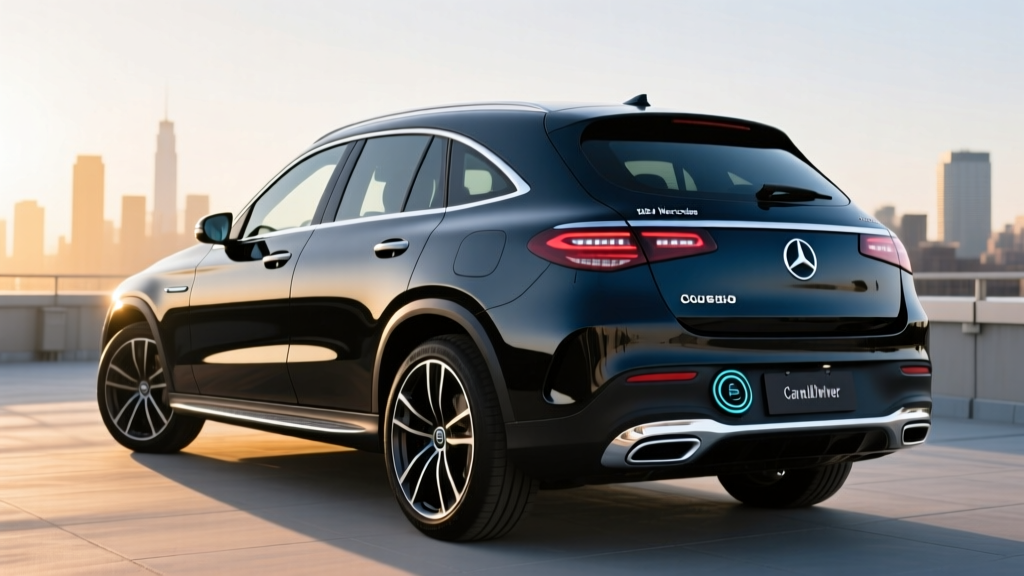
The 2024 Mercedes-Benz GLC 300e 4MATIC Coupe is a plug-in hybrid (PHEV) that bridges the gap between traditional luxury SUVs and full electric vehicles. With 34 miles of EPA-rated electric-only range and a combined 335 horsepower from its turbocharged four-cylinder and electric motor, it lets most commuters handle daily driving on electricity alone while keeping a gas engine for longer trips. However, its starting MSRP of approximately $59,900 and limited DC fast-charging capability mean buyers need to weigh whether the PHEV premium over the gas-only GLC 300 Coupe pays off in their specific driving pattern.
This guide covers the GLC-Class Coupe hybrid powertrain in detail — including real-world MPG expectations, battery specs, charging logistics, tax credit eligibility under current IRS §30D rules, and how it stacks up against full EVs and conventional hybrids in this segment.
HEV vs PHEV: What the GLC Coupe Hybrid Actually Is
Before diving into specs, it's critical to clarify terminology, because Mercedes sells multiple GLC variants and the distinction affects how you fuel, charge, and qualify for incentives.
| Feature | Conventional Hybrid (HEV) | Plug-In Hybrid (PHEV) — GLC 300e | Full Electric (BEV) |
|---|---|---|---|
| Plugs in to charge? | No — regenerates via braking & engine | Yes — Level 1, Level 2, limited DC | Yes — Level 1, 2, and DC fast |
| Electric-only range | 0 miles (motor assists engine only) | 34 miles (EPA) | 200–350+ miles typically |
| Gas engine | Yes | Yes | No |
| Federal tax credit | No | Up to $3,750 (see eligibility below) | Up to $7,500 (subject to rules) |
The 2024 GLC 300e 4MATIC Coupe is a plug-in hybrid (PHEV). It has a larger battery than a conventional hybrid and can be plugged into a wall outlet or charging station. When the battery is charged, you can drive up to 34 miles on electricity alone before the 2.0-liter turbocharged engine engages. Mercedes does not currently offer a conventional (non-plug-in) HEV version of the GLC Coupe in the U.S. market.
Powertrain Specs: Engine, Motor, and Combined Output
| Engine | 2.0L turbocharged inline-4 |
| Engine output | 204 hp / 236 lb-ft torque |
| Electric motor | Permanently excited synchronous, integrated in transmission |
| Motor output | 136 hp / 325 lb-ft torque |
| Combined system output | 335 hp / 406 lb-ft torque (with boost) |
| 0–60 mph | 6.1 seconds (manufacturer est.) |
| Transmission | 9G-TRONIC 9-speed automatic |
| Drivetrain | 4MATIC all-wheel drive |
| Battery (gross / usable) | 31.2 kWh / ~25.4 kWh usable |
| Battery chemistry | Lithium-ion (NMC) |
| EPA electric-only range | 34 miles |
| EPA combined range (gas + electric) | ~420 miles |
| EPA MPGe (electric + gas) | 54 MPGe combined |
| EPA MPG (charge-sustaining / gas only) | 25 MPG combined (24 city / 27 highway) |
| AC charging (Level 2) | Up to 9.6 kW — full charge in ~3.25 hours |
| DC fast charging | Not available (AC only) |
| Cargo volume (behind 2nd row) | 19.4 cu ft |
| Base MSRP | ~$59,900 (before destination) |
The GLC 300e's combined 335 hp is substantial for a compact luxury crossover, and the instant torque from the electric motor makes the 0–60 sprint feel quicker than the 6.1-second figure suggests. In EV mode, acceleration is smooth and silent; when the gas engine engages, the transition is one of the better-executed handoffs in the PHEV segment. The 9-speed automatic manages both power sources without the lurching some earlier PHEVs exhibited.
Fuel Economy: EPA Numbers vs. Real-World MPG
The EPA rates the 2024 GLC 300e 4MATIC Coupe at 54 MPGe combined when factoring in electric driving, and 25 MPG combined once the battery is depleted and the vehicle operates on gasoline alone. According to fueleconomy.gov, the breakdown is:
| Mode | City | Highway | Combined |
|---|---|---|---|
| Charge-sustaining (gas only, battery depleted) | 24 MPG | 27 MPG | 25 MPG |
| Charge-depleting + sustaining (MPGe, with full battery) | 54 MPGe combined | ||
Real-world expectations: PHEV fuel economy depends heavily on your driving pattern. If your daily commute is under 34 miles round-trip and you charge nightly at home, you may use almost no gasoline for months — effectively achieving infinite MPG for daily driving. On a long highway road trip with a depleted battery, expect the 25 MPG combined figure to hold reasonably close, though sustained 75+ mph cruising may pull it down to 23–24 MPG. In cold weather (below freezing), electric-only range typically drops 20–30%, reducing your EV range to roughly 24–27 miles before the engine kicks in.
Compared to the gas-only GLC 300 4MATIC Coupe (rated at 23 city / 30 highway / 26 combined per the EPA), the PHEV's advantage is most pronounced in city driving and short commutes where electric mode dominates. On long highway trips with no charging, the gas-only model may actually edge out the PHEV slightly due to the added weight of the battery pack (~350 lbs).
Electric-Only Range and Charging Logistics
The 34-mile EPA electric range is the headline figure, and it's meaningful: the average American drives roughly 37 miles per day according to FHWA data, meaning most owners can cover the majority of daily miles on electricity alone — provided they charge regularly.
EPA Electric Range: 34 miles
Real-World Expectation: 28–34 miles in mild weather; 24–27 miles in freezing conditions or with aggressive highway driving. Climate control use (especially heating) is the biggest range killer in PHEVs, as the GLC 300e uses a resistive heater rather than a more efficient heat pump.
Charging options and times:
| Level | Power (kW) | Time (0–100%) | Notes |
|---|---|---|---|
| Level 1 (120V household outlet) | ~1.4 kW | ~18 hours | Emergency/trickle only; adds ~5 mi/hr |
| Level 2 (240V home or public AC) | Up to 9.6 kW | ~3.25 hours | Ideal for overnight home charging; adds ~18 mi/hr |
| DC Fast Charging | N/A | N/A | Not supported — AC charging only |
The lack of DC fast charging is a notable limitation. If you're on a road trip and want to top up the battery at a public fast-charging station, you cannot. The 9.6 kW onboard charger is competitive for PHEVs (many rivals cap at 7.2 kW), and a Level 2 home charger will fully replenish the battery overnight in just over three hours. For most PHEV owners, nightly Level 2 home charging is the intended use case, and the GLC 300e handles that well.
Pricing, Trims, and Federal Tax Credit Eligibility
The 2024 GLC 300e 4MATIC Coupe starts at approximately $59,900 (MSRP before the $1,150 destination charge). A well-equipped model with the AMG Line exterior, Premium package, and MBUX upgrades can push the price to $68,000–$72,000.
Federal tax credit (IRS §30D): Under current IRS rules, the GLC 300e 4MATIC Coupe qualifies for a partial federal tax credit of up to $3,750 — not the full $7,500. This is because the vehicle's battery sourcing and critical-mineral composition partially meets but does not fully satisfy the post-2023 sourcing requirements outlined by the IRS. Key eligibility factors:
- MSRP cap: SUVs must be under $80,000 — the GLC 300e Coupe qualifies at base, but heavily optioned models may exceed this threshold. Verify your specific build.
- Buyer income cap: Modified AGI must not exceed $150,000 (single), $225,000 (head of household), or $300,000 (joint filers).
- Battery sourcing: Partial credit ($3,750) is available; full $7,500 requires meeting both critical-mineral and battery-component sourcing thresholds.
- Point-of-sale transfer: As of 2024, eligible buyers can transfer the credit to the dealer at purchase, reducing the purchase price directly rather than waiting for a tax refund.
- Assembly: Must be assembled in North America — the GLC is built in Bremen, Germany. This is a critical disqualifier for the full credit. Check the VIN on the IRS qualified vehicle list before purchasing.
Important caveat: Because the GLC-Class Coupe is manufactured in Germany, it does not meet the North American final-assembly requirement for the §30D credit. As of the latest IRS guidance, this means the GLC 300e Coupe may not qualify for any federal tax credit. Always verify current eligibility on the IRS qualified vehicle list and consult a tax professional before relying on credit amounts in your purchase decision. State-level incentives (such as those in California, Colorado, or New York) may still apply — check your state's energy office for current programs.
Battery Warranty, Reliability, and Long-Term Costs
The high-voltage battery in the GLC 300e is a 31.2 kWh (gross) lithium-ion pack using NMC (nickel-manganese-cobalt) chemistry. PHEV batteries experience less stress than full EV batteries because they operate in a narrower state-of-charge window — the vehicle's software maintains a buffer at both the top and bottom of the battery to protect longevity.
Mercedes-Benz High-Voltage Battery Warranty: 6 years or 62,000 miles (whichever comes first) for the PHEV battery — this is shorter than the 8-year/100,000-mile warranties common among competitors like Toyota, Hyundai, and BMW. The warranty covers defects and capacity loss below approximately 70% of original capacity.
Battery replacement cost (out of warranty): Estimated at $12,000–$18,000 for the complete high-voltage battery pack, based on current Mercedes parts pricing and labor. Individual module replacement may be possible at lower cost, depending on the failure mode.
Regarding reliability: Mercedes-Benz's PHEV powertrains have shown reasonable durability in early years, but the brand consistently ranks below average in long-term reliability surveys from Consumer Reports and J.D. Power. The complexity of combining a turbocharged engine, 9-speed transmission, electric motor, and high-voltage battery creates more potential failure points than either a conventional gas car or a full EV. The GLC-Class as a platform has not been flagged for major battery-related recalls as of this writing, but PHEV-specific issues (charging port failures, onboard charger faults) have appeared sporadically across the Mercedes lineup.
Maintenance costs are higher than a pure EV (you still have oil changes, spark plugs, and transmission fluid) but the regenerative braking system reduces brake pad wear significantly. Expect annual maintenance in the $800–$1,200 range after the warranty period, consistent with Mercedes-Benz luxury pricing.
Who Should Choose the GLC 300e Coupe PHEV vs. a Full EV or Gas Car?
Pros
- 34-mile EV range covers most daily commutes gas-free
- 335 hp combined output — genuinely quick for the segment
- No range anxiety — gas engine provides 400+ total miles
- Luxury interior with latest MBUX infotainment
- Smooth gas/electric handoff — one of the best PHEV transitions available
- 9.6 kW onboard charger is faster than many PHEV rivals
Cons
- No DC fast charging — limits public charging utility
- Battery warranty (6 yr / 62k mi) is below segment average
- Likely ineligible for federal tax credit (German assembly)
- Cargo space reduced vs. gas GLC Coupe (battery packaging)
- Premium pricing — $60K+ base, $70K+ as typically equipped
- No heat pump — cold-weather EV range drops significantly
- Long-term reliability uncertain vs. simpler powertrains
Choose the GLC 300e PHEV if: You have home Level 2 charging, your daily commute is under 35 miles, you want luxury and performance without committing to a full EV, and you take road trips too often to rely on EV charging infrastructure alone.
Choose a full EV (e.g., Tesla Model Y, BMW iX, Mercedes EQB) if: You want maximum fuel savings, lower maintenance costs, access to DC fast charging for road trips, and eligibility for the full $7,500 federal tax credit (on qualifying models).
Choose the gas-only GLC 300 Coupe if: You lack home charging access, your budget is tighter, you primarily drive long highway distances, or you want to avoid the complexity and weight of a PHEV powertrain.
Hybrid vs PHEV vs EV: Which Fits Your Lifestyle?
| Driving Pattern | Best Fit | Why |
|---|---|---|
| Short commute (<30 mi), home charging available | PHEV (GLC 300e) or BEV | Drive mostly on electricity; gas as backup |
| No home charging, mixed driving | Conventional HEV or gas | PHEV without charging is just a heavy, expensive hybrid |
| Long highway commutes (60+ mi daily) | BEV (with DC fast charging) or efficient gas/HEV | PHEV EV range exhausted quickly; operates as gas car with battery dead weight |
| Frequent road trips, rural areas | PHEV or gas | Charging infrastructure gaps make pure EV less practical |
| Urban, short trips, want lowest running cost | BEV | Electricity is cheapest per mile; minimal maintenance |
Frequently Asked Questions
How many MPG does the 2024 Mercedes-Benz GLC-Class Coupe hybrid get?
The EPA rates the GLC 300e 4MATIC Coupe at 54 MPGe combined (electric + gas) and 25 MPG combined when operating on gasoline alone after the battery is depleted. City driving on gas yields 24 MPG; highway returns 27 MPG. Real-world results vary: if you charge nightly and commute under 34 miles, you'll use very little gasoline. On long road trips, expect 23–25 MPG.
How far can the GLC 300e Coupe go on electric only?
The EPA rates it at 34 miles of electric-only range. In real-world conditions — mild weather, moderate speeds — expect 28–34 miles. In freezing temperatures or at sustained highway speeds above 70 mph, that drops to approximately 24–27 miles due to increased energy demand and the lack of a heat pump.
Does the GLC 300e Coupe qualify for a federal tax credit?
Likely not. The §30D federal tax credit requires North American final assembly, and the GLC-Class Coupe is built in Bremen, Germany. Even before the assembly requirement, the credit would be limited to $3,750 due to partial battery-sourcing compliance. Always verify on the IRS qualified vehicle list and consult a tax professional. State incentives may still apply.
Is the GLC 300e hybrid reliable, and what does a battery replacement cost?
Mercedes-Benz PHEV systems have shown acceptable early reliability, but the brand ranks below average in long-term dependability studies. The high-voltage battery is warranted for 6 years / 62,000 miles — shorter than the 8-year / 100,000-mile warranties from Toyota, Hyundai, and BMW. Out-of-warranty battery replacement is estimated at $12,000–$18,000. The added complexity of a dual-powertrain system means more potential service points than a pure EV or conventional gas car.
Can I DC fast charge the GLC 300e Coupe?
No. The GLC 300e only supports AC charging — Level 1 (120V) and Level 2 (240V, up to 9.6 kW). There is no DC fast-charge port. This is common for PHEVs with smaller batteries, but it means you cannot use Electrify America, Tesla Supercharger, or other DC networks to quickly top up on road trips.
How does the GLC 300e PHEV compare to a conventional hybrid (HEV)?
A conventional hybrid (like a Toyota RAV4 Hybrid) never plugs in and provides no electric-only range — it simply uses the electric motor to assist the gas engine, improving MPG to around 40 combined. The GLC 300e PHEV can drive 34 miles on electricity alone when charged, offering zero-emission daily commuting. However, if you never plug in a PHEV, it operates as a heavier, less efficient conventional hybrid — you'd be better off buying a dedicated HEV.
What is the total driving range of the GLC 300e Coupe?
With a full battery and a full tank of gas, the GLC 300e 4MATIC Coupe delivers approximately 420 miles of total combined range. The 17.2-gallon fuel tank provides the bulk of that range once the battery is depleted.