Mercedes-Benz Hybrid Cars: What the 2026 Lineup Actually Offers
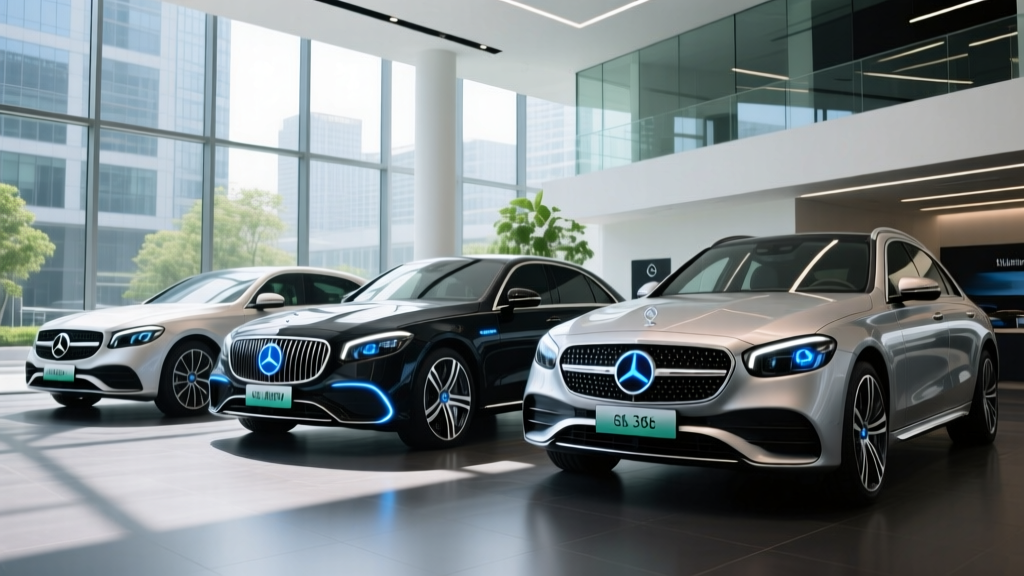
Mercedes-Benz has committed heavily to plug-in hybrid technology as a bridge between internal combustion and full electrification. For 2026, the automaker offers PHEV variants across its core lineup — from the compact GLC to the flagship S-Class — pairing turbocharged engines with electric motors and increasingly large battery packs. The result: vehicles that can handle daily commutes on electricity alone while retaining gas-engine range for road trips.
This guide covers every current Mercedes-Benz hybrid car available in the U.S. market, breaking down real-world MPG, electric-only range, battery specs, pricing, and whether any qualify for federal tax incentives under current IRS §30D rules.
HEV vs PHEV: What Mercedes Actually Sells
Conventional Hybrid (HEV): Uses a small battery recharged by regenerative braking and the engine. No plug. Mercedes currently offers mild-hybrid (48V EQ Boost) systems on many models, but these are not true HEVs in the Toyota Prius sense — they provide brief electric assist, not standalone electric driving.
Plug-in Hybrid (PHEV): Features a larger battery (typically 20-30+ kWh) that charges via plug. Offers meaningful electric-only range (30-50+ miles EPA). This is where Mercedes has concentrated its hybrid strategy, and what this guide focuses on.
2026 Mercedes-Benz PHEV Lineup: Specs at a Glance
| Model | Powertrain | Combined HP | Battery (kWh) | EV Range (mi) | EPA Combined MPG/MPGe | Base MSRP |
|---|---|---|---|---|---|---|
| GLC 350e 4MATIC | 2.0L turbo I4 + electric motor | 312 hp | 31.2 kWh | 39 mi | 76 MPGe / 27 MPG (gas) | $59,900 |
| GLE 350de 4MATIC | 3.0L turbo I6 diesel + electric motor | 367 hp | 31.2 kWh | 45 mi | 58 MPGe / 23 MPG (gas) | $72,500 |
| S 580e 4MATIC | 3.0L turbo I6 + electric motor | 442 hp | 28.6 kWh | 38 mi | 60 MPGe / 22 MPG (gas) | $121,050 |
| GLS 580e 4MATIC | 3.0L turbo I6 + electric motor | 449 hp | 31.2 kWh | 35 mi | 54 MPGe / 20 MPG (gas) | $108,900 |
| C 300e (Sedan) | 2.0L turbo I4 + electric motor | 312 hp | 25.4 kWh | 34 mi | 72 MPGe / 28 MPG (gas) | $52,850 |
Sources: EPA fueleconomy.gov, Mercedes-Benz USA specifications. MPGe reflects combined driving during electric+gas operation. When battery is depleted, MPG figures apply.
Electric-Only Range: Real-World Expectations vs EPA Stickers
Mercedes-Benz PHEVs use substantial battery packs — the GLC 350e's 31.2 kWh unit is larger than what powered early Nissan Leafs. That translates to genuine daily-driving capability on electric power alone.
EPA electric-only ratings assume moderate temperatures and mixed driving. Expect 15-25% less range in these conditions:
- Highway speeds (70+ mph): Aerodynamic drag reduces EV range significantly. A GLC 350e rated at 39 miles may deliver 28-32 miles at sustained highway speeds.
- Cold weather (below 40°F): Battery chemistry slows, and cabin heating draws power. Expect 25-30 miles from a 39-mile-rated pack in winter.
- Climate control load: Running A/C or heat at maximum reduces range by 10-15%.
Bottom line: Most Mercedes PHEV owners with sub-40-mile commutes can drive electric daily in mild weather, but plan for gas-engine engagement in extreme conditions or longer trips.
When the battery depletes, these vehicles operate as conventional hybrids — though not particularly efficient ones compared to dedicated HEVs like the Toyota RAV4 Hybrid. The GLC 350e returns 27 MPG combined on gas alone, which is respectable for a luxury compact SUV but trails non-hybrid rivals like the BMW X3 (28 MPG combined with its mild-hybrid system).
Charging: What It Takes to Keep a Mercedes PHEV Topped Up
Unlike full EVs, Mercedes PHEVs prioritize Level 2 AC charging. DC fast charging is available on select models but not universal.
| Charging Method | Power | 0-100% Time | Notes |
|---|---|---|---|
| Level 1 (120V household) | 1.4-1.8 kW | 18-24 hours | Emergency/trickle only; impractical for daily use |
| Level 2 (240V home/public) | 7.4-9.6 kW | 2.5-4 hours | Recommended for daily charging; overnight at home |
| DC Fast Charge (optional) | Up to 60 kW | ~30 min (10-80%) | Available on GLC 350e, S 580e; not standard on all trims |
The GLC 350e and S 580e support optional DC fast charging at up to 60 kW — useful for road-trip top-ups but far slower than full EVs (which charge at 150-350 kW). For most PHEV owners, a home Level 2 charger is the practical solution: plug in overnight, wake up with a full battery, and drive electric all day.
Home charging setup cost: A Level 2 home charger (ChargePoint Home Flex, Emporia Vue) costs $500-$700 for equipment. Professional installation by a licensed electrician runs $800-$2,500 depending on panel proximity and local permit fees. Total: $1,300-$3,200 for a turnkey setup. No electrical panel upgrade is typically needed for PHEVs (they draw less power than full EVs).
Fuel Economy: Do Mercedes Hybrids Deliver Real Savings?
| Model | EPA City MPG (gas only) | EPA Highway MPG (gas only) | EPA Combined MPG (gas) | Combined MPGe (EV+gas) | Real-World City (hybrid mode) |
|---|---|---|---|---|---|
| GLC 350e | 25 | 29 | 27 | 76 | 28-30 (regen assist in stop-and-go) |
| GLE 350de | 21 | 26 | 23 | 58 | 24-26 |
| S 580e | 20 | 25 | 22 | 60 | 23-25 |
| GLS 580e | 18 | 22 | 20 | 54 | 21-23 |
| C 300e | 26 | 31 | 28 | 72 | 29-32 |
Key insight: Hybrids typically exceed EPA city ratings in real-world stop-and-go driving because regenerative braking recaptures energy that would otherwise be lost. The C 300e sedan, in particular, benefits from this — owners frequently report 30+ MPG in urban driving even after the battery is depleted.
However, once the battery is empty, these are heavy luxury vehicles with moderate gas-only efficiency. The GLE 350de's 23 MPG combined (gas only) trails the non-hybrid GLE 350 (22 MPG combined) by just 1 MPG — the real advantage is the 45 miles of electric driving before the engine fires up.
Pricing and Tax Credit Eligibility: The §30D Reality Check
Mercedes-Benz PHEVs carry a price premium over their gas-only counterparts. The GLC 350e starts at $59,900 — roughly $12,000 more than the GLC 300 4MATIC. That premium buys you electric-only commuting capability, but the payback period depends heavily on your driving patterns and electricity costs.
Not all Mercedes PHEVs qualify for the full $7,500 federal tax credit. Current requirements include:
- Battery capacity: Must be at least 7 kWh (all Mercedes PHEVs exceed this)
- MSRP caps: Vans/SUVs/pickups: $80,000 max. Sedans: $55,000 max. This eliminates the S 580e ($121,050) and GLE 350de ($72,500) from eligibility.
- Buyer income limits: AGI must not exceed $300,000 (joint), $225,000 (head of household), $150,000 (single)
- Battery sourcing: Critical minerals and battery components must meet phased-in domestic/content requirements. Check fueleconomy.gov for current eligible models.
- Point-of-sale transfer: Eligible buyers can transfer the credit to the dealer for an immediate price reduction at purchase.
Current eligible models (verify at purchase): GLC 350e ($59,900 — under SUV cap), C 300e ($52,850 — under sedan cap). Final eligibility depends on battery sourcing compliance and your income. Consult a tax professional before relying on credit availability.
Battery Longevity, Warranty, and Replacement Costs
All Mercedes plug-in hybrids come with a high-voltage battery warranty of 6 years or 62,000 miles (whichever comes first). This is shorter than the 8-year/100,000-mile coverage offered by most competitors (Toyota, Hyundai, BMW).
The warranty covers defects and capacity loss below 70% of original capacity. If your 31.2 kWh GLC 350e battery degrades to 21.8 kWh or less within the warranty period, Mercedes will repair or replace it at no cost.
Real-world degradation: PHEV batteries experience less stress than full EV batteries because they operate in a narrower state-of-charge window (typically 15-85% rather than 0-100%). Most Mercedes PHEV owners report minimal degradation — 5-8% capacity loss over 5 years is typical based on owner forums and fleet data.
Out-of-warranty replacement cost: If your battery fails after the warranty expires, expect a replacement cost of $8,000-$14,000 depending on the model. The GLC 350e's 31.2 kWh pack runs approximately $10,500 for parts and labor at a Mercedes dealer. This is a significant expense, though PHEV batteries rarely fail catastrophically — gradual capacity loss is more common, and many continue functioning (with reduced EV range) well beyond 150,000 miles.
Who Should Choose a Mercedes-Benz Hybrid (and Who Shouldn't)
- Your daily commute is under 35 miles round-trip (you'll drive electric most days)
- You have home charging access (Level 2 strongly recommended)
- You want luxury features and brand prestige but aren't ready for full EV range limitations
- You take frequent road trips where charging infrastructure is sparse
- You value the ability to drive electric locally but need 400+ mile total range
- You want zero tailpipe emissions and minimal maintenance
- Your daily driving exceeds 50 miles (you'll burn gas regularly in a PHEV)
- You want access to HOV lanes (many states restrict this to full EVs, not PHEVs)
- You're eligible for the full $7,500 tax credit on an EV but not on a PHEV due to sourcing rules
- You lack home or workplace charging access
- Your budget doesn't accommodate the PHEV premium ($10,000-$15,000 over gas models)
- You drive primarily long highway routes where EV range provides no benefit
Mercedes PHEV Advantages
- 30-45 miles of daily electric driving eliminates gas use for most commutes
- No range anxiety — gas engine provides 400+ mile total range
- Luxury interior, advanced driver-assist systems, brand cachet
- Smooth, quiet electric operation around town
- Larger batteries than most PHEV rivals (BMW, Audi offer 15-20 kWh)
Mercedes PHEV Drawbacks
- Shorter battery warranty (6 yr/62k mi) than Toyota (10 yr/150k mi) or Hyundai (10 yr/100k mi)
- Heavy vehicles — gas-only MPG is mediocre once battery depletes
- High starting prices ($53,000-$121,000); many trims exceed tax-credit MSRP caps
- DC fast charging is optional, not standard, and limited to 60 kW
- Cargo space reduced by battery placement (GLC 350e loses 3 cu ft vs gas model)
Frequently Asked Questions
How many MPG does a Mercedes-Benz hybrid get?
Gas-only MPG varies by model: the C 300e sedan achieves 28 MPG combined (26 city/31 highway), while the GLS 580e SUV returns 20 MPG combined. When factoring in electric-only driving, combined MPGe ratings reach 54-76 MPGe. Real-world city driving often exceeds EPA gas-only ratings by 1-3 MPG due to regenerative braking.
How far can a Mercedes PHEV drive on electric only?
EPA-rated electric-only range spans 34-45 miles depending on the model. The GLE 350de leads at 45 miles; the C 300e delivers 34 miles. Real-world range drops to 25-35 miles in cold weather or at sustained highway speeds above 70 mph.
Does the Mercedes GLC 350e qualify for a tax credit?
The GLC 350e ($59,900 MSRP) falls under the $80,000 SUV cap and may qualify for up to $7,500 in federal tax credits under IRS §30D, subject to buyer income limits (AGI under $300,000 for joint filers) and battery sourcing requirements. Verify current eligibility at fueleconomy.gov before purchase. The S 580e and GLE 350de exceed MSRP caps and do not qualify.
Is the Mercedes hybrid battery reliable, and what does replacement cost?
Mercedes PHEV batteries are generally reliable, with typical degradation of 5-8% over 5 years. The warranty covers 6 years/62,000 miles (shorter than most rivals). Out-of-warranty replacement costs $8,000-$14,000 depending on the model. Most PHEV batteries last 150,000+ miles with gradual capacity loss rather than sudden failure.
Should I buy a Mercedes PHEV or a full EV like the EQE?
Choose the PHEV if your daily commute is under 35 miles, you have home charging, and you frequently take long road trips where charging infrastructure is uncertain. Choose the EQE (or rival EV) if you want zero emissions, lower maintenance costs, and your daily driving exceeds 50 miles. PHEVs make sense as a transition vehicle for buyers not yet comfortable with full EV range limitations.
Do Mercedes hybrids charge themselves, or do I need to plug them in?
Mercedes PHEVs require plug-in charging to access their full electric range. While regenerative braking recovers some energy during deceleration, it cannot fully recharge a 25-31 kWh battery pack. Without regular plug-in charging (ideally overnight at home on Level 2), you'll operate primarily on gas and forfeit the efficiency advantage. Mercedes does not currently sell conventional (non-plug-in) hybrids in the U.S. — only mild-hybrid 48V systems that provide brief electric assist.
Always verify current specifications, pricing, and tax-credit eligibility with your local Mercedes-Benz dealer and a qualified tax professional. Federal and state incentive rules change frequently.