The AMG E53 Hybrid Is a Performance PHEV — Here's What That Actually Means
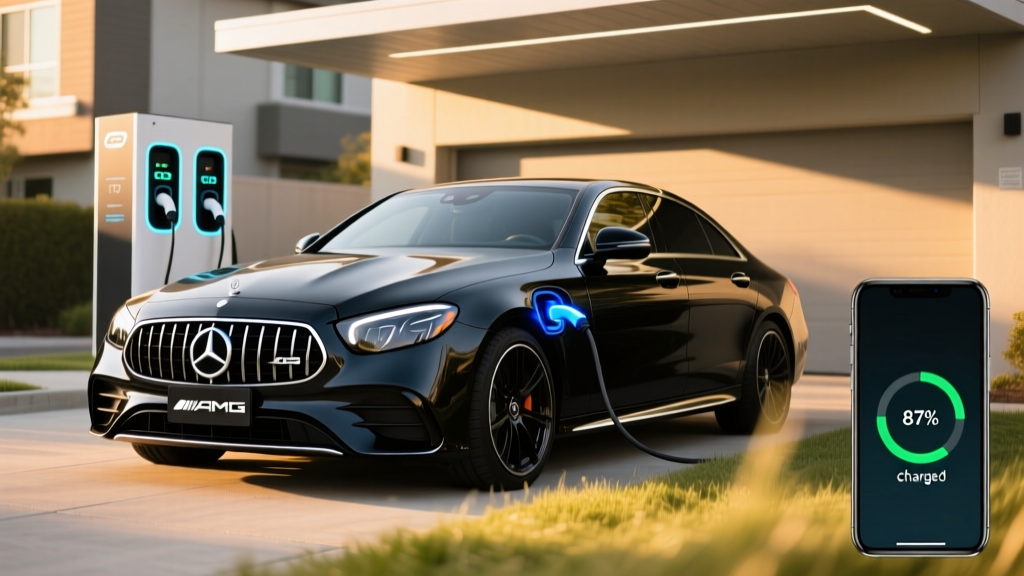
The 2026 Mercedes-AMG E53 Hybrid isn't your typical fuel-sipping commuter hybrid. It's a plug-in hybrid (PHEV) performance sedan that pairs a turbocharged 3.0-liter inline-6 with a rear-mounted electric motor for a combined 577 horsepower. But unlike full EVs, it retains a gas engine for road trips, while offering meaningful electric-only commuting range for daily use. For buyers cross-shopping between a BMW M5, a Porsche Panamera E-Hybrid, and full-electric alternatives like the Porsche Taycan or Tesla Model S, the E53 Hybrid occupies a specific niche: luxury performance with an electrified safety net.
This guide breaks down every number that matters — EPA MPG, real-world electric range, battery capacity, charging speed, pricing, and whether the E53 qualifies for federal tax credits under current IRS §30D rules.
| Spec | Value |
|---|---|
| Powertrain | 3.0L turbo I-6 + electric motor (PHEV) |
| Combined Output | 577 hp / 553 lb-ft torque |
| 0–60 mph | 3.7 seconds |
| Battery (usable) | 21.7 kWh (lithium-ion) |
| EPA Electric-Only Range | ~34 miles (est.) |
| EPA Combined MPG (gas) | ~26 MPG combined |
| EPA City / Highway MPG | ~24 city / ~29 highway |
| Max AC Charge Rate | 7.4 kW (Level 2) |
| DC Fast Charging | Not available |
| Level 2 Charge Time (0–100%) | ~3 hours |
| Base MSRP | ~$82,000 |
| Federal Tax Credit (§30D) | Up to $7,500 (eligibility varies) |
| Hybrid Battery Warranty | 6 years / 62,000 miles |
HEV vs PHEV: Where the AMG E53 Fits
Before evaluating the E53, it's essential to distinguish the two hybrid categories, because they behave very differently in daily life:
| Feature | HEV (e.g., Toyota Prius) | PHEV (e.g., AMG E53 Hybrid) |
|---|---|---|
| Plugs in? | No — charges via regen braking and engine | Yes — charges via plug and engine |
| Electric-only range | ~1 mile or less | 20–40+ miles typical |
| Battery size | 1–2 kWh | 15–30 kWh |
| Tax credit eligible? | No | Potentially (see §30D below) |
| Best for | Drivers without home charging | Drivers with home/work Level 2 access |
The AMG E53 is squarely a PHEV. Its 21.7 kWh battery enables genuine zero-emission commuting for short trips, while the inline-6 eliminates range anxiety on longer drives. If you can't plug in at home or work, much of the E53's electric advantage goes unused — you'd be carrying dead battery weight and paying a premium for capability you can't access.
Fuel Economy: EPA MPG and Real-World Expectations
The EPA rates the 2026 AMG E53 Hybrid at approximately 26 MPG combined when operating on gasoline alone (after the battery is depleted). Here's the breakdown:
| Driving Cycle | EPA Estimate | Real-World Expectation |
|---|---|---|
| City | 24 MPG | 22–26 MPG (regen helps in stop-and-go) |
| Highway | 29 MPG | 25–28 MPG (aero drag and weight hurt at 75+ mph) |
| Combined | 26 MPG | 24–27 MPG mixed driving |
Real-world MPG in a PHEV depends entirely on how often you charge. If your commute is under 30 miles and you plug in nightly, you may burn almost no gasoline for months. On a 400-mile road trip with no charging stops, expect fuel economy closer to 23–25 MPG — the AMG's performance tuning, wider tires, and all-wheel-drive system prioritize grip over efficiency.
Compared to the non-hybrid AMG E63 S (rated around 19 MPG combined), the E53 Hybrid delivers a meaningful 35% improvement in mixed driving — not Prius territory, but substantial for a 577-hp sedan. According to fueleconomy.gov, PHEVs in this class typically achieve 50–60 MPGe when operating in blended electric/gas mode on shorter trips.
Electric-Only Range: How Far Can You Go Without Gas?
The 2026 AMG E53 Hybrid's 21.7 kWh battery delivers an estimated 34 miles of EPA-rated electric-only range. In practice, expect:
- 30–34 miles in mild weather, city/suburban driving under 50 mph
- 24–28 miles at sustained highway speeds (65–75 mph), where aerodynamic drag dominates
- 20–25 miles in cold weather (below 40°F), as cabin heating and battery conditioning consume energy
The electric motor produces 120 kW (161 hp) on its own, which is enough for confident highway merging and brisk city acceleration without waking the inline-6. Top speed in electric-only mode is electronically limited to approximately 87 mph.
Total combined range (electric + full gas tank) reaches approximately 420–450 miles, which matches or slightly exceeds the gas-only E-Class variants. For most owners who charge daily, the effective weekly gas consumption can drop to a few gallons — a dramatic shift from the E63's thirst.
Battery, Charging, and Powertrain Details
The E53's hybrid system centers on a 21.7 kWh lithium-ion battery pack mounted beneath the rear floor. Unlike full EVs with 80–100+ kWh packs, this is sized specifically for short electric commutes with the gas engine as backup.
Charging capabilities:
- Level 1 (120V household outlet): ~1.4 kW — full charge in approximately 15 hours. Functional for overnight top-ups but slow for daily use.
- Level 2 (240V home or public charger): 7.4 kW max — full charge in roughly 3 hours. This is the intended daily charging method.
- DC fast charging: Not available. Mercedes-Benz does not equip the E53 Hybrid with CCS or NACS DC fast-charge capability. The battery is simply too small to justify the hardware cost and weight.
The absence of DC fast charging is standard for PHEVs in this class — the BMW 550e and Audi A6 TFSI e also lack it. Since the battery holds only ~22 kWh, a Level 2 home charger refills it completely while you sleep or work, making DC infrastructure largely irrelevant for PHEV owners.
Battery Warranty & Replacement Cost
Mercedes-Benz covers the E53 Hybrid's high-voltage battery for 6 years or 62,000 miles, whichever comes first. This is shorter than the 8-year/100,000-mile warranties common on full EVs and some mainstream PHEVs (Toyota covers hybrid batteries for 10 years/150,000 miles). If the battery degrades below approximately 70% of original capacity within the warranty period, Mercedes will repair or replace it.
Out-of-warranty replacement cost for the E53's PHEV battery is estimated at $8,000–$12,000 including labor, based on current Mercedes PHEV service pricing. For context, the smaller battery means lower replacement cost than a full EV pack ($15,000–$25,000+), but it's still a significant expense for second or third owners.
Pricing, Tax Credits, and Total Cost
The 2026 Mercedes-AMG E53 Hybrid starts at approximately $82,000 MSRP, with options and packages (AMG Night Package, Executive Rear Seat, Burmester 4D surround sound) pushing well-equipped examples past $95,000.
Federal Tax Credit Eligibility (§30D)
As a plug-in hybrid, the E53 Hybrid may qualify for the federal §30D Clean Vehicle Credit of up to $7,500. However, eligibility depends on several factors that change annually and vary by buyer. Per current IRS guidelines:
- MSRP cap: Sedans must have an MSRP at or below $55,000. The E53 at ~$82,000 exceeds this cap, which likely disqualifies it from the new-vehicle credit.
- Buyer income limits: Modified AGI must not exceed $150,000 (single), $225,000 (head of household), or $300,000 (joint).
- Battery sourcing: Critical minerals and battery components must meet escalating domestic-content thresholds.
- Point-of-sale transfer: If eligible, the credit can be applied at purchase rather than claimed on your tax return.
Bottom line: At its MSRP, the AMG E53 Hybrid almost certainly does not qualify for the federal new-vehicle tax credit due to the $55,000 sedan price cap. Always verify current rules at fueleconomy.gov or with a tax professional before purchasing.
Some states offer additional PHEV rebates or HOV lane access that don't carry federal MSRP caps — check your state's energy office for details.
Who Should Buy the AMG E53 Hybrid?
The E53 Hybrid makes sense if:
- You want AMG performance (577 hp, 3.7s 0–60) but also want to commute on electricity most days
- You have Level 2 charging at home or work to actually use the 34-mile electric range
- You take regular road trips where a full EV's charging logistics feel limiting
- You value the E-Class cabin, MBUX tech, and Mercedes build quality over pure efficiency
Look elsewhere if:
- You can't plug in regularly — you'll pay a performance-hybrid premium without the electric benefit
- Fuel cost savings are your primary goal — a mainstream PHEV (Toyota RAV4 Prime, Hyundai Tucson PHEV) delivers better economics
- You want full zero-emission driving — consider the Mercedes EQE or Tesla Model S instead
- Tax credit eligibility is important to your purchase math — the E53's MSRP disqualifies it
Pros
- 577 hp with 3.7s 0–60 — genuine AMG performance
- 34-mile electric range covers most daily commutes
- No range anxiety — gas engine for road trips
- Premium E-Class interior with MBUX Superscreen
- Regen braking and electric mode reduce city fuel use significantly
Cons
- ~$82,000 MSRP exceeds federal tax credit cap
- No DC fast charging (common PHEV limitation)
- Battery warranty (6yr/62k mi) is shorter than EV competitors
- 26 MPG gas-only is modest for a PHEV — performance tuning takes priority
- Heavier than gas E53 due to battery pack — affects handling feel
Frequently Asked Questions
How many MPG does the AMG E53 Hybrid get?
The EPA rates it at approximately 24 city / 29 highway / 26 combined MPG when running on gasoline. In blended mode with a charged battery, shorter trips can yield 50+ MPGe. Real-world gas-only fuel economy typically falls between 23–27 MPG depending on driving style and conditions.
How far can the AMG E53 go on electric only?
The EPA-estimated electric-only range is approximately 34 miles. Expect 28–34 miles in normal conditions, dropping to 20–25 miles in cold weather or at sustained highway speeds above 70 mph.
Hybrid vs PHEV vs full EV — which fits my lifestyle?
A conventional hybrid (HEV) like the Toyota Prius needs no plug and delivers consistent 50+ MPG — ideal if you lack charging access. A PHEV like the E53 offers 20–40 miles of electric range for daily commuting plus a gas engine for longer trips — best if you can charge at home but also road-trip regularly. A full EV (BEV) like the Tesla Model S eliminates gas entirely with 300–400+ miles of range — best if you have reliable home charging and your trips fit within the charging network.
Is the AMG E53 Hybrid reliable, and what does battery replacement cost?
Mercedes' PHEV powertrains have been in production across multiple model lines since 2019, and early reliability data is generally positive for the hybrid system. The high-voltage battery is warrantied for 6 years/62,000 miles. Out-of-warranty replacement is estimated at $8,000–$12,000. The turbocharged inline-6 is a proven Mercedes engine family, though AMG-tuned variants carry higher maintenance costs than standard E-Class models.
Does the AMG E53 Hybrid qualify for a federal tax credit?
Almost certainly not. The §30D federal tax credit caps sedan MSRPs at $55,000, and the E53 starts at approximately $82,000. Some state-level incentives or utility rebates may still apply — check AFDC's state incentive database for local programs. Always consult a tax professional for your specific situation.
Can I DC fast charge the E53 Hybrid?
No. The E53 Hybrid supports Level 1 (120V) and Level 2 (240V, up to 7.4 kW) charging only. This is typical for PHEVs — the 21.7 kWh battery fills completely on Level 2 in about 3 hours, making DC fast charging unnecessary for most use cases.
How does the E53 Hybrid compare to the AMG E63?
The E63 S produces 603 hp from a twin-turbo V8 with no electrification, achieving roughly 19 MPG combined. The E53 Hybrid delivers 577 hp with better fuel economy (26 MPG gas-only, 50+ MPGe blended), 34 miles of electric commuting, and a quieter daily-driving experience. The E63 wins on raw V8 character and track performance; the E53 Hybrid wins on daily usability and running costs.