If you've searched for the meaning of hybrid cars, you've likely found conflicting answers. Some sources describe a vehicle that never plugs in; others describe one that drives on electricity alone for 30+ miles. Both are technically correct — because the term "hybrid" now covers two fundamentally different powertrains. Understanding the distinction is the single most important step before you spend $30,000–$55,000 on an electrified vehicle.
This guide breaks down the real engineering behind conventional hybrids (HEVs) and plug-in hybrids (PHEVs), with exact EPA figures, battery data, and ownership economics for the 2026 model year.
What Is a Hybrid Car, Exactly?
At its core, a hybrid car pairs a gasoline internal combustion engine with one or more electric motors and a battery pack. The electric motor assists during acceleration, captures energy during braking (regenerative braking), and in some configurations can propel the vehicle on electricity alone at low speeds or for short distances. The result: better fuel economy and lower tailpipe emissions than a gas-only equivalent, without requiring the driver to change fueling habits — in the case of conventional hybrids.
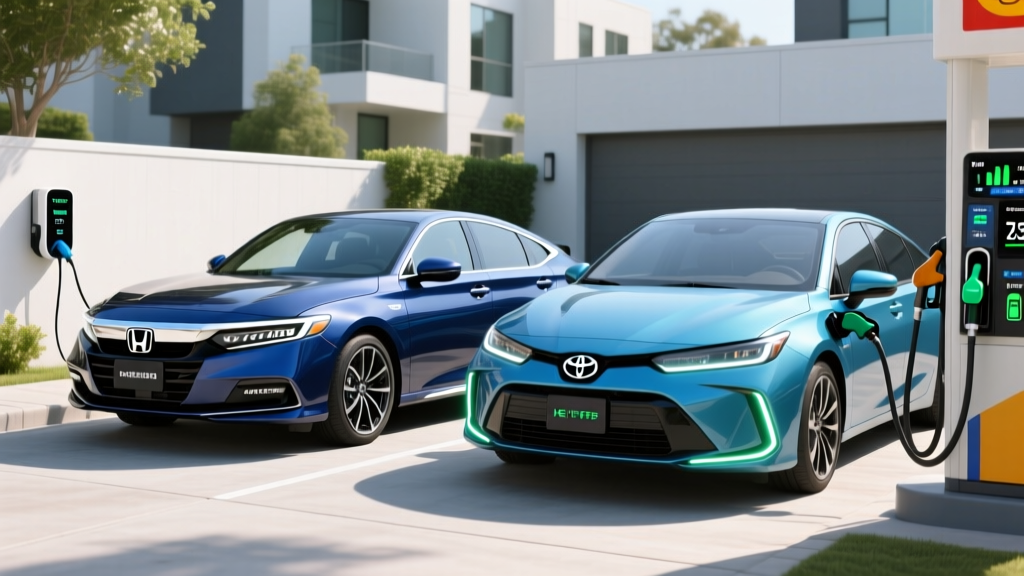
But the meaning of hybrid cars splits into two categories with very different capabilities, costs, and use cases.
HEV vs PHEV: The Core Difference
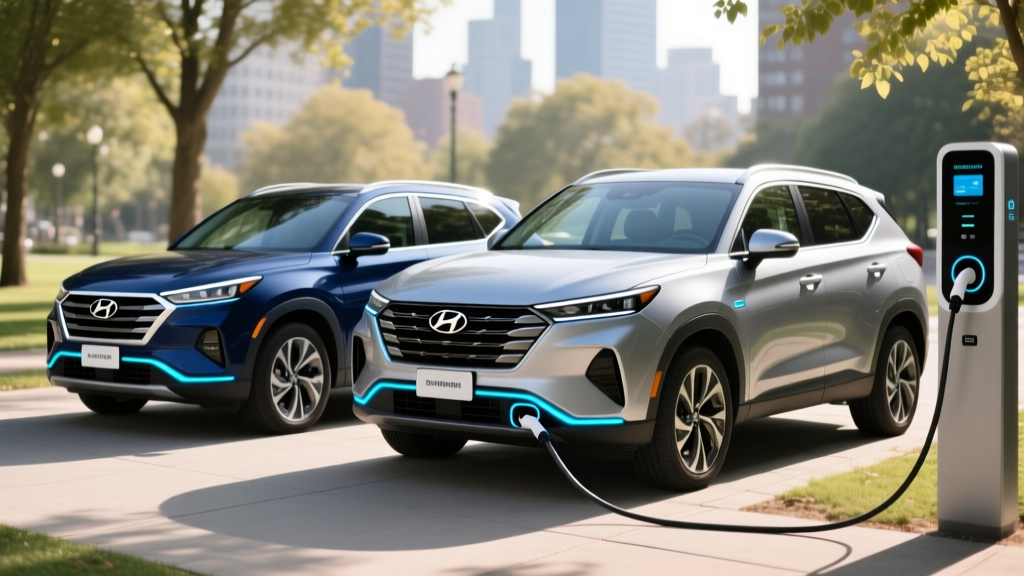
Conventional Hybrid (HEV): Small battery (typically 1–2 kWh), charged only by the engine and regenerative braking. You never plug it in. The electric motor assists the gas engine but cannot sustain highway speeds on electricity alone. Examples: Toyota Prius, Honda CR-V Hybrid, Hyundai Tucson Hybrid.
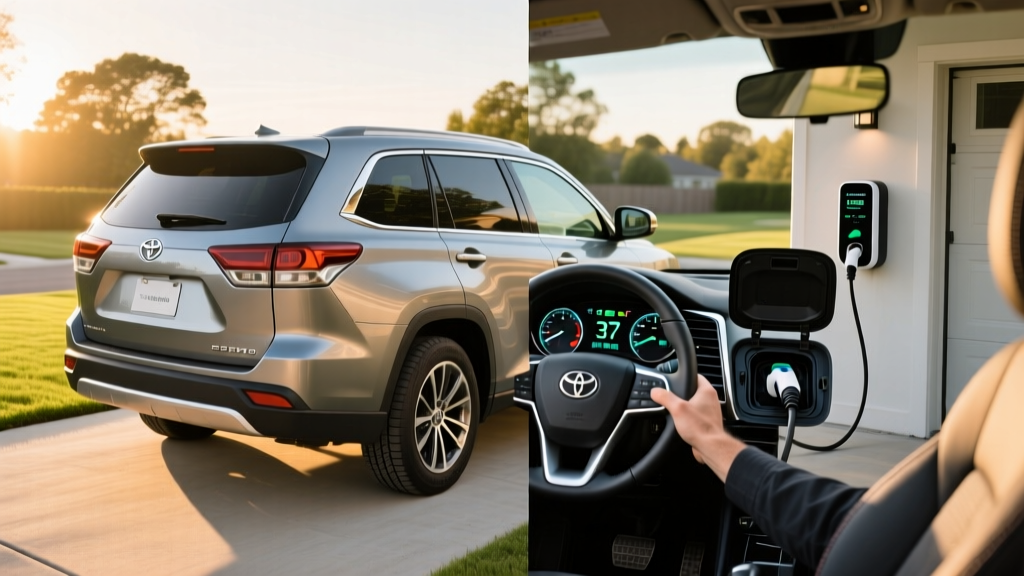
Plug-In Hybrid (PHEV): Larger battery (typically 13–25 kWh), chargeable from a wall outlet or public charger. Offers 25–50 miles of electric-only driving before the gas engine engages. Examples: Toyota RAV4 Prime, Jeep Wrangler 4xe, Hyundai Tucson PHEV.
How Many MPG Does a Hybrid Get? Real EPA Data
Fuel economy is the primary reason most buyers consider a hybrid. Here's how top 2026 models stack up, using EPA data from fueleconomy.gov. Note that conventional hybrids often exceed their EPA city rating in real-world stop-and-go driving, because regenerative braking recovers more energy in urban conditions.
| 2026 Model | Type | City MPG | Hwy MPG | Combined | EV Range (mi) |
|---|---|---|---|---|---|
| Toyota Prius | HEV | 57 | 56 | 57 | — |
| Toyota Prius PHEV (Prius Prime) | PHEV | 53* | 51* | 52* | 44 |
| Honda CR-V Hybrid | HEV | 43 | 36 | 40 | — |
| Toyota RAV4 Prime | PHEV | 40* | 36* | 38* | 42 |
| Hyundai Tucson Hybrid | HEV | 38 | 38 | 38 | — |
| Hyundai Tucson PHEV | PHEV | 37* | 35* | 36* | 33 |
* PHEV MPG figures apply after the battery is depleted (charge-sustaining mode). While battery charge remains, the vehicle operates as an EV with MPGe ratings typically 90–105 MPGe combined.
Powertrain Specs: What's Under the Hood
The meaning of hybrid cars becomes clearer when you look at the hardware. Both HEVs and PHEVs use an engine-motor team, but the balance of power differs dramatically.
| 2026 Model | Engine | Combined HP | Battery (kWh) | 0-60 mph | Base MSRP |
|---|---|---|---|---|---|
| Toyota Prius | 2.0L I-4 | 196 | ~1.3 (Li-ion) | 7.2s | $29,450 |
| Prius Prime (PHEV) | 2.0L I-4 | 220 | 13.6 (Li-ion) | 6.6s | $34,100 |
| Toyota RAV4 Prime | 2.5L I-4 | 302 | 18.1 (Li-ion) | 5.7s | $44,900 |
| Honda CR-V Hybrid | 2.0L I-4 | 204 | ~1.3 (Li-ion) | 7.6s | $36,395 |
| Hyundai Tucson PHEV | 1.6L Turbo I-4 | 261 | 13.8 (Li-ion) | 7.1s | $39,900 |
PHEVs carry significantly larger batteries — typically 13–25 kWh of usable capacity versus the 1–2 kWh in a conventional hybrid. That energy density is what enables 25–50 miles of electric-only driving. Most PHEVs use a 6.6 kW Level 2 onboard charger, meaning a full charge from empty takes roughly 2–3 hours on a 240V home outlet. None of the mainstream PHEVs listed above support DC fast charging — a deliberate engineering choice, since the battery is small enough that Level 2 replenishment is practical for overnight or workplace top-ups.
Hybrid vs PHEV vs EV: Which Fits Your Life?
The meaning of hybrid cars only matters if the technology matches your daily routine. Here's a practical decision framework:
Choose a Conventional Hybrid (HEV) If:
- You cannot charge at home (apartment, street parking, no garage)
- Your budget is $28,000–$38,000 and you want maximum MPG per dollar
- You want zero behavior change — just gas up and go
- Your daily driving is unpredictable and often exceeds 200+ miles
Choose a Plug-In Hybrid (PHEV) If:
- You can install a Level 2 charger at home or reliably charge at work
- Your commute is under 40 miles round-trip (most PHEVs cover this on electricity alone)
- You want EV-like daily driving but need gas flexibility for road trips
- You're willing to pay a $4,000–$8,000 premium over the HEV equivalent
Choose a Full EV (BEV) If:
- You have reliable home charging and your daily driving stays within 200–250 miles
- You want the lowest per-mile fuel cost and minimal maintenance
- You qualify for the full federal EV tax credit (up to $7,500 under IRS §30D rules)
- You're ready to plan around DC fast charging on road trips
How Far Can a PHEV Go on Electric Only?
Electric-only range is where PHEVs earn their premium. Here's what the current market delivers, along with total range (electric + gas tank combined):
| 2026 PHEV Model | Battery (kWh) | EV-Only Range | Total Range | L2 Charge Time |
|---|---|---|---|---|
| Toyota Prius Prime | 13.6 | 44 mi | ~600 mi | ~2.3 hrs @ 6.6 kW |
| Toyota RAV4 Prime | 18.1 | 42 mi | ~600 mi | ~2.5 hrs @ 6.6 kW |
| Hyundai Tucson PHEV | 13.8 | 33 mi | ~420 mi | ~2.1 hrs @ 6.6 kW |
| Jeep Wrangler 4xe | 17.3 | 22 mi | ~370 mi | ~2.7 hrs @ 6.6 kW |
| Chrysler Pacifica PHEV | 16.0 | 32 mi | ~520 mi | ~2.5 hrs @ 6.6 kW |
Tax Credits: Do Hybrids Qualify?
This is where the distinction between HEV and PHEV directly affects your wallet.
Conventional hybrids (HEVs): Do not qualify for the federal §30D clean vehicle tax credit. That credit is reserved for plug-in vehicles with a battery capacity of at least 7 kWh. Some states offer modest rebates for HEVs, but these vary widely by jurisdiction — check your state energy office or the Alternative Fuels Data Center for current local incentives.
Plug-in hybrids (PHEVs): May qualify for up to $7,500 under IRS §30D, but eligibility is far from guaranteed. The credit depends on:
- Battery sourcing: Critical minerals and battery components must meet phased-in domestic-content thresholds that tighten annually through 2030. Check the fueleconomy.gov tax credit lookup for the specific model.
- MSRP caps: Vans, SUVs, and pickups must be under $80,000 MSRP; sedans under $55,000.
- Buyer income caps: Modified adjusted gross income must not exceed $300,000 (joint), $225,000 (head of household), or $150,000 (single).
- Point-of-sale transfer: As of 2024, you can transfer the credit to the dealer at purchase for an immediate price reduction, rather than waiting to claim it on your tax return.
For 2026, many PHEVs — including the RAV4 Prime and Pacifica PHEV — are eligible for the full $7,500, but battery sourcing rules have tightened. Always verify the specific VIN's eligibility at purchase using the IRS's official tool. Consult a tax professional for your personal situation.
Reliability and Battery Replacement: What Owners Should Know
Hybrid battery longevity remains the top concern for first-time hybrid buyers. The data is reassuring: modern hybrid batteries from Toyota, Honda, and Hyundai are engineered for the life of the vehicle, with extensive warranties backing that claim.
Hybrid Battery Warranty Coverage (2026 Models)
| Manufacturer | Warranty | Capacity Retention Threshold | Estimated Replacement Cost |
|---|---|---|---|
| Toyota (HEV & PHEV) | 10 yr / 150,000 mi | Below ~70% SoH | $2,500–$5,500 |
| Honda (HEV) | 8 yr / 100,000 mi (10/150k in CARB states) | Below ~70% SoH | $2,000–$4,000 |
| Hyundai/Kia (HEV & PHEV) | 10 yr / 100,000 mi | Below ~70% SoH | $2,500–$5,000 |
PHEV battery replacement costs run higher ($5,000–$8,500) due to larger pack size. However, out-of-warranty failures are rare — Toyota's hybrid battery failure rate across millions of vehicles is well under 5% at 200,000 miles, based on fleet and consumer data.
For conventional HEVs, the battery is small (1–2 kWh) and rarely stressed — it cycles shallowly, never fully depleting or fully charging. This gentle usage pattern is why HEV batteries routinely last 150,000–200,000+ miles without significant degradation. PHEV batteries see deeper cycles but benefit from active thermal management in most modern designs.
Overall hybrid powertrain reliability is excellent. Toyota's hybrid system, in particular, has proven to be among the most durable powertrains in the industry, with the planetary gearset design eliminating traditional transmission wear points. IIHS and Consumer Reports data consistently rank hybrid variants equal to or above their gas-only counterparts in reliability.
Pricing and Total Cost of Ownership
Hybrids carry a modest upfront premium over gas-only models but often break even within 3–5 years through fuel savings, depending on your mileage and local gas prices.
Advantages
- 30–50% better fuel economy than gas equivalents
- No charging infrastructure needed (HEV)
- Lower brake wear from regenerative braking
- Strong resale value, especially Toyota/Honda
- PHEVs eligible for up to $7,500 federal credit
- Seamless gas-engine backup eliminates range anxiety
Trade-Offs
- $1,500–$6,000 higher MSRP vs gas-only trims
- PHEVs require home charging to maximize value
- Higher insurance premiums on some PHEV models
- Two systems to maintain (engine + electric)
- PHEV cargo space reduced by battery placement
- HEVs don't qualify for federal tax credits
At $3.50/gallon gas and 15,000 miles/year, a Prius (57 MPG combined) saves roughly $680/year over a comparable 30 MPG gas compact — that's $3,400 over five years, more than offsetting the hybrid premium. PHEV owners who charge at home and commute within EV range can cut fuel costs by 60–80% on weekdays while retaining gas flexibility for weekend trips.
Frequently Asked Questions
Do hybrid cars need to be plugged in?
Conventional hybrids (HEVs) never need to be plugged in — they generate all their electricity from the gas engine and regenerative braking. Plug-in hybrids (PHEVs) can be plugged in to charge their larger battery for electric-only driving, and they should be plugged in regularly to capture their full efficiency benefit. A PHEV that's never charged operates as a slightly heavier conventional hybrid with marginally lower MPG.
How long do hybrid batteries last?
Most hybrid batteries from major manufacturers last 150,000–200,000+ miles under normal use. All 2026 hybrid models carry battery warranties of 8–10 years or 100,000–150,000 miles. Real-world failure rates are low — Toyota reports hybrid battery replacement rates under 5% across millions of vehicles at high mileage.
Is a hybrid worth it if I mostly drive on the highway?
Hybrids provide the greatest fuel savings in city driving, where regenerative braking and electric assist are most active. On sustained highway cruising, the advantage over a efficient gas car narrows to roughly 10–20%. If 80%+ of your driving is highway, a clean-diesel or efficient turbo-gas vehicle may close the gap. However, modern hybrids like the Prius still deliver strong highway MPG (56 EPA) due to improved aerodynamics and engine efficiency.
What's the cheapest hybrid car available in 2026?
The Toyota Prius starts at $29,450, making it the most affordable and most efficient hybrid on the market. The Hyundai Elantra Hybrid begins around $29,500 with an EPA 54 MPG combined rating. Both deliver exceptional value with strong reliability records.
Can I get a tax credit for buying a hybrid?
Conventional hybrids (HEVs) do not qualify for the federal §30D clean vehicle credit. Plug-in hybrids (PHEVs) may qualify for up to $7,500, subject to battery sourcing requirements, MSRP caps ($55,000 for cars, $80,000 for SUVs/trucks), and buyer income limits. Verify eligibility per VIN at fueleconomy.gov and consult a tax professional. Some states offer additional rebates — check the Alternative Fuels Data Center for local programs.