The Mazda CX-5 Hybrid Delay: Where Things Stand in 2026
If you've been searching for a "mazda cx-5 hybrid delay," you're not alone. The compact SUV segment's best-selling Mazda has been promised with a hybrid powertrain for years, yet as of early 2026, a conventional hybrid (HEV) CX-5 remains unavailable in the U.S. market. Mazda's electrification strategy has focused instead on the plug-in hybrid CX-50 PHEV, the CX-70 and CX-90 PHEVs, and its new EV lineup — leaving CX-5 loyalists wondering if a hybrid version will ever arrive.
This guide breaks down everything we know about the CX-5 hybrid's status, the plug-in CX-50 PHEV that Mazda has offered as an alternative, and what compact-SUV buyers should actually consider right now.
Why Has Mazda Delayed the CX-5 Hybrid?
Mazda's road to hybridization has been unusually slow for a mainstream automaker. Several factors explain the CX-5 hybrid delay:
- Toyota partnership dependency: Mazda's hybrid tech is co-developed with Toyota. The CX-5 was designed on Mazda's older platform, and retrofitting Toyota's hybrid system required significant re-engineering.
- Platform transition: Mazda shifted its large-SUV focus to the rear-biased, longitudinal-engine CX-50/CX-70/CX-90 architecture, which was designed from the outset for PHEV integration. The CX-5's transverse-engine layout was deprioritized.
- Regulatory strategy: Mazda opted to meet CAFE and emissions targets through its larger PHEVs and upcoming EVs rather than investing in a hybrid variant of a model it considers near end-of-life.
- Market positioning: With the CX-50 overlapping heavily in the compact crossover segment, Mazda has little incentive to cannibalize CX-50 PHEV sales with a CX-5 HEV.
The result? The CX-5 continues into 2026 as a gas-only model, while buyers seeking a Mazda hybrid in this segment are pointed toward the CX-50 PHEV.
CX-50 PHEV: The Hybrid Mazda Actually Sells
Since Mazda hasn't delivered a CX-5 hybrid, the closest alternative is the CX-50 PHEV (plug-in hybrid electric vehicle). Here's how it stacks up:
| Spec | Value |
|---|---|
| Powertrain | 2.5L inline-4 + electric motor |
| Combined Horsepower | 320 hp |
| Battery Capacity | 17.8 kWh (usable ~14.2 kWh) |
| Battery Chemistry | NMC (nickel manganese cobalt) |
| EPA Electric-Only Range | 26 miles |
| Total Combined Range | ~430 miles |
| EPA MPG (gas, after battery depleted) | 25 city / 27 hwy / 25 combined |
| MPGe (combined, EV + gas) | 92 MPGe |
| Level 2 Charging (240V) | ~2.5 hours (0–100%) |
| DC Fast Charging | Not available |
| Drivetrain | AWD (standard) |
| Starting MSRP | $41,550 (Preferred) |
| Battery Warranty | 8 years / 100,000 miles |
Understanding the HEV vs. PHEV Distinction
This is critical because the CX-5 hybrid delay is often conflated with the CX-50 PHEV, but these are fundamentally different vehicles:
Conventional Hybrid (HEV) — What CX-5 Buyers Wanted
A conventional hybrid like the Toyota RAV4 Hybrid uses a small battery (typically 1–2 kWh) that charges through regenerative braking and the engine. You never plug it in. The electric motor assists the gas engine, improving fuel economy — often by 30–40% over the gas-only version. There is no electric-only driving beyond very low-speed creeping. Expected MPG for a CX-5 HEV (if it existed) would likely be around 35–40 combined, similar to the RAV4 Hybrid's 39 MPG combined.
Plug-in Hybrid (PHEV) — What Mazda Actually Offers
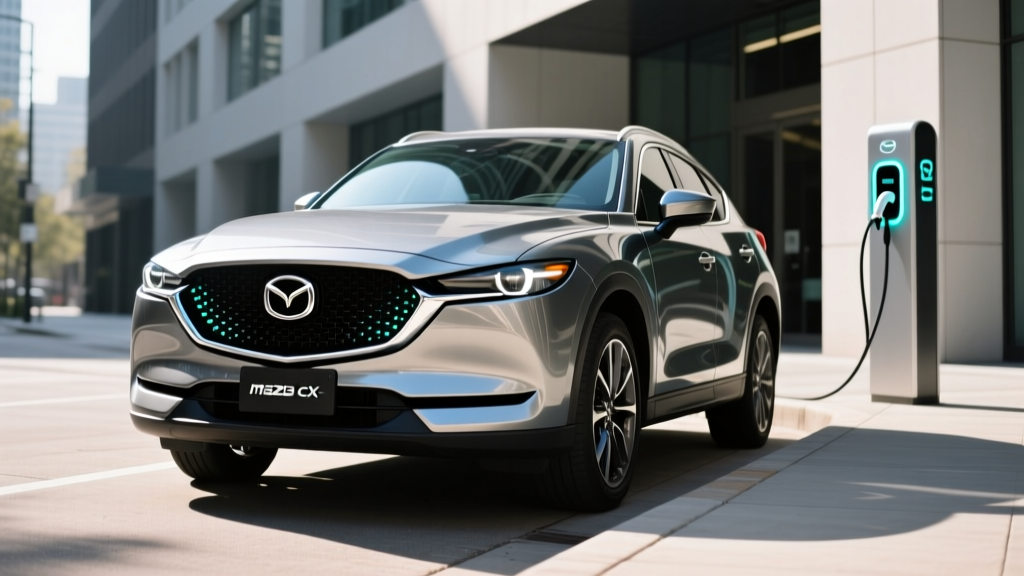
The CX-50 PHEV has a much larger battery (17.8 kWh) that you plug in to charge. It delivers 26 miles of pure electric driving before the gas engine takes over. For commuters with short round trips and home charging, a PHEV can run mostly on electricity. Once the battery depletes, it operates as a conventional hybrid — but with lower MPG than a dedicated HEV because it carries the weight of a larger battery. No DC fast charging is available; Level 2 charging at 240V takes about 2.5 hours.
Real-World MPG and Efficiency: What to Actually Expect
The EPA rates the CX-50 PHEV at 25 MPG combined once the battery is depleted. But real-world results vary significantly based on driving style, climate, and how often you recharge.
| Scenario | Effective MPG / MPGe | Notes |
|---|---|---|
| Short commute (<25 mi), daily charging | 100+ MPGe effective | Mostly electric; gas engine rarely runs |
| Mixed driving, regular charging | 50–70 MPGe effective | Blend of EV miles and hybrid miles |
| Long road trip, no charging | 24–27 MPG | Battery depleted; heavy vehicle on gas only |
| Cold weather (below 30°F), mixed | 20–23 MPG (gas) / ~20 mi EV range | EV range drops 20–30%; engine runs more |
For comparison, the gas-only 2026 CX-5 with the turbocharged 2.5L engine gets 23 city / 29 highway / 26 combined MPG per fueleconomy.gov. The non-turbo 2.5L CX-5 achieves 26 city / 31 highway / 28 combined. The PHEV's advantage comes entirely from its electric-only miles — if you don't charge regularly, the CX-50 PHEV actually underperforms the gas CX-5 on fuel economy due to its ~500-lb weight penalty from the battery pack.
Pricing, Tax Credits, and Total Cost
The 2026 CX-50 PHEV starts at $41,550 for the Preferred trim and climbs to approximately $48,000 for the Premium Plus. By contrast, the gas-only CX-5 starts at around $30,550 — a gap of over $11,000.
Federal Tax Credit Eligibility (§30D)
The CX-50 PHEV's eligibility for the federal plug-in vehicle tax credit is subject to the current IRS rules under IRS §30D. Key requirements include:
- Battery capacity: Must be at least 7 kWh — the CX-50 PHEV's 17.8 kWh battery qualifies.
- MSRP cap: SUVs must be priced at or below $80,000 — all CX-50 PHEV trims qualify.
- Buyer income cap: Modified AGI must not exceed $150,000 (single) or $300,000 (joint filing).
- Critical minerals and battery component sourcing: The credit is split into two halves ($3,750 each) based on whether the battery meets critical-mineral and component-sourcing requirements. Mazda's supply chain sourcing determines eligibility, and this changes by model year — verify current-year status with your tax professional.
- Point-of-sale transfer: As of 2024, eligible buyers can transfer the credit to the dealer at purchase, reducing the out-of-pocket price directly rather than waiting to claim it on their tax return.
If the full $7,500 credit applies, the effective starting price drops to roughly $34,050 — closer to a well-equipped gas CX-5. However, sourcing requirements have tightened annually, and some Mazda PHEV configurations may qualify for only $3,750 or none at all. Always confirm current eligibility before purchase.
Battery Longevity, Warranty, and Replacement Costs
Battery lifespan is the top concern for any hybrid or PHEV buyer. Here's what you need to know about the CX-50 PHEV's battery:
Battery Warranty
Mazda covers the CX-50 PHEV's high-voltage battery for 8 years or 100,000 miles (whichever comes first). In California Air Resources Board (CARB) states, the warranty extends to 10 years or 150,000 miles. The warranty covers defects and capacity loss below a defined threshold — typically 70% of original capacity, though confirm the exact threshold in your purchase documentation.
Degradation reality: Modern NMC batteries in PHEVs typically lose 10–15% capacity over the first 8–10 years under normal use. Because the CX-50 PHEV's battery is relatively small and the vehicle's thermal management system limits extreme states of charge, degradation should be manageable. Expect the 26-mile EV range to drop to roughly 22–23 miles after 8 years of typical driving.
Replacement cost: If the battery fails out of warranty, a full replacement currently runs between $8,000 and $12,000 including labor, based on comparable Mazda and Toyota PHEV battery replacement quotes. This is a significant sum, though battery prices continue to decline and most PHEV batteries outlast their warranty periods without needing full replacement.
Who Should Buy the CX-50 PHEV — And Who Should Wait or Look Elsewhere
✓ Choose the CX-50 PHEV If
- You want a Mazda and need hybrid efficiency now
- Your daily commute is under 25 miles and you can charge at home
- You value the 320-hp turbo powertrain for highway merging and towing
- You qualify for the federal tax credit, narrowing the price gap
- You take road trips and don't want EV range anxiety
✗ Skip It (or Wait) If
- You specifically want a conventional HEV — no plug, simpler, cheaper
- You can't charge at home (the PHEV advantage disappears)
- You're on a tight budget — the gas CX-5 is $11,000+ cheaper
- You want a true compact footprint (CX-50 is slightly larger than CX-5)
- You're waiting for Mazda to finally release a CX-5 hybrid — no confirmed date exists
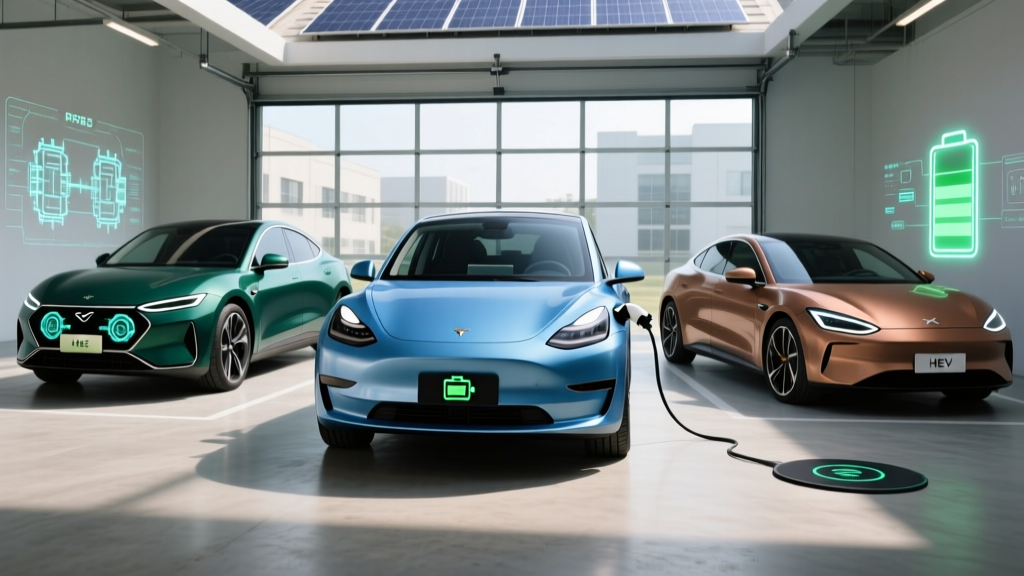
Hybrid vs. PHEV vs. Full EV — Which Fits You?
| Factor | HEV (e.g., RAV4 Hybrid) | PHEV (e.g., CX-50 PHEV) | Full EV (e.g., Tesla Model Y) |
|---|---|---|---|
| Plug in required? | No | Yes (for EV range benefit) | Yes (always) |
| Electric-only range | ~1 mile (creep) | 20–35 miles typical | 250–350 miles |
| Best for | No home charging, simplicity | Short commute + road trips | Home charging + mostly under 300 mi/day |
| Upfront cost | Lowest hybrid premium | Mid-range (credit helps) | Highest (credit helps) |
| Maintenance | Low (no plug components) | Moderate (engine + EV systems) | Lowest (no engine) |
| Fuel cost (per mile) | ~$0.10–0.12 | ~$0.04–0.10 (varies) | ~$0.03–0.05 |
Alternatives While the CX-5 Hybrid Remains Delayed
If the CX-5 hybrid delay is a dealbreaker, these compact-SUV hybrids are available now:
- Toyota RAV4 Hybrid: 41 city / 38 highway / 39 combined MPG; starts ~$33,550. The segment benchmark. Conventional HEV, no plug needed.
- Toyota RAV4 Prime (PHEV): 42 miles EV range, 94 MPGe, 302 hp. Starts ~$44,500. Eligible for partial or full §30D credit depending on sourcing.
- Honda CR-V Hybrid: 43 city / 36 highway / 40 combined MPG; starts ~$36,050. Excellent interior space and ride comfort.
- Hyundai Tucson Hybrid: 38 city / 38 highway / 38 combined MPG; starts ~$37,550. Also available as a PHEV with 33 miles EV range.
- Ford Escape Hybrid: 42 city / 36 highway / 39 combined MPG; starts ~$35,500. Available as a PHEV with 37 miles EV range.
Each of these offers the no-plug simplicity that CX-5 hybrid seekers originally wanted, with proven reliability records and EPA-verified efficiency figures available on fueleconomy.gov.
Frequently Asked Questions
Is Mazda ever releasing a CX-5 hybrid?
As of early 2026, Mazda has not confirmed a conventional hybrid CX-5 for the U.S. market. The company's hybrid strategy centers on the CX-50 PHEV and its larger CX-70/CX-90 PHEVs. A next-generation CX-5 could potentially adopt hybrid technology, but no timeline has been announced.
How many MPG does the CX-50 PHEV get?
Once the battery is depleted, the CX-50 PHEV delivers 25 city / 27 highway / 25 combined MPG on gasoline. When factoring in its 26-mile EV range and regular charging, effective efficiency can reach 92 MPGe for mixed driving. Real-world results depend heavily on charging habits — without regular plug-in, expect 24–27 MPG, which is slightly below the gas-only CX-5 non-turbo.
How far can the CX-50 PHEV go on electric only?
The EPA rates the CX-50 PHEV at 26 miles of electric-only range. In real-world driving, expect 22–26 miles in mild weather and 18–22 miles in cold conditions (below 30°F), as battery efficiency drops and cabin heating demands engine assistance.
Does the CX-50 PHEV qualify for a tax credit?
It may qualify for up to $7,500 under IRS §30D, split into two $3,750 halves based on battery-sourcing requirements. Eligibility depends on your income, the vehicle's MSRP (all trims are under the $80,000 SUV cap), and current-year critical-mineral and component-sourcing rules. Always verify with the IRS or a tax professional before purchasing.
Is the CX-50 PHEV battery reliable and what does replacement cost?
Mazda's PHEV battery is covered for 8 years / 100,000 miles (10 years / 150,000 miles in CARB states). Based on industry data from similar Toyota and Mazda hybrid systems, expect 10–15% capacity loss over 8–10 years. Out-of-warranty replacement currently costs $8,000–$12,000, though most PHEV batteries last well beyond their warranty period.
Can I charge the CX-50 PHEV at a DC fast charger?
No. The CX-50 PHEV supports Level 1 (120V, ~8 hours) and Level 2 (240V, ~2.5 hours) charging only. DC fast charging is not available — this is typical for PHEVs, whose smaller batteries don't justify the added cost and weight of DC fast-charge hardware.