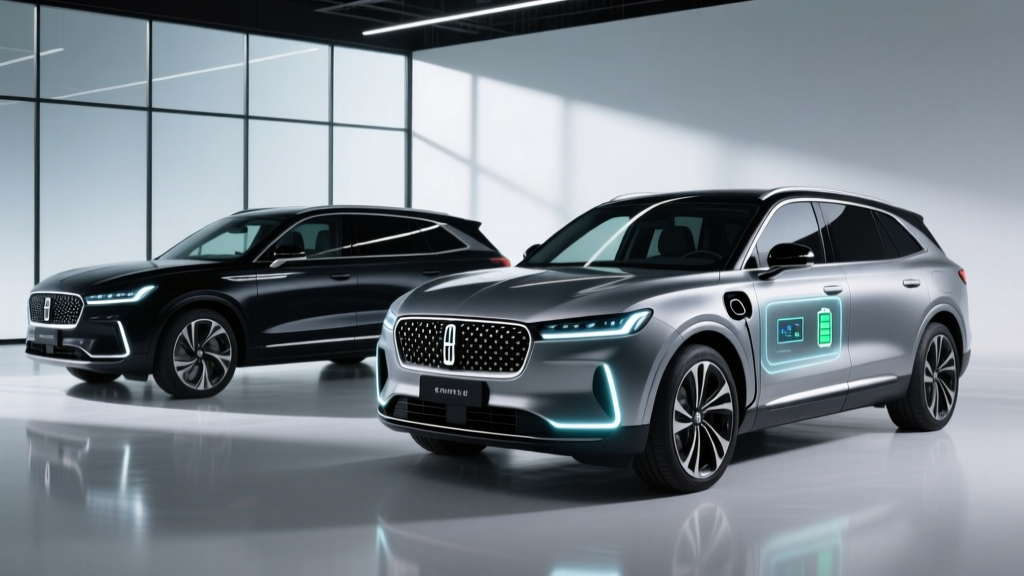
Lincoln occupies a narrow but important lane in the luxury plug-in hybrid market. While BMW, Volvo, and Lexus have pushed aggressively into PHEVs, Lincoln's electrified offerings center on two models: the compact Corsair Grand Touring and the midsize Aviator Grand Touring. Both carry the "Grand Touring" badge — Lincoln's branding for its plug-in hybrid variants — and both aim to deliver silent, electric-only commuting with the fallback of a gasoline engine for longer trips.
But specs, electric range, and pricing differ significantly between the two. And with federal tax credit rules tightening under IRS §30D, not every Lincoln PHEV qualifies for the full incentive. This guide breaks down exactly what you're getting — battery capacity, real-world range, charging times, and ownership economics — so you can decide whether a Lincoln PHEV fits your garage or whether a full BEV or conventional hybrid makes more sense.
Lincoln's PHEV Lineup: Corsair Grand Touring vs. Aviator Grand Touring
Before diving into numbers, it's worth clarifying terminology. Lincoln sells both conventional hybrids (HEV) and plug-in hybrids (PHEV). A conventional hybrid — like the standard Lincoln Corsair hybrid — uses a small battery recharged entirely through regenerative braking and the gasoline engine. You never plug it in. A plug-in hybrid has a larger battery that you do plug in, enabling a meaningful electric-only driving range before the gas engine engages.
This guide focuses on Lincoln's PHEV models. Here's how the two Grand Touring variants compare at a glance:
| Spec | 2026 Corsair Grand Touring (PHEV) | 2026 Aviator Grand Touring (PHEV) |
|---|---|---|
| Powertrain | 2.5L 4-cyl + electric motor (eCVT) | 3.0L twin-turbo V6 + electric motor (10-spd auto) |
| Combined Horsepower | 266 hp | 494 hp |
| Battery (usable) | 14.4 kWh (NMC) | 13.6 kWh (NMC) |
| EPA Electric-Only Range | 28 miles | 21 miles |
| Total Combined Range | ~430 miles | ~415 miles |
| EPA Combined (gas, after battery) | 33 MPG | 23 MPG |
| MPGe (electric + gas) | 78 MPGe | 56 MPGe |
| Level 2 Charge Time (0–100%) | ~3.5 hours (3.3 kW onboard) | ~3.5 hours (3.3 kW onboard) |
| DC Fast Charging | No | No |
| 0–60 mph | ~7.5 sec | ~5.5 sec |
| Starting MSRP | ~$53,000 | ~$72,000 |
| Battery Warranty | 8 yr / 100,000 mi | 8 yr / 100,000 mi |
Source: fueleconomy.gov and Lincoln official specifications.
Electric-Only Range: What You'll Actually Get
Corsair Grand Touring: EPA-rated 28 miles electric-only. Expect 24–27 miles in mixed driving; closer to 20–22 miles in cold weather (below 40°F) or sustained highway speeds above 70 mph.
Aviator Grand Touring: EPA-rated 21 miles electric-only. Expect 17–20 miles in mixed driving; as low as 14–16 miles in winter conditions or with heavy cargo loads.
The Corsair's 28-mile electric range covers the average American's one-way commute — the U.S. Census Bureau reports a median commute of roughly 26 miles round-trip. If you can charge at home overnight and your daily driving stays under ~25 miles, you'll rarely burn gasoline in the Corsair Grand Touring during weekday commuting.
The Aviator, being heavier (over 5,100 lbs curb weight) and less aerodynamic, sacrifices some electric efficiency. Its 21-mile EPA rating is adequate for school runs and grocery trips but will require more frequent engine engagement on longer suburban errands.
Neither Lincoln PHEV supports DC fast charging. This is standard for the PHEV segment — the batteries are too small to justify the infrastructure cost — but it means all charging happens at home or at Level 2 public stations at a maximum of 3.3 kW.
Fuel Economy: MPG Breakdown and Real-World Expectations
| Model | City (gas) | Highway (gas) | Combined (gas) | Combined MPGe |
|---|---|---|---|---|
| Corsair Grand Touring PHEV | 34 MPG | 32 MPG | 33 MPG | 78 MPGe |
| Aviator Grand Touring PHEV | 23 MPG | 24 MPG | 23 MPG | 56 MPGe |
Once the battery is depleted, both models operate as conventional hybrids — though the Aviator's twin-turbo V6 and 5,100+ lb weight keep its gas-only MPG modest. The Corsair's 2.5L four-cylinder Atkinson-cycle engine paired with an eCVT is far more efficient in charge-sustaining mode.
Real-world note: PHEVs often exceed their EPA city MPG when the battery has charge, because the electric motor handles low-speed driving where gasoline engines are least efficient. On the highway, expect numbers closer to — or slightly below — the EPA rating, especially in the Aviator. Drivers who rarely charge will see the Aviator return 19–21 MPG in mixed use, which is roughly on par with the non-hybrid Aviator.
Charging at Home: What's Required
Both Lincoln PHEVs use a standard J1772 connector for Level 1 (120V) and Level 2 (240V) AC charging. Neither has a CCS or NACS port because DC fast charging is not supported.
| Charging Level | Power | Corsair (0–100%) | Aviator (0–100%) | Notes |
|---|---|---|---|---|
| Level 1 (120V outlet) | ~1.2 kW | ~10–12 hours | ~10–12 hours | Standard household outlet; adequate for overnight top-up |
| Level 2 (240V) | 3.3 kW (vehicle-limited) | ~3.5 hours | ~3.5 hours | Requires 240V outlet or hardwired station; onboard charger caps at 3.3 kW |
Even if you install a 48-amp Level 2 home charger capable of delivering 11.5 kW, both Lincoln PHEVs will only accept 3.3 kW — that's the limit of their onboard chargers. You don't need an expensive high-amperage station; a basic 16-amp, 240V Level 2 charger (~$300–$450 for the unit) is sufficient.
Home installation cost: Expect $500–$1,500 for a professional electrician to install a 240V NEMA 14-50 outlet near your parking spot, assuming your electrical panel has capacity. A full panel upgrade (100A to 200A) can add $1,500–$3,500. Always get a quote from a licensed electrician before committing.
Level 1 charging from a standard 120V outlet adds roughly 3–4 miles of electric range per hour. For the Corsair's 28-mile battery, an overnight 10-hour charge restores most or all of the pack — making Level 1 viable for owners with short commutes who don't want to invest in Level 2 installation.
HEV vs. PHEV vs. EV: Which Lincoln Powertrain Fits You?
No plug. Small battery recharged by regen braking. Best for drivers without home charging access who want better MPG without behavior change.
Lincoln example: Corsair HEV (if available in your market year). Expect ~37 MPG combined.
Plug in for 20–28 miles of electric driving, then gas engine takes over. Best for home-chargers with short commutes who also take road trips.
Lincoln example: Corsair Grand Touring, Aviator Grand Touring.
No gas engine. 250–350+ mile range. Best for drivers with reliable home charging who want lowest operating cost and zero tailpipe emissions.
Lincoln does not currently sell a BEV in the U.S. market.
Choose a Lincoln PHEV if: You can charge at home (Level 1 or Level 2), your daily driving is mostly under 25–30 miles, but you regularly take trips exceeding 200 miles where charging infrastructure may be sparse. The PHEV gives you EV-like commuting with zero range anxiety on road trips.
Choose a full BEV instead if: You have reliable home Level 2 charging, rarely drive more than 250 miles in a single day, and want to eliminate gasoline costs entirely. Models like the BMW iX, Genesis Electrified GV70, or Tesla Model X compete in Lincoln's luxury segment with 250–320 miles of range.
Stick with a conventional hybrid or gas model if: You cannot charge at home (apartment, street parking, no garage outlet). A PHEV you never plug in is just a heavy, less-efficient hybrid — you're carrying battery weight without the benefit.
Pricing, Tax Credits, and Total Cost of Ownership
Lincoln PHEVs carry a premium over their gasoline counterparts:
- 2026 Corsair Grand Touring: Starting MSRP ~$53,000 (vs. ~$40,000 for the gas-only Corsair)
- 2026 Aviator Grand Touring: Starting MSRP ~$72,000 (vs. ~$56,000 for the gas-only Aviator Reserve)
Federal Tax Credit (§30D) Eligibility
- Credit amount: Up to $7,500, split between critical minerals ($3,750) and battery components ($3,750)
- MSRP cap: SUVs must be under $80,000 — both Corsair and Aviator Grand Touring qualify on base trims, but optioned-up Aviators may exceed the cap
- Buyer income cap: $150,000 single / $300,000 married filing jointly
- Battery sourcing: Critical minerals and battery components must meet escalating domestic/free-trade-partner thresholds — Lincoln's supply chain sourcing determines eligibility year to year
- Point-of-sale transfer: You can transfer the credit to the dealer at purchase for an immediate price reduction (if eligible)
- Filing: Must file IRS Form 8936; consult a tax professional for your specific situation
Source: IRS Clean Vehicle Credit
Critical caveat: PHEV tax credit eligibility is highly dependent on battery sourcing requirements that tighten annually. A model that qualifies in early 2026 may lose eligibility if Lincoln's battery supplier changes or if critical-mineral thresholds aren't met. Always verify current eligibility on fueleconomy.gov before purchasing.
For the Corsair Grand Touring at ~$53,000 MSRP, a full $7,500 credit brings the effective price to ~$45,500 — much closer to the gas-only model and significantly improving the payback period on the PHEV premium.
5-Year Ownership Cost Estimate
Assuming 12,000 miles/year, $3.50/gallon gas, and $0.14/kWh home electricity:
| Cost Factor | Corsair PHEV | Corsair Gas (AWD) |
|---|---|---|
| Purchase (after est. credit) | ~$45,500 | ~$40,000 |
| Fuel/Energy (5 yr) | ~$4,200 | ~$8,400 |
| Maintenance (5 yr) | ~$2,800 | ~$3,500 |
| Insurance (5 yr est.) | ~$9,000 | ~$7,500 |
| Est. 5-Year Total | ~$61,500 | ~$59,400 |
The PHEV narrows the gap significantly through fuel and maintenance savings, but the higher purchase price and insurance premiums mean break-even depends heavily on whether you qualify for the full tax credit and how much of your driving is electric-only.
Reliability, Battery Warranty, and Replacement Costs
- Hybrid/EV battery: 8 years / 100,000 miles (whichever comes first)
- Powertrain: 6 years / 70,000 miles
- Bumper-to-bumper: 4 years / 50,000 miles
- Capacity retention threshold: Lincoln typically warrants against failure or loss below ~60–70% of original capacity during the warranty period (confirm with dealer for exact terms)
PHEV battery degradation is generally modest. NMC chemistry in these packs is designed for daily shallow cycling (20–28 miles of use), which is less stressful than the deep cycles in a full BEV. Industry data suggests PHEV batteries lose roughly 1–2% of capacity per year under normal use, meaning a Lincoln PHEV battery should retain 85–90% of its original capacity after 8 years.
Out-of-warranty replacement cost: If the high-voltage battery fails after the warranty period, expect a replacement cost of $5,000–$8,000 including parts and labor. This is a meaningful expense, but the 8-year/100,000-mile warranty covers most original owners and many second owners.
Lincoln's reliability ratings have been middling in recent years. The brand typically scores average to slightly below average in J.D. Power dependability studies and Consumer Reports reliability surveys. The PHEV powertrain adds complexity (electric motor, inverter, high-voltage wiring) but eliminates the conventional starter motor and reduces brake wear through regenerative braking. Most reported issues with Lincoln PHEVs have been related to infotainment software and minor electrical gremlins rather than the hybrid system itself.
Pros and Cons: Lincoln PHEVs at a Glance
- Silent, smooth electric-only commuting (21–28 miles)
- No range anxiety — gas engine covers road trips
- Luxury interior, quiet ride quality
- Aviator Grand Touring's 494 hp is genuinely quick
- Potential $7,500 federal tax credit (verify eligibility)
- 8-year / 100,000-mile battery warranty
- Level 1 charging adequate for many owners
- No DC fast charging capability
- 3.3 kW onboard charger is slow for public Level 2 stations
- Aviator PHEV fuel economy is modest (23 MPG gas-only)
- Premium over gas models ($12,000–$16,000)
- Electric range shorter than some competitors (Volvo XC60 Recharge: 35 mi)
- Tax credit eligibility uncertain and subject to change
- Lincoln brand reliability ratings are average
Frequently Asked Questions
How many MPG does the Lincoln PHEV get?
The 2026 Corsair Grand Touring PHEV achieves an EPA-rated 33 MPG combined (34 city / 32 highway) once the battery is depleted. The Aviator Grand Touring PHEV returns 23 MPG combined (23 city / 24 highway) in gas-only mode. When factoring in electric driving, the Corsair earns 78 MPGe and the Aviator 56 MPGe.
How far can a Lincoln PHEV go on electric only?
The Corsair Grand Touring delivers an EPA-rated 28 miles of electric-only range. The Aviator Grand Touring provides 21 miles. Real-world range is typically 10–20% lower in cold weather or at sustained highway speeds.
Does the Lincoln PHEV qualify for a federal tax credit?
Possibly. Under IRS §30D, eligible PHEVs can receive up to $7,500, but qualification depends on MSRP caps (under $80,000 for SUVs), buyer income limits ($150,000 single / $300,000 joint), and battery sourcing requirements that change annually. Verify current eligibility on fueleconomy.gov before purchasing, and consult a tax professional.
Is the Lincoln PHEV reliable? What does a battery replacement cost?
Lincoln's overall brand reliability is average. The hybrid system itself has proven durable across Ford/Lincoln's PHEV lineup, with most complaints centered on infotainment and minor electronics. The high-voltage battery is warranted for 8 years / 100,000 miles. Out-of-warranty replacement costs $5,000–$8,000.
Should I get a Lincoln PHEV, a conventional hybrid, or a full EV?
Choose the Lincoln PHEV if you have home charging access and a short commute but also take long road trips. Choose a conventional hybrid if you can't charge at home. Choose a full BEV (from another brand, since Lincoln doesn't currently offer one) if you want maximum fuel savings and have reliable charging. The PHEV is the bridge option — best for drivers who aren't ready to commit fully to electric but want meaningful daily EV driving.
Can I DC fast charge a Lincoln PHEV?
No. Neither the Corsair Grand Touring nor the Aviator Grand Touring supports DC fast charging. Both are limited to AC charging at a maximum of 3.3 kW via Level 1 (120V) or Level 2 (240V). Full charges take ~3.5 hours on Level 2 or ~10–12 hours on Level 1.
Do Lincoln PHEVs charge while driving?
Yes, partially. Regenerative braking and the gasoline engine can maintain or slightly replenish the battery during driving, but this is not a substitute for plugging in. To get the full 21–28 miles of electric range, you must charge from an external power source. Operating a PHEV without ever plugging it in defeats the purpose — you'll carry dead battery weight and see worse fuel economy than a conventional hybrid.
Sources: EPA fueleconomy.gov, Lincoln.com official specifications, IRS §30D Clean Vehicle Credit. All specifications reflect 2026 model year data available at time of publication. Verify pricing, credit eligibility, and specs with your local Lincoln dealer.