Quick Verdict: The Nautilus Hybrid Is a Luxury HEV, Not a PHEV
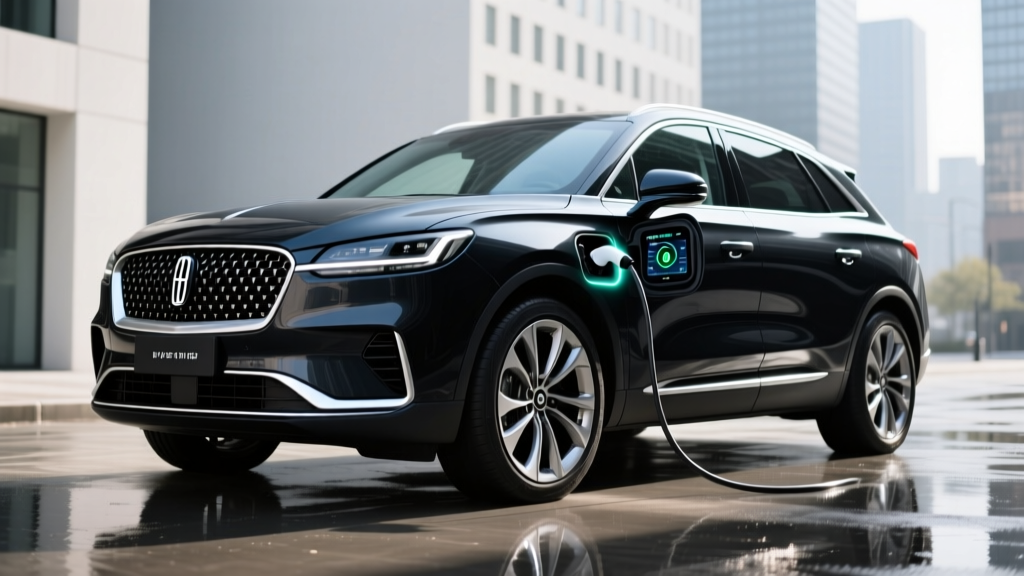
Before we get into the numbers, one clarification that trips up a surprising number of shoppers: the Lincoln Nautilus hybrid is a conventional hybrid electric vehicle (HEV). It is not a plug-in hybrid (PHEV). There is no charging port, no electric-only range to manage, and no federal §30D tax credit eligibility. You fuel it with gasoline, and the hybrid system handles the rest — recapturing energy during braking and supplementing the turbocharged engine with electric motor assist.
For the 2026 model year, Lincoln continues to offer the Nautilus exclusively with its hybrid powertrain across all trims (Premiere, Reserve, and Black Label). There is no gas-only variant and no PHEV option. This makes the Nautilus one of the few luxury midsize SUVs that has gone all-hybrid in the U.S. market, a move that simplifies the buying decision but demands you understand exactly what you're getting.
A conventional hybrid (HEV) like the Nautilus uses a small battery (typically 1–2 kWh) charged entirely by the engine and regenerative braking. You never plug it in. A plug-in hybrid (PHEV) has a larger battery (15–30 kWh), a charging port, and can drive 20–40+ miles on electricity alone before the gas engine engages. The Nautilus is firmly in the HEV camp — think Toyota RAV4 Hybrid logic, not Toyota RAV4 Prime.
Lincoln Nautilus Hybrid Powertrain: Engine, Motors, and Horsepower
The 2026 Nautilus pairs a 2.0-liter turbocharged inline-4 engine with a front-mounted electric motor integrated into the power-split transaxle. Combined system output is rated at 310 horsepower and approximately 310 lb-ft of torque. Power is routed to all four wheels via Lincoln's electronically controlled all-wheel-drive system.
| Spec | Value |
|---|---|
| Engine | 2.0L turbocharged I-4 |
| Electric Motor | Permanent-magnet synchronous (integrated in transaxle) |
| Combined Horsepower | 310 hp |
| Combined Torque | ~310 lb-ft |
| Transmission | Power-split eCVT (no traditional gears) |
| Drivetrain | AWD (electronically controlled) |
| Hybrid Battery | ~1.8 kWh lithium-ion (sealed, self-charging) |
| Fuel Tank | 17.7 gallons |
| 0-60 mph (est.) | ~6.5 seconds |
The power-split eCVT is worth a note. Unlike a belt-driven CVT found in some economy cars, this is a planetary gearset that blends engine and motor power seamlessly. There are no rubber bands or droning sensations — acceleration is linear and the engine revs stay reasonable under moderate loads. The electric motor fills in torque at low RPM, which eliminates the turbo lag you'd expect from a 2.0L making this much power.
Fuel Economy: EPA Ratings and Real-World MPG
The EPA rates the 2026 Lincoln Nautilus hybrid at 30 MPG city / 29 MPG highway / 30 MPG combined. For a 4,800-pound luxury AWD SUV, those are strong numbers — roughly 30% better than a comparable turbo-only gas powertrain would deliver.
| Cycle | EPA Rating | Real-World Expectation |
|---|---|---|
| City | 30 MPG | 31–34 MPG (hybrids excel in stop-and-go) |
| Highway | 29 MPG | 26–28 MPG (aero drag at 75+ mph, less regen benefit) |
| Combined | 30 MPG | 28–31 MPG (varies by driving mix) |
Why real-world city MPG often beats the EPA sticker: Hybrids recapture kinetic energy during braking and low-speed driving. The more you stop, the more the electric motor handles propulsion, and the less the engine runs. Owners with heavy urban commutes routinely report 32–34 MPG on the trip computer. Highway driving, conversely, relies more on the engine since there's less braking to recharge the small battery and aerodynamic drag dominates at speed.
Cold-weather impact: Expect a 5–10% fuel economy reduction in sub-freezing temperatures. The engine runs more often to provide cabin heat (no resistive heater on an HEV) and the battery's charge/discharge efficiency drops in cold. This is normal hybrid behavior and far less severe than the 20–30% range loss a full BEV experiences in winter.
According to fueleconomy.gov, the Nautilus hybrid's combined 30 MPG places it among the most efficient luxury midsize SUVs available, trailing only plug-in options like the BMW X5 xDrive50e (which costs significantly more).
Pricing, Trims, and Tax Credit Eligibility
The 2026 Lincoln Nautilus hybrid starts at approximately $53,490 MSRP (Premiere trim, including destination). Here's the trim-by-trim breakdown:
| Trim | Starting MSRP | Key Features |
|---|---|---|
| Premiere | $53,490 | 48-inch screen, AWD, Co-Pilot360, heated seats |
| Reserve | $58,990 | Leather, Revel audio, panoramic roof, BlueCruise |
| Black Label | $71,590 | Concierge service, premium leather, exclusive interior |
The Lincoln Nautilus hybrid is a conventional HEV, not a PHEV or BEV. It does not qualify for the IRS §30D Clean Vehicle Credit (up to $7,500). That credit requires a plug-in vehicle with a minimum 7 kWh battery capacity and meeting critical-mineral and battery-component sourcing rules. The Nautilus's ~1.8 kWh self-charging battery falls far short. Some state or local programs offer modest rebates for any hybrid — check your state energy office or IRS guidance on qualifying vehicles for specifics.
Battery Warranty, Reliability, and Replacement Cost
Lincoln covers the Nautilus hybrid battery under its 8-year / 100,000-mile hybrid/electric component warranty (whichever comes first). In states that follow California Air Resources Board (CARB) standards — including California, New York, Massachusetts, and several others — hybrid battery coverage extends to 10 years / 150,000 miles.
The hybrid battery in the Nautilus is a relatively small, conservatively managed lithium-ion pack. Unlike full EVs that cycle through large portions of their capacity daily, HEV batteries operate in a narrow state-of-charge window (roughly 40–80%). This shallow cycling dramatically reduces degradation stress. Toyota and Ford — whose hybrid systems share engineering DNA with the Nautilus powertrain — have demonstrated that HEV batteries routinely last 150,000–200,000+ miles without replacement.
What if it does need replacement? Out-of-warranty hybrid battery replacement for the Nautilus is estimated at $3,000–$5,000 for the battery pack itself, plus roughly $500–$1,000 in labor. This is significantly less than a full EV battery replacement ($10,000–$25,000+) because the pack is small. Individual hybrid components (inverter, DC-DC converter) are also covered under the hybrid warranty.
Overall reliability: The Nautilus shares its hybrid architecture with Ford's well-tested 2.0L hybrid system used in vehicles like the Ford Maverick Hybrid and Escape Hybrid. Early reliability data from the 2024–2025 redesign has been positive, with no widespread powertrain complaints. The eCVT power-split design has no traditional transmission clutches or bands to wear out, which is a long-term durability advantage over turbocharged gas models with 8- or 10-speed automatics.
Nautilus Hybrid vs. PHEV vs. Full EV: Which Should You Choose?
The Nautilus hybrid occupies a specific niche. Here's a decision framework to determine whether it's the right electrified option for your situation:
Choose the Nautilus Hybrid (HEV) if:
- You can't install a home charger (apartment, street parking, no garage)
- You want better fuel economy without changing any habits — just fill up with gas
- You regularly take long road trips (400+ miles) and don't want to plan charging stops
- You want a luxury SUV with lower running costs but aren't ready for a full EV
Choose a PHEV (like the BMW X5 xDrive50e) if:
- You have home charging and a short daily commute (under 30 miles)
- You want electric-only daily driving but gas flexibility for road trips
- You want to qualify for the $7,500 federal tax credit
Choose a full EV (like the Genesis Electrified GV70 or Tesla Model X) if:
- You have reliable home Level 2 charging
- Your daily driving is under 250 miles and you can plan road-trip charging
- You want zero tailpipe emissions and the lowest per-mile fuel cost
| Factor | Nautilus Hybrid (HEV) | PHEV (e.g., BMW X5 50e) | Full EV (e.g., Electrified GV70) |
|---|---|---|---|
| Plug in? | No | Yes (optional) | Yes (required) |
| Electric-only range | N/A | ~38 miles | ~236 miles (full) |
| Fuel cost per mile | ~$0.12 (at $3.50/gal) | ~$0.04 (elec) / $0.14 (gas) | ~$0.04–$0.06 |
| Federal tax credit | No | Up to $7,500 (if eligible) | Up to $7,500 (if eligible) |
| Home charging needed? | No | Recommended | Essential |
Pros and Cons of the Nautilus Hybrid
- 30 MPG combined is excellent for a luxury AWD SUV in this size class
- No charging infrastructure needed — works with existing gas station habits
- 310 hp with smooth electric torque fill; no turbo lag
- 48-inch panoramic display and premium interior across all trims
- Strong hybrid battery warranty (8yr/100k mi, 10yr/150k in CARB states)
- AWD standard with no fuel-economy penalty vs FWD
- No plug-in option — can't drive on electric only, even short distances
- Not eligible for the $7,500 federal §30D tax credit
- Starting MSRP near $54K is steep for the segment
- Highway MPG (29) barely trails city — limited high-speed efficiency advantage
- eCVT, while smooth, lacks the stepped-gear feel some drivers prefer
- No DC fast charging capability (not applicable to HEV)
Frequently Asked Questions
How many MPG does the Lincoln Nautilus hybrid get?
The EPA rates the 2026 Nautilus hybrid at 30 MPG city, 29 MPG highway, and 30 MPG combined. Real-world city driving often yields 31–34 MPG thanks to regenerative braking. Highway driving at sustained speeds above 70 mph typically returns 26–28 MPG. With the 17.7-gallon fuel tank, expect roughly 500–530 miles of total range per fill-up in mixed driving.
Is the Lincoln Nautilus a plug-in hybrid?
No. The Nautilus is a conventional hybrid (HEV). It has no charging port and no electric-only driving mode. The small lithium-ion battery charges exclusively through regenerative braking and engine power. If you want plug-in capability, you'll need to look at competitors like the BMW X5 xDrive50e or the Volvo XC90 Recharge.
Does the Lincoln Nautilus hybrid qualify for any tax credit?
The Nautilus hybrid does not qualify for the federal §30D Clean Vehicle Credit, which requires plug-in vehicles with at least 7 kWh of battery capacity. The Nautilus's ~1.8 kWh pack falls well below this threshold. Some states may offer minor incentives for conventional hybrids — check your state energy office or the Alternative Fuels Data Center for state-specific programs.
How long will the Nautilus hybrid battery last?
Lincoln's hybrid battery warranty covers 8 years/100,000 miles (10 years/150,000 miles in CARB states). In practice, conventional hybrid batteries operating in a narrow charge window routinely last 150,000–200,000+ miles. Out-of-warranty replacement is estimated at $3,000–$5,000 for the pack plus labor — far less than a full EV battery replacement.
Is the Nautilus hybrid reliable compared to gas-only SUVs?
Hybrid powertrains have proven highly reliable over two decades of mainstream use. The eCVT power-split design eliminates traditional transmission wear items (clutch packs, torque converters). The Nautilus shares its hybrid architecture with Ford's extensively field-tested 2.0L system. Long-term reliability data from the 2024+ redesign has been positive with no systemic issues reported by major reliability trackers.
How does the Nautilus hybrid compare to the Lexus RX 350h?
The Lexus RX 350h is the Nautilus hybrid's closest competitor. The RX 350h delivers slightly better fuel economy (36 MPG combined vs. 30 MPG) but produces less power (246 hp vs. 310 hp). The Nautilus offers a more modern interior with its standard 48-inch screen, while the RX leans on Lexus's long-standing hybrid reliability reputation and lower starting price (~$52K). Both are HEVs with no plug-in requirement. See IIHS safety ratings for crash-test comparisons.