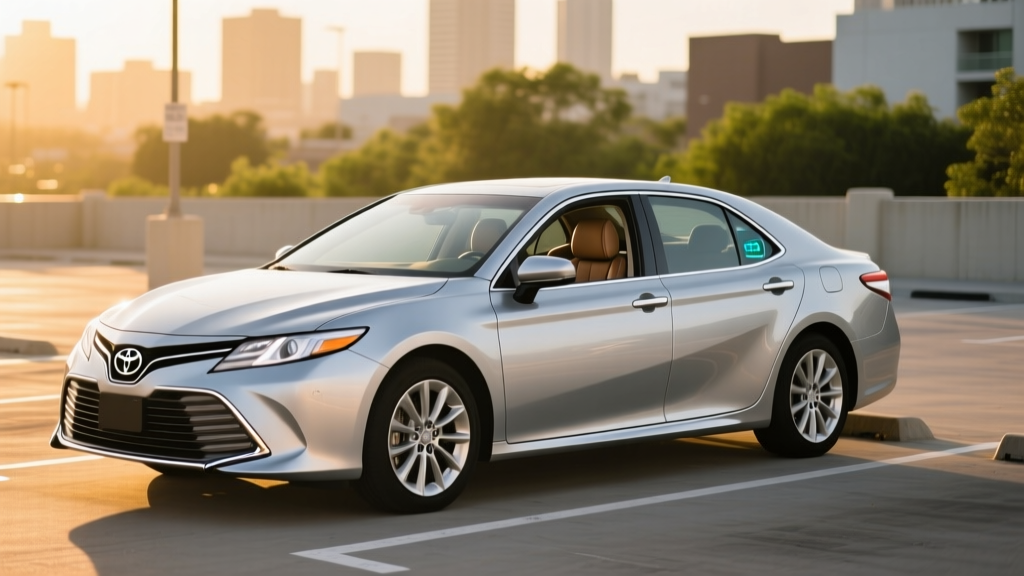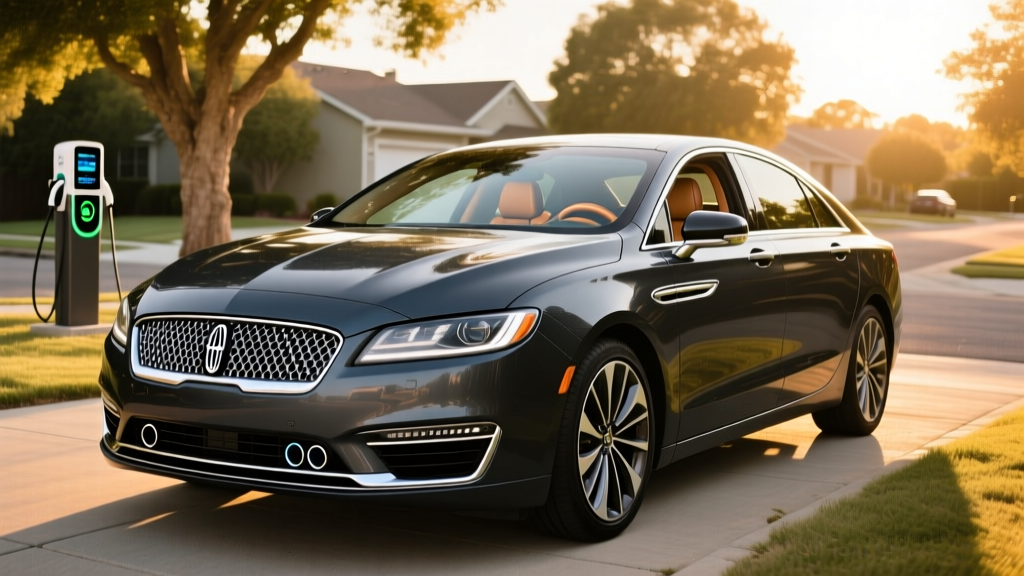
The Lincoln MKZ Hybrid was discontinued after the 2020 model year, but it remains one of the most compelling used luxury hybrid sedans on the market. Built on Ford's CD4 platform and sharing its powertrain with the Ford Fusion Hybrid, the MKZ Hybrid offered a uniquely affordable entry point into premium hybrid ownership — new pricing started under $37,000, undercutting German rivals by thousands. For 2026 buyers navigating the used market, the MKZ Hybrid still delivers strong fuel economy, a comfortable ride, and proven hybrid reliability. But with no plug-in variant ever offered and newer PHEVs now available, where does this conventional hybrid fit in today's electrified landscape?
This guide covers everything a used-car shopper needs to know: exact EPA fuel economy, real-world MPG expectations, powertrain specs, battery longevity and replacement costs, and how the MKZ Hybrid compares to modern plug-in hybrids and full EVs.
Lincoln MKZ Hybrid Fuel Economy: EPA Numbers and Real-World MPG
The second-generation MKZ Hybrid (2013–2020) is rated by the EPA at 42 MPG city / 39 MPG highway / 41 MPG combined for most model years. The 2013–2016 models carry a slightly different split — 44 city / 39 highway / 41 combined — due to minor powertrain calibration differences. These figures are published on fueleconomy.gov and hold across all trims since the MKZ Hybrid was offered in a single, well-equipped configuration.
| Model Years | City MPG | Highway MPG | Combined MPG | Fuel Tank (gal) | Est. Total Range |
|---|---|---|---|---|---|
| 2013–2016 | 44 | 39 | 41 | 13.5 | ~553 miles |
| 2017–2020 | 42 | 39 | 41 | 14.0 | ~574 miles |
Real-World MPG: What Owners Actually Report
Like most conventional hybrids, the MKZ Hybrid tends to meet or slightly exceed its EPA combined rating in mixed city/suburban driving. Owner forums and Fuelly data show a real-world average of 38–44 MPG combined, with city-heavy commuters regularly hitting 43–46 MPG thanks to the regenerative braking system and frequent engine-off electric-only operation at low speeds.
Highway-only driving at 75+ MPH typically yields 36–39 MPG — right around the EPA highway estimate. Cold weather (below 30°F) reduces efficiency by roughly 8–12% due to increased engine runtime for cabin heating and reduced battery efficiency, dropping combined figures to approximately 35–38 MPG in winter conditions. This is normal hybrid behavior, not a deficiency of the MKZ specifically.
HEV vs. PHEV: Understanding the MKZ Hybrid's Place
A critical distinction for buyers: the Lincoln MKZ Hybrid is a conventional hybrid electric vehicle (HEV), not a plug-in hybrid (PHEV). Lincoln never produced a plug-in version of the MKZ. The related Ford Fusion did offer a PHEV variant (the Fusion Energi), but that configuration was never extended to the Lincoln-badged model.
HEV vs. PHEV — Key Differences
| Feature | HEV (MKZ Hybrid) | PHEV (e.g., Fusion Energi) |
|---|---|---|
| Plug-in charging | No — self-charging via regen + engine | Yes — plug in for electric-only miles |
| Battery size | 1.4 kWh (usable ~1.0 kWh) | 7.6–11.2 kWh usable |
| Electric-only range | ~1 mile at low speed | 21–26 miles (EPA) |
| Federal tax credit | None | Up to $4,007 (Fusion Energi, now expired for new) |
| Fueling | Gasoline only | Gasoline + electricity |
| Home charging needed | No | Recommended for full benefit |
This matters because some shoppers searching for a "hybrid MKZ" assume they'll get electric-only commuting range. You won't. The MKZ Hybrid's small 1.4 kWh lithium-ion battery pack enables brief electric-only assists at low speeds (typically under 25 MPH for roughly one mile), but the gasoline engine is always part of the propulsion equation. If plug-in electric commuting is a priority, you'll need to look at a PHEV or full BEV instead.
Powertrain Specs: Engine, Motor, and Combined Output
The MKZ Hybrid uses Ford's 2.0-liter Atkinson-cycle four-cylinder engine paired with an AC synchronous electric motor, connected through an electronically controlled continuously variable transmission (eCVT). This is the same proven Hybrid Electric Vehicle (HEV) powertrain found in the Ford Fusion Hybrid, with Lincoln-specific tuning for quieter operation and smoother power delivery.
| Specification | Value |
|---|---|
| Engine | 2.0L Atkinson-cycle I4 |
| Engine horsepower | 141 hp @ 6,000 RPM |
| Engine torque | 129 lb-ft @ 4,000 RPM |
| Electric motor output | 88 kW (118 hp) |
| Combined net horsepower | 188 hp |
| Transmission | eCVT (planetary gearset) |
| Drivetrain | Front-wheel drive |
| Hybrid battery | 1.4 kWh lithium-ion (air-cooled) |
| 0–60 MPH (estimated) | ~8.0 seconds |
| Curb weight | ~3,860 lbs |
| Towing capacity | Not rated for towing |
The 188 combined horsepower is adequate for highway merging and passing but won't feel quick by modern EV standards. The eCVT is a planetary gearset design — not a belt-driven CVT — so there's no rubber-band effect. Power delivery is smooth and linear, with the engine and motor blending seamlessly. Most owners describe the driving experience as refined and relaxed rather than sporty.
Battery Longevity, Warranty, and Replacement Cost
Hybrid battery lifespan is the single most common concern for used hybrid buyers, and it's a legitimate one to investigate. Here's what the data shows for the MKZ Hybrid's lithium-ion pack.
Ford/Lincoln warranted the MKZ Hybrid battery for 8 years / 100,000 miles (whichever comes first) in most states. In California Air Resources Board (CARB) states — including California, New York, Massachusetts, and several others — the warranty extends to 10 years / 150,000 miles under emissions-related component coverage.
For 2026 used buyers: A 2017 model year MKZ Hybrid is just exiting its 8-year federal warranty window. A 2018–2020 model may still have remaining factory battery coverage. Always verify warranty status by VIN with a Lincoln dealer.
Real-World Battery Degradation
The MKZ Hybrid's 1.4 kWh battery is relatively small and operates within a conservative state-of-charge (SoC) window — typically between 30% and 70% — which significantly reduces degradation stress. Ford's hybrid system manages battery temperature via an active air-cooling system and avoids the deep charge/discharge cycles that accelerate wear.
Real-world data from high-mileage Ford Fusion Hybrid and MKZ Hybrid owners (this powertrain's twin) indicates that most hybrid batteries retain 90%+ of original capacity at 150,000 miles. Failures before 100,000 miles are uncommon. Taxi fleet data on the Fusion Hybrid — which sees extreme duty cycles — has shown batteries lasting 200,000+ miles with minimal capacity loss.
Battery Replacement Cost
If replacement becomes necessary outside warranty coverage:
- New OEM battery from Lincoln/Ford: $2,500–$4,000 (parts + labor at dealer)
- Refurbished/remanufactured battery: $1,500–$2,500 (installed at independent hybrid specialist)
- Individual module replacement: $300–$800 if only specific cells have degraded (requires diagnostic testing)
Compared to full EV battery replacements ($5,000–$20,000+), the MKZ Hybrid's small battery is relatively affordable to service. And because the battery is small and conservatively managed, outright failure is statistically unlikely for most used examples.
Pricing: Used MKZ Hybrid Values in 2026
As a discontinued model, the MKZ Hybrid is available exclusively on the used market. Pricing varies by model year, mileage, condition, and region. Based on current market data from major listing platforms:
| Model Year Range | Mileage Range | Approx. Price Range |
|---|---|---|
| 2013–2016 (1st gen refresh) | 80,000–130,000 mi | $10,000–$15,000 |
| 2017–2018 (2nd gen early) | 60,000–100,000 mi | $14,000–$19,000 |
| 2019–2020 (final years) | 30,000–70,000 mi | $18,000–$25,000 |
Original MSRP for the final 2020 Lincoln MKZ Hybrid was approximately $36,750 (single Hybrid trim, well-equipped). Depreciation has been favorable for used buyers — these vehicles typically sell for 40–55% of original MSRP depending on year and mileage.
Tax Credit Eligibility
The MKZ Hybrid does not qualify for the federal §30D new clean vehicle tax credit (it's a conventional HEV, not a PHEV or BEV, and it's no longer sold new). It also does not qualify for the §25E used clean vehicle credit, which requires the vehicle to be a qualified plug-in electric vehicle or fuel cell vehicle with a battery capacity of at least 7 kWh — the MKZ Hybrid's 1.4 kWh pack falls well short.
Some states and municipalities offer registration or HOV lane benefits for any hybrid, but these vary by jurisdiction. Check your state's DMV or energy office for current local incentives.
Reliability and Ownership Costs
The MKZ Hybrid benefits from sharing its powertrain with the Ford Fusion Hybrid, one of the most extensively road-tested hybrid systems in North America. Ford's second-generation hybrid architecture (introduced 2013) has proven remarkably durable, with few systemic issues reported across model years.
Key reliability notes from NHTSA complaint databases, IIHS records, and owner communities:
- Hybrid system: Very low failure rate. The eCVT planetary gearset has no belts or clutches to wear. The inverter and electric motor have proven robust.
- 12V auxiliary battery: Like many modern vehicles, the MKZ uses a standard 12V battery for accessories. This typically needs replacement every 4–6 years ($150–$250).
- Brakes: Regenerative braking significantly reduces pad wear. Many owners report original brake pads lasting 80,000–100,000+ miles.
- Common non-hybrid issues: Some owners report SYNC infotainment glitches (software-related), minor interior trim rattles, and occasional coolant hose replacements at higher mileage — all typical for a luxury sedan in this age bracket.
Maintenance costs are lower than a conventional luxury sedan because there's no traditional automatic transmission to service, brake wear is minimal, and the Atkinson-cycle engine runs fewer total hours than a conventional powertrain (thanks to engine-off electric operation). Expect annual maintenance of $400–$700 for a well-maintained example.
MKZ Hybrid vs. Modern PHEVs and EVs: Which Should You Choose?
The MKZ Hybrid competes in a used market that now includes newer PHEVs and entry-level EVs. Here's how to think about the choice:
Decision Framework: Which Electrified Vehicle Fits You?
Choose the MKZ Hybrid (HEV) if:
- You cannot install a home charger (apartment, street parking, no garage)
- Your budget is $12,000–$22,000 and you want a luxury-badged sedan
- You drive 12,000–18,000 miles/year and want low fuel costs without any charging logistics
- You want proven reliability with minimal technology risk
- Your commute is city-heavy where hybrid efficiency peaks
Choose a used PHEV (e.g., Toyota RAV4 Prime, BMW 330e, Chrysler Pacifica Hybrid) if:
- You have home charging access and a commute under 30 miles
- You want electric-only daily driving with gas backup for road trips
- You're willing to spend $25,000–$40,000 on a newer used vehicle
Choose a full EV (e.g., Chevy Bolt, Tesla Model 3, Hyundai Ioniq 5) if:
- You have reliable home Level 2 charging
- You want zero tailpipe emissions and the lowest per-mile energy cost
- You're ready to plan around public DC fast charging for road trips
- Your budget is $20,000+ for a used EV or $30,000+ for new
The MKZ Hybrid's strongest advantage is simplicity: you fuel it like any gas car and it delivers 41 MPG without any behavior change. No plug, no charging app, no range planning. For buyers without home charging access, this is often the most practical electrified option.
Pros and Cons of a Used MKZ Hybrid
Pros
- 41 MPG combined — excellent for a luxury sedan
- No plug-in charging required — works with existing fueling habits
- Proven, durable hybrid powertrain with low failure rates
- Strong value: luxury features at mainstream prices on the used market
- Quiet, comfortable ride quality befitting the Lincoln brand
- Low brake wear thanks to regenerative braking
- ~550+ mile total range per tank
Cons
- No plug-in electric range — this is an HEV, not a PHEV
- No federal tax credit eligibility (new or used)
- Discontinued — no new models, limited dealer support network vs. active lines
- 188 hp is adequate but not quick by 2026 standards
- SYNC infotainment system feels dated vs. current interfaces
- FWD only — no AWD option for snow-belt buyers
- Cargo space reduced slightly vs. gas MKZ due to hybrid battery placement
Frequently Asked Questions
How many MPG does the Lincoln MKZ Hybrid get?
The EPA rates the MKZ Hybrid at 42 city / 39 highway / 41 combined MPG (2017–2020 models). Real-world results typically range from 38–44 MPG combined, with city-heavy drivers often exceeding the EPA estimate and sustained highway driving yielding the lower end.
Can the MKZ Hybrid drive on electric power only?
Only very briefly. The 1.4 kWh battery enables roughly one mile of electric-only operation at speeds below 25 MPH. This is a conventional hybrid — the gasoline engine is the primary power source, and you cannot plug it in. If you want meaningful electric-only commuting, you need a PHEV with 7+ kWh of battery capacity.
Is the MKZ Hybrid reliable, and what does battery replacement cost?
Yes. Ford's hybrid system has an excellent reliability track record, with most batteries lasting 150,000+ miles with minimal degradation. If replacement is needed, expect $2,500–$4,000 for a new OEM battery at a dealer, or $1,500–$2,500 for a refurbished unit at an independent shop. The factory warranty covers 8 years/100,000 miles (10 years/150,000 miles in CARB states).
Does the MKZ Hybrid qualify for any tax credit?
No. As a conventional hybrid (HEV), the MKZ Hybrid does not qualify for the federal §30D new vehicle credit or the §25E used vehicle credit. Both programs require plug-in capability and minimum battery capacity thresholds that the MKZ Hybrid does not meet. Some states may offer minor registration or HOV benefits for hybrids — check your local regulations.
What model year MKZ Hybrid should I buy used?
The 2017–2020 models are preferred for their updated interior, refreshed styling, and more recent manufacture date (meaning more remaining battery warranty and fewer miles). The 2019–2020 examples command a premium but offer the newest technology and lowest mileage. If budget is the primary concern, the 2013–2016 models offer identical hybrid efficiency at a lower price point — just verify battery health and maintenance history carefully.
How does the MKZ Hybrid compare to the Toyota Camry Hybrid?
The Camry Hybrid (52 MPG combined for the LE trim) is more fuel-efficient and has a stronger reliability reputation backed by Toyota's hybrid dominance. However, the MKZ Hybrid offers a more premium interior, standard luxury features that are optional or unavailable on the Camry, and a quieter ride. If luxury and comfort matter more than squeezing out maximum MPG, the MKZ Hybrid is the better choice. If pure efficiency and lowest total cost of ownership are priorities, the Camry Hybrid wins.
Does the MKZ Hybrid require premium fuel?
No. The MKZ Hybrid runs on regular 87-octane unleaded gasoline. This is an important cost advantage over some luxury competitors that require premium fuel.