Quick Verdict: The MKZ Hybrid in 2026
The Lincoln MKZ Hybrid was discontinued after the 2020 model year, but it remains one of the most compelling used luxury hybrids on the market. Built on Ford's CD4 platform alongside the Fusion Hybrid, the MKZ delivered a genuinely quiet, comfortable ride with an EPA-estimated 42 MPG combined — a figure that still holds up against current hybrid sedans. For buyers shopping the used market in 2026, the MKZ Hybrid offers luxury-car comfort at economy-car fuel costs, provided you understand what you're getting and how to evaluate the hybrid battery.
This guide covers every critical spec, real-world fuel economy expectations, battery longevity data, and whether the MKZ Hybrid is the right electrified choice versus a newer PHEV or full EV.
HEV vs. PHEV: Where the MKZ Hybrid Fits
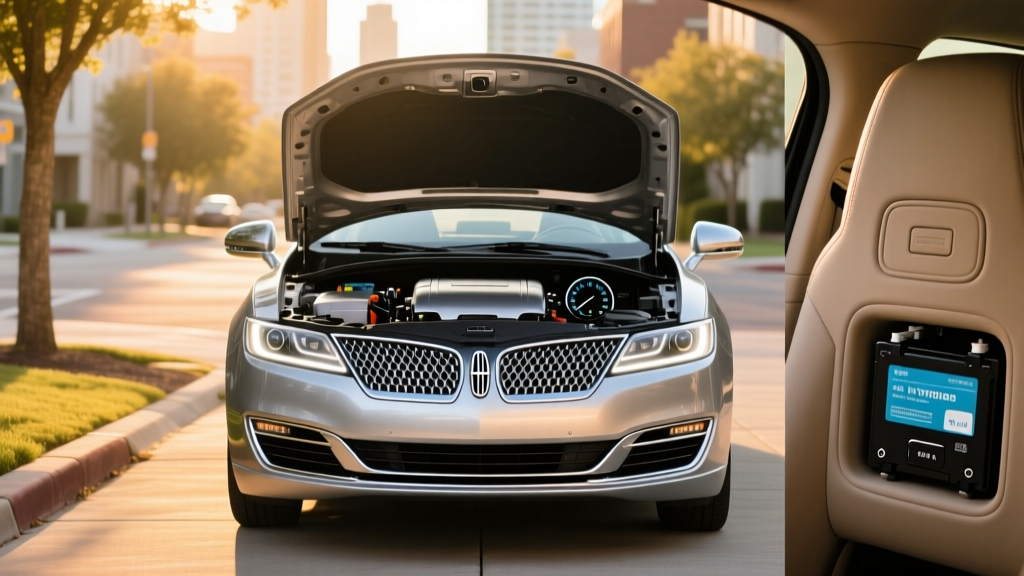
Conventional Hybrid (HEV) — Lincoln MKZ Hybrid: The MKZ Hybrid is a self-charging conventional hybrid. It has a small 1.4 kWh lithium-ion battery pack that recharges through regenerative braking and the gasoline engine. You never plug it in. It cannot drive on electric power alone for meaningful distances. Its job is to maximize MPG by assisting the engine, enabling electric-only movement at low speeds, and recapturing energy during deceleration.
Plug-In Hybrid (PHEV): A PHEV like the Lincoln Corsair Grand Touring (the MKZ's spiritual successor in Lincoln's lineup) carries a larger battery (typically 14–18 kWh) that you plug in to recharge. PHEVs offer 20–35 miles of electric-only driving before the gas engine engages. They qualify for certain tax incentives that conventional hybrids do not.
The MKZ was never offered as a PHEV. If you see references to an "MKZ plug-in," that's incorrect — the Ford Fusion Energi was the PHEV variant on the same platform, but Lincoln never badge-engineered a plug-in MKZ.
Fuel Economy: EPA Ratings and Real-World MPG
Lincoln rated the MKZ Hybrid (2017–2020 model years with the 2.0L Atkinson-cycle engine) at the following EPA figures:
| Metric | EPA Estimate | Real-World Expectation |
|---|---|---|
| City MPG | 42 MPG | 40–45 MPG (hybrids often exceed EPA in city) |
| Highway MPG | 39 MPG | 35–39 MPG (aerodynamic drag reduces hybrid advantage) |
| Combined MPG | 41 MPG | 38–43 MPG depending on driving mix |
Why real-world MPG varies: Hybrids like the MKZ thrive in stop-and-go city driving where regenerative braking constantly recharges the battery and the electric motor handles low-speed propulsion. On the highway, the gasoline engine does most of the work, and the hybrid system provides less benefit. Owners who drive primarily in urban environments frequently report exceeding the EPA combined figure. According to fueleconomy.gov, user-reported averages for the 2020 MKZ Hybrid cluster around 39–44 MPG combined.
Cold-weather impact: Expect a 5–10% MPG reduction in winter months. The engine runs more frequently to provide cabin heat (the MKZ Hybrid lacks a heat pump), and battery efficiency drops at low temperatures. In sub-freezing conditions, 36–38 MPG combined is typical.
Powertrain Specs: What's Under the Hood
| Specification | Detail |
|---|---|
| Engine | 2.0L Atkinson-cycle 4-cylinder |
| Engine Output | 141 hp / 129 lb-ft torque |
| Electric Motor | Permanent-magnet AC synchronous, 120 hp |
| Combined System Output | 188 hp |
| Transmission | eCVT (planetary gearset, not a belt-driven CVT) |
| Hybrid Battery | 1.4 kWh lithium-ion (usable capacity ~1.0 kWh) |
| Drivetrain | Front-wheel drive (AWD not available on hybrid) |
| 0–60 mph | ~8.4 seconds |
| Fuel Tank | 13.5 gallons |
| Total Range | ~550 miles per tank |
The eCVT in the MKZ Hybrid is Toyota-derived planetary gearset technology — not the rubber-band-feeling belt CVTs found in some competitors. Power delivery is smooth and linear, though 188 hp means passing maneuvers at highway speed require planning. This is a comfort-oriented powertrain, not a performance one.
Battery Lifespan, Warranty & Replacement Cost
Original Hybrid Battery Warranty: 8 years / 100,000 miles (10 years / 150,000 miles in CARB states including California, New York, Massachusetts, and others adopting California emissions standards).
Capacity Retention Threshold: Ford/Lincoln warranted the battery against failure or capacity loss below approximately 60% of original capacity during the warranty period.
Battery degradation reality: The MKZ Hybrid's 1.4 kWh battery is small and operates within a narrow state-of-charge window (roughly 40–60% SoC). This conservative battery management strategy dramatically reduces degradation stress. Most MKZ Hybrid batteries in 2026 — even those with 100,000+ miles — show minimal measurable degradation. The hybrid system's computer manages charge/discharge cycles to prioritize longevity over maximum electric assist.
Replacement cost if needed:
- New OEM battery (Ford/Lincoln dealer): $2,500–$3,500 including labor
- Refurbished/remanufactured battery: $1,200–$2,000 including labor
- Individual cell/module replacement (specialist shop): $500–$1,000
The Ford Fusion Hybrid and MKZ Hybrid share the same hybrid powertrain, which means a robust supply of replacement parts and independent shops familiar with the system. Complete battery failure before 150,000 miles is uncommon based on owner forums and repair databases. If you're buying a used MKZ Hybrid, a pre-purchase hybrid battery health scan (available at any Ford/Lincoln dealer or through an OBD-II scanner with hybrid-specific software) is strongly recommended.
Pricing in 2026: Used Market Values
Since the MKZ Hybrid is no longer in production, pricing reflects the used market:
- 2017–2018 MKZ Hybrid (60k–90k miles): $13,000–$17,000
- 2019–2020 MKZ Hybrid (30k–60k miles): $17,000–$23,000
- 2020 MKZ Hybrid Reserve (under 30k miles): $22,000–$27,000
These prices represent a significant value proposition: a luxury-branded sedan achieving 41 MPG combined for well under the cost of a new Toyota Prius. The MKZ Hybrid's cabin materials, sound insulation, and ride quality exceed what you'll find in mainstream hybrids at any price point.
Tax Credits and Incentives: What Applies in 2026
Federal §30D tax credit: The MKZ Hybrid does not qualify for the federal IRS §30D clean vehicle credit. That credit applies only to new plug-in electric vehicles (BEVs and PHEVs with at least 7 kWh of battery capacity). Conventional hybrids like the MKZ are excluded regardless of purchase year.
Used EV credit (§25E): Similarly, the up-to-$4,000 used clean vehicle credit applies only to used BEVs and PHEVs — not conventional hybrids. The MKZ Hybrid does not qualify.
State incentives: A handful of states offer minor incentives for hybrid purchases (registration fee reductions, HOV lane access in some jurisdictions for certain model years), but these are increasingly targeted at plug-in vehicles. Check your state's DMV or energy office for current programs. No state currently offers a meaningful purchase incentive for a used conventional hybrid.
Reliability and Ownership Costs
The MKZ Hybrid benefits from Ford's extensive hybrid experience — the company has been building Fusion Hybrids since 2010, and the powertrain in the MKZ is a mature, well-debugged system. Key reliability notes:
- eCVT transmission: The planetary gearset eCVT has no belts, pulleys, or traditional clutch packs. It is one of the most reliable transmission designs in any vehicle, hybrid or otherwise. Failures are exceptionally rare.
- Regenerative braking: The hybrid system handles most deceleration, which means the conventional friction brakes see minimal use. Brake pad replacement at 80,000–120,000 miles is common — a significant cost savings versus non-hybrid vehicles.
- Engine longevity: The 2.0L Atkinson-cycle engine is under-stressed (it runs at lower RPMs thanks to electric motor assist) and routinely exceeds 200,000 miles with basic maintenance.
- Insurance: Typically 5–10% less than the gas-only MKZ 2.0T (the turbo model), as the hybrid's lower performance profile correlates with fewer claims.
MKZ Hybrid vs. Alternatives: Which Should You Choose?
Choose the Lincoln MKZ Hybrid if:
- You want luxury-car comfort and quiet at a used-car price
- Your driving is primarily city/suburban (where hybrid MPG shines)
- You don't have access to home or workplace charging (no plug needed)
- You drive 12,000–15,000 miles/year and want minimal fuel cost without charging logistics
- You value proven reliability over cutting-edge technology
Choose a PHEV (e.g., Toyota RAV4 Prime, Lincoln Corsair Grand Touring) if:
Choose a full EV (e.g., Tesla Model 3, Hyundai Ioniq 6) if:
- You have reliable home Level 2 charging
- Your daily driving is under 250 miles and you can plan road-trip charging
- You want the lowest per-mile energy cost and near-zero drivetrain maintenance
- You want current-year technology, warranty, and tax credit eligibility
Pros
- 41 MPG combined — still competitive with 2026 hybrid sedans
- Genuinely quiet, comfortable cabin with premium materials
- No plug-in charging required — works with existing gas infrastructure
- Proven, reliable powertrain with low maintenance costs
- Strong used-market value; parts widely available
- Excellent brake life thanks to regenerative braking
Cons
- Discontinued — no new inventory, limited remaining factory warranty
- No AWD option (hybrid is FWD only)
- Modest 188 hp; not a performance sedan
- Infotainment system (SYNC 3) feels dated versus 2026 standards
- No federal or state purchase incentives available
- Rear seat and trunk space compromised slightly by hybrid battery placement
Frequently Asked Questions
How many MPG does the Lincoln MKZ Hybrid get?
The EPA rates the 2017–2020 MKZ Hybrid at 42 MPG city, 39 MPG highway, and 41 MPG combined. Real-world results typically range from 38–45 MPG depending on driving conditions, with city-heavy drivers often exceeding the EPA combined figure.
Does the MKZ Hybrid need to be plugged in?
No. The MKZ Hybrid is a conventional (self-charging) hybrid. Its small battery recharges through regenerative braking and the gasoline engine. You fuel it like any other car — there is no plug, no charging cable, and no electric-only driving range to manage.
How far can the MKZ Hybrid drive on electric power alone?
Effectively zero miles at meaningful speeds. The MKZ Hybrid can creep short distances (a few hundred feet) on electric power at very low speeds (under 25 mph), such as in a parking lot. This is not a plug-in hybrid — it does not offer a usable electric-only driving range.
Is the MKZ Hybrid reliable, and what does a battery replacement cost?
Yes. The MKZ Hybrid's powertrain is one of Ford's most proven systems. The hybrid battery is warrantied for 8 years/100,000 miles (10 years/150,000 miles in CARB states), and most batteries last well beyond 150,000 miles with minimal degradation. If replacement is needed, expect $2,500–$3,500 for a new OEM battery or $1,200–$2,000 for a refurbished unit.
Does the MKZ Hybrid qualify for any tax credit?
No. The MKZ Hybrid is a conventional hybrid, which does not qualify for the federal §30D new clean vehicle credit or the §25E used clean vehicle credit. These credits are reserved for plug-in vehicles (BEVs and qualifying PHEVs). Some states may offer minor registration or inspection benefits, but no meaningful purchase incentives apply in 2026.
What should I check before buying a used MKZ Hybrid?
Request a hybrid battery health report (any Ford/Lincoln dealer can run this diagnostic). Check for consistent maintenance records, particularly oil changes (the Atkinson-cycle engine still requires standard oil service). Inspect brake pad thickness — if the original pads are still installed at 60,000+ miles, that's normal and a sign the regen system is working properly. Verify the hybrid system warranty hasn't been voided by accident damage or unauthorized modifications.