Quick Verdict: A Performance SUV Ahead of Its Time
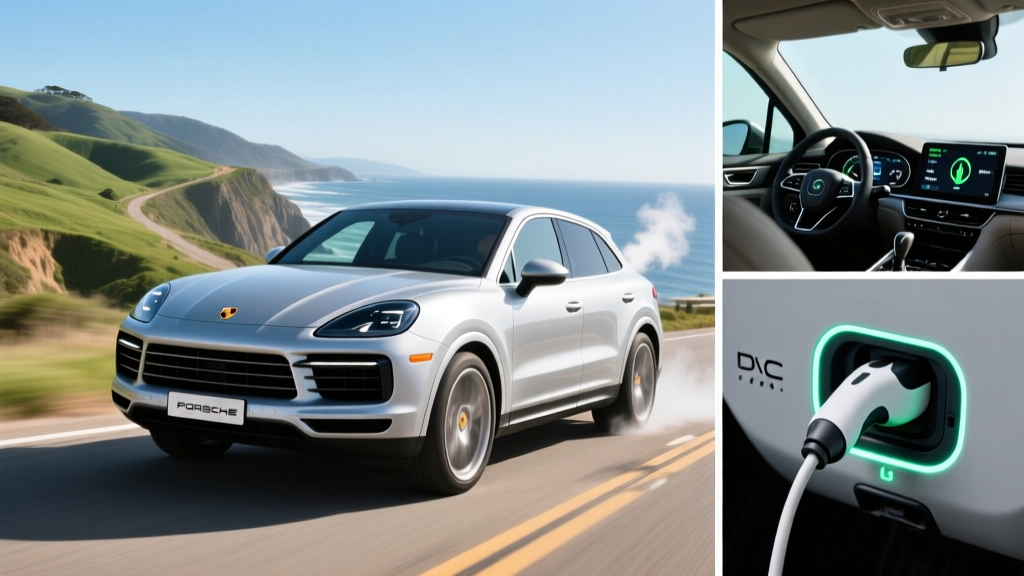
The 2017 Porsche Cayenne S E-Hybrid was Porsche's first plug-in hybrid SUV in the U.S. market, pairing a supercharged 3.0L V6 with an electric motor for 416 combined horsepower. Nearly a decade later, it remains a compelling used purchase for buyers who want Porsche dynamics with modest electric-only commuting capability. But with just 14 miles of EPA-rated electric range and a now-aging 10.8 kWh battery pack, prospective owners need a clear-eyed look at what this PHEV delivers today — and what it might cost to keep on the road.
This guide covers every number that matters: real-world MPG, electric range degradation, battery replacement costs, and whether the Cayenne S E-Hybrid still makes financial sense as a used PHEV in 2026.
| Spec | Value |
|---|---|
| Powertrain | 3.0L Supercharged V6 + Electric Motor |
| Combined Horsepower | 416 hp |
| Combined Torque | 435 lb-ft |
| Battery (usable) | 10.8 kWh (lithium-ion) |
| EPA Electric Range | 14 miles |
| EPA MPGe (combined) | 47 MPGe |
| EPA MPG (gas only, combined) | 22 MPG |
| 0–60 mph | 5.4 seconds (with Sport Chrono) |
| Top Speed | 151 mph |
| Level 2 Charge Time (0–100%) | ~2.5 hours (3.6 kW onboard charger) |
| DC Fast Charging | Not supported |
| Original MSRP (base) | $77,200 |
| Typical Used Price (2026) | $22,000–$32,000 |
HEV vs. PHEV: Where the Cayenne E-Hybrid Fits
Understanding the distinction between a conventional hybrid (HEV) and a plug-in hybrid (PHEV) is essential before evaluating this vehicle.
| Feature | Conventional Hybrid (HEV) | Plug-In Hybrid (PHEV) |
|---|---|---|
| Plug-in charging | No — charges via regen and engine | Yes — plugs into Level 1 or Level 2 |
| Battery size | 1–2 kWh | 8–25+ kWh |
| Electric-only range | 0–1 mile at low speed | 14–50+ miles |
| Example | Toyota RAV4 Hybrid | 2017 Cayenne S E-Hybrid |
The 2017 Cayenne S E-Hybrid is a plug-in hybrid (PHEV). It has a 10.8 kWh battery that can be charged from a wall outlet or Level 2 station, giving it a genuine electric-only driving mode. Porsche also sold a conventional hybrid version — the Cayenne S Hybrid — in earlier model years, but by 2017 the U.S. lineup featured only the PHEV variant under the "S E-Hybrid" badge.
Fuel Economy and Electric Range: The Numbers
| Mode | City | Highway | Combined |
|---|---|---|---|
| Electric + Gas (MPGe) | — | — | 47 MPGe |
| Gas Only (MPG) | 20 | 24 | 22 |
The EPA rates the Cayenne S E-Hybrid at 47 MPGe combined when operating in blended electric-gas mode. Once the 14-mile electric range is depleted, it functions as a conventional hybrid and returns 22 MPG combined (20 city / 24 highway). Data from fueleconomy.gov confirms these figures.
The EPA's 14-mile electric estimate was measured when the vehicle was new. In 2026, a used Cayenne S E-Hybrid with battery degradation may deliver only 10–12 miles of real-world electric range. Highway driving at 70+ mph will further reduce this. In gas-only mode, owners on Fuelly report averages between 19–23 MPG combined, with city-heavy driving occasionally hitting 24–25 MPG thanks to regenerative braking — but sustained highway trips drop to 18–20 MPG.
Powertrain and Performance
The Cayenne S E-Hybrid's powertrain pairs a 333-hp supercharged 3.0L V6 with a 95-hp electric motor integrated into the 8-speed Tiptronic S automatic transmission. Combined output is 416 hp and 435 lb-ft of torque, routed through Porsche's all-wheel-drive system.
Performance credentials are legitimate: 0–60 mph in 5.4 seconds with the optional Sport Chrono package (5.7 seconds without). The electric motor provides instant torque fill at low RPMs, making the supercharged V6 feel more responsive than its displacement suggests. Top speed is electronically limited to 151 mph.
Driving modes include E-Power (electric-only up to 78 mph), Hybrid (automatic blending), Sport, and E-Charge (engine charges the battery while driving). The E-Charge mode sacrifices fuel economy to rebuild the battery — useful if you're approaching a city center with zero-emission requirements but generally inefficient for daily use.
Charging: What to Expect at Home and on the Road
The 2017 Cayenne S E-Hybrid uses a J1772 connector for Level 1 and Level 2 AC charging. It does not support DC fast charging — there is no CCS or CHAdeMO port. This is typical for PHEVs of this era; the battery is small enough that fast charging isn't necessary.
| Level | Power | Time (0–100%) | Notes |
|---|---|---|---|
| Level 1 (120V) | ~1.4 kW | ~7 hours | Standard household outlet |
| Level 2 (240V) | 3.6 kW (onboard limit) | ~2.5 hours | Home wallbox or public L2 |
| DC Fast Charge | N/A | N/A | Not supported |
The onboard charger is limited to 3.6 kW, meaning even a 48-amp Level 2 home charger won't speed things up beyond this rate. For a 10.8 kWh battery, 3.6 kW is adequate — a full charge in roughly 2.5 hours means you can top up during a workday or between errands. Overnight Level 1 charging from a standard 120V outlet is also viable, delivering a full charge in about 7 hours.
Battery Health, Warranty, and Replacement Cost
Porsche provided an 8-year / 100,000-mile hybrid battery warranty for the 2017 Cayenne S E-Hybrid, covering defects and capacity loss below a specified threshold (typically 70% of original capacity). In states that adopted California's ZEV mandate (including CA, NY, MA, NJ, CT, and others), the warranty extended to 10 years / 150,000 miles. For a 2017 model, the federal 8-year warranty expired in 2025; the 10-year ZEV-state warranty expires in 2027.
Degradation reality: Lithium-ion PHEV batteries of this size and generation typically lose 15–25% of capacity over 8–10 years, depending on climate, charging habits, and how often the battery is cycled to low states of charge. Owners reporting on Porsche forums have noted electric ranges dropping from the original 14 miles to 10–12 miles after 80,000–100,000 miles. This degradation is gradual and the vehicle remains fully functional as a hybrid.
Battery replacement cost: If the high-voltage battery fails outside of warranty, expect a replacement cost between $6,000 and $9,000 for the battery module (parts and labor at a Porsche dealer). Independent hybrid-battery specialists may offer refurbished or reconditioned packs for $3,500–$5,500. Individual cell module replacement (if only a few cells are degraded) can sometimes be done for $1,500–$3,000, but availability varies.
Pricing, Tax Credits, and Ownership Costs
The 2017 Cayenne S E-Hybrid originally started at $77,200 (MSRP), with well-optioned examples exceeding $95,000. In the 2026 used market, prices typically range from $22,000 to $32,000 depending on mileage, condition, and service history.
Federal tax credit status: The Cayenne S E-Hybrid qualified for a $6,667 federal tax credit under the pre-2023 rules (IRC §30D) when new, based on its battery capacity. However, this credit was claimed by the original purchaser and does not transfer to subsequent used owners. Under current IRS rules for the Used Clean Vehicle Credit (§25E), a used PHEV may qualify for up to $4,000 (30% of sale price, capped at $4,000) if it meets these criteria:
- Sale price of $25,000 or less
- Buyer income below $75,000 (single) / $150,000 (joint)
- Purchased from a licensed dealer
- Battery capacity of at least 7 kWh (Cayenne's 10.8 kWh qualifies)
- Not previously transferred to the same buyer
Given that many Cayenne S E-Hybrid examples sell above $25,000, only lower-mileage or higher-depreciation units priced at or below the cap will qualify. Always verify current eligibility on irs.gov before purchase.
Reliability and Common Issues
The 2017 Cayenne (958.2 generation) is generally regarded as one of the more reliable Cayenne generations, though "reliable" is relative for a German luxury SUV. The supercharged 3.0L V6 (EA837 engine) is well-proven across the VW Group and is not known for major mechanical failures when properly maintained.
Common issues to watch for:
- Coolant system leaks: The coolant crossover tubes on the 3.0T/3.0S engine are plastic and can crack after 60,000–80,000 miles. Replacement with updated aluminum parts costs ~$1,500–$2,500.
- Air suspension failure: If equipped, front and rear air struts can develop leaks. Aftermarket replacements (Arnott, etc.) run $800–$1,500 per corner versus $2,500+ for OEM.
- Transfer case (T-case) wear: Some owners report shuddering or clunking from the transfer case at higher mileages. A fluid flush sometimes resolves early symptoms; replacement is $3,000–$4,500.
- 12V battery drain: Like many PHEVs, the 12V accessory battery can drain if the vehicle sits unplugged for extended periods. Keep it on a maintainer if storing.
The high-voltage hybrid battery has proven reasonably durable. Porsche's hybrid system is less stressed than a full EV battery because the 10.8 kWh pack is rarely cycled through its full depth of discharge — the car's software maintains a buffer to protect longevity.
Who Should Buy the 2017 Cayenne S E-Hybrid?
- You want Porsche performance and AWD with modest daily electric commuting (10–14 mi)
- You have access to Level 2 charging at home or work
- You need a luxury midsize SUV but don't want a full EV due to road-trip flexibility needs
- You're comfortable with $2,000–$3,000/year in maintenance on a used German luxury vehicle
- Your daily commute exceeds 15 miles and you want zero gas usage
- You want minimal maintenance and no engine-related repair risk
- You qualify for current EV tax credits on a new vehicle
- You cannot charge at home — a PHEV without charging access is just a heavier, less efficient hybrid
- You want lower purchase price and simpler maintenance
Pros and Cons
- 416 hp and genuine Porsche handling dynamics
- Real electric-only mode for short commutes
- No range anxiety — gas engine covers long trips
- Luxury interior with high build quality
- Air suspension (if equipped) provides excellent ride
- Used prices now in an accessible range
- Only 10–14 miles of real-world electric range
- 22 MPG gas-only is poor for a hybrid SUV
- 3.6 kW onboard charger is slow by modern standards
- No DC fast charging
- Maintenance costs remain high (Porsche parts/labor)
- Battery replacement ($6K–$9K) is a looming expense
- Original hybrid warranty has expired (most states)
Frequently Asked Questions
How many MPG does the 2017 Porsche Cayenne S E-Hybrid get?
The EPA rates it at 47 MPGe combined when using both electric and gas power. Once the battery is depleted, it returns 22 MPG combined (20 city / 24 highway) as a conventional hybrid. Real-world gas-only MPG typically falls between 19 and 23 combined, depending on driving style and conditions.
How far can the 2017 Cayenne E-Hybrid go on electric only?
The EPA rated it at 14 miles of electric-only range when new. In 2026, expect 10–12 miles from a used example with typical battery degradation. Electric-only mode works at speeds up to 78 mph, so highway driving is possible but will drain the battery faster.
Does the 2017 Cayenne S E-Hybrid qualify for any tax credit?
The original federal tax credit was claimed by the first owner and does not transfer. Under the current IRS Used Clean Vehicle Credit (§25E), you may qualify for up to $4,000 if the purchase price is $25,000 or less, your income falls below IRS thresholds, and you buy from a licensed dealer. Verify details at irs.gov.
Is the hybrid battery reliable and what does replacement cost?
The 10.8 kWh lithium-ion pack has proven durable, with most owners reporting 15–25% capacity loss over 8–10 years. The original 8-year/100,000-mile warranty has expired for most vehicles (10-year in ZEV states, expiring 2027). Out-of-warranty replacement costs $6,000–$9,000 at a dealer, or $3,500–$5,500 through independent specialists with reconditioned packs.
Can I charge the Cayenne S E-Hybrid at a DC fast charger?
No. The 2017 Cayenne S E-Hybrid only supports AC charging via a J1772 connector at Level 1 (120V, ~1.4 kW) or Level 2 (240V, up to 3.6 kW). There is no DC fast-charge port. A full Level 2 charge takes approximately 2.5 hours.
Hybrid vs. PHEV vs. full EV — which should I choose?
If you have home charging and a commute under 15 miles, this PHEV lets you drive mostly electric while keeping a gas engine for road trips. If you can't charge at home, a conventional hybrid (HEV) like a Lexus RX Hybrid makes more sense — a PHEV you never plug in is just a heavier, less efficient hybrid. If you want zero gas, lower maintenance, and have reliable charging access, a full BEV is the better long-term choice.
What's the total range of the Cayenne S E-Hybrid?
With a 22.5-gallon fuel tank and 22 MPG combined (gas only), the total range is approximately 495 miles on gas alone, plus 10–14 miles of electric range for a combined total of roughly 505–510 miles.