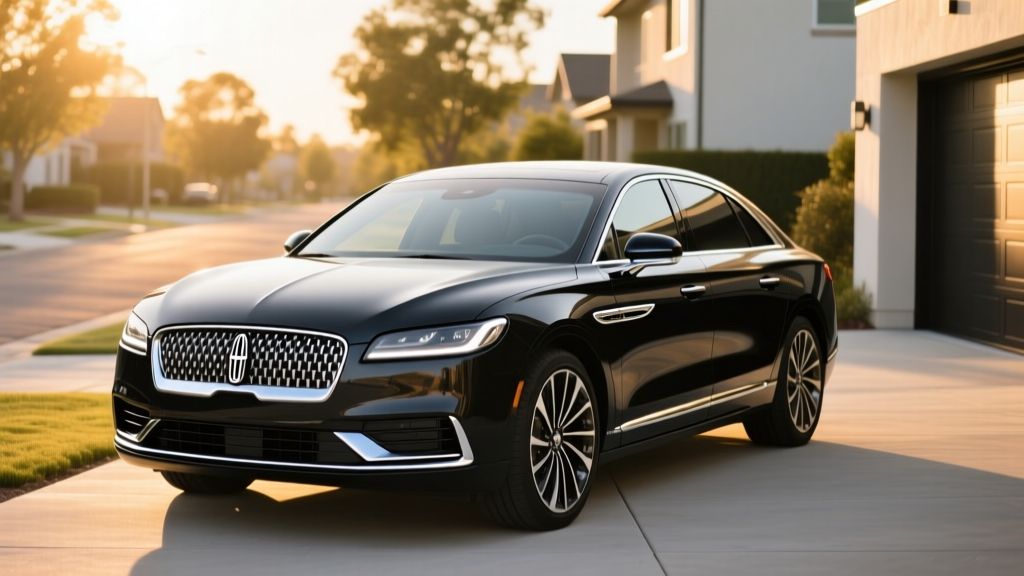
Lincoln's "Grand Touring" badge designates the brand's plug-in hybrid electric (PHEV) variants — vehicles that pair a turbocharged gasoline engine with a sizable battery and electric motor for genuine electric-only commuting and long-distance flexibility. Available primarily on the Lincoln Corsair Grand Touring and previously on the Aviator Grand Touring, these PHEVs occupy a specific niche: luxury buyers who want daily electric driving without committing to a full battery-electric vehicle.
This guide breaks down exactly what Lincoln's Grand Touring hybrid powertrain delivers in the 2026 model year — real EPA fuel economy, electric-only range, charging logistics, battery longevity, tax-credit eligibility, and whether it's the right electrified choice for your garage.
HEV vs. PHEV: What "Grand Touring Hybrid" Actually Means
Lincoln uses the Grand Touring nameplate exclusively for plug-in hybrids (PHEVs), not conventional hybrids. This distinction matters enormously for your daily routine and wallet.
| Feature | Conventional Hybrid (HEV) | Lincoln Grand Touring (PHEV) |
|---|---|---|
| Plug-in charging | No — charges via regenerative braking and engine | Yes — plug in to access electric-only range |
| Electric-only driving | Minimal (typically under 1 mile at low speed) | ~27–28 miles on battery alone |
| Battery size | 1–2 kWh | 14.4 kWh usable (Corsair Grand Touring) |
| Federal tax credit | None | Potential partial credit (§30D, subject to sourcing/income rules) |
| Fuel cost savings | Moderate (better MPG than gas-only) | Significant (if charging daily for commutes under 28 mi) |
If you see a Lincoln listed as a "hybrid" without the Grand Touring badge, verify whether it's a mild-hybrid system (which provides negligible electric assist) or a full PHEV. Only the Grand Touring variants offer meaningful electric-only range.
EPA Fuel Economy & Real-World MPG
The 2026 Lincoln Corsair Grand Touring pairs a 2.5-liter inline-4 Atkinson-cycle engine with an electric motor integrated into the eCVT transmission. Combined system output reaches 266 horsepower, routed through all-wheel drive.
| Metric | EPA Estimate | Real-World Expectation |
|---|---|---|
| Combined MPGe (charge-sustaining + electric) | 78 MPGe | 70–80 MPGe with regular charging |
| Gas-only city MPG | 33 MPG | 30–35 MPG (hybrids often beat EPA in city) |
| Gas-only highway MPG | 32 MPG | 28–32 MPG at 70+ mph |
| Gas-only combined MPG | 33 MPG | 30–33 MPG mixed driving |
| Electric-only range | 28 miles | 22–28 mi (shorter in cold or at highway speed) |
| Total range (full tank + full battery) | ~430 miles | ~380–430 miles |
The beauty of the PHEV layout: once the battery depletes, the Corsair Grand Touring operates as a conventional hybrid at 33 MPG combined — still significantly better than the gas-only Corsair's 25 MPG combined. You never get stranded or forced to find a charger.
Battery, Charging & Powertrain Specs
| Specification | 2026 Lincoln Corsair Grand Touring |
|---|---|
| Battery capacity (usable) | 14.4 kWh (lithium-ion NMC) |
| Electric motor output | ~100 kW integrated in eCVT |
| Combined system horsepower | 266 HP |
| Engine | 2.5L inline-4 Atkinson-cycle turbo |
| Drivetrain | AWD (eAWD with rear electric motor assist) |
| 0–60 mph | ~7.0 seconds |
| Level 1 charging (120V, 12A) | ~1.4 kW; full charge in ~10–11 hours |
| Level 2 charging (240V, 32A) | ~7.7 kW peak; full charge in ~2–2.5 hours |
| DC fast charging | Not supported |
| Charge port | J1772 (Level 2); no CCS/NACS |
| EPA electric range | 28 miles |
| Fuel tank capacity | 13.2 gallons |
A critical limitation: the Corsair Grand Touring cannot DC fast charge. This is standard for most PHEVs in this class — the battery is small enough that Level 2 charging fully replenishes it in roughly two hours. For daily use, this means plugging in overnight at home on a standard 240V outlet or Level 2 wall charger is the intended workflow.
On a standard 120V household outlet (Level 1), a full charge takes approximately 10–11 hours. This works for overnight charging if your daily commute falls within the 28-mile electric range, but a Level 2 home installation is strongly recommended for convenience. Expect to pay $500–$1,500 for a basic Level 2 home charger installation (equipment plus licensed electrician), assuming your electrical panel has capacity.
Pricing, Trims & Federal Tax Credit Eligibility
The 2026 Lincoln Corsair Grand Touring starts at approximately $53,000 MSRP (including destination), positioning it at a $7,000–$9,000 premium over the gas-only Corsair. The Grand Touring trim is loaded — standard features include adaptive LED headlights, a 13.2-inch touchscreen with SYNC 4, wireless Apple CarPlay/Android Auto, heated front seats, and Lincoln Co-Pilot360 2.0 driver-assistance suite.
- Battery capacity: Must be ≥7 kWh — Corsair Grand Touring qualifies (14.4 kWh) ✓
- MSRP cap: SUVs/vans/pickups capped at $80,000 — Corsair qualifies ✓
- Buyer income cap: AGI ≤$150,000 (single) / ≤$300,000 (joint) — varies by filer
- Critical minerals requirement: Battery minerals must meet phased-in sourcing thresholds (check current-year IRS guidance)
- Battery component sourcing: Components must be manufactured/assembled in North America per phased thresholds
- Point-of-sale transfer: Eligible buyers can transfer the credit to the dealer for an immediate price reduction
PHEVs with smaller batteries often qualify for a partial credit (typically $3,750 or less) depending on how the sourcing requirements are met at time of purchase. Always verify current eligibility at IRS.gov or through the dealer's point-of-sale verification tool. Tax rules change — consult a tax professional.
At the state level, several states (California, Colorado, Massachusetts, New York, among others) offer additional PHEV rebates ranging from $1,000–$4,000, often with their own income and price caps. Check your state energy office or DMV for current programs.
Battery Longevity, Warranty & Replacement Cost
- Hybrid/EV battery component warranty: 8 years / 100,000 miles (whichever comes first)
- Coverage threshold: Battery must retain ≥70% of original capacity during warranty period
- Hybrid system components: 8 years / 100,000 miles (electric motor, eCVT, power electronics)
- Bumper-to-bumper: 4 years / 50,000 miles
- Powertrain (engine): 6 years / 70,000 miles
Lincoln's 8-year/100,000-mile hybrid battery warranty is mandated by federal emissions warranty requirements and matches the industry standard for PHEVs. Real-world data from Ford/Lincoln PHEVs (which share the same powertrain architecture) shows minimal degradation in the first 5–7 years — typically 5–10% capacity loss under normal use.
The Corsair Grand Touring's NMC lithium-ion battery includes active thermal management (liquid cooling), which significantly extends lifespan compared to passively cooled packs. Most owners report negligible electric-range loss over the warranty period.
Out-of-warranty replacement cost: If the high-voltage battery requires replacement after the warranty expires, expect a parts-and-labor cost of approximately $5,000–$8,000 at a Lincoln dealership. Third-party hybrid battery specialists can sometimes refurbish individual cells for $2,000–$4,000. This is considerably less than full BEV battery replacements, largely because the 14.4 kWh pack is physically smaller and less expensive to manufacture.
For context, conventional hybrid batteries (1–2 kWh) in vehicles like the Toyota Prius routinely last 150,000–200,000+ miles. PHEV batteries cycle more frequently but benefit from larger buffers and thermal management. Data from NHTSA complaint databases shows very few hybrid battery failure reports for current-generation Ford/Lincoln PHEV systems.
Grand Touring vs. Full EV vs. Gas: Decision Framework
Choose the Lincoln Corsair Grand Touring (PHEV) if:
- Your daily commute is under 30 miles round-trip and you can charge at home
- You take road trips of 200+ miles several times per year and don't want to plan around chargers
- You want luxury compact SUV refinement with meaningful fuel savings
- Your home electrical setup can support a Level 2 charger
- You want AWD capability without the efficiency penalty of a gas-only AWD system
Choose a full EV (like the Cadillac Lyriq or BMW iX) instead if:
- You have reliable home charging and your daily driving is under 250 miles
- You want to eliminate gasoline purchases entirely
- You prefer maximum federal tax credit eligibility ($7,500 for qualifying BEVs)
- You want lower long-term maintenance costs (no oil changes, fewer moving parts)
Choose the gas-only Lincoln Corsair instead if:
- You cannot install a home charger (apartment, no garage, no electrical capacity)
- Your budget is under $46,000 and the PHEV premium doesn't pencil out
- You drive predominantly highway miles at 75+ mph (where PHEV electric range is less useful)
The PHEV sweet spot is narrow but powerful: home charging access plus a sub-30-mile commute means you'll drive 70–80% of your miles on electricity, paying the equivalent of $1.00–$1.50 per gallon, while retaining the freedom to drive cross-country without any infrastructure planning.
Pros & Cons
Pros
- 28 miles of electric-only range covers most daily commutes
- 33 MPG combined on gas after battery depletes — no range anxiety
- 266 HP with smooth eAWD provides confident acceleration
- Luxury interior with excellent ride quality and cabin quietness
- Standard Level 2 charging cord included (no extra equipment purchase required)
- 8-year/100,000-mile hybrid battery warranty
- Potential partial federal tax credit plus state incentives
Cons
- $7,000–$9,000 premium over gas-only Corsair takes years to recoup via fuel savings
- No DC fast charging — impractical to "top up" on road trips
- Electric range drops to ~20–22 miles in cold weather
- Cargo space slightly reduced vs. gas model due to battery placement
- Federal tax credit eligibility uncertain — depends on battery sourcing rules at time of purchase
- Requires home charging access to realize full value
Frequently Asked Questions
How many MPG does the Lincoln Grand Touring hybrid get?
The 2026 Lincoln Corsair Grand Touring achieves an EPA-estimated 33 MPG combined (33 city / 32 highway) when operating on gasoline after the battery is depleted. When factoring in electric-only driving, the combined rating is 78 MPGe. Real-world city driving often yields 30–35 MPG on gas, as the Atkinson-cycle engine and regenerative braking excel in stop-and-go traffic.
How far can the Lincoln Grand Touring go on electric only?
The EPA rates the Corsair Grand Touring at 28 miles of electric-only range. In real-world conditions, expect 22–28 miles depending on temperature, speed, and terrain. Highway driving at 70+ mph reduces this to roughly 22–25 miles, while cold weather (below 40°F) can drop it to 20–24 miles. Once depleted, the gas engine takes over seamlessly.
Does the Lincoln Grand Touring qualify for a tax credit?
The Corsair Grand Touring PHEV may qualify for a partial federal tax credit under IRS §30D, but the exact amount depends on current-year battery sourcing requirements, your adjusted gross income, and the vehicle's MSRP. Because the battery is 14.4 kWh (above the 7 kWh minimum), it meets the capacity threshold. However, critical-mineral and battery-component sourcing rules may limit the credit to $3,750 or less. Always verify at fueleconomy.gov and IRS.gov before purchasing.
Is the Lincoln Grand Touring hybrid reliable?
The Ford/Lincoln PHEV powertrain (shared with the Ford Escape PHEV) has demonstrated solid reliability since its introduction. The 2.5L Atkinson-cycle engine is naturally aspirated and conservatively tuned, and the eCVT has no traditional gear-shifting components to fail. The hybrid battery carries an 8-year/100,000-mile warranty. Long-term data from fleet and consumer use shows battery degradation of approximately 5–10% over the first 5–7 years — well within the warranty threshold.
What does a Lincoln Grand Touring hybrid battery replacement cost?
Out-of-warranty high-voltage battery replacement for the Corsair Grand Touring runs approximately $5,000–$8,000 at a Lincoln dealership, including parts and labor. Independent hybrid battery specialists may offer cell-level refurbishment for $2,000–$4,000. Given the 8-year/100,000-mile warranty and the track record of NMC packs with liquid cooling, most owners will never face this expense during typical ownership.
Do I need to plug in the Lincoln Grand Touring?
You don't have to, but you should. The Corsair Grand Touring operates as a conventional hybrid if you never plug it in, delivering 33 MPG combined. However, the entire economic and environmental value proposition depends on regular plug-in charging. Without plugging in, you're carrying 300+ pounds of battery weight you never use, and you'll pay a premium for the PHEV hardware without realizing fuel savings. If you cannot charge at home or work, the gas-only Corsair is the better purchase.
How long does it take to charge the Corsair Grand Touring at home?
On a 240V Level 2 charger (recommended), the 14.4 kWh battery charges from empty to full in approximately 2–2.5 hours at up to 7.7 kW. On a standard 120V household outlet (Level 1), a full charge takes 10–11 hours. The vehicle does not support DC fast charging — this is typical for PHEVs, as the small battery doesn't warrant the added cost and complexity of DC hardware.