Quick Verdict
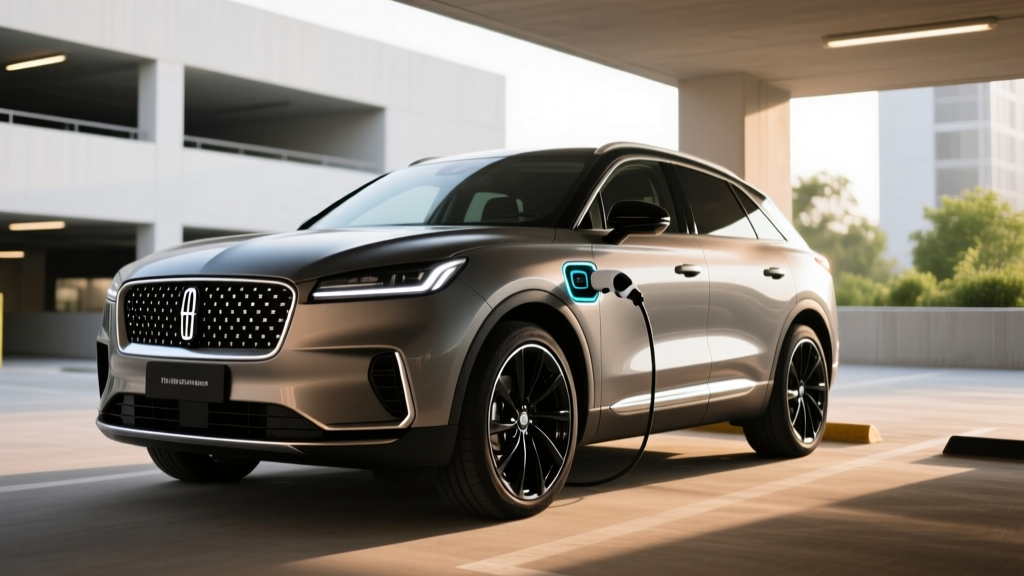
The 2026 Lincoln Corsair Grand Touring plug-in hybrid occupies a narrow but compelling niche: luxury compact SUV buyers who want electric-only commuting without range anxiety on road trips. With 28 miles of EPA-rated electric range and 33 MPG combined once the battery depletes, it rewards owners who can charge at home. However, its 11.2 kWh usable battery, lack of DC fast charging, and premium pricing mean it works best as a specific lifestyle solution — not a general-purpose EV substitute. If your daily commute falls under 25 miles round-trip and you have Level 2 home charging access, the Corsair PHEV can run almost entirely on electricity weekday-to-weekday while still offering 430+ miles of total range for weekend getaways.
Lincoln Corsair Plug-In Hybrid: Key Specs at a Glance
| Specification | 2026 Corsair Grand Touring PHEV |
|---|---|
| Powertrain | 2.5L Atkinson-cycle I4 + permanent-magnet electric motor |
| Combined Horsepower | 266 hp |
| Battery (usable) | 11.2 kWh lithium-ion |
| EPA Electric-Only Range | 28 miles |
| EPA MPGe (electric+gas) | 78 MPGe combined |
| EPA MPG (gas only, charge-depleted) | 33 combined / 34 city / 32 highway |
| Total Combined Range | ~430 miles |
| Level 1 Charging (120V) | ~10–11 hours (0–100%) |
| Level 2 Charging (240V) | ~3.5 hours (0–100%) |
| DC Fast Charging | Not available |
| 0–60 mph | ~6.2 seconds (est.) |
| Drivetrain | eAWD (front engine + rear electric motor) |
| Starting MSRP | ~$52,290 (Grand Touring trim) |
| Battery Warranty | 8 years / 100,000 miles |
Electric-Only Range: The Real-World Picture
Real-World Expectation: 22–27 miles in mixed driving; 18–22 miles in sustained highway or cold-weather conditions (below 40°F)
The Corsair PHEV's 11.2 kWh usable battery delivers an EPA-rated 28 miles of electric-only driving. In practice, owners who drive conservatively in city traffic with regenerative braking set to maximum can stretch this to 27–30 miles. Highway driving at 70+ mph, aggressive acceleration, or cold temperatures will reduce that figure to the low 20s or even high teens.
This range is adequate for many daily commutes but falls short of PHEV leaders like the Toyota RAV4 Prime (42 miles) or the Hyundai Tucson PHEV (33 miles). The key question for prospective buyers: does your typical daily driving stay under 25 miles round-trip? If yes, you can run the Corsair almost entirely on electricity during the work week, only engaging the gas engine for longer weekend trips.
MPGe, or miles per gallon equivalent, measures the combined efficiency when running on both electricity and gasoline. The Corsair PHEV earns an EPA-rated 78 MPGe combined when factoring in its electric operation. Once the battery is depleted and the vehicle operates as a conventional hybrid, fuel economy drops to 33 MPG combined — still respectable for a luxury AWD compact SUV.
Fuel Economy Breakdown: City, Highway, and Charge-Depleted
| Driving Mode | City | Highway | Combined |
|---|---|---|---|
| Charge-Sustaining (gas only) | 34 MPG | 32 MPG | 33 MPG |
| Charge-Depleting (EV mode) | — | — | 78 MPGe |
| Real-World Hybrid (owner avg.) | ~35–37 MPG | ~30–32 MPG | ~32–34 MPG |
Like most hybrids and PHEVs, the Corsair benefits from regenerative braking and electric-motor assist at low speeds, meaning real-world city driving can actually exceed the EPA city figure. Highway driving, by contrast, relies more heavily on the gasoline engine at sustained speeds, so expect highway MPG to land slightly below the sticker estimate. Drivers who rarely plug in will still get a capable 33 MPG combined — a meaningful improvement over the gas-only Corsair AWD's 25 MPG combined.
Powertrain and Performance
The Corsair Grand Touring pairs a 2.5-liter Atkinson-cycle four-cylinder engine with a permanent-magnet electric motor integrated into the eCVT transmission. The front axle is driven by the engine and a secondary motor, while a dedicated rear electric motor provides all-wheel drive without a mechanical driveshaft. Combined output reaches 266 horsepower, delivered through an electronic continuously variable transmission (eCVT).
The eAWD system is a genuine advantage in inclement weather. Because the rear axle is powered solely by the electric motor, torque distribution is managed electronically and responds faster than a conventional mechanical AWD system. The trade-off is that towing capacity is limited — Lincoln rates the Corsair PHEV at 2,000 pounds, adequate for a small trailer but not for heavier loads.
Acceleration is confident: the electric motor's instant torque fills in the low-end gap that typically plagues Atkinson-cycle engines, delivering a 0–60 mph time in the low 6-second range. The eCVT avoids the rubber-band feel of older CVTs, though enthusiasts may miss the directness of a stepped automatic.
Charging: What You Need to Know Before Buying
The Corsair PHEV charges exclusively via AC — Level 1 (120V household outlet) or Level 2 (240V dedicated charger). There is no DC fast charging capability, which is typical for PHEVs with smaller batteries but worth understanding if you expected quick top-ups on road trips.
| Charging Level | Power | Time (0–100%) | Connector |
|---|---|---|---|
| Level 1 (120V) | ~1.4 kW | 10–11 hours | J1772 |
| Level 2 (240V) | ~3.3 kW | ~3.5 hours | J1772 |
For most PHEV owners, Level 2 home charging is the practical choice. A full charge in 3.5 hours means you can replenish the battery between morning and evening commutes, or simply plug in overnight. The onboard charger maxes out at approximately 3.3 kW, so even a 7.2 kW or 11.5 kW Level 2 home station won't charge the Corsair any faster — the vehicle's onboard charger is the bottleneck, not the station.
Level 1 charging from a standard household outlet works as a fallback and can fully recharge the battery overnight, though it takes 10–11 hours. If your daily electric-only consumption is under 20 miles, a Level 1 top-up during an 8-hour workday or overnight may suffice without installing a dedicated 240V circuit.
Important distinction: kW (kilowatts) measures charging power — the rate at which energy flows into the battery. kWh (kilowatt-hours) measures energy capacity — how much the battery stores. The Corsair's 11.2 kWh battery charged at 3.3 kW takes roughly 3.5 hours (11.2 ÷ 3.3 ≈ 3.4, plus charging losses).
HEV vs. PHEV vs. Full EV: Which Lincoln Is Right for You?
Conventional Hybrid (HEV)
No plug required. The battery recharges via regenerative braking and the engine. Expect 35–40 MPG combined. Best for drivers without home charging access who still want better fuel economy. Lincoln does not currently offer a conventional HEV Corsair — the gas-only model is a turbocharged 2.0L with a standard automatic.
Plug-In Hybrid (PHEV)
Plug in to unlock EV range. The Corsair Grand Touring offers 28 electric-only miles. Best for drivers with home/workplace charging and commutes under ~25 miles who also need long-distance flexibility. Falls back to 33 MPG hybrid mode when the battery depletes.
Battery Electric (BEV)
100% electric, no gas engine. Vehicles like the Cadillac Lyriq or Tesla Model Y offer 280–330 miles of range. Best for drivers with reliable home charging and access to DC fast charging networks who want zero tailpipe emissions and the lowest per-mile fuel cost. Requires lifestyle adjustment for road trips.
Choose the Corsair PHEV if:
- Your daily commute is under 25 miles round-trip
- You have access to Level 2 (or even Level 1) charging at home or work
- You take road trips 3+ times per year and don't want to plan around charging stations
- You want luxury-brand features with better fuel economy than the gas-only Corsair
- You live in an area with cold winters where EV range loss is a concern
Look at a full BEV instead if:
- Your commute exceeds 30 miles daily (you'll burn gas regularly in the Corsair)
- You want the lowest possible per-mile operating cost
- You have reliable DC fast-charging access nearby
- You want to eliminate oil changes, spark plugs, and transmission maintenance entirely
Pricing, Tax Credits, and Ownership Costs
The 2026 Lincoln Corsair Grand Touring PHEV starts at approximately $52,290 MSRP, including destination. Options packages — such as the Elements Technology Package, upgraded audio, or adaptive suspension — can push a well-equipped model past $60,000.
Federal §30D Tax Credit Eligibility for PHEVs
The Corsair PHEV may qualify for up to $3,750 under the IRS §30D Clean Vehicle Credit, depending on battery mineral and component sourcing requirements. Full $7,500 credits require meeting both critical-mineral and battery-component thresholds, which many PHEVs with smaller batteries struggle to satisfy. Key eligibility factors:
- MSRP cap: SUVs must be under $80,000 — the Corsair qualifies ✓
- Buyer income cap: AGI must not exceed $150,000 (single) / $300,000 (joint) ✓
- Battery sourcing: Critical minerals and battery components must meet phased-in thresholds per IRS §30D rules — verify current-year compliance on the IRS eligible vehicle list
- Point-of-sale transfer: As of 2024+, you can transfer the credit to the dealer for an immediate price reduction rather than waiting for tax filing
- Final assembly: Must occur in North America — the Corsair is assembled in Louisville, KY ✓
Always verify current eligibility at fueleconomy.gov and consult a tax professional. Rules and eligible vehicle lists change frequently.
On the operating-cost side, the Corsair PHEV offers meaningful savings over the gas-only model if you charge regularly. At $0.14/kWh (national average residential electricity rate), a full charge costs approximately $1.57 and delivers 22–28 miles — roughly $0.06–0.07 per mile on electricity. Compare that to $0.13–0.15 per mile on gasoline at 33 MPG and $3.80/gallon. Over 12,000 annual miles with 70% electric driving, you could save $600–$900 per year in fuel costs compared to the gas-only Corsair.
Battery Warranty, Reliability, and Long-Term Costs
Coverage threshold: Battery must retain sufficient capacity; Lincoln/Ford covers defects and excessive degradation
Estimated out-of-warranty replacement cost: $5,000–$8,000 (based on comparable Ford/Lincoln PHEV battery packs)
The Corsair PHEV's high-voltage battery is covered by an 8-year/100,000-mile warranty, which is the federal minimum for emissions-related components and has become the industry standard for hybrid and PHEV battery packs. This warranty covers manufacturing defects and capacity loss beyond a manufacturer-defined threshold — typically around 60–70% of original capacity.
In practice, modern lithium-ion PHEV batteries rarely require full replacement within the warranty period. Ford's PHEV systems (shared with Lincoln) have demonstrated strong reliability. Data from owners of the Ford Escape PHEV and previous-generation Fusion Energi show typical degradation of 8–12% over the first 5 years, leaving ample buffer above the warranty threshold.
The smaller 11.2 kWh battery also means lower replacement costs compared to a full EV's 75–100 kWh pack. If an out-of-warranty replacement ever becomes necessary, expect $5,000–$8,000 including parts and labor — a significant expense, but far less than the $15,000–$22,000 a large BEV battery might cost.
For overall vehicle reliability, the Corsair benefits from Ford's extensive hybrid powertrain experience. The eCVT transmission has fewer moving parts than a conventional automatic, and regenerative braking reduces wear on the friction brakes. Owners should budget for standard luxury-brand maintenance costs (premium oil, higher labor rates at Lincoln dealers) but can expect the hybrid-specific components to be durable.
Pros, Cons, and Real Ownership Considerations
✓ Pros
- 28 miles of electric-only range covers many daily commutes
- eAWD provides confident all-weather traction
- 33 MPG combined as a hybrid beats the gas Corsair by 8 MPG
- Luxury interior with Lincoln's latest SYNC 4 tech
- No range anxiety — gas engine provides 430+ total miles
- Quiet, smooth EV-mode driving around town
- 8-year/100,000-mile battery warranty
✗ Cons
- 28-mile EV range trails RAV4 Prime (42 mi) and Tucson PHEV (33 mi)
- No DC fast charging — AC only
- 3.3 kW onboard charger is slow for public Level 2 stations
- $52,290 starting price is steep for a compact luxury SUV
- Federal tax credit may be limited to $3,750 (not full $7,500)
- Cargo space slightly reduced vs. gas Corsair due to battery placement
- EV range drops significantly in cold weather and highway driving
Frequently Asked Questions
How many MPG does the Lincoln Corsair plug-in hybrid get?
When the battery is depleted and the Corsair operates as a conventional hybrid, it achieves an EPA-rated 33 MPG combined (34 city / 32 highway). When factoring in electric-only driving, it earns 78 MPGe combined. Real-world results vary: city drivers often see 35–37 MPG in hybrid mode thanks to regenerative braking, while sustained highway driving may yield 30–32 MPG.
How far can the Corsair PHEV go on electric power alone?
The EPA rates the Corsair Grand Touring at 28 miles of electric-only range. In real-world conditions, expect 22–27 miles in mixed driving, with cold weather and highway speeds reducing that to 18–22 miles. Once the battery is depleted, the gasoline engine engages seamlessly and the vehicle continues as a hybrid with no driver intervention required.
Does the Lincoln Corsair PHEV qualify for a federal tax credit?
The Corsair PHEV may qualify for up to $3,750 under the IRS §30D Clean Vehicle Credit, depending on current-year battery sourcing requirements. Full $7,500 credits require meeting both critical-mineral and battery-component thresholds. The vehicle meets the MSRP cap (under $80,000 for SUVs) and North American final assembly requirements. Buyer income caps also apply. Always verify current eligibility at irs.gov and consult a tax professional before relying on credit estimates.
Is the Corsair PHEV reliable, and what does battery replacement cost?
The Corsair's hybrid powertrain shares architecture with Ford's proven PHEV systems, which have demonstrated strong reliability. The high-voltage battery is warranted for 8 years / 100,000 miles. Out-of-warranty battery replacement, should it ever be needed, is estimated at $5,000–$8,000 — considerably less than a full EV battery. The eCVT and regenerative braking system also reduce wear on conventional maintenance items like friction brakes.
Should I choose the Corsair PHEV over a full electric vehicle?
It depends on your driving patterns and charging access. Choose the Corsair PHEV if your daily commute is under 25 miles, you have home charging, and you regularly take long road trips where charging infrastructure is uncertain. Choose a full EV (like the Cadillac Lyriq or Tesla Model Y) if you want the lowest per-mile fuel cost, zero tailpipe emissions, and you have reliable access to DC fast charging. The PHEV is a bridge solution — ideal for electrification-curious buyers who aren't ready to commit to battery-only driving.
Do I need to install a Level 2 charger at home for the Corsair PHEV?
It's strongly recommended but not strictly required. Level 1 charging from a standard 120V outlet will fully recharge the 11.2 kWh battery in 10–11 hours, which works if you can plug in for extended periods. A Level 2 (240V) home charger cuts that to about 3.5 hours, making daily top-ups effortless. Given the Corsair's 3.3 kW onboard charger, even a basic 16-amp Level 2 station (3.8 kW) is sufficient — no need for an expensive high-power unit. Expect $500–$1,500 for Level 2 equipment and electrician installation, depending on your electrical panel's capacity and proximity to the parking spot.