Why the 2017 Camry Hybrid Still Matters in 2026
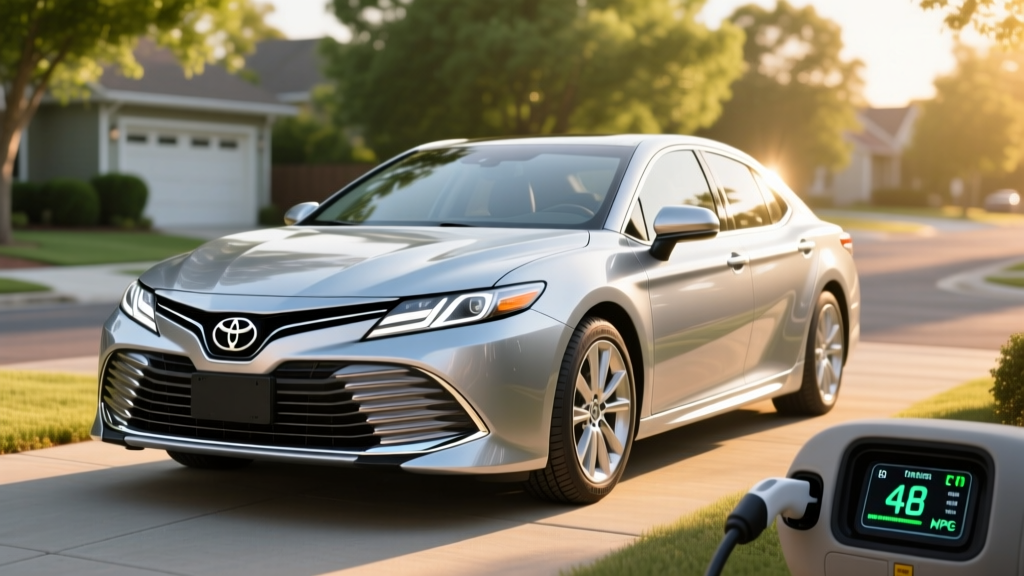
Nine years after it rolled off the assembly line, the 2017 Toyota Camry Hybrid remains one of the most fuel-efficient midsize sedans on the used market. With gasoline prices remaining volatile and newer EVs still carrying premium price tags, buyers are circling back to proven hybrid technology. The 2017 Camry Hybrid delivers EPA-rated fuel economy that rivals many newer vehicles, paired with Toyota's legendary hybrid reliability record.
This guide covers everything you need to know about 2017 Camry Hybrid MPG, real-world efficiency, battery longevity, replacement costs, and how this conventional hybrid (HEV) stacks up against plug-in hybrids and full EVs in today's market.
2017 Camry Hybrid MPG: EPA Ratings and Real-World Results
The 2017 Toyota Camry Hybrid comes in three trims — LE, SE, and XLE — and fuel economy varies slightly depending on which you choose. Here are the official EPA-estimated MPG figures:
| Trim | City MPG | Highway MPG | Combined MPG |
|---|---|---|---|
| LE | 42 | 38 | 40 |
| SE | 40 | 37 | 38 |
| XLE | 40 | 37 | 38 |
Why does the LE get better mileage? The LE trim rides on narrower, lower-rolling-resistance tires and weighs slightly less than the SE and XLE, which use larger alloy wheels and sport-tuned suspensions.
Real-World MPG: What Owners Actually Report
Toyota's hybrid system excels in stop-and-go city driving, where regenerative braking recaptures energy and the electric motor handles low-speed propulsion. This means the Camry Hybrid often exceeds its EPA city rating in real urban commuting:
- City commuting (mixed stop-and-go): 42–48 MPG (often exceeds EPA)
- Highway cruising (70+ mph): 34–38 MPG (aerodynamic drag reduces hybrid advantage)
- Mixed daily driving: 38–44 MPG
- Cold weather (below 35°F): 34–38 MPG (engine runs more for cabin heat, battery less efficient)
On fueleconomy.gov, user-submitted data for the 2017 Camry Hybrid averages roughly 39–43 MPG combined, with some drivers reporting 45+ MPG on conservative city routes. This is a vehicle where your driving habits and environment matter enormously — gentle acceleration and city-heavy routes unlock the best numbers.
Powertrain and Hybrid System Specs
The 2017 Camry Hybrid uses Toyota's well-proven Hybrid Synergy Drive system. It pairs a 2.5-liter Atkinson-cycle four-cylinder engine with an electric motor and a nickel-metal hydride (NiMH) battery pack.
| Specification | Value |
|---|---|
| Gasoline Engine | 2.5L Atkinson-cycle I4 |
| Engine Horsepower | 156 hp @ 5,700 rpm |
| Electric Motor Output | 105 kW (141 hp) |
| Net Combined System HP | 200 hp |
| Transmission | eCVT (planetary gearset) |
| Battery Type | Nickel-Metal Hydride (NiMH) |
| Battery Capacity | ~1.6 kWh (nominal) |
| Drivetrain | Front-Wheel Drive |
| 0–60 mph | ~7.6 seconds |
HEV vs PHEV: The 2017 Camry Hybrid Is a Conventional Hybrid
This is a critical distinction that confuses many shoppers. The 2017 Camry Hybrid is a conventional hybrid (HEV), not a plug-in hybrid (PHEV). Here's what that means:
Conventional Hybrid (HEV)
- Never plugs in — charges via regenerative braking and the gas engine
- Small battery (~1–2 kWh) provides assist, not standalone driving
- No electric-only range to speak of (maybe 1 mile at low speed)
- Fuel economy advantage comes from engine optimization and regen
- No charging infrastructure needed
Plug-In Hybrid (PHEV)
- Plugs into a wall outlet or charger to fill a larger battery
- Larger battery (8–20+ kWh) enables 20–50 miles of electric-only driving
- Gas engine kicks in after battery depletes or under heavy load
- Requires access to charging (home or work) to realize full benefit
- May qualify for federal tax credits (new purchases only)
The 2017 Camry Hybrid has no plug, no electric-only range worth mentioning, and requires zero charging infrastructure. You simply fill it with gas and drive — the hybrid system handles the rest. Toyota did not offer a Camry PHEV in 2017; the Prius Prime was Toyota's plug-in offering that year.
Hybrid Battery Longevity, Warranty, and Replacement Cost
The single biggest concern for any used hybrid buyer is the traction battery. Will it last? What happens when it degrades? Here's the data-driven answer.
Toyota warranted the 2017 Camry Hybrid battery for 8 years / 100,000 miles (10 years / 150,000 miles in California and states adopting CARB emissions standards). As of 2026, the original factory warranty has expired for most vehicles unless they have unusually low mileage and are in a CARB state.
How Long Do Camry Hybrid Batteries Actually Last?
Toyota's NiMH hybrid batteries have an exceptional longevity track record. Real-world data from fleet operators, taxi services, and high-mileage owners consistently shows:
- Typical lifespan: 150,000–200,000+ miles before significant degradation
- Capacity loss pattern: Gradual — expect 10–15% loss over 150K miles, not sudden failure
- Failure mode: Individual cell imbalance rather than complete pack death
- Taxi fleet data: Camry Hybrids routinely exceed 300,000 miles on original batteries in moderate climates
NiMH chemistry is less energy-dense than the lithium-ion packs in modern EVs, but it's remarkably durable and tolerant of the shallow charge/discharge cycles that hybrid systems use. The battery never fully charges or fully depletes — Toyota's system keeps it in a 40–80% state-of-charge window, which dramatically extends cycle life.
Battery Replacement Cost (2026 Estimates)
If the battery does eventually need replacement, here's what to budget:
- OEM new battery (Toyota dealer): $3,000–$4,000 installed
- Refurbished/remanufactured battery: $1,500–$2,500 installed
- Individual cell/module replacement (specialist shop): $500–$1,200 if only specific cells have failed
At the used-car prices a 2017 Camry Hybrid commands in 2026 (roughly $14,000–$22,000 depending on mileage and condition), a battery replacement represents a meaningful but not catastrophic expense — especially compared to a new vehicle purchase.
Tax Credits and Incentives: What Applies to a Used 2017 Camry Hybrid?
Let's be direct: the 2017 Camry Hybrid does not qualify for the federal §30D new clean vehicle tax credit. That credit applies only to new vehicle purchases and has specific requirements around battery sourcing, MSRP caps, and buyer income limits as outlined by the IRS.
However, here's what might apply depending on your situation:
- Used Clean Vehicle Credit (§25E): This credit covers up to $4,000 (or 30% of the sale price, whichever is less) for qualifying used EVs and fuel cell vehicles purchased from a dealer. However, conventional hybrids like the Camry Hybrid do not qualify — the §25E credit requires the vehicle to be a plug-in EV or fuel cell vehicle with a minimum 7 kWh battery. The Camry Hybrid's ~1.6 kWh NiMH pack doesn't meet this threshold.
- State incentives: A handful of states offer rebates or HOV lane access for hybrids, but most have shifted incentives toward plug-in vehicles. Check your state's energy office or DMV for current programs.
- Insurance discounts: Some insurers (GEICO, Liberty Mutual) offer 5–10% discounts for hybrid vehicles — worth asking about.
2017 Camry Hybrid vs. Plug-In Hybrid vs. Full EV: Which Fits You?
If you're cross-shopping a used 2017 Camry Hybrid, you're likely weighing it against other electrified options. Here's a practical decision framework:
Choose the 2017 Camry Hybrid (HEV) If:
- You don't have access to home or workplace charging
- You want maximum simplicity — no plugs, no charging apps, no range planning
- Your budget is under $22,000 for a reliable, efficient sedan
- You drive a mix of city and highway and want consistent 38–44 MPG
- You want Toyota's proven reliability and low maintenance costs
Consider a Plug-In Hybrid (PHEV) Instead If:
- You have reliable home Level 2 charging and a commute under 30 miles
- You want to drive most days on electricity but need gas flexibility for road trips
- You're buying new and want to capture the $7,500 federal tax credit
- Example: Toyota RAV4 Prime (42 miles electric-only), Hyundai Tucson PHEV (33 miles)
Consider a Full EV (BEV) Instead If:
- You have home charging and rarely drive more than 250 miles in a day
- You want zero tailpipe emissions and the lowest per-mile fuel cost
- You're willing to plan charging stops on road trips
- You want minimal maintenance (no oil changes, no transmission fluid)
- Example: Used Tesla Model 3, Chevrolet Bolt EV, Hyundai Ioniq 5
Pros and Cons: Honest Assessment for 2026 Buyers
Pros
- 40–42 MPG combined (LE) — still competitive with newer hybrids
- Exceptional Toyota reliability; NiMH battery proven to 200K+ miles
- No charging infrastructure needed — just add gas
- Comfortable, quiet midsize sedan with good cargo space (15.4 cu ft trunk)
- Low cost of ownership: minimal maintenance, affordable insurance
- Strong resale value retention
- Atkinson-cycle engine is inherently efficient at partial load
Cons
- No electric-only driving capability — it's always burning some fuel
- No federal tax credit eligibility (new or used)
- eCVT drone under hard acceleration (common to Toyota hybrids of this era)
- 2017 infotainment is dated — no Apple CarPlay/Android Auto from factory
- Highway MPG drops noticeably above 70 mph
- Original battery warranty has expired for most examples
- NiMH battery is heavier and less energy-dense than modern lithium-ion
What to Inspect Before Buying a Used 2017 Camry Hybrid
If you're evaluating a specific vehicle, these checks are essential:
- Hybrid battery health check: Ask a Toyota dealer or hybrid specialist to run a battery health diagnostic. They can read individual module voltages and identify weak cells. Cost: $50–$150.
- Maintenance records: Verify regular oil changes (every 5,000–10,000 miles with synthetic) and inverter coolant service.
- Brake wear: Hybrids use regenerative braking heavily, so brake pads often last 80,000–100,000+ miles. If the car has original pads at high mileage, that's actually normal.
- 12V auxiliary battery: Like all Toyotas, the 12V battery is separate from the hybrid pack. It typically lasts 4–6 years and costs ~$200 to replace. A dead 12V will prevent the car from starting even if the hybrid battery is fine.
- Recall status: Check the VIN on nhtsa.gov/recalls for any open safety recalls.
Frequently Asked Questions
How many MPG does the 2017 Camry Hybrid actually get?
The EPA rates the 2017 Camry Hybrid LE at 42 city / 38 highway / 40 combined MPG. The SE and XLE trims rate at 40/37/38. In real-world driving, most owners report 38–44 MPG combined, with city-heavy commutes often pushing 45+ MPG and sustained highway driving at 75+ mph dropping to 34–36 MPG.
Does the 2017 Camry Hybrid need to be plugged in?
No. The 2017 Camry Hybrid is a conventional hybrid (HEV), not a plug-in. It charges its battery entirely through regenerative braking and the gasoline engine. You never plug it in — you just fill it with gas like any other car.
How long will the hybrid battery last, and what does replacement cost?
Toyota's NiMH hybrid batteries typically last 150,000–200,000+ miles with gradual capacity loss rather than sudden failure. If replacement is needed, expect $3,000–$4,000 for a new OEM battery at a dealer, $1,500–$2,500 for a refurbished unit, or $500–$1,200 for individual cell replacement at a specialist shop.
Does the 2017 Camry Hybrid qualify for any tax credit?
No. The 2017 Camry Hybrid does not qualify for the federal §30D new vehicle credit (it's a used, conventional hybrid) or the §25E used clean vehicle credit (that requires a plug-in EV or fuel cell vehicle with at least 7 kWh of battery). The Camry Hybrid's ~1.6 kWh NiMH battery doesn't meet plug-in requirements. Some states may offer minor incentives — check your local programs.
Is the 2017 Camry Hybrid reliable compared to a gas-only Camry?
Yes, and in some ways it's more reliable. The hybrid system eliminates the traditional starter motor and alternator (the electric motor handles both functions), and the eCVT transmission has no belts, clutches, or bands to wear out — it's a simple planetary gearset. The Atkinson-cycle engine runs under less stress than a conventional engine. Toyota's hybrid powertrains consistently rank at the top of long-term reliability studies from Consumer Reports and J.D. Power.
Camry Hybrid vs. a full EV like a used Tesla Model 3 — which is smarter in 2026?
It depends entirely on your charging access and driving patterns. If you can charge at home and your daily driving is under 200 miles, a used Model 3 offers dramatically lower fuel and maintenance costs. If you lack home charging, frequently drive long distances without planning charging stops, or want the lowest possible purchase price, the Camry Hybrid is the more practical choice. The Camry Hybrid eliminates range anxiety entirely — you can fuel up at any gas station in 3 minutes.