The Lincoln Corsair Grand Touring occupies a narrow but appealing lane: a compact luxury plug-in hybrid (PHEV) that lets you handle most daily commutes on electric power while keeping a turbocharged gas engine for weekend road trips. For 2026, the Corsair PHEV retains the 2.5-liter Atkinson-cycle four-cylinder paired with an electric motor for a combined 266 horsepower, delivered through standard all-wheel drive. If you've been searching for a Lincoln Corsair hybrid that blends Lincoln's quiet-cabin luxury with genuine electric-only commuting, the Grand Touring trim is the one to evaluate — but it comes with trade-offs in pricing, charging speed, and federal incentive eligibility that every buyer should understand before signing.
2026 Lincoln Corsair Grand Touring PHEV: Key Specifications
| Specification | Value |
|---|---|
| Powertrain | 2.5L Atkinson 4-cyl + electric motor (AWD) |
| Combined Output | 266 hp |
| Battery (usable) | 14.4 kWh lithium-ion |
| EPA Electric Range | 28 miles |
| EPA MPGe (combined) | 78 MPGe |
| EPA MPG (gas-only combined) | 33 MPG (34 city / 32 highway) |
| Total Combined Range | ~430 miles |
| Level 2 Charge Time (0–100%) | ~3.5 hours at 240V / 32A |
| DC Fast Charging | Not available |
| 0–60 mph | ~6.5 seconds (est.) |
| Cargo Volume | 27.6 cu ft (rear seats up) |
| Base MSRP (Grand Touring AWD) | $53,400 |
| Battery Warranty | 8 years / 100,000 miles |
HEV vs. PHEV: Understanding the Corsair's Hybrid System
Lincoln does not sell a conventional hybrid (HEV) version of the Corsair. The only electrified option is the Grand Touring plug-in hybrid. This is a critical distinction that trips up some shoppers:
Conventional Hybrid (HEV)
- Never plugs in — charges via regenerative braking and the gas engine
- Small battery (typically 1–2 kWh)
- No meaningful electric-only range; motor assists the engine
- Example: Toyota RAV4 Hybrid
Plug-In Hybrid (PHEV) — Corsair Grand Touring
- Plugs into a wall outlet or Level 2 charger to fill a larger battery
- 14.4 kWh battery enables 28 miles of electric-only driving
- Gas engine engages once battery depletes or under heavy acceleration
- Requires regular charging to capture fuel savings benefit
The Corsair Grand Touring's system defaults to electric mode at startup. You can drive up to 28 EPA-rated miles without the engine firing, provided you stay below roughly 85 mph and don't demand hard acceleration. Once the battery depletes, the vehicle seamlessly transitions to hybrid operation, where the gas engine and motor work together and the 33 MPG combined rating applies.
Fuel Economy: EPA Ratings and Real-World MPG
According to fueleconomy.gov, the 2026 Corsair Grand Touring PHEV posts the following figures:
| Driving Mode | City | Highway | Combined |
|---|---|---|---|
| Electric + Gas (MPGe) | — | — | 78 MPGe |
| Gas-Only Hybrid (MPG) | 34 | 32 | 33 |
Real-world expectations: In mixed city-suburban driving where you charge nightly and stay within the 28-mile electric envelope, many owners report using little to no gasoline during the workweek. On longer highway trips where the battery depletes quickly, expect the gas-only hybrid mode to deliver 30–33 MPG depending on speed, terrain, and temperature. Cold weather (below 35°F) can reduce electric-only range by 20–30%, dropping the usable EV range to roughly 19–22 miles before the engine kicks in.
The hybrid system's Atkinson-cycle engine prioritizes efficiency over power, but the electric motor fills in low-end torque, making the Corsair feel responsive around town. Unlike a conventional hybrid, your actual fuel consumption depends heavily on charging habits — a PHEV you never plug in is just a heavier, less efficient hybrid.
Electric-Only Range and Charging
The 28-mile EPA electric range is competitive within the luxury compact PHEV segment. For context, the BMW X3 xDrive30e offers roughly 35 miles, while the Volvo XC60 Recharge provides about 35 miles as well. The Corsair trails slightly but compensates with standard AWD and a lower entry price than many rivals.
Charging specifics:
- Level 1 (120V household outlet): Approximately 10–12 hours for a full charge. Practical only for overnight top-offs if you drive very few electric miles daily.
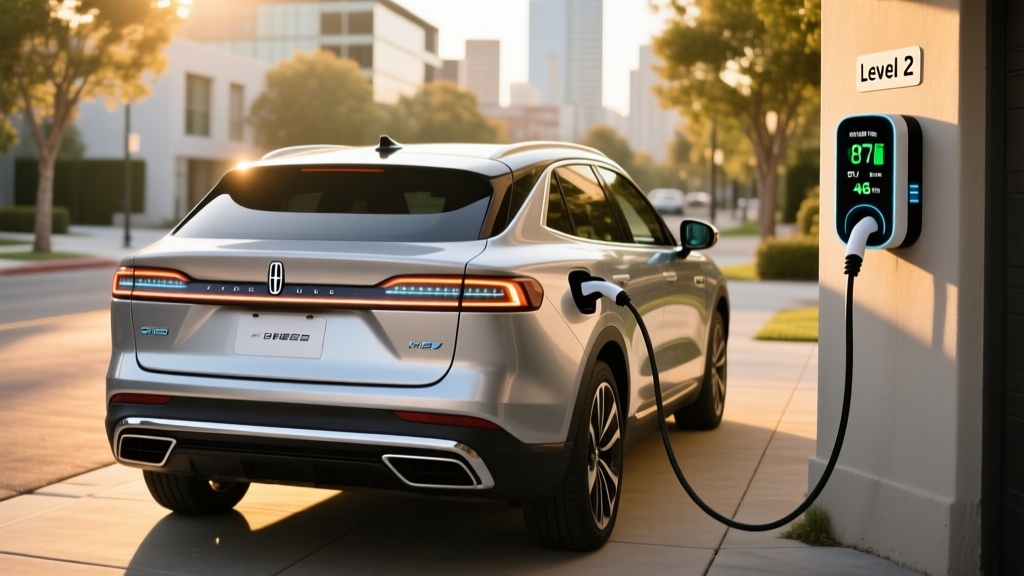
- Level 2 (240V, 32A): About 3.5 hours from empty to full. This is the recommended home-charging method and covers most overnight needs.
- DC fast charging: Not supported. The Corsair Grand Touring uses a J1772 connector for AC charging only. There is no CCS or NACS DC port.
The lack of DC fast charging is standard for PHEVs in this class — the small battery doesn't justify the added cost and weight of DC hardware. For most PHEV owners, a Level 2 home charger (a 240V / 32A unit, costing roughly $500–$800 for the charger plus $500–$1,500 for professional installation) is all you need.
Powertrain, Performance, and Driving Impressions
The Corsair Grand Touring pairs a naturally aspirated 2.5-liter four-cylinder engine (running the Atkinson cycle for efficiency) with a permanent-magnet electric motor integrated into the front transaxle. Combined output is 266 horsepower, routed through an electronically controlled continuously variable transmission (eCVT) to all four wheels.
The eCVT means there are no fixed gear shifts — acceleration is linear and smooth, though some drivers notice the engine drone under hard throttle as the transmission holds the engine at its optimal RPM. In practice, the electric motor's instant torque masks this during city driving, and the cabin insulation Lincoln is known for keeps noise well-managed.
Lincoln's Co-Pilot360 suite comes standard, including adaptive cruise control with stop-and-go, lane centering, automatic emergency braking, and blind-spot monitoring. This is an SAE Level 2 driver-assistance system — it does not drive the car for you. The driver must keep hands on the wheel and eyes on the road at all times. Lincoln does not currently offer a hands-free system like BlueCruise on the Corsair (that feature is reserved for the Navigator and select other models).
Pricing, Trims, and Tax Credit Eligibility
The 2026 Corsair Grand Touring starts at an MSRP of approximately $53,400, including destination. Well-optioned examples with the Elements Technology Package, upgraded leather, and the Revel audio system can push the price toward $60,000–$62,000.
Federal §30D Tax Credit: Does the Corsair PHEV Qualify?
Under current IRS rules for the Clean Vehicle Credit (§30D), PHEVs can qualify for up to $7,500 — but eligibility depends on several factors that change frequently:
- MSRP cap: SUVs/vans/pickups must have an MSRP at or below $80,000. The Corsair qualifies on price.
- Buyer income cap: Modified adjusted gross income must not exceed $150,000 (single), $225,000 (head of household), or $300,000 (joint filers).
- Battery sourcing requirements: A percentage of critical minerals and battery components must be sourced from the U.S. or free-trade-agreement countries. This requirement tightens annually and has disqualified several PHEVs that previously qualified.
- Point-of-sale transfer: If eligible, you can transfer the credit to the dealer at purchase, reducing your out-of-pocket cost immediately rather than waiting for tax filing.
Important: Battery sourcing rules have disqualified many PHEVs in recent years. Before assuming you'll receive the credit, verify the Corsair Grand Touring's current eligibility on the IRS clean vehicle credit page or consult a tax professional. Eligibility can change with model-year updates to battery supply chains.
There is no separate federal tax credit for conventional hybrids. Some states and utilities offer rebates for PHEVs — check your local programs, as these vary widely by jurisdiction.
Reliability, Battery Warranty, and Long-Term Costs
Battery and Hybrid Component Warranty
Lincoln covers the Corsair Grand Touring's high-voltage battery and hybrid-specific components for 8 years or 100,000 miles (whichever comes first), which aligns with the federal minimum requirement for emissions-related components. The standard new-vehicle warranty is 4 years / 50,000 miles, and the powertrain warranty is 6 years / 70,000 miles.
Hybrid and PHEV battery packs have proven durable in real-world use. Lithium-ion degradation in PHEV applications is generally modest — expect roughly 10–15% capacity loss over 10 years under normal use, which translates to a few miles of reduced electric range. The 14.4 kWh battery in the Corsair is relatively small, so even moderate degradation remains functional for daily commuting.
Battery replacement cost: If the high-voltage battery fails outside of warranty, expect a replacement cost in the range of $8,000–$12,000 including parts and labor. However, out-of-warranty PHEV battery failures remain uncommon based on industry data from similar Ford/Lincoln hybrid systems.
Lincoln's reliability ratings have been middle-of-the-pack in recent years per Consumer Reports and J.D. Power. The hybrid powertrain itself (shared with Ford's Escape PHEV platform) has a solid track record. Most reported issues involve infotainment software and minor build-quality items rather than the hybrid system.
Who Should Buy the Lincoln Corsair Hybrid — and Who Shouldn't
Choose the Corsair Grand Touring PHEV if:
- Your daily commute is under 25 miles round-trip and you can charge at home
- You want luxury-cabin quietness and Lincoln's ride comfort without committing to a full EV
- You take regular road trips beyond 300 miles and don't want to plan around charging stops
- You value standard AWD for snow or rain climates
- You prefer a traditional luxury brand over Tesla, Rivian, or newer EV marques
Consider a full BEV instead if:
- You want zero tailpipe emissions and lower per-mile fuel costs
- You have reliable home charging and your daily driving exceeds 28 miles on most days
- You want to eliminate oil changes, spark plugs, and transmission fluid from your maintenance schedule
- Models like the Genesis GV60, BMW iX, or Tesla Model Y better match your tech and range expectations
Consider a conventional HEV instead if:
- You cannot install a home charger (apartment, street parking, no garage)
- You don't want the behavioral change of plugging in regularly
- A Toyota RAV4 Hybrid or Honda CR-V Hybrid meets your needs at a lower price point (though without the luxury badge)
Pros
- 28-mile electric range covers most daily commutes gas-free
- 33 MPG combined in hybrid mode is strong for a luxury AWD SUV
- Quiet, well-insulated cabin with premium materials
- Standard AWD and 266 hp provide confident all-weather performance
- No range anxiety — gas engine covers any trip length
Cons
- Higher MSRP than gas-only Corsair trims ($53,400 vs. ~$40,000 base)
- No DC fast charging capability
- Federal tax credit eligibility uncertain due to battery sourcing rules
- Electric range trails key rivals (BMW X3, Volvo XC60 PHEV)
- eCVT engine drone under hard acceleration
- Cargo space slightly reduced vs. gas-only Corsair due to battery placement
Frequently Asked Questions
How many MPG does the Lincoln Corsair hybrid get?
The 2026 Corsair Grand Touring PHEV achieves 33 MPG combined (34 city / 32 highway) when operating in gas-only hybrid mode after the battery is depleted. When factoring in the electric-only portion, the combined rating is 78 MPGe. Your real-world fuel consumption depends heavily on how often you charge and how many miles you drive within the 28-mile electric window.
How far can the Corsair Grand Touring go on electric only?
The EPA rates the Corsair PHEV at 28 miles of electric-only range. In real-world conditions — particularly in cold weather, at highway speeds, or with climate control running — expect 20–25 miles before the gas engine activates. For city commuters with a short round-trip and nightly charging, this covers most weekday driving without using gasoline.
Does the Lincoln Corsair hybrid qualify for a federal tax credit?
The Corsair Grand Touring PHEV may qualify for up to $7,500 under the IRS §30D Clean Vehicle Credit, but eligibility depends on current battery-sourcing requirements, buyer income limits, and MSRP caps that change over time. The MSRP is below the $80,000 SUV cap, but critical-mineral and battery-component sourcing rules have disqualified several PHEVs in recent years. Always verify current status on the IRS clean vehicle credit page before purchasing.
Is the Corsair PHEV reliable, and what does battery replacement cost?
The Ford/Lincoln hybrid powertrain has a solid reliability track record, and the high-voltage battery is warrantied for 8 years or 100,000 miles. Out-of-warranty battery replacement would cost approximately $8,000–$12,000, though premature failures are rare. Routine maintenance costs are lower than a gas-only vehicle (no transmission fluid changes, reduced brake wear from regenerative braking) but higher than a full EV due to the retained gas engine.
Do I need to plug in the Corsair Grand Touring?
Yes — to get the fuel-economy benefit, you should plug in regularly. The car will still drive without plugging in (operating as a conventional hybrid at 33 MPG combined), but you'll forfeit the 28 miles of electric-only range and the associated fuel savings. If you cannot charge at home or work, a conventional hybrid (HEV) may be a better fit.
How does the Corsair PHEV compare to a full EV?
A full EV like the BMW iX or Tesla Model Y offers 250–320+ miles of range, zero tailpipe emissions, lower per-mile energy costs, and minimal maintenance — but requires reliance on charging infrastructure for road trips. The Corsair PHEV offers the flexibility of a gas engine for long trips with electric commuting for short ones, at the cost of maintaining two powertrains and accepting lower electric range. If your lifestyle includes frequent 400+ mile trips without reliable en-route charging, the PHEV is the more pragmatic choice.
What is the total combined range of the Corsair Grand Touring?
With a full battery and a full tank of gas, the Corsair Grand Touring delivers approximately 430 miles of total range (28 electric + ~400 on gasoline). This eliminates range anxiety for cross-country travel while still providing meaningful electric operation for daily use.
The 2026 Lincoln Corsair Grand Touring makes a compelling case for luxury PHEV buyers who want electric commuting without sacrificing the flexibility of a gas engine. Its 28-mile EV range, 33 MPG hybrid operation, and standard AWD cover the practical bases, while Lincoln's cabin refinement keeps the experience premium. Just verify the tax-credit situation before you buy, budget for the premium over the gas-only trims, and commit to plugging in nightly — that's where the real savings live.